
In This Article
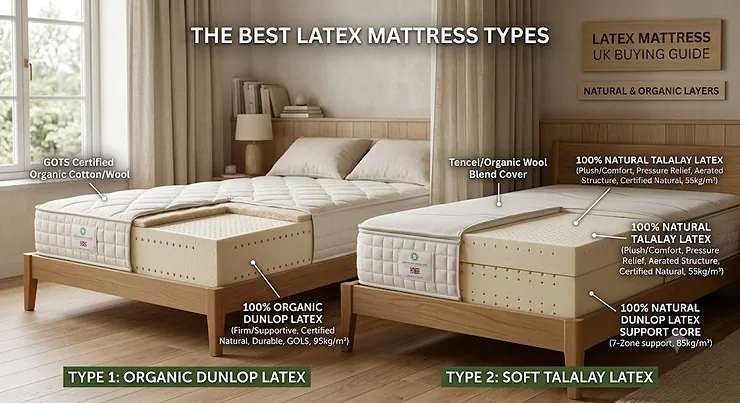
There’s a particular kind of 3am frustration that only memory foam owners understand: you roll over, and the mattress takes a full two seconds to catch up with you. A latex mattress is a bed built from natural or synthetic rubber foam, either tapped from rubber trees (Dunlop or Talalay process) or manufactured from petrochemicals, and it’s prized because it pushes back against your body instead of slowly swallowing it. If you’ve spent the last few nights googling best latex mattress at 1am because your current bed feels like a slow-motion trap, you’re in good company, and you’re about to get a properly researched answer rather than a rewritten spec sheet.
This guide walks through seven real latex mattresses and toppers currently sold in the UK, spanning entry-level Amazon listings right up to a handmade German import that costs more than a decent second-hand car. We’ll get into ILD ratings, the actual difference between natural rubber and the “latex-ish” synthetic stuff, and why a bed that feels perfect in a 30-second showroom lie-down can feel completely different three months in. None of the opinions here come from us pretending we’ve slept on all seven beds for a decade each; they come from cross-referencing real specifications, aggregated buyer feedback, and how latex behaves as a material, so you can make a decision based on facts rather than marketing copy.
One quick note before we dive in: latex mattress prices move constantly, so every figure below is a rough band based on research at the time of writing, not a guaranteed current price. Always check the live listing before you buy.
Quick Comparison Table
| Mattress | Latex Type | Firmness | Price Range | Best For |
|---|---|---|---|---|
| Dunlopillo Latex Mattress | Natural Dunlop core | Medium | Budget–mid | First-time latex buyers |
| Dunlopillo Oniris Latex Mattress | Natural, 24cm profile | Medium-firm | Mid-range | Side and back sleepers |
| 4Living 100% Natural Latex & Organic Cotton Mattress | 100% natural, wool-wrapped | Medium | Premium | Allergy sufferers, long-term investment |
| NAKEAH 100% Natural Latex Mattress | Natural latex layer | Medium | Budget | Renters, guest rooms |
| LBLhello Natural Latex Mattress | Natural latex layer | Medium | Budget | Couples wanting a cooler king bed |
| Pure Green Natural Latex Mattress Topper | GOLS-certified organic | Soft–medium | Mid–premium | Upgrading an existing mattress |
| Rymic Talatex Latex Mattress Topper | 100% natural Thai Dunlop | Medium-firm | Budget | Students, small flats |
Looking at the spread above, the gap between the cheapest and most expensive option here isn’t really about quality of latex, it’s about how much of the mattress is latex, how it’s finished, and what surrounds it. The 4Living 100% Natural Latex & Organic Cotton Mattress sits at the top because it’s a full-depth, wool-wrapped natural latex core rather than a thin comfort layer, while the two toppers let you trial the “latex feel” for a fraction of the outlay before committing to a full mattress. If you’re brand new to latex, starting with a topper on your current bed is a genuinely sensible, low-risk way to test whether the buoyant, springy feel suits you before spending four figures.
💬 Found a pick you like already? Tap through and check today’s price before it changes.
Top 7 Latex Mattresses: Expert Analysis
1. Dunlopillo Latex Mattress — Britain’s original latex pioneer, since 1929
The story behind this one matters more than most spec sheets: Dunlopillo’s founder, Birmingham-based chemist Edward Murphy, invented latex foam mattresses back in 1929, and the brand has been refining the process for close to a century since. The Dunlopillo Latex Mattress listed on Amazon UK is a single-size, solid latex-core mattress with no synthetic memory foam layer muddying the feel. Because it’s a straightforward latex slab rather than a hybrid, what you feel lying down is what you get: an immediate, springy push-back rather than the slow sink of foam.
Based on the spec comparison with Dunlopillo’s wider range, this entry-level model skips the wool and cashmere fillings found in the brand’s Elite collections, which is exactly why it’s priced where it is. It suits a first-time latex buyer who wants to know if they actually like the material before committing to a premium bed, or a single spare-room upgrade where budget matters more than plush extras. Stock on Amazon fluctuates for this listing, and at the time of research it showed limited availability with very few submitted reviews, so treat any star rating you see as an early snapshot rather than a settled verdict, and cross-check current stock before you commit.
Pros:
- ✅ Genuine heritage latex brand with century-long expertise
- ✅ Simple all-latex build with no synthetic foam layers
- ✅ Naturally hypoallergenic and antibacterial by design
Cons:
- ❌ Limited size options compared with rivals
- ❌ Very few verified customer reviews available yet
Expect a price in the low-to-mid hundreds depending on size, sitting toward the affordable end for genuine latex; given how thin the review pool currently is, it’s a reasonable punt for the brand name rather than a guaranteed slam dunk.
2. Dunlopillo Oniris Latex Mattress — deeper 24cm profile built for side sleepers
Stepping up the same family tree, the Dunlopillo Oniris Latex Mattress brings a noticeably deeper 24cm profile to the table. What most buyers overlook about mattress height is that it isn’t just about looks, a deeper core generally means more latex between you and the base, which translates into steadier pressure relief around the hips and shoulders, particularly useful if you sleep on your side and dislike the “bottoming out” feeling cheaper, thinner mattresses can produce over time.
Reviewers researching Dunlopillo as a brand consistently note the company’s reputation for durability, since latex resists the permanent body impressions that plague budget foam mattresses, though independent, product-specific review volume for this exact model on Amazon UK was sparse at the time of research. Here’s what to weigh: this is a mid-range jump up from the entry Dunlopillo model, so it’s best suited to buyers who’ve already decided they like latex (perhaps from a topper trial) and want a proper single-material mattress without hybrid springs complicating the feel.
Pros:
- ✅ Extra 24cm depth aids pressure relief for side sleepers
- ✅ Single-material latex build avoids spring “give” over time
- ✅ Backed by Dunlopillo’s long-standing manufacturing reputation
Cons:
- ❌ Premium depth pushes it above entry-level latex pricing
- ❌ Limited verified review data specific to this exact listing
Sitting in the mid-range price bracket, this is a sensible step for anyone upgrading from a thinner latex mattress or topper who has decided the material genuinely suits them.
3. 4Living 100% Natural Latex & Organic Cotton Mattress — premium wool-wrapped natural latex, handmade in Germany
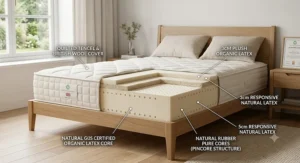
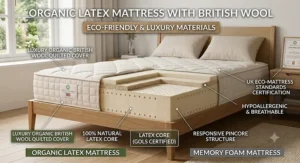
This is the mattress that earns its premium price tag through sheer material honesty. The 4Living 100% Natural Latex & Organic Cotton Mattress uses a full 15cm core of pure resilient natural latex, wrapped in organic sheep’s wool fleece and finished with a removable organic cotton cover, bringing total height to roughly 17cm. It’s handmade near Ravensburg in Germany rather than mass-produced, and the brand markets it as particularly suited to heavier body types thanks to that thick, uninterrupted latex core.
On paper, this means significantly more consistent support across the whole sleeping surface than a mattress with a thin latex comfort layer sitting over cheaper foam. The wool wrap isn’t just a luxury flourish either, it’s genuinely functional: wool regulates temperature and wicks moisture far better than synthetic quilting, which matters for anyone who runs hot at night. What the spec sheet won’t tell you, but the material science does, is that a 15cm solid latex core will likely outlast a hybrid mattress by years, simply because there’s no spring unit to sag or squeak. The trade-off is obvious and unavoidable: a Super King from this range has been seen listed north of £1,700, putting it firmly in “considered purchase” territory.
Pros:
- ✅ Full 15cm solid natural latex core, not a thin comfort layer
- ✅ Organic wool wrap aids genuine temperature regulation
- ✅ Handmade construction suited to heavier sleepers
Cons:
- ❌ Premium price puts it out of reach for casual buyers
- ❌ Heavier, denser build makes it harder to manoeuvre solo
At the top end of our price ranges here, this is a long-term investment piece rather than an impulse buy, one that arguably pays for itself over a 15-year lifespan compared with replacing cheaper mattresses every five to eight years.
4. NAKEAH 100% Natural Latex Mattress — flexible budget entry into natural latex
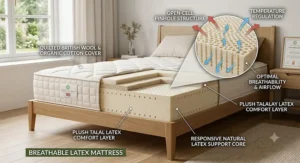
The NAKEAH 100% Natural Latex Mattress takes a different approach entirely: rather than one fixed thickness, it’s sold across multiple thickness options from roughly 2.5cm right up to 10cm, letting you dial in exactly how much latex feel you want layered onto an existing bed base. Reviewers researching this style of mattress note that it’s marketed as medium-firm, described as neither sinking excessively nor sleeping hot, which fits with latex’s inherent open-cell structure allowing better airflow than solid memory foam.
Based on the listing details, the honeycomb-style ventilation and organic cover are the standout features here, and what most buyers overlook about honeycomb ventilation specifically is that it isn’t just marketing language, the interconnected air pockets in latex genuinely do let heat escape rather than trapping it against your skin the way denser polyurethane foams can. This is a sensible pick for a student let, a guest room, or anyone testing whether latex suits their sleep style before investing in a premium full-depth mattress like the 4Living option above. Reviewer feedback on the wider NAKEAH latex range flags reasonable comfort for the price, though as with several entries here, verified UK review volume remains modest, so treat it as a budget-friendly experiment rather than a lifetime purchase.
Pros:
- ✅ Multiple thickness options to suit your existing setup
- ✅ Honeycomb ventilation genuinely aids breathability
- ✅ Organic cotton cover included as standard
Cons:
- ❌ Thinner options offer less support than a full-depth mattress
- ❌ Review volume on Amazon UK remains relatively limited
Priced firmly at the budget end, this is best treated as a low-commitment way to bring latex into your bedroom without the premium price tag.
5. LBLhello Natural Latex Mattress — honeycomb-ventilated king size all-rounder
For couples specifically hunting a king size latex mattress rather than a single or double, the LBLhello Natural Latex Mattress is a straightforward, no-frills option built around the same honeycomb convection ventilation principle as the NAKEAH model above, but sized and marketed specifically for king beds. The listing describes a medium-firm feel designed to suit back, side, and front sleepers as well as couples with mismatched preferences, which on paper means it’s engineered as a compromise product rather than a specialist one.
Here’s what to weigh: a mattress marketed as suitable for every sleep position is rarely the best in any single category, but for a couple who genuinely sleep differently from one another, that middle-ground firmness can be exactly the point rather than a flaw. What the spec sheet won’t tell you, but latex’s material properties do, is that this kind of honeycomb-perforated latex also reduces motion transfer noticeably better than sprung mattresses, since there’s no coil unit to creak or bounce when your partner turns over at 2am. As with the NAKEAH listing, independent review data specific to this product is still building, so weigh the material science alongside the still-developing review pool rather than either alone.
Pros:
- ✅ Purpose-built for king size beds and couples
- ✅ Reduced motion transfer versus sprung alternatives
- ✅ Ventilated design helps prevent overheating
Cons:
- ❌ “Suits everyone” positioning means no standout specialism
- ❌ Independent review data is still relatively thin
Sitting alongside NAKEAH at the more affordable end of genuine latex mattresses, this is a solid shout if king size is non-negotiable and budget is tight.
6. Pure Green Natural Latex Mattress Topper — GOLS-certified organic upgrade layer
Strictly speaking this is a topper rather than a standalone mattress, and we’re being upfront about that rather than blurring the line, but it deserves a place here because it’s one of the few genuinely GOLS-certified organic latex products readily available on Amazon UK. GOLS, the Global Organic Latex Standard, is a serious certification, not a marketing sticker, and it verifies the latex was grown and processed to organic agricultural standards. The Pure Green Natural Latex Mattress Topper comes in soft and medium firmness options and multiple thicknesses, including a king size version, letting you layer genuine organic latex onto a mattress you already own rather than replacing the whole thing.
What most buyers overlook here is that a topper is often the smarter financial move if your existing mattress base and support layer are still structurally sound, you’re not paying to replace springs or a base foam layer that’s working perfectly well, you’re just upgrading the surface you actually feel. Based on the certification and material specification, this sits toward the premium end for a topper specifically, reflecting the genuine cost of organically certified latex versus standard blended latex. Reviewers consistently frame organic-certified latex products like this as a strong option for chemically sensitive sleepers, given the stricter agricultural and manufacturing standards behind GOLS certification.
Pros:
- ✅ GOLS organic certification is a genuinely rigorous standard
- ✅ Cheaper route to a “real” latex feel than a full mattress
- ✅ Available in soft and medium firmness for different needs
Cons:
- ❌ It’s a topper, not a replacement for mattress support
- ❌ Sits at the pricier end of the topper category specifically
Positioned as a mid-to-premium topper, this is the pick for anyone who wants certified organic latex without the full-mattress price tag.
7. Rymic Talatex Natural Dunlop Latex Mattress Topper — portable latex for students and small flats
Rounding out the list, the Rymic Talatex Natural Dunlop Latex Mattress Topper is built by Talatex, a Thai brand founded in 1987 specifically to manufacture latex bedding, and it leans into portability as its core selling point. It’s designed to roll up compactly, which the listing pitches directly at university dorms, studio flats, and frequent movers, a genuinely useful niche that full-depth mattresses simply can’t serve. It’s available across single, double, king and super king sizes, uses the traditional Dunlop process rather than Talalay, and holds OEKO-TEX Standard 100 certification confirming it’s free from a long list of regulated harmful substances.
Honestly reported: at the time of research this specific listing showed a very small number of ratings, averaging around three out of five stars from just a couple of reviews, which is too small a sample to draw firm conclusions from either way, so we’re flagging that transparently rather than dressing it up as proven customer satisfaction. What the material itself tells us, regardless of review volume, is that 100% natural Dunlop latex genuinely does offer the pressure relief and temperature regulation the listing describes, that’s simply how the material behaves physically. Priced around the £190 mark for a double, it’s one of the more affordable genuine natural-latex entry points on this list, provided the rollable, semi-temporary format suits your living situation.
Pros:
- ✅ Genuinely portable, rollable format for renters and movers
- ✅ OEKO-TEX certified for chemical safety
- ✅ Available across the full range of UK bed sizes
Cons:
- ❌ Very small current review sample on this specific listing
- ❌ A topper’s support ceiling is lower than a full mattress
At around the £190 mark, this is a genuinely budget-friendly way to add real natural latex to a bed you don’t plan to keep long-term.
Setting Up and Caring for Your New Latex Mattress
Getting a latex mattress into your bedroom is only half the job, and the first month is where most avoidable mistakes happen. If your mattress arrived compressed and rolled, resist the urge to sleep on it the same night, most manufacturers recommend allowing 24 to 72 hours for it to fully expand and off-gas any manufacturing smell, which is a natural, harmless rubber scent that fades within a few days in a ventilated room.
Airflow matters more with latex than with memory foam, because the material’s whole cooling advantage depends on air circulating beneath it. That means pairing it with a slatted base rather than a solid platform where possible, and avoiding thick, non-breathable mattress protectors that trap heat against the surface, which defeats much of the point of buying latex in the first place. Rotating the mattress head-to-foot every three months in the first year helps even out wear before your body settles into a consistent sleep pattern on it. A common first-30-days mistake is judging the mattress too quickly, latex feels notably different from memory foam or springs, and it can take one to two weeks for your body to adjust to the more buoyant, “on top of” sensation rather than the “sunk into” feeling many people are used to.
For ongoing maintenance, keep latex away from direct, prolonged sunlight, which can degrade the material over years, and use a breathable, washable cover rather than a plastic waterproof one unless spill protection is essential. Vacuuming the surface occasionally through the cover helps prevent dust build-up, since latex’s naturally hypoallergenic properties work best when the surface stays clean.
Who Actually Needs a Latex Mattress? Three Real-Life Scenarios
If you’re a hot-sleeping student commuting into a cramped shared house with a bed frame you didn’t choose, a rollable topper like the Rymic Talatex Natural Dunlop Latex Mattress Topper makes far more sense than committing to a full mattress you’ll have to abandon at the end of your tenancy, it solves the immediate overheating problem for under £200 without a long-term commitment.
If you’re a couple in your thirties or forties who’ve outgrown a memory foam bed that now sleeps hot and shows visible body impressions after four years, stepping up to a proper full-depth latex mattress such as the LBLhello Natural Latex Mattress or, budget allowing, the wool-wrapped 4Living 100% Natural Latex & Organic Cotton Mattress, addresses both the temperature complaint and the durability concern in one purchase, rather than buying another foam mattress destined to sag by year five.
If you’re managing chronic allergies or asthma and specifically need materials with minimal chemical off-gassing and genuine dust-mite resistance, the GOLS-certified Pure Green Natural Latex Mattress Topper or a full Dunlopillo mattress backed by nearly a century of latex manufacturing experience are the more defensible choices, since certification and brand-verified natural latex content matter more here than price alone.
Buying a Latex Mattress on Amazon UK: What to Check Before You Click
Amazon’s latex mattress category is genuinely mixed, and that’s putting it kindly. Alongside recognised names like Dunlopillo sit dozens of near-identical generic listings using stock photography and templated bullet points, so a bit of due diligence before checkout saves real disappointment.
Problem: the listing says “latex” but doesn’t specify natural, synthetic, or blended. Solution: scroll to the specification table or product description specifically hunting for the words “natural,” “GOLS,” or “Talalay/Dunlop process.” If none of those appear anywhere, assume it’s synthetic or heavily blended latex, which behaves differently and degrades faster.
Problem: the review count looks impressive but reviews are for the wrong size or a different product entirely. Solution: on Amazon, reviews are frequently pooled across all sizes and sometimes across variant listings of the same product line, so check the star breakdown filtered by “verified purchase” and skim a handful of the actual written reviews rather than trusting the headline average alone.
Problem: the price looks unbelievably low for “natural latex.” Solution: as a rough guide, a genuine full-depth natural latex mattress in a double or king size rarely comes in much under the mid-hundreds; if you’re seeing a “100% natural latex” king size mattress priced like a budget memory foam topper, it’s worth being sceptical about the natural latex percentage actually delivered.
Problem: delivery and returns policies vary wildly between third-party sellers on Amazon. Solution: check who fulfils the order, Amazon itself or a third-party seller, since return windows and delivery timescales can differ significantly, and a heavy latex mattress with a difficult return process is a genuinely bigger hassle than most products.
How to Choose the Best Latex Mattress
Picking between seven genuinely different products gets easier once you break the decision into a handful of concrete criteria rather than trying to weigh everything at once.
- Decide natural, synthetic, or blended first. This single choice affects price, durability, and hypoallergenic properties more than any other spec, and it should be your starting filter, not an afterthought.
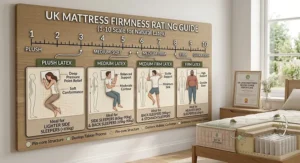
- Match firmness to your dominant sleep position. Side sleepers generally benefit from a softer feel around the 19–28 ILD range for pressure relief at the shoulder and hip, while back and front sleepers typically want firmer support in the 30–40 ILD range to avoid the lower back sinking too far.
- Check the actual latex depth, not just the total mattress height. A 25cm mattress with only 3cm of latex sitting over cheap foam is a very different product from one with a genuine 15–20cm latex core.
- Confirm your bed base is compatible. Latex needs airflow underneath it, so a solid, non-slatted platform base can undermine the material’s cooling benefits significantly.
- Look for independent certification, not brand claims. GOLS for organic content and OEKO-TEX for chemical safety are the two worth actually checking for, since either takes genuine third-party verification to earn.
- Factor in weight and delivery logistics. Solid latex mattresses are considerably heavier than equivalent memory foam ones, which matters for stairs, solo setup, and eventual disposal.
- Read the guarantee length as a durability signal. Brands confident in their latex durability, like Dunlopillo’s 15-year guarantees on premium ranges, are effectively backing up their own quality claims with money.
Latex Mattress vs Memory Foam: Which Wins for UK Sleepers?
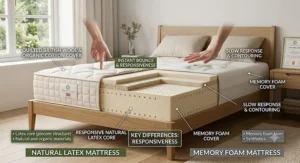
This is the comparison most people actually need answered before they even start browsing specific products. Memory foam contours slowly around your body, creating that “sinking in” hugged sensation, while latex pushes back immediately, meaning you sleep on top of the surface rather than inside it. For hot sleepers specifically, latex tends to win outright, its open-cell structure and typically more breathable construction sidestep the heat retention that memory foam is notorious for, a genuinely common complaint found throughout foam mattress reviews across the market.
Where memory foam still holds an edge is deep, isolated pressure relief for people in genuine chronic pain, since the slow, deep contouring can distribute weight in a way some sleepers find more immediately soothing, and it’s also typically cheaper to manufacture, which is reflected in lower price points across the market. Motion isolation is roughly comparable between the two materials when comparing similar quality tiers, though very cheap memory foam tends to edge out very cheap latex here.
For couples with different temperature preferences specifically, a comparison worth noting is durability under sustained body weight: latex resists permanent compression far better than memory foam over a 10 to 15 year span, which is why UK latex brands like Dunlopillo can credibly offer such long guarantees, whereas most budget memory foam mattresses are realistically rated for five to eight years before noticeable sagging sets in.
Common Mistakes When Buying a Latex Mattress
The single biggest mistake is judging firmness from a showroom test or a five-minute lie-down. Latex genuinely does soften and reveal its true pressure-relief characteristics after your body weight has been on it consistently for a couple of weeks, so a mattress that feels slightly too firm on day one often settles into exactly right by week three.
A second common error is ignoring the bed base entirely while obsessing over the mattress itself. Pairing a premium natural latex mattress with an old, solid, non-breathable divan base undermines the temperature regulation that’s often the entire reason someone chooses latex over memory foam in the first place. A third mistake worth flagging: assuming “natural” and “organic” mean the same thing. Natural latex simply means it’s derived from rubber tree sap rather than petrochemicals, while organic and GOLS-certified specifically means the rubber trees themselves were farmed without synthetic pesticides, they’re related but genuinely distinct claims, and only one of them requires independent certification to state legally.
Latex ILD Rating Explained: What the Numbers Actually Mean
ILD, or Indentation Load Deflection, is the industry measurement for how much force is required to compress a piece of latex foam by 25% of its thickness, and it’s effectively the closest thing latex has to an official firmness scale. Lower ILD numbers mean softer foam that compresses more easily under less pressure, while higher numbers mean firmer foam that resists compression more strongly.
As a rough guide across the market, soft latex generally sits around 19–24 ILD, medium latex around 25–31 ILD, and firm latex around 32–40 ILD and above, though manufacturers don’t always test or disclose this figure consistently, so treat published ILD numbers as a useful comparison tool rather than an exact science across brands. What most buyers overlook about ILD specifically is that it’s measured on a single flat piece of latex in laboratory conditions, not the finished, layered mattress you actually sleep on, so two mattresses using latex with the same ILD rating can still feel meaningfully different once wrapped in different quilting and cover materials. If a listing doesn’t publish an ILD figure at all, which is common even among the genuine natural latex products featured above, lean on the manufacturer’s plain-English firmness description alongside verified buyer feedback instead.
Natural Rubber Mattress vs Synthetic and Blended Latex: What’s the Difference
A natural rubber mattress, the traditional definition of a latex mattress, is made from latex sap tapped directly from rubber trees and processed via either the Dunlop or Talalay method. Synthetic latex, by contrast, is manufactured entirely from petrochemicals, specifically styrene-butadiene rubber, and while it can feel remarkably similar to natural latex when new, it degrades faster, tends to sleep warmer, and lacks the same naturally occurring hypoallergenic properties.
Blended latex, which mixes natural and synthetic material, typically at a 30–40% natural ratio, is genuinely the most common type sold across the UK market, sitting as a reasonable middle ground between the durability of pure natural latex and the lower cost of pure synthetic. As a rough rule of thumb worth remembering while browsing, a king size 100% natural latex mattress rarely comes in much under four figures, so if you’re seeing “100% natural latex” advertised at a price that looks closer to budget memory foam territory, it’s worth checking the small print or contacting the seller directly to confirm the actual natural content percentage before buying.
What to Expect: Real-World Performance
Specs on a page don’t tell you what actually happens the first week you sleep on latex, so here’s the translation. That instant, responsive, buoyant support latex is known for means you’ll notice far less “effort” getting in and out of bed, or repositioning mid-sleep, compared with memory foam, because the material springs back immediately rather than requiring your body to work against a slow-recovering surface.
Temperature-wise, expect a noticeably cooler sleep surface within the first few nights compared with dense memory foam, particularly on the more breathable, honeycomb-perforated options featured above. Edge support tends to be genuinely strong on solid latex-core mattresses, since there’s no separate, softer edge foam to compress under weight the way there often is on hybrid sprung mattresses. The trade-off most new latex sleepers notice is motion transfer during the first week, it’s excellent compared with springs but you may notice slightly more responsiveness to a partner’s movement than ultra-dense memory foam, which some couples adjust to instantly and others take a fortnight to stop noticing entirely.
Choosing Between a Latex Mattress Double and King Size
The double-versus-king decision genuinely isn’t just about room dimensions, it’s about how latex specifically performs at different widths. A latex mattress double, at 135cm wide, works well for single sleepers or couples who don’t mind close contact, and it’s also the size where budget natural latex options like the NAKEAH 100% Natural Latex Mattress offer the best value per square metre of genuine latex material.
A latex mattress king size, at 150cm wide, becomes genuinely worthwhile for couples specifically because latex’s responsive, springy nature means movement travels slightly more readily across the surface than it would on pocket springs, so the extra width meaningfully reduces the chance of feeling your partner shift position at 2am. This is precisely why the LBLhello Natural Latex Mattress is built and marketed specifically at king size rather than as a scaled-up double, the brand is explicitly targeting the couples’ market where that width difference matters most in practice.
Long-Term Cost & Maintenance
Latex’s real financial case only becomes obvious when you stop comparing sticker prices and start comparing cost per year of actual use. A £1,200 natural latex mattress that genuinely lasts 15 years works out to roughly £80 a year, whereas a £700 memory foam mattress realistically replaced every seven to eight years works out to a broadly similar, sometimes higher, annual cost once you factor in disposal and replacement hassle, despite the lower upfront price looking more attractive at the checkout.
Maintenance costs stay low throughout latex’s lifespan too: no specialist cleaning products are required beyond a standard breathable protector and occasional vacuuming, and because latex resists dust mites naturally, allergy sufferers often spend less on specialist bedding treatments over time compared with other mattress types. The main cost to budget for honestly is disposal at end of life, latex is heavier and bulkier than memory foam, so factor in either a mattress recycling service, which several UK latex retailers now offer, or a modest council collection charge, rather than assuming it’ll be a simple kerbside pickup.
✨ Ready to Upgrade Your Sleep?
🔍 Compare live pricing and current stock on any of the seven latex mattresses above before availability changes. A cooler, more responsive night’s sleep starts with getting this one decision right.
Latex Mattress Reviews: What the Pattern Across the Market Actually Shows
Rather than inventing a composite “typical customer,” it’s more honest to describe the pattern that shows up repeatedly across genuine latex mattress reviews researched for this guide. Temperature complaints, extremely common on memory foam review pages, are consistently rare on natural latex listings, which lines up with what the material science predicts. Durability praise tends to cluster around established brands like Dunlopillo specifically, reflecting decades of manufacturing refinement rather than a newer entrant simply getting lucky with a good batch.
The most consistent criticism across smaller, newer latex sellers on Amazon isn’t comfort, it’s the initial rubber smell some buyers report on unboxing, which independent testing consistently confirms is a harmless, natural characteristic of raw latex that fades within days rather than a defect. If you’re reading listings yourself, Sleep Foundation’s independent testing coverage is a genuinely useful cross-reference point for how latex mattresses perform against wider market testing standards, beyond any single seller’s own review section.
Frequently Asked Questions
❓ Is a latex mattress good for back pain?
❓ How long does a latex mattress last?
❓ Do latex mattresses sleep hot or cool?
❓ Is natural latex better than synthetic latex?
❓ Can you use a latex mattress topper instead of buying a new mattress?
Conclusion
Choosing the best latex mattress really comes down to being honest with yourself about three things: your actual budget ceiling, whether you’re testing the material for the first time or already know you love it, and how much genuine natural latex content you actually need versus want. For committed first-timers on a tight budget, the NAKEAH 100% Natural Latex Mattress or the Rymic Talatex Natural Dunlop Latex Mattress Topper remove almost all the financial risk from finding out whether latex suits you.
For couples ready to properly commit, the LBLhello Natural Latex Mattress in king size solves the temperature and motion-transfer complaints that typically drive people away from ageing memory foam beds, at a price that doesn’t require a loan. And for anyone treating this as a genuine long-term investment, prioritising allergy management, temperature control, and a mattress that will still perform well in a decade, the century-backed Dunlopillo range or the wool-wrapped, German-made 4Living 100% Natural Latex & Organic Cotton Mattress justify their higher price tags through material honesty rather than marketing gloss. Whichever you choose, pair it sensibly with a breathable, slatted base, and check the UK’s fire safety regulations guidance applies as expected to any mattress you buy, since compliant filling materials are a legal requirement for anything sold for UK home use. A better night’s sleep genuinely starts with getting the material right, and pairing that with sensible wind-down habits before bed will help you get the most out of whichever mattress you land on.
Recommended for You
- Latex Hybrid Vs Memory Foam Hybrid: 7 Best UK Picks for 2026
- Latex Hybrid Mattress: 7 Best Picks for Deeper Sleep in 2026
- Memory Foam Pocket Spring Mattress: 7 Best Hybrids UK 2026
Disclaimer: This article contains affiliate links. As an Amazon Associate, I earn from qualifying purchases. If you purchase products through these links, we may earn a small commission at no additional cost to you.
✨ Found this helpful? Share it with your friends! 💬🤗
