
In This Article
Here’s an odd little fact: only around 7% of us actually sleep face-down, yet stomach sleepers are consistently the group mattress brands seem to forget exists. Walk into any bed shop and you’ll be steered towards “medium” and “medium-firm” beds built with side sleepers in mind — plush, sink-in, cloud-like. Lovely if you’re on your side. Rather less lovely if you’re lying flat on your front, because that same softness lets your hips drop, your lower back arch, and your spine twist into a shape it was never designed to hold for eight hours.

So what is a mattress for stomach sleepers? In short, it’s a firm-to-extra-firm mattress — usually rated 7 out of 10 or higher on the industry firmness scale — built with a supportive core (pocket springs, dense foam, or both) that keeps the hips level with the shoulders rather than letting them sink below the spine’s natural line.
This matters more than most people realise. Lying face-down on a soft surface forces the lower spine into extension, and over time that repeated arching contributes to the stiff, achy mornings a lot of front sleepers just assume are normal. It isn’t a niche concern, either — back pain, particularly lower back pain, is very common and usually improves within a few weeks but can sometimes last longer or keep coming back, according to the NHS, and your sleep surface is one of the few variables you can actually control.
In this guide, I’ve dug through real product specs, verified customer feedback, and independent testing data to shortlist seven mattresses genuinely built for the way front sleepers rest — spanning tight budgets, mid-range hybrids, and properly premium builds. No fluff, no invented reviews, just the honest analysis you’d want before spending several hundred pounds on something you’ll be lying on for the next decade.
Quick Comparison Table
| Mattress | Firmness | Type | Price Bracket | Best For |
|---|---|---|---|---|
| REM-Fit 500 Ortho Hybrid | Firm (8-9/10) | Hybrid | Mid-range | Best overall for stomach and back sleepers |
| Silentnight Amsterdam Miracoil Ortho | Extra Firm | Pocket-sprung | Budget | Tight-budget extra-firm support |
| Sareer Matrah Pocket 1000 | Firm | Pocket-sprung | Budget | Cheapest genuine pocket-spring option |
| Simba Hybrid Original | Medium-Firm | Hybrid | Mid-range | Hot sleepers who mostly lie face-down |
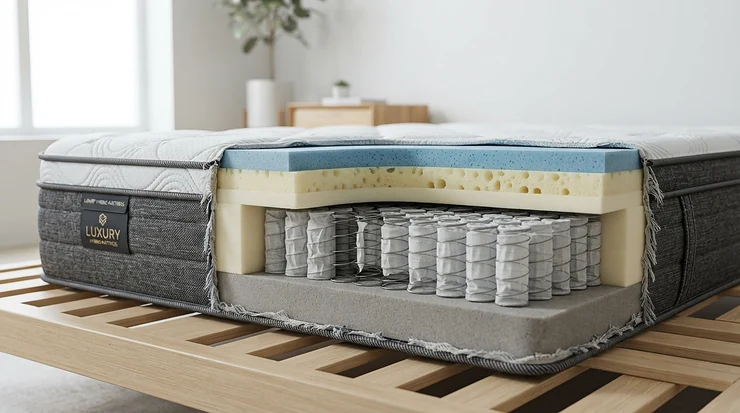
| DreamCloud Luxury Hybrid | Medium-Firm (6.5-8/10) | Hybrid | Premium | Couples wanting cushioning with real support |
| Panda Hybrid Bamboo Pro | Medium-Firm to Firm | Hybrid | Premium | Eco-conscious, allergy-prone sleepers |
| Emma Original | Medium (5/10) | All-foam/hybrid | Budget-mid | Lighter-weight front sleepers only |
Looking at this table, the pattern is fairly clear: the closer a mattress sits to that 7-9/10 firmness range, the more reliably it suits genuine, committed front sleeping, while anything sitting at “medium” (like the standard Emma Original) needs a caveat about body weight attached to it. Price doesn’t map neatly onto firmness either — the budget-bracket Silentnight Amsterdam Miracoil Ortho is rated firmer than several mattresses costing three times as much. If you take one thing from this table, let it be that firmness rating matters more than price tag when you sleep on your front.
A quick tap on the share button helps other stomach sleepers find honest advice too — thanks for reading this far! 💬
Top 7 Mattresses for Stomach Sleepers: Expert Analysis
Before the individual write-ups, here’s how the seven compare side by side on the numbers that actually affect a front sleeper’s night:
| Mattress | Depth | Trial Period | Warranty | Spring/Foam Count |
|---|---|---|---|---|
| REM-Fit 500 Ortho Hybrid | 25cm | 100 nights | 15 years | Tall pocket springs + memory foam |
| Silentnight Amsterdam Miracoil Ortho | 24cm | 60 nights | 5 years | Miracoil zoned open-coil springs |
| Sareer Matrah Pocket 1000 | ~22cm | 60 nights | 5 years | 1,000+ pocket springs |
| Simba Hybrid Original | 25cm | 200 nights | 10 years | Up to 2,500 Aerocoil micro-springs |
| DreamCloud Luxury Hybrid | 28cm | 365 nights | Lifetime | Individually wrapped coils |
| Panda Hybrid Bamboo Pro | 25-27cm | 100 nights | 10 years | Up to 1,500 pocket springs |
| Emma Original | 22-25cm | 100-200 nights | 10 years | Multi-layer foam (some variants add springs) |
A longer trial period genuinely matters here, because firmness is one of those things you can’t judge from a spec sheet — the DreamCloud Luxury Hybrid‘s 365-night trial gives your body nearly a full year to decide if that support is right, while the Silentnight Amsterdam Miracoil Ortho‘s 60-night window means you’ll want to be fairly confident going in. Warranty length tends to track construction quality too: pocket-sprung and hybrid builds with 10+ year guarantees are typically engineered to resist the sagging that ruins spinal support over time, whereas cheaper open-coil designs may need replacing sooner.
1. REM-Fit 500 Ortho Hybrid Mattress — best overall firm support for stomach sleepers
The clue is in the name: this is an orthopaedic hybrid built specifically to stop hips from sinking, and independent testing rated it a genuinely firm 8-9 out of 10. That firmness comes from tall, motion-absorbing pocket springs topped with a comparatively thin layer of memory foam — enough to soften the surface without letting your midsection drop below your shoulder line.
At 25cm deep with a four-layer construction, the spring core does the heavy lifting while the foam layer prevents the “sleeping on a plank” sensation some pure-spring beds create. Reviewers who sleep on their backs and fronts report excellent lumbar support and strong edge-to-edge stability, which matters if you tend to sprawl. What most buyers overlook is that the same firmness making it brilliant for front sleepers makes it a poor match for petite side sleepers, who reported it felt too hard on the hips and shoulders.
Aggregated reviewer sentiment consistently flags brilliant motion isolation and genuine back-pain relief, alongside honest complaints that the foam layer feels a touch thinner than the marketing suggests.
Pros:
- ✅ Purpose-built firmness ideal for stomach and back sleepers
- ✅ Excellent motion isolation for shared beds
- ✅ Strong edge support prevents roll-off
Cons:
- ❌ Too firm for most dedicated side sleepers
- ❌ Foam comfort layer feels thinner than expected
Expect to pay in the mid-range bracket, roughly £500-£900 depending on size and current promotions — check current price for the latest figure. Given the 15-year guarantee, this represents strong long-term value for committed front sleepers.

2. Silentnight Amsterdam Miracoil Ortho Mattress — best budget extra-firm pick
If your budget is tight and your priority is pure, no-nonsense firmness, the Silentnight Amsterdam Miracoil Ortho delivers exactly what its name promises. Silentnight’s Miracoil system uses zoned open-coil springs concentrated through the centre third of the mattress, which is precisely where a stomach sleeper’s hips need the most resistance against sinking.
At 24cm deep with an Extra Firm rating — Silentnight’s firmest classification — this single-sided mattress pairs the spring zone with a thin Eco Comfort Fibre layer, giving just enough cushioning to avoid feeling like a park bench while still keeping the spine level. Being single-sided means you rotate rather than flip it, which is genuinely easier for most households, though it does mean the top layer takes all the wear.
Aggregated review sentiment is notably consistent: buyers with back issues and heavier body types repeatedly praise the firmness for reducing “roll-together” with a partner, though a small number of reviewers found the coils audible when their partner shifted position.
Pros:
- ✅ Genuinely extra-firm, zoned spinal support
- ✅ NBF-approved and hypoallergenic build
- ✅ Strong value at a genuinely budget price point
Cons:
- ❌ Some reviewers report audible springs
- ❌ Shorter 60-night trial than pricier rivals
Price sits firmly in the budget bracket — think under £300 for most sizes, making it one of the most affordable genuinely firm options on this list.
3. Sareer Matrah Pocket 1000 Firm Mattress in a Box — best budget pocket-sprung alternative
Where the Silentnight relies on open-coil springs, the Sareer Matrah Pocket 1000 takes the pocket-spring route at a near-identical price point, which is worth knowing because pocket springs generally contour more precisely to individual body shape than open-coil systems. Each of its 1,000+ springs sits in its own cloth pocket, responding independently to weight rather than moving as one connected unit.
The build is straightforward: a firm pocket-spring interior, white fibre fillings for a touch of surface comfort, and a hand-tufted damask cover to keep everything in place. Being double-sided — rotate and flip, rather than rotate only — is a genuine practical advantage over most modern bed-in-a-box mattresses, since you can even out wear across both surfaces over its lifespan.
Here’s what’s honest to flag: one verified reviewer specifically noted it was “not quite as stiff as I would have liked,” which matters for anyone expecting Silentnight-level extra-firmness. Reviewers otherwise consistently praise its comfort-to-price ratio, with a 4.5-star aggregate rating across independent retailer reviews.
Pros:
- ✅ Individually pocketed springs for targeted support
- ✅ Double-sided design extends usable lifespan
- ✅ Vacuum-packed delivery keeps costs low
Cons:
- ❌ Firmness runs slightly softer than “firm” branding suggests
- ❌ No reinforced edge support
Budget-bracket pricing throughout the range, generally comparable to or slightly below the Silentnight, with a 5-year warranty backing it up.
4. Simba Hybrid Original Mattress — best for hot sleepers who mostly lie face-down
The Simba Hybrid Original earns its place here with a caveat worth taking seriously, because honesty matters more than a tidy recommendation: independent testing found that while this mattress performs superbly for back and side sleeping, dedicated stomach sleepers noted the firmness didn’t always support pressure points as effectively as spring-forward alternatives. That’s not a dealbreaker — it’s a genuinely medium-firm bed that suits average-to-heavier stomach sleepers who prioritise temperature regulation above all else — but lighter-framed front sleepers may find it doesn’t resist sinkage quite as decisively as the REM-Fit or Silentnight above.
What it does exceptionally well is stay cool. The graphite-infused Simbatex foam layer, working alongside up to 2,500 titanium-alloy Aerocoil micro-springs, earned a full 5-out-of-5 rating for edge support in professional testing, plus consistently strong marks for breathability — a genuine advantage if night sweats are what’s disrupting your sleep, rather than spinal alignment alone.
Reviewers overwhelmingly praise the cooling performance and edge strength; the most common complaint across aggregated feedback was a loose-fitting cover on some units, a cosmetic rather than structural issue.
Pros:
- ✅ Outstanding temperature regulation via graphite foam
- ✅ Class-leading edge support for sprawling sleepers
- ✅ 200-night trial, longest among the mid-range picks here
Cons:
- ❌ Lighter stomach sleepers may find pressure relief inconsistent
- ❌ Some units reported a loose-fitting cover
Mid-range pricing, typically in the £600-£900 bracket for a king size depending on promotions — worth watching for Simba’s frequent sales.
5. DreamCloud Luxury Hybrid Mattress — best premium hybrid for stomach and back sleepers
DreamCloud rates its own mattress at a moderate 6.5 out of 10 on firmness, but independent testers consistently found it firmer in practice — closer to 7.5-8 out of 10 — which is exactly the kind of gap between marketing and measured reality this guide exists to flag. In testing, a stomach-sleeping panellist reported maintaining spinal alignment through the night “without any dipping around his hips,” which is precisely the outcome a front sleeper is paying for.
Constructed with individually wrapped coils beneath layers of gel memory foam and finished with a cashmere-blend cover, the 28cm profile is the deepest on this list. That extra depth translates into a genuinely plush first impression that still resolves into firm support once your weight settles — the springs, notably, are what independent reviewers flagged as less firm than rival hybrids, so this is a mattress that leans on foam feel more than pure spring resistance.
The trade-off is body weight: reviewers over roughly 16 stone, or anyone actively seeking a sturdier, more resistant surface, may find the cushioning too generous for strict front sleeping.
Pros:
- ✅ Rated firmer in independent testing than the brand’s own scale
- ✅ Outstanding temperature regulation and motion isolation
- ✅ Industry-leading 365-night trial and lifetime warranty
Cons:
- ❌ Springs feel softer than rival hybrids in this price bracket
- ❌ Less suitable for heavier-set stomach sleepers
Sits in the premium bracket — expect a noticeably higher outlay than the budget or mid-range picks, though the lifetime warranty offsets the higher upfront cost over a decade-plus of use.

6. Panda Hybrid Bamboo Mattress Pro — best eco-friendly firm pick
For stomach sleepers who also care where their mattress comes from, the Panda Hybrid Bamboo Mattress Pro pairs orthopaedic-grade support with genuinely eco-conscious materials — bamboo-infused open-cell BioCell foam for breathability, a high-density OrthoAlign foam layer for contouring, and up to 1,500 individually pocketed springs across seven support zones.
Officially rated medium-firm, real customer feedback tells a slightly firmer story: multiple verified reviewers specifically described it as firmer than expected, with one noting “we find it a bit too firm” while acknowledging they were “getting used to it.” That’s genuinely useful signal for a front sleeper — a mattress that skews firmer than its own marketing label is generally good news for spinal support, even if it means a longer adjustment period for softer-mattress converts.
The bamboo cover’s temperature-regulating properties and hypoallergenic credentials are well documented across independent retailer reviews, with a strong 4.6-4.9 star aggregate rating depending on model variant, and the 10-year guarantee reflects genuine confidence in the pocket-spring build quality.
Pros:
- ✅ Naturally hypoallergenic bamboo-infused cover
- ✅ Firmer in practice than its “medium-firm” label suggests
- ✅ FSC-certified materials and UK manufacturing
Cons:
- ❌ Some reviewers report an initial chemical smell after unboxing
- ❌ Takes 3-5 days to fully expand and settle
Premium pricing across the range, generally £650-£1,550 depending on size and whether you choose the standard or Pro build — the Pro’s extra spring count justifies the step up for genuinely committed front sleepers.
7. Emma Original Mattress — best for lighter-weight stomach sleepers on a budget
The Emma Original is one of the UK’s best-selling bed-in-a-box mattresses, and it deserves its place here with an important honesty check attached: multiple independent testers rate it a genuine medium 5 out of 10 on firmness, and specifically flag that this “won’t be supportive enough for some back/stomach sleepers, and especially those of heavier body weight.” I’m including it precisely because it’s a common Amazon purchase for stomach sleepers who don’t realise this caveat exists — and you deserve to know it before you buy.
Where it does work well for front sleeping is at the lighter end of the body-weight spectrum. One independent testing panel specifically noted their stomach-and-back-sleeping tester, weighing around 119lbs (roughly 8.5 stone), found the Emma comfortable and well-aligned. Its three-to-five-layer foam construction (with newer variants adding a pocket-spring core for a firmer “Medium to Firm” feel) delivers excellent pressure relief and class-leading motion isolation for couples.
Aggregated customer sentiment is broadly excellent for comfort and value, with the most consistent honest complaint being that it sleeps a little warm and offers middling edge support.
Pros:
- ✅ Excellent value and widely available on Amazon UK
- ✅ Outstanding motion isolation for couples
- ✅ Newer “Lite” hybrid variant offers a firmer feel
Cons:
- ❌ Standard model too soft for heavier stomach sleepers
- ❌ Sleeps warmer than hybrid or spring-based rivals
Budget-to-mid-range pricing, generally the most competitively priced named mattress brand on this list — a sensible pick specifically for lighter-framed front sleepers rather than a universal recommendation.
Practical Usage Guide: Breaking In and Maintaining a Firm Mattress
Buying the right firmness is only half the job — how you set it up in the first month genuinely affects how supportive it feels. Bed-in-a-box mattresses are compressed for shipping, and most manufacturers recommend allowing 24-72 hours for full expansion before judging the feel; lying on it too soon can make a firm mattress seem unevenly supportive simply because the layers haven’t settled.
Base choice matters more than people expect. A slatted base with wide gaps can let a firm mattress flex unevenly along the slats, subtly undermining the very support you paid for — a solid or close-slatted base preserves the intended firmness far better. If you’ve bought a double-sided mattress like the Sareer Matrah Pocket 1000, rotate it head-to-foot every three months and flip it twice a year to prevent uneven compression forming around your usual sleeping spot.
The most common first-30-days mistake is quitting too early. A genuinely firm new mattress can feel almost aggressively hard for the first week or two simply because your body hasn’t adjusted from a softer bed — this is normal and typically resolves within two to three weeks, which is exactly why trial periods exist. Avoid layering a soft topper on top during this adjustment window; it defeats the purpose of buying a firm mattress in the first place and should only be added afterward if genuinely needed for surface comfort.

Real-World Scenarios: Who Actually Needs a Stomach Sleeping Mattress
Not every “stomach sleeper” has identical needs, so here are three genuinely different profiles matched to the picks above.
Take a 24-year-old renting a first flat, sleeping on their front most nights, budget capped around £250. The Sareer Matrah Pocket 1000 or Silentnight Amsterdam Miracoil Ortho make sense here — both deliver genuine firmness without the premium hybrid price tag, and the shorter expected tenancy length makes a lower upfront cost more sensible than a decade-long investment.
Then there’s a couple in their late 30s, one a hot-sleeping side sleeper, the other a committed stomach sleeper, sharing a super-king. This is a genuinely tricky combination, and it’s precisely the scenario the Simba Hybrid Original was designed to solve — its cooling technology satisfies the side-sleeping partner’s temperature needs, while its medium-firm hybrid build offers workable (if not perfect) support for the front sleeper, backed by a 200-night trial to confirm the compromise actually works for both of you.
Finally, picture someone in their 50s managing mild lower-back stiffness, front-sleeping through habit rather than preference, with a premium budget available. The REM-Fit 500 Ortho Hybrid or DreamCloud Luxury Hybrid both suit this profile well, though for genuinely stubborn back stiffness the firmer, orthopaedic-labelled REM-Fit is the more targeted choice.
Problem → Solution: Fixing Common Front-Sleeping Complaints
Neck strain from twisting to breathe is probably the single most common front-sleeper complaint, and the fix has nothing to do with the mattress at all — swap to the thinnest pillow you own, or none, since a thick pillow forces the neck into an angle it wouldn’t naturally hold.
Lower back aching on waking usually means the mattress is too soft, letting the pelvis sink below the shoulder line overnight. If you’re currently on anything rated medium or softer, moving to a firm pick like the REM-Fit 500 Ortho Hybrid or Silentnight Amsterdam Miracoil Ortho directly addresses this by keeping the hips level rather than dropped.
Overheating while face-down, which traps body heat against the mattress surface more than other positions do, points towards the Simba Hybrid Original‘s graphite-cooling technology or the Panda Hybrid Bamboo Pro‘s naturally breathable bamboo cover rather than a dense all-foam build.
Finally, a persistent “sinking in the middle” sensation after a year or two of ownership usually signals a mattress reaching the end of its supportive life — most mattresses need replacing every seven to ten years, and if you’re feeling premature sagging on a spring-based mattress specifically, rotating it more frequently can extend usable life before replacement becomes unavoidable.
How to Choose a Firm Mattress for Stomach Sleeping
Getting this decision right comes down to working through the same criteria a specialist retailer would ask about, in this order:
- Confirm your dominant position first. If you switch between your front and side through the night, a strict extra-firm mattress may feel uncomfortable on your hips during side phases — a medium-firm hybrid like the Simba Hybrid Original is the safer middle ground.
- Factor in body weight honestly. Lighter sleepers (under roughly 10 stone) can get adequate support from a firm mattress like the Emma Original‘s newer hybrid variant; heavier sleepers generally need a genuinely firm-to-extra-firm rated build such as the REM-Fit 500 Ortho Hybrid.
- Check the trial period, not just the firmness rating. Firmness numbers are inconsistently applied across brands, so a longer trial like DreamCloud’s 365 nights gives you real-world time to judge fit.
- Prioritise a solid or close-slatted base. Even the firmest mattress underperforms on a base that flexes unevenly.
- Consider temperature alongside firmness. Firm foam-heavy builds can sleep warmer than spring-forward hybrids — a genuine consideration if you already run hot at night.
- Read aggregated reviews for your specific weight bracket, not just the star rating average, since firmness perception varies enormously by body type.
- Budget for a mattress protector from day one, since most manufacturer warranties are voided by stains, and firm mattresses in particular are harder to spot-clean without a protective layer.
As Which? and other independent testing bodies consistently note, factoring in body weight alongside dominant sleeping position remains the single most reliable way to narrow down mattress firmness before you buy.
Prone Sleeping Position: The Biomechanics Explained
Sleeping face-down — the prone sleeping position, in clinical terms — is genuinely the rarest of the major sleep postures, and there’s a reason it gets less design attention from mattress brands as a result. Interestingly, one academic study on sleeping position and mattress type found that the prone sleeping position was reported by only around 6% of subjects studied, with the majority favouring side or combined side-and-back positions.
What’s biomechanically distinct about lying prone is the lack of any natural counter-support for the lumbar spine. When you’re on your back, the mattress and a knee pillow can maintain the spine’s natural curve; on your side, a pillow between the knees keeps the pelvis level. Face-down, there’s no equivalent adjustment available — the mattress surface itself is doing all the work of preventing the lower back from arching, which is precisely why firmness under the hips and midsection matters so much more for this position than any other.
Interestingly, that same research found that sleeping position itself did not correlate strongly with the occurrence of lower back pain across the study population — reinforcing that it’s genuinely the mattress and support surface doing the heavy lifting here, not the position alone. In other words: you don’t necessarily need to retrain yourself out of front sleeping, provided your mattress is doing its job.
Front Sleeper Spine Alignment: What Good Support Actually Looks Like
Picture your spine from the side while lying face-down: ideally, it should trace a roughly straight, level line from your shoulders down to your hips, with no dip in the middle and no arch upward. That’s front sleeper spine alignment in a nutshell, and it’s the single test worth applying to any mattress you’re considering.
In practice, this means the mattress needs to resist compression specifically under the pelvis and abdomen — the heaviest, most concentrated part of the body in this position — while still allowing enough give at the shoulders and lower legs to avoid pressure points. This is exactly why pure memory foam mattresses, brilliant as they are for side sleeping, tend to underperform here: their signature deep contouring is precisely what lets the hips sink too far. Hybrid and pocket-sprung builds like the REM-Fit 500 Ortho Hybrid and Silentnight Amsterdam Miracoil Ortho counter this with a firmer, more resistant core specifically engineered to distribute weight evenly rather than contour deeply.
A genuinely quick self-test: lie face-down on your current mattress and have someone slide a flat hand under the small of your back. If there’s a noticeable gap, the mattress is too firm for your build; if their hand meets resistance and your hips feel visibly elevated above your shoulder line, it’s too soft.

Lumbar Hyperextension and Sleep: Why It Matters for Front Sleepers
Lumbar hyperextension — an excessive backward arch in the lower spine — is the specific mechanical problem a soft mattress creates for stomach sleepers, and it’s worth understanding why it happens rather than just accepting the discomfort as normal.
When the mattress sinks too far under the hips and abdomen while the shoulders and legs remain relatively supported, the lower spine is pulled into an arched position it wouldn’t naturally hold. Sustained over seven or eight hours, night after night, this repeated hyperextension places extra load on the small facet joints at the back of each vertebra rather than the discs that are built to bear weight, which is a common contributor to the specific ache many front sleepers report in the small of the back on waking.
The fix is mechanical, not postural: a firmer support surface prevents the initial sinking that triggers the arch in the first place. This is precisely the mechanism behind every firm recommendation in this guide — it’s not about making sleep less comfortable, it’s about removing the structural cause of the hyperextension before it happens.
Firm Mattress for Front Sleepers vs Medium Mattresses: The Real Difference
| Factor | Firm Mattress | Medium Mattress |
|---|---|---|
| Hip sinkage | Minimal — hips stay level with shoulders | Noticeable — hips can dip below shoulder line |
| Best body weight range | All weights, especially 12+ stone | Under roughly 11 stone |
| Pressure relief | Lower at shoulders/knees | Higher, but at the cost of alignment |
| Long-term spinal support | Strong | Weaker for strict front sleepers |
| Example pick | REM-Fit 500 Ortho Hybrid | Emma Original |
The clearest takeaway from this comparison is that a firm mattress for front sleepers isn’t simply a harsher version of a medium one — it’s solving a genuinely different structural problem. A medium mattress like the Emma Original prioritises pressure relief through contouring, which works beautifully for side sleepers but actively undermines spinal alignment for anyone sleeping face-down. Weight is the deciding variable more than personal preference: even someone who finds a firm mattress initially less “plush” will typically wake with less stiffness than on a softer alternative, once their body has adjusted over the first few weeks.
Common Mistakes When Buying a Mattress for Stomach Sleepers
The single biggest mistake is trusting a brand’s own firmness number without cross-referencing independent reviews — as several products in this guide demonstrate, official ratings and independently tested firmness can differ by a full point or more on the 10-point scale.
A close second is buying based on partner compromise without checking individual trial policies. If you’re a firm-mattress front sleeper and your partner prefers something softer, check whether the retailer allows exchanges — some hybrid mattresses ship with dual-firmness options specifically to solve this, and it’s worth asking before you commit to a single-firmness compromise mattress neither of you loves.
Ignoring the base is another frequent oversight: pairing a genuinely firm mattress with an old, sagging divan base effectively cancels out the firmness you paid for. Finally, judging firmness within the first three nights rather than allowing the full adjustment period is a common reason people return perfectly good mattresses, mistaking normal settling-in stiffness for the wrong purchase entirely.
Safety, Regulations, and Fire Compliance for UK Mattresses
Every mattress sold legally in the UK, including every product featured in this guide, must comply with the Furniture and Furnishings (Fire) (Safety) Regulations 1988 (as amended), which governs fire-resistance standards for fillings, covers, and construction of domestic mattresses sold in England, Scotland, and Wales. In practice, this means every reputable mattress — including all seven featured here — carries a permanent label confirming compliance, and it’s genuinely worth checking for this label on any mattress you buy secondhand, since older or non-compliant stock can occasionally slip through less regulated resale channels.
Beyond fire safety, National Bed Federation (NBF) approval, which several products in this guide carry, is a useful secondary quality marker — it confirms the manufacturer meets recognised UK industry standards for construction and material quality, though it isn’t a legal requirement in the way fire safety compliance is. For allergy-prone sleepers, hypoallergenic certification (present on the Silentnight Amsterdam Miracoil Ortho and Panda Hybrid Bamboo Pro) is worth prioritising, since dust mites thrive particularly well in older, uncovered mattress fillings.

Frequently Asked Questions
❓ What firmness is best for a stomach sleeper?
❓ Can a mattress that's too soft cause back pain for front sleepers?
❓ Is memory foam good for stomach sleepers?
❓ How long does it take to adjust to a firmer mattress?
❓ Do I need a special mattress if I sleep on both my front and side?
Conclusion
If there’s one honest takeaway from everything above, it’s that firmness genuinely earns its reputation for stomach sleepers — but the right number on that scale depends heavily on your body weight, your budget, and whether you share a bed with someone who sleeps completely differently. The REM-Fit 500 Ortho Hybrid remains the most purpose-built option on this list for committed front sleepers seeking proper spinal support without a premium price tag, while the Silentnight Amsterdam Miracoil Ortho and Sareer Matrah Pocket 1000 prove genuine firmness doesn’t require a luxury budget. At the premium end, the DreamCloud Luxury Hybrid and Panda Hybrid Bamboo Pro add cushioning and eco-conscious materials without sacrificing the underlying support a front sleeper actually needs.
Whichever you choose, remember that a mattress for stomach sleepers is only doing its job properly when your hips stay level with your shoulders through the night — everything else, from cooling technology to eco credentials, is a genuine bonus layered on top of that fundamental requirement.
Recommended for You
- Firm vs Medium Orthopaedic Mattress: 7 Best UK Picks (2026)
- Firm Orthopaedic Mattress: 7 Proven Picks for Bad Backs (2026)
- Orthopaedic Mattress for Heavy Person: 7 Best UK Picks 2026
Disclaimer: This article contains affiliate links. As an Amazon Associate, I earn from qualifying purchases. If you purchase products through these links, we may earn a small commission at no additional cost to you.
✨ Found this helpful? Share it with your friends! 💬🤗
