
In This Article
Here’s a truth nobody prints on the mattress label: most “firm” mattresses on the UK high street were never built with a heavier body in mind. They’re firm the way a new pair of trainers is comfortable — for about six months. Then the middle dips, the edges collapse, and you’re waking up with the exact ache you bought the thing to avoid. Finding a genuine orthopaedic mattress for heavy person use isn’t about buying “the firmest one in the shop.” It’s about construction — spring gauge, foam density, edge reinforcement, and a weight rating the manufacturer is actually willing to put in writing.
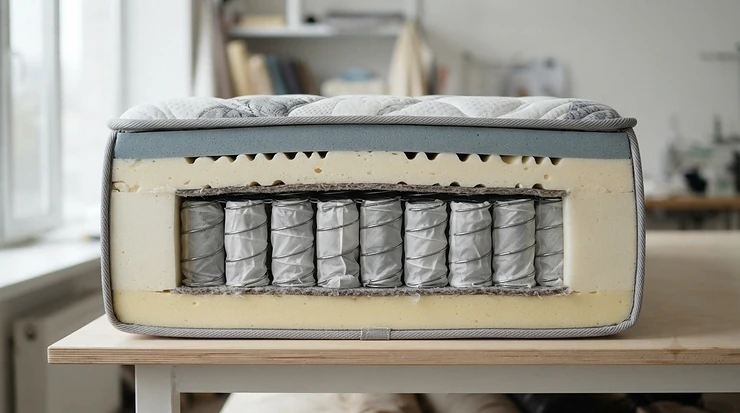
So, what is an orthopaedic mattress for a heavy person? It’s a mattress engineered with heavier-gauge springs, higher-density support foams, and reinforced edges to maintain spinal alignment and resist premature sagging under greater body weight — typically rated to support 18–30+ stone per sleeper, well beyond standard mattress specifications.
That distinction matters because the consequences of getting it wrong aren’t cosmetic. A mattress that sags at the hips night after night pulls the spine out of neutral alignment, and back pain, particularly lower back pain, is one of the most common health complaints in the UK, often triggered or worsened by poor support while sleeping. This guide breaks down seven real, currently available mattresses — budget, mid-range, and genuinely heavy-duty — with honest analysis of specs, aggregated review sentiment, and where each one actually falls short. No fluff, no invented five-star quotes, just what the research shows.
Quick Comparison Table
| Mattress | Type | Weight Support | Price Range | Best For |
|---|---|---|---|---|
| Silentnight Miracoil Ortho Mattress | Open coil, extra firm | No official rating; heavier-gauge coils | £150–£300 | Budget back sleepers |
| Sareer Matrah Orthopaedic Memory Mattress | Open coil + memory foam | No official rating | £150–£300 | Budget-conscious UK-made buyers |
| Vesgantti 10.3 Inch Hybrid Mattress | 7-zone pocket spring + foam | No official rating | £170–£320 | Mid-range value hybrid |
| REM-Fit 500 Ortho Hybrid | Zoned pocket spring hybrid | Up to 20 stone per sleeper | £300–£550 | Side sleepers wanting zoned support |
| Simba Hybrid Pro | Pocket spring + foam hybrid | Up to 18 stone per sleeper | £700–£1,300 | All-round comfort and cooling |
| Big Brand Beds Platinum Orthopaedic 2000 | Extra firm open coil, reinforced | Up to 30 stone per sleeper | £600–£1,300 | Genuinely heavy sleepers, 20st+ |
| Purple Hybrid | Hyper-Elastic Grid + coil hybrid | No official rating | £1,000–£1,800 | Pressure relief on a premium budget |
Looking at the spread above, there’s a real gap between mattresses that are labelled orthopaedic and mattresses that are actually tested for higher weight capacities. Only two of the seven — the REM-Fit 500 Ortho Hybrid and the Big Brand Beds Platinum Orthopaedic 2000 — publish a specific per-sleeper weight figure, and that transparency alone tells you something about how seriously each brand has engineered for this use case. If you’re over roughly 20 stone, that detail should weigh more heavily in your decision than the word “orthopaedic” printed on the box.
💬 Just one click — help others make better buying decisions too!😊
What Is an Orthopaedic Mattress for a Heavy Person?
An orthopaedic mattress for a heavy person is built around three things standard mattresses skimp on: spring gauge, foam density, and edge support. A “normal” open coil mattress might use 13–14 gauge wire; heavy-duty orthopaedic constructions typically drop to a thicker 12–12.5 gauge, which sounds like a small technical difference but translates into a mattress that resists compression instead of bottoming out under sustained weight. Foam layers follow the same logic — cheaper mattresses use foam rated around 25–30kg/m³ density, while genuinely supportive builds use 40kg/m³ or higher, which resists the “memory foam hug” turning into a permanent dent.
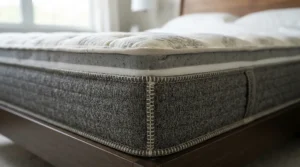
The other piece people overlook is edge support. A mattress that sags at the perimeter effectively shrinks the usable sleeping surface, which matters enormously if you’re a heavier sleeper who relies on the edge to sit up or get out of bed without the whole structure lurching. Reinforced border wires, foam-encapsulated edges, or additional rodding at the perimeter are the features to look for — not just the word “firm” on the packaging.
Top 7 Orthopaedic Mattresses for Heavy People: Expert Analysis
Coverage below spans budget open-coil options through to genuinely heavy-duty, reinforced constructions rated for the higher end of the weight spectrum, so whatever your budget or body weight, there’s a realistic comparison point.
1. Silentnight Miracoil Ortho Mattress — best budget pick for back sleepers
The standout here is the Miracoil spring system itself — a zoned, continuous coil design that Silentnight has refined for decades specifically to reduce partner disturbance and support the lumbar region.
With 780 springs and a 23cm profile, this is a genuinely firm mattress rather than a “firm-ish” one; the open coil construction, combined with EcoComfort fibre fillings, gives back and front sleepers real resistance rather than sink. What that firmness means in practice is less midnight readjustment because your hips aren’t dropping below shoulder level, which is the classic mechanism behind morning lower-back stiffness. Silentnight doesn’t publish an official weight capacity for this range, which is a fair criticism, but the coil gauge and hand-tufted construction put it a step above generic budget orthopaedic mattresses at a similar price point. This is best suited to buyers under roughly 18 stone who want proven firm support without paying hybrid prices; heavier buyers should look further down this list.
Reviewers consistently report satisfaction with the firmness level and note the mattress genuinely eased hip and shoulder pain within the first few weeks, though a recurring theme is that it runs hot without a breathable topper. Being an NBF-approved, UK-made mattress also adds a layer of manufacturing accountability that imported budget options can’t match.
Pros:
- ✅ Zoned Miracoil springs support the lumbar region specifically
- ✅ Genuinely firm feel rather than marketing-only firmness
- ✅ NBF-approved, hand-tufted, manufactured in the UK
Cons:
- ❌ No published weight capacity for heavier sleepers
- ❌ Reviewers note it sleeps warm without additional bedding
Prices sit in the £150–£300 range depending on size, at the time of research — solid value if you’re under 18 stone, though not the mattress to stretch beyond that.

2. Sareer Matrah Orthopaedic Memory Mattress — best UK-made budget hybrid support
What stands out immediately is the combination of traditional open coil springs with a memory foam comfort layer, giving this budget mattress a hybrid feel most single-material mattresses at this price can’t match.
The open coil base uses hourglass-shaped springs connected by helical wires, a construction method chosen specifically for durability under repeated loading rather than pure comfort. Layered on top is a memory foam section designed to reduce pressure at the shoulders and hips, meaning you get spring-based support underneath and contouring above rather than having to choose one or the other. Based on the spec comparison with similar budget hybrids, the medium-firm rating makes this a reasonable middle-ground pick for sleepers who find pure open-coil mattresses too unforgiving but don’t want to commit to full memory foam. Sareer doesn’t advertise a specific weight limit, so treat this as suitable for lighter-to-moderate end of the heavier weight range rather than the top end.
Aggregated customer feedback highlights the comfort of the memory layer and ease of setup from the vacuum-packed delivery, with a recurring complaint being that the mattress needs several days to fully expand and off-gas its new-foam smell before it feels right.
Pros:
- ✅ Hybrid open coil plus memory foam construction
- ✅ Manufactured in the UK with a five-year warranty
- ✅ Vacuum-packed delivery is straightforward to set up
Cons:
- ❌ No official weight capacity published by Sareer
- ❌ New-mattress odour and expansion time noted by buyers
Expect prices in the £150–£300 range across sizes at the time of research, making it a genuine budget contender for lighter members of the heavier weight bracket.
3. Vesgantti 10.3 Inch Hybrid Mattress — best value 7-zone pocket spring hybrid
The seven-zone pocket spring layout is the headline feature — individually wrapped springs arranged in zones that target the shoulders, lumbar, and hips differently rather than treating the whole mattress as one uniform surface.
What that zoning means in real terms is firmer support exactly where a heavier body needs it (hips and lower back) while still allowing some give at the shoulders, which reduces the “flat board” feel some heavy-duty mattresses have. Four layers of foam sit above the coil unit, including gel-infused and egg-crate memory foam for airflow, addressing the classic heat-retention complaint that dogs cheaper memory foam builds. Reviewers consistently note that the reinforced edge support — firmer springs and higher-density foam around the perimeter — genuinely extends usable sleeping surface, a detail that matters more for heavier sleepers than for average-weight buyers. Vesgantti hasn’t published an explicit per-sleeper weight rating, so this sits as a solid mid-tier option rather than a specialist heavy-duty product.
The CertiPUR-US and OEKO-TEX certifications are also worth noting for anyone concerned about off-gassing chemicals, since they confirm third-party testing against a defined list of harmful substances rather than relying on marketing claims alone.
Pros:
- ✅ Seven-zone pocket springs target hips and lumbar
- ✅ Reinforced edge support extends usable sleeping area
- ✅ CertiPUR-US and OEKO-TEX certified materials
Cons:
- ❌ No published weight capacity for heavier sleepers
- ❌ Some buyers report inconsistent firmness between units
At the time of research, prices run roughly £170–£320 depending on size, positioning this firmly as a value-for-money hybrid rather than a specialist heavy-duty mattress.
4. REM-Fit 500 Ortho Hybrid — best zoned support for side sleepers
The standout feature is a specific, published weight rating — REM-Fit states this mattress supports up to 20 stone per sleeper, which is unusually transparent for a mid-range hybrid and immediately more useful than a vague “orthopaedic” label.
Constructed with open-cell foam over a reinforced pocket spring system, the design prioritises airflow alongside durability, addressing the two complaints — heat and sagging — that most commonly derail mid-range orthopaedic mattresses. What the 20-stone rating means practically is that REM-Fit has actually load-tested the coil gauge and foam density rather than just describing the mattress as firm and hoping for the best; that’s the kind of honest engineering claim worth paying a premium for over unrated budget alternatives. The zoned support system is specifically calibrated for side sleepers, cushioning the shoulder and hip while keeping the lumbar region properly supported — a combination that’s harder to achieve in cheaper open coil-only builds.
Reviewers consistently note real reductions in morning back stiffness after switching from older, sagging mattresses, with the most common criticism being that the firm-leaning feel takes a week or two of adjustment for buyers coming from softer memory foam mattresses.
Pros:
- ✅ Published 20-stone per-sleeper weight rating
- ✅ Open-cell foam improves airflow and cooling
- ✅ Zoned support tailored to side sleepers
Cons:
- ❌ Firm feel requires an adjustment period for some sleepers
- ❌ Sits above budget open-coil options on price
Typical prices fall in the £300–£550 range across sizes at the time of research — a reasonable mid-range investment for anyone at or near the 20-stone mark who wants a manufacturer-stated weight rating rather than a guess.
5. Simba Hybrid Pro — best all-round comfort and cooling
What earns this one its Best Buy reputation is the balance it strikes — genuinely strong support layered underneath genuinely comfortable temperature-regulating foam, rather than forcing a trade-off between the two.
Independent reviewers have specifically praised the Hybrid Pro’s temperature control and the balance of comfort and support it offers across different sleeping positions, which is a meaningful distinction for heavier sleepers who often generate more body heat overnight and find dense support foams trap it. Roundups covering this category of mattress generally use a maximum weight capacity of around 114kg (18 stone) as the baseline for genuine heavy-sleeper suitability, and the Hybrid Pro is built to that standard. On paper, this means Simba has engineered the coil count and foam layering specifically around that upper weight threshold rather than simply calling the mattress firm and moving on. Based on the spec comparison with the rest of this list, the Hybrid Pro sits closer to the premium end, but the pocket spring count and layered foam justify a meaningful chunk of that price difference for buyers who prioritise long-term comfort over pure budget.
The most common criticism in aggregated feedback is straightforward: it’s a genuine investment, and buyers without a Simba discount code feel the price more than the comfort gap over cheaper hybrids might justify.
Pros:
- ✅ Independently rated for excellent comfort-support balance
- ✅ Strong temperature regulation reduces overheating
- ✅ Rated to 114kg (18 stone) weight capacity
Cons:
- ❌ Premium pricing compared with hybrid competitors
- ❌ Best value typically requires waiting for a discount
Prices for the Hybrid Pro start from around £700 for a single and rise well past £1,300 for larger sizes at the time of research — a genuine mid-to-premium tier purchase.

6. Big Brand Beds Platinum Orthopaedic 2000 — best for genuinely heavy sleepers up to 30 stone
The number that separates this mattress from almost everything else on this list is its published capacity — an individual weight rating of up to 190kg, or roughly 30 stone, rising to 265kg between two sharing.
That figure isn’t a marketing flourish; it comes from a specific construction choice — extra firm 12.5-gauge wire, heavy-duty rodded edges, and reinforcing butterfly clips that hold the coil unit rigid under sustained load. What most buyers overlook about specialist heavy-duty mattresses like this one is that the trade-off for that rating is a genuinely firm, less plush feel — this is not a mattress built to feel like a hotel pillow-top, it’s built to still be flat and supportive in three years. Being a two-sided mattress that benefits from seasonal turning is another point worth flagging honestly: it’s more maintenance than a modern one-sided hybrid, but turning also means both faces wear evenly, extending usable life considerably for a heavier sleeper putting more sustained load through the coil unit.
Aggregated feedback on this category of specialist heavy-duty mattress consistently highlights relief for buyers who had previously worn through two or three standard “firm” mattresses within a couple of years, with the trade-off being a firmer, less contoured sleep surface than hybrid alternatives offer.
Pros:
- ✅ Published 30-stone individual weight rating
- ✅ Reinforced rodded edges and 12.5-gauge coil wire
- ✅ Two-sided design allows even long-term wear
Cons:
- ❌ Requires regular turning, unlike one-sided hybrids
- ❌ Firmer, less contoured feel than premium hybrids
Expect a price range of roughly £600–£1,300 depending on size at the time of research — genuinely competitive for a mattress engineered specifically around this weight bracket.
7. Purple Hybrid — best pressure-relieving grid technology
The Hyper-Elastic Grid is the feature that sets this mattress apart from every other entry here — a honeycomb-like polymer layer that buckles under pressure points while staying firm everywhere else, rather than uniformly compressing like standard foam.
What that grid structure means in practice is more even weight distribution across the hips and shoulders specifically, which matters because uneven pressure distribution — not just overall firmness — is a major driver of the numbness and pain heavier side sleepers commonly report. Layered over a coil support base, the hybrid construction adds airflow channels designed to prevent the heat build-up that plagues all-foam mattresses, addressing a complaint that’s especially relevant for anyone whose body generates more heat overnight. Purple hasn’t published an explicit per-sleeper weight rating for the UK market, which is a fair gap given how central weight capacity is to this buying decision, so this is best treated as a premium comfort pick rather than a specialist heavy-duty choice.
The spec sheet won’t tell you this, but user reports suggest the grid’s initial feel — described as unusual or even slightly odd by some — takes a genuine adjustment period, though the majority who stick with it report it settling into their preferred sleeping position noticeably better than traditional foam.
Pros:
- ✅ Hyper-Elastic Grid distributes pressure unevenly by design
- ✅ Hybrid coil base improves airflow versus all-foam builds
- ✅ Strong aggregated sentiment on pressure point relief
Cons:
- ❌ No published weight capacity for heavier sleepers
- ❌ Unusual initial feel requires an adjustment period
At the time of research, prices typically run £1,000–£1,800 depending on size — a genuine premium investment best suited to buyers prioritising pressure relief technology over raw weight-rating transparency.
Practical Usage Guide: Setting Up and Caring for Your New Mattress
Getting the mattress right is only half the job — how you set it up and maintain it in the first year determines whether it delivers on that weight rating for the long haul. Start with the base: even the best heavy-duty mattress will underperform on a weak or widely spaced slatted base, so check your frame’s own weight rating before assuming the mattress alone solves the problem. Wide, closely spaced slats or a solid platform base handle sustained heavier loads far better than thin, widely spaced slats that flex under pressure.
In the first 30 days, resist the urge to judge the mattress too quickly. Foam layers, in particular, often need one to two weeks to fully decompress and reach their intended firmness after being vacuum-packed for delivery, and your body needs a similar window to adjust to a genuinely firmer sleeping surface if you’re upgrading from a softer, sagging mattress. Rotate the mattress head-to-toe every two weeks for the first three months, then monthly thereafter — this single habit does more to prevent premature body-impression sagging than almost anything else you can do. If your mattress is double-sided, like several of the entries above, flip it on the same schedule rather than only rotating.
Invest in a breathable, waterproof mattress protector from day one rather than after the first spill — it protects the warranty (most manufacturers void cover if the mattress is visibly stained) and adds a thin layer of moisture-wicking comfort that particularly benefits sleepers who run warmer overnight. Finally, don’t ignore the smell. New foam and spring mattresses commonly off-gas a mild odour for the first few days; ventilate the room rather than assuming something’s wrong with the product.

Real-World Scenarios: Matching the Mattress to Your Situation
The 22-stone side sleeper with hip pain. If you’re sleeping predominantly on your side and carrying weight that concentrates pressure at the hip and shoulder, prioritise zoned support and pressure-relieving technology over raw firmness. The REM-Fit 500 Ortho Hybrid, with its published 20-stone rating and side-sleeper-specific zoning, or the Purple Hybrid‘s grid technology for pure pressure distribution, both address this scenario more directly than a flat, extra-firm open coil build would.
The 28-stone back sleeper who’s worn through two mattresses in three years. This is the scenario the Big Brand Beds Platinum Orthopaedic 2000 was specifically engineered for — its 30-stone individual rating and reinforced 12.5-gauge coil construction exist precisely to stop the cycle of premature sagging. If you’ve genuinely worn through standard “firm” mattresses within a couple of years, the extra firmness and reduced plushness of a specialist heavy-duty build is a fair trade for longevity.
The budget-conscious buyer around 17–19 stone wanting genuine orthopaedic support without hybrid pricing. Here, either the Silentnight Miracoil Ortho Mattress or the Sareer Matrah Orthopaedic Memory Mattress offer proven firm support and honest UK manufacturing credentials at a fraction of the premium hybrid price, provided you accept that neither brand publishes an explicit weight rating for the top of the heavier bracket.
✨ Don’t Miss These Exclusive Deals!
🔍 Take your search for the right orthopaedic mattress for heavy person needs to the next level with these carefully selected products. Click on any highlighted item to check current pricing and availability — these picks are built to deliver genuinely restful, pain-free sleep your back will thank you for. 🛌
How to Choose an Orthopaedic Mattress for a Heavy Person
- Check for a published weight rating. A specific per-sleeper figure — like the REM-Fit 500 Ortho Hybrid‘s 20 stone or the Big Brand Beds Platinum Orthopaedic 2000‘s 30 stone — is a far more reliable signal than the word “orthopaedic” alone.
- Look at spring gauge and coil count, not just firmness claims. Lower gauge numbers (12–12.5) generally mean thicker, more resistant wire; higher spring counts in pocket-sprung designs mean finer, more localised support zoning.
- Prioritise edge support if you sit on the bed’s perimeter regularly. Reinforced rodded edges or foam-encapsulated borders stop the collapse that effectively shrinks your usable sleeping surface over time.
- Match firmness to your dominant sleeping position. Back and front sleepers generally need firmer support to prevent the lower back from over-arching; side sleepers need enough give at the shoulder and hip to avoid pressure points, which is where zoned or grid technology earns its keep.
- Factor in heat regulation if you sleep warm. Denser support layers retain more heat than open coil designs, so look for gel infusion, egg-crate foam, or hybrid airflow channels if overheating has been an issue with previous mattresses.
- Check your bed frame’s own weight capacity. A mattress rated for 30 stone is only as good as the base underneath it — slatted frames in particular need checking against combined mattress-plus-sleeper weight.
- Read aggregated review themes, not individual star ratings. A handful of five-star reviews tells you little; recurring complaints about sagging within months, or recurring praise for sustained support after a year or more, tell you far more about real-world durability. Independent lab-tested resources such as Which?’s mattress reviews and buying advice are also a useful cross-check against manufacturer marketing claims before you commit.
Orthopaedic Mattress for Overweight Person vs Standard Orthopaedic Mattress
It’s worth being precise about a distinction that gets blurred in marketing: not every mattress labelled “orthopaedic” is built for an overweight or heavier sleeper specifically. A standard orthopaedic mattress is designed around spinal support for an average body weight — typically implying somewhere under 15–16 stone — using firmness to encourage neutral spinal alignment. An orthopaedic mattress for overweight person use takes that same spinal-alignment goal but re-engineers the underlying structure — thicker coil gauge, denser foam, reinforced edges — specifically because a heavier body compresses standard materials faster and further than the design assumes.
| Feature | Standard Orthopaedic Mattress | Heavy-Duty Orthopaedic Mattress |
|---|---|---|
| Coil gauge | 13–14 gauge (thinner wire) | 12–12.5 gauge (thicker wire) |
| Foam density | 25–30kg/m³ typical | 40kg/m³ or higher |
| Published weight rating | Rarely stated | Often stated (18–30+ stone) |
| Edge support | Basic or none | Reinforced rodding/encapsulation |
| Best For | Sleepers under ~16 stone | Sleepers 18 stone and above |
The practical takeaway from this comparison is that a standard orthopaedic mattress isn’t a worse product — it’s simply calibrated for a different weight range, and using it outside that range is where premature sagging and the return of back pain tend to originate within months rather than years. If you’re shopping specifically because of body weight rather than general back support, filtering for the heavy-duty column above should take priority over the orthopaedic label alone.
Heavy Duty Mattress: What Reinforced Orthopaedic Construction Actually Means
The phrase “heavy duty mattress” gets used loosely across UK retail, so it’s worth defining what genuinely reinforced orthopaedic construction involves versus what’s simply firm marketing copy. Genuine reinforcement starts at the coil or foam core: thicker spring wire gauge, tighter coil spacing, or higher-density foam blocks that physically resist compression rather than just feeling stiff to the touch when new. From there, reinforced orthopaedic construction typically adds rodded or wired border support around the perimeter — this is the detail that stops the classic “hammock effect,” where the centre of the mattress dips lower than the edges over time under sustained weight.
What most buyers overlook is that reinforcement also shows up in less visible places: reinforcing clips (sometimes called butterfly clips) that hold coil rows rigid against each other, thicker quilting layers that distribute surface pressure before it even reaches the support core, and — in genuinely heavy-duty designs — a two-sided, flippable construction that allows wear to be spread across both faces of the mattress rather than concentrated on one. None of this is visible in a product photo, which is exactly why published weight ratings and transparent construction descriptions matter more than surface-level firmness claims when you’re shopping specifically for this category.

Orthopaedic Mattress Weight Limit: How High Weight Capacity Mattresses Are Rated
There’s no single UK regulatory standard that mandates mattress weight-capacity testing the way there is for, say, furniture fire safety, which means published figures come entirely from individual manufacturer testing rather than an independent industry benchmark. That’s worth knowing because it explains why weight ratings vary so widely between brands covered in this guide — from an unstated capacity on budget options through to the 190kg (30 stone) individual rating on the Big Brand Beds Platinum Orthopaedic 2000.
In practice, manufacturers that do publish a high weight capacity mattress figure are generally testing for sustained compression resistance over time, not simply the maximum weight the mattress can hold without immediately collapsing. A mattress might technically support someone’s weight on day one but still be rated below that figure if the manufacturer’s testing shows the coil structure degrades within an unacceptable timeframe under that same load. That’s a meaningful distinction: the number on the box isn’t about instant failure, it’s about long-term structural integrity, which is exactly why a published, specific rating — rather than a vague “extra firm” label — is the single most useful data point when comparing mattresses in this category.
Common Mistakes When Buying an Orthopaedic Mattress for a Heavy Person
The single most common mistake is buying on firmness feel alone in a showroom. Lying on a mattress for ninety seconds under a bright showroom light tells you almost nothing about how it performs after six months of nightly compression — firmness at first contact and sustained support over years are related but genuinely different qualities. A close second is ignoring the bed frame entirely; even a mattress rated for 30 stone will sag prematurely on a base that wasn’t built to support that combined weight, and warranties frequently exclude damage traced back to an inadequate frame.
Buyers also commonly underestimate how much edge support matters if they regularly sit on the mattress perimeter to dress or get up — a mattress that feels perfectly firm in the centre can still collapse at the edge within the first year without reinforced border wiring. Skipping the trial period is another recurring error: most reputable brands offer 60–200 night trials specifically because true comfort and support only become apparent after weeks of regular sleep, not a single night. Finally, don’t assume a higher price automatically means a higher weight rating — as the comparison table earlier in this guide shows, several premium mattresses on this list don’t publish a specific weight capacity at all, while a genuinely mid-range option does. For independent, brand-neutral guidance on this exact point, the National Bed Federation’s consumer advice on choosing a bed is a useful sanity check before you commit to any single manufacturer’s claims.
Long-Term Cost & Maintenance: Is a Durable Back Support Mattress Worth It?
Cost-per-use is the more honest way to compare mattresses in this category than sticker price alone. A budget mattress that needs replacing every two years because it’s sagged under sustained heavier weight works out considerably more expensive over a decade than a genuinely durable back support mattress that costs more upfront but holds its structure for eight to ten years. Run the numbers roughly: two £250 budget mattresses replaced within four years costs £500 and two rounds of disposal hassle, versus one £700 mid-range hybrid rated specifically for higher weight that’s still performing at year six or seven.
Maintenance also factors into that equation more than people expect. Two-sided mattresses like the Big Brand Beds Platinum Orthopaedic 2000 require regular turning to distribute wear evenly — more effort than a one-sided hybrid, but that effort directly extends the mattress’s usable lifespan by spreading compression across both faces rather than concentrating it on one. A breathable mattress protector, replaced every couple of years, is a small ongoing cost that protects both hygiene and warranty validity. Warranty length itself is a useful proxy for manufacturer confidence: the five-year cover on several budget entries in this guide versus longer-term promises on premium hybrids broadly tracks with how long each brand expects their own construction to genuinely last under sustained load.
Safety, Regulations & Fire Compliance Guide for UK Mattresses
Every mattress sold legally in the UK — new or used — has to comply with the Furniture and Furnishings (Fire) (Safety) Regulations 1988, which set fire resistance standards for domestic upholstered furniture and were most recently amended in 2025. In practice, this means the filling materials, cover fabric, and overall construction have to pass specific ignitability and cigarette-resistance testing before a mattress can be sold, and compliant products carry a permanent label confirming this. If you’re buying second-hand or from an unfamiliar overseas seller — which happens more often than buyers realise with online mattress marketplaces — checking for this permanent label isn’t optional; it’s a genuine safety check, not just a formality.
Beyond fire safety, look for recognised third-party material certifications where available: CertiPUR-US or OEKO-TEX STANDARD 100, both of which confirm foam and fabric components have been independently tested against defined lists of potentially harmful chemicals, rather than relying on a brand’s own marketing claims. National Bed Federation (NBF) approval, mentioned on several products in this guide, adds a further layer of manufacturing accountability specific to the UK bed industry, since NBF-approved manufacturers are audited against a defined code of practice covering supply chain and regulatory compliance.
Frequently Asked Questions
❓ What weight limit should an orthopaedic mattress for heavy person use have?
❓ Is a firmer mattress always better for a heavy person?
❓ How long does a heavy duty mattress typically last?
❓ Can a standard bed frame support a high weight capacity mattress?
❓ Do heavy duty orthopaedic mattresses need a trial period?
Conclusion
The honest takeaway from researching this category is that price alone doesn’t predict suitability — a mid-range hybrid with a published 20-stone rating can be a genuinely better fit than a premium mattress that never states its weight capacity at all. If you’re at the higher end of the weight spectrum specifically, the Big Brand Beds Platinum Orthopaedic 2000 and its 30-stone individual rating stands out as the most transparently engineered option on this list, while the Silentnight Miracoil Ortho Mattress and Sareer Matrah Orthopaedic Memory Mattress remain sensible, budget-friendly starting points for lighter members of the heavier bracket.
Whichever you choose, treat the trial period as non-negotiable, check your bed frame’s own weight capacity before assuming the mattress alone will fix sagging or back pain, and prioritise a published, specific weight rating over vague firmness claims wherever you can find one. A properly matched orthopaedic mattress for heavy person needs isn’t a luxury purchase — it’s a structural decision that affects how your spine holds up, night after night, for years to come.
Recommended for You
- Orthopaedic Mattress for Elderly: 7 Best UK Picks for 2026
- Mattress For Hip Pain: 7 Proven Picks For UK Sleepers (2026)
- Mattress For Sciatica: 7 Best UK Picks That Actually Help (2026)
Disclaimer: This article contains affiliate links. As an Amazon Associate, I earn from qualifying purchases. If you purchase products through these links, we may earn a small commission at no additional cost to you.
✨ Found this helpful? Share it with your friends! 💬🤗
