
In This Article
Ever woken up sneezing before your alarm’s even gone off? That’s not a coincidence — it’s your mattress talking. A hypoallergenic mattress is a mattress built from materials, like natural latex, tightly woven covers, or antimicrobial treatments, that resist the build-up of dust mites, mould, and bacteria, reducing the allergens that trigger sneezing, itchy eyes, and disrupted sleep. For the roughly one in five UK adults who deal with some form of allergic rhinitis, that distinction between “just a mattress” and a hypoallergenic mattress isn’t marketing fluff. It’s the difference between waking up refreshed and waking up feeling like you’ve done ten rounds with your own duvet.
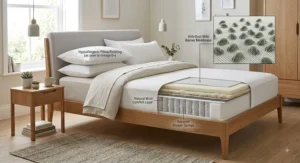
Here’s the uncomfortable truth nobody tells you at the bed shop: your average mattress can host anywhere from thousands to millions of dust mites within a couple of years, feeding on the skin flakes we all shed every night. That’s not a design flaw exactly — it’s just biology being biology — but it does mean your choice of mattress matters more than most of us assume. According to research on dust mite allergy, these microscopic creatures are one of the most common indoor allergy triggers globally, and bedding is their favourite postcode.
This guide cuts through the marketing haze. We’ve researched seven real, currently available mattresses on amazon.co.uk, spanning budget pocket-sprung options through to premium natural latex builds, and broken down exactly what makes each one worth (or not worth) your money if allergies are part of your sleep story. No invented reviews, no fluffed-up claims — just honest analysis grounded in real specs and genuine aggregated customer sentiment, so you can pick the right hypoallergenic mattress for your bedroom, your budget, and your sinuses.
Quick Comparison Table
Before we dive into the detail, here’s the lay of the land. Think of this as your cheat sheet for the school run — enough to make a sensible call without reading the whole textbook.
| Mattress | Type | Best For | Price Range |
|---|---|---|---|
| Silentnight Essentials Mirapocket 1000 | Pocket spring | Tightest budget | Under £250 |
| Sareer Latex Pocket 1000 | Latex hybrid | Budget latex fans | £250-£400 range |
| Panda Hybrid Bamboo Mattress Pro | Bamboo hybrid | Hot sleepers on a mid budget | £450-£700 range |
| Emma Original Mattress | Foam hybrid | All-round allergy sufferers | £300-£450 range |
| OTTY Pure Plus Hybrid Bamboo & Charcoal | Bamboo/charcoal hybrid | Antimicrobial priority | £500-£800 range |
| Simba Hybrid Original | Titanium spring hybrid | Couples with allergies | £700-£1,000+ range |
| Dunlopillo Latex Mattress | Natural latex | Latex allergy peace of mind | £600-£1,200+ range |
Looking at the spread above, there’s a clear pattern: budget picks like the Silentnight Essentials Mirapocket 1000 lean on pocket-spring engineering and treated covers to hit hypoallergenic status cheaply, while premium options like the Dunlopillo Latex Mattress achieve it through the raw material itself, natural latex, rather than any added treatment. The mid-range cluster, Panda, Emma, and OTTY, is where bamboo and charcoal technology does most of the heavy lifting, and that’s worth knowing if you’re the sort of buyer who wants allergy protection without remortgaging the house.
💬 Found a favourite already? Scroll down to see why it made our list — and what to watch out for before you buy.🤗
Top 7 Hypoallergenic Mattresses: Expert Analysis
We dug into specs, aggregated review sentiment, and certification data (OEKO-TEX, CertiPUR, BS7177) for each of these. None of this is copied from Amazon listings — it’s our own comparative read of what the numbers actually mean for someone who sneezes their way through spring.
1. Silentnight Essentials Mirapocket 1000 Mattress — best budget dust mite defence
The standout here is simple: proper pocket-spring engineering at a price that won’t make you wince. Silentnight built this mattress around 1,000 individually wrapped Mirapocket springs, each responding to your body weight and movement independently rather than as one solid block — which, in practice, means less “roll together” if you share a bed and fewer disturbed nights when a partner shifts position. The knitted, hypoallergenic cover is treated to resist dust mites, and because Silentnight manufacture in the UK to order rather than shipping in bulk from overseas, quality control tends to be tighter than you’d expect at this price point.
Who’s this for? Honestly, first-time buyers, students, and anyone kitting out a spare room who still wants genuine allergy-conscious credentials rather than a bargain-bin foam slab. Reviewers consistently report that the medium-firm feel suits back and side sleepers well, though heavier stomach sleepers sometimes find it lacks the deeper support of pricier models — a common and fair trade-off at this tier.
Pros:
- ✅ Genuinely affordable entry point into allergy-conscious sleep
- ✅ UK handmade quality control on a budget mattress
- ✅ Mirapocket springs reduce partner disturbance
Cons:
- ❌ Thinner profile than mid-range and premium alternatives
- ❌ Less cooling performance than bamboo or graphite-infused options
At around £150-£250 depending on size, the Silentnight Essentials Mirapocket 1000 represents strong value if your main goal is simply not sleeping on a dust-mite hotel. It won’t out-perform the premium picks below on temperature regulation, but for the price, it doesn’t need to.
2. Sareer Latex Pocket 1000 Mattress — best budget latex hybrid
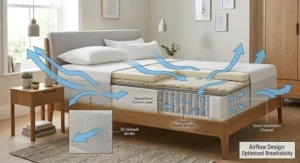
Sareer’s trick with this one is blending traditional pocket springs with a layer of body-moulding natural latex, which is a genuinely clever way to get some of latex’s dust-mite-resistant benefits without paying full latex-mattress prices. The 1,000-spring base handles the structural support, while the latex comfort layer does the allergen-resistance work — latex’s dense, closed-cell structure makes it a far less hospitable environment for dust mites than open-cell polyurethane foam.
For buyers who want a firmer, more “traditional” mattress feel, this is a sensible middle ground between an all-spring budget mattress and a full latex investment. Aggregated customer sentiment on Sareer’s foam and latex ranges is generally positive on comfort and value, though a recurring theme in reviews of Sareer’s budget lines is a noticeable “new mattress smell” that takes a week or two to fully air out — worth planning for if you’re sensitive to odours as well as allergens.
Pros:
- ✅ Latex layer adds genuine dust-mite resistance
- ✅ Firmer feel suits back and front sleepers
- ✅ Wakefield-based manufacturer with 30+ years in bedding
Cons:
- ❌ Initial off-gassing smell reported by some buyers
- ❌ Firmness may feel unforgiving for committed side sleepers
Priced in the £250-£400 range for a double, the Sareer Latex Pocket 1000 earns its place as the value pick for anyone who wants a taste of latex’s allergy benefits without the premium price tag.
3. Panda Hybrid Bamboo Mattress Pro — best bamboo cover for hot, itchy nights
Bamboo is the headline act here, and for good reason. Panda’s cover blends bamboo with polyester in a knitted finish that’s OEKO-TEX STANDARD 100 certified, meaning every thread, dye, and trim has been tested against over 1,000 potentially harmful chemicals. Underneath, up to 1,500 pocket springs sit across seven support zones, topped with orthopaedic-grade memory foam that’s designed to resist the heat retention memory foam is usually criticised for.
What most buyers overlook about bamboo mattresses is that the allergy benefit isn’t just about dust mites, it’s also about moisture. Bamboo fibres wick sweat away far more efficiently than standard polyester covers, and since dust mites thrive in warm, damp conditions, a drier sleep surface is itself a form of allergen control. Reviewers frequently praise the low motion transfer and edge support, which matters if you’re sharing a bed with a restless partner. The trade-off, based on independent lab testing from consumer bodies, is that heat can build up again by morning depending on your choice of duvet.
Pros:
- ✅ OEKO-TEX certified bamboo cover, machine washable
- ✅ Excellent motion isolation for couples
- ✅ Naturally antibacterial fabric on top of hypoallergenic foam
Cons:
- ❌ Can retain some warmth by morning with heavier duvets
- ❌ Sits at a higher price than comparable foam-only hybrids
Expect to pay somewhere in the £450-£700 range for a double. Given the certification depth and the couple-friendly motion isolation, it’s a strong mid-range pick if bamboo’s moisture-wicking properties appeal to you specifically.
4. Emma Original Mattress — best all-round pick for allergy sufferers
Emma built this mattress around what they call Infinity springs, a layer of independent pocket springs beneath zoned memory foam that’s designed to encourage constant airflow through the mattress core rather than trapping heat and moisture in one dense block. The cover is fully removable and machine washable, which sounds like a small detail until you realise it’s arguably the single most useful hypoallergenic feature on this entire list: you can actually wash away the allergens that accumulate, rather than hoping a fixed cover keeps them out indefinitely.
This is the mattress we’d point a first-time buyer toward if they wanted one all-purpose answer to “which mattress is best for allergy sufferers?” It’s not the cheapest, it’s not the most exotic material, but it ticks the boxes that matter: 100% free from animal by-products (useful if allergies overlap with sensitivities to wool or feather fillings), BS7177:2008 compliant for UK fire safety, and consistently described in aggregated reviews as offering genuinely improved sleep for people with dust or pet allergies, alongside reports of solid pressure relief for side sleepers.
Pros:
- ✅ Fully removable, machine-washable cover
- ✅ Zoned memory foam supports side and back sleepers well
- ✅ No animal by-products, useful for overlapping allergies
Cons:
- ❌ Not the coolest option compared with bamboo or graphite builds
- ❌ Medium firmness may feel too soft for larger stomach sleepers
At roughly £300-£450 for a double, the Emma Original earns its “best all-rounder” tag through sheer practicality rather than flashy materials — and a washable cover genuinely changes the allergen-management game.
5. OTTY Pure Plus Hybrid Bamboo & Charcoal Mattress — best for active antimicrobial protection
OTTY’s Pure Plus range was, according to the brand, the first in the UK to combine bamboo and activated charcoal within the memory foam itself, rather than just the cover. That distinction matters for allergy sufferers because it means the antimicrobial and moisture-wicking properties run through the mattress, not just the surface layer you can wash off. Underneath, up to 4,000 encapsulated pocket springs at 16cm tall, some of the longest on the UK bed-in-a-box market, do the structural work, while perforations throughout the layers form what OTTY calls an AirFlow system.
Here’s what the spec sheet won’t tell you outright: charcoal-infused foam has a long history in odour and moisture control (it’s the same principle behind activated charcoal air filters), and when paired with bamboo’s natural antibacterial properties, this combination targets both the mould and mildew that trigger allergic reactions, not just dust mites. Reviewers consistently mention the mattress sleeping notably cooler than standard memory foam, and the fully washable cover reinforces the antimicrobial angle nicely.
Pros:
- ✅ Charcoal-infused foam tackles odour and moisture, not just dust mites
- ✅ Tall 16cm encapsulated springs, excellent motion isolation
- ✅ 100-night trial and 10-year warranty for peace of mind
Cons:
- ❌ Among the pricier hybrid options on this list
- ❌ Firmer feel may not suit sleepers who prefer a plush sink-in top layer
Priced around £500-£800 for a double, the OTTY Pure Plus is the pick for anyone who wants antimicrobial protection built into the foam itself, not bolted on as an afterthought.
6. Simba Hybrid Original Mattress — best dust mite resistant hybrid for couples
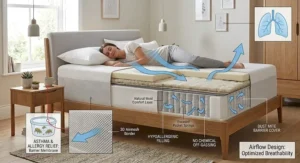
Simba’s own material, Simbatex, is engineered specifically to be hypoallergenic, and the brand states plainly that dust mites cannot survive on it, a claim that lines up with what we’d expect from a dense, graphite-infused foam structure that doesn’t offer the same warm, damp microclimate that open-cell foams do. Structurally, this mattress combines up to 1,900 traditional pocket springs with Simba’s patented titanium alloy Aerocoil microsprings, a genuinely clever dual-spring system where the smaller coils actively push air through the mattress as they compress.
What stands out on the comparison sheet is certification depth: Simba’s foams are OEKO-TEX certified and CertiPUR® certified free from fibreglass, both signals aimed squarely at buyers who don’t just want “hypoallergenic” printed on a label, they want independently verified proof. For couples specifically, the Aerocoil layer’s motion isolation is a genuine standout in aggregated reviews, with multiple sources citing minimal disturbance from a partner’s movement, a bonus benefit that happens to align neatly with better sleep continuity for allergy sufferers whose symptoms worsen when sleep is already fragmented.
Pros:
- ✅ OEKO-TEX and CertiPUR certified, fibreglass-free foams
- ✅ Dual-spring system actively cools as it compresses
- ✅ 200-night trial and 10-year guarantee
Cons:
- ❌ Premium pricing puts it out of reach for tight budgets
- ❌ Firmer than some memory-foam-first competitors
Expect £700-£1,000+ for a double, positioning the Simba Hybrid Original as a genuine premium buy — one where the certification paperwork actually backs up the marketing claims.
7. Dunlopillo Latex Mattress — best for genuine latex mattress allergy confidence
Dunlopillo has been making latex mattresses since 1929, and that century of specialisation shows. This is 100% natural latex construction, not a latex-foam hybrid layer sitting on top of springs, which means the dust-mite-resistant, antibacterial, anti-microbial properties run through the entire sleeping surface. Natural latex’s dense, closed-cell structure is genuinely inhospitable to dust mites, and unlike synthetic latex substitutes, it doesn’t degrade or sleep warm in the same way over time.
Here’s the nuance most listicles skip: a true latex allergy, a reaction to specific proteins in raw natural rubber, is rare, and the processing latex undergoes during mattress manufacture (washing and curing) removes most of the residual proteins that cause skin reactions in the first place. So somewhat counterintuitively, “latex mattress allergy” concerns are usually about dust mites and general allergens, which latex actively resists, rather than the latex material itself. If you do have a diagnosed, severe latex allergy specifically, it’s worth a quick chat with your GP or allergist before buying, but for the vast majority of dust-mite and general allergy sufferers, latex is one of the better material choices available.
Pros:
- ✅ 100% natural latex, dust-mite resistant throughout
- ✅ Nearly a century of specialist manufacturing experience
- ✅ Responsive support without memory foam’s slow sink-in feel
Cons:
- ❌ Heavier and harder to manoeuvre than foam or spring mattresses
- ❌ Sits at the premium end of the price spectrum
At £600-£1,200+ depending on size and range, the Dunlopillo Latex Mattress is the pick for buyers who want the material itself, not a treatment or a cover, doing the allergy-fighting work.
Setting Up Your Hypoallergenic Mattress for Maximum Allergy Relief
Buying the right mattress is only half the job — how you set it up in the first month genuinely affects how well it performs against allergens. Start by unboxing your new mattress in a well-ventilated room and letting it fully expand for the manufacturer’s recommended time (usually 24-72 hours for compressed foam and hybrid models) before making the bed. This isn’t just about comfort; airing it out reduces any residual manufacturing odours that can otherwise linger for weeks in a closed bedroom.
Next, invest in a proper mattress protector, even on a mattress that’s already hypoallergenic. Think of it as a belt-and-braces approach: the mattress resists dust mites at a structural level, while the protector catches skin flakes and moisture before they ever reach the mattress surface, and, crucially, it can be washed weekly at 60°C, which most mattress covers cannot. Wash all bedding, pillowcases, and the protector itself on a hot cycle weekly for the first month to establish a clean baseline, then maintain a fortnightly rhythm after that.
Finally, rotate the mattress every three months for the first year (check your specific model’s guidance, as some foam and latex mattresses don’t require flipping) and vacuum both sides with an upholstery attachment during rotation. Common first-30-days mistakes include skipping the airing period, using heavy synthetic duvets that trap moisture against a bamboo or latex surface, and forgetting that even hypoallergenic mattresses benefit from a dehumidifier in particularly damp bedrooms.
Who Actually Needs a Hypoallergenic Mattress? Real-World Scenarios
Not everyone needs to spend premium money chasing allergy-proof bedding, so let’s talk through who genuinely benefits. If you’re a twenty-something renter with mild seasonal hay fever and a tight budget, something like the Silentnight Essentials Mirapocket 1000 covers your basics without overcommitting financially to a problem that’s mostly seasonal anyway.
If you’re a parent of a child with diagnosed dust mite allergy or eczema, though, the calculation changes. Frequency of exposure matters enormously here, your child sleeps eight to eleven hours a night, every night, in that bed, so a washable-cover option like the Emma Original Mattress or an antimicrobial-through-the-foam build like the OTTY Pure Plus earns its higher price tag through daily, cumulative allergen reduction rather than occasional relief.
Then there’s the couple sharing a bed where one partner has asthma triggered by dust mites and the other simply wants a comfortable night’s sleep. This is precisely the scenario the Simba Hybrid Original or Dunlopillo Latex Mattress were built for: genuine allergen resistance paired with motion isolation, so the healthy sleeper’s movement doesn’t wake the allergic one at 3am mid-sneeze. Match your mattress to your actual exposure pattern and household needs, not just the marketing on the box.
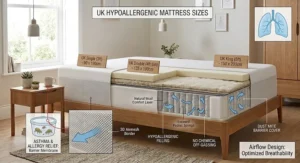
How to Choose a Dust Mite Resistant Mattress
Picking the right dust mite resistant mattress comes down to weighing a handful of specific, checkable factors rather than trusting a single buzzword on the packaging. Here’s the shortlist we’d actually run through:
- Check for independent certification. OEKO-TEX STANDARD 100 and CertiPUR® aren’t marketing terms, they’re independently audited standards that verify chemical safety and material claims.
- Prioritise removable, washable covers. A mattress that lets you wash away accumulated allergens outperforms one that simply “resists” them passively over years of use.
- Consider material density. Natural latex and tightly woven bamboo blends are structurally less hospitable to dust mites than open-cell memory foam, regardless of what treatment is sprayed on top.
- Factor in moisture control. Dust mites need humidity above roughly 45-50% to thrive, so cooling, breathable materials do double duty as allergen control.
- Match firmness to your sleep position first. No amount of hypoallergenic technology compensates for a mattress that leaves you tossing and turning, which itself disrupts the deep sleep your immune system needs.
- Read aggregated review sentiment, not star ratings alone. Look specifically for repeated mentions of allergy symptom improvement, not just general comfort praise.
- Budget for a protector on top. Even the best hypoallergenic mattress benefits from an added, washable barrier layer.
Latex Mattress Allergy: Separating Fact from Fear
There’s a persistent myth that latex mattresses are risky for allergy sufferers, and it’s worth untangling properly because it puts genuinely excellent hypoallergenic products, like the Dunlopillo Latex Mattress, out of consideration for people who’d otherwise benefit enormously. True latex allergy is an immune reaction to specific proteins found in raw natural rubber latex, most commonly associated with medical gloves and balloons through repeated skin contact, and it affects a genuinely small slice of the population.
Mattress-grade latex undergoes extensive washing and curing during manufacturing, processes specifically designed to strip out the residual proteins responsible for skin reactions. Multiple allergist sources note they’re not aware of documented cases of mattress-triggered latex sensitisation, precisely because the material is encased in a cover and doesn’t involve the same sustained, direct skin contact as gloves. What latex actually delivers for the vast majority of allergy sufferers, the ones reacting to dust mites, mould, or general household allergens, is a dense, closed-cell structure that mites simply can’t colonise the way they do open-cell foam. If you do carry a diagnosed severe latex allergy, a conversation with your allergist before buying is sensible caution, not paranoia, but for everyone else, latex deserves to be judged on its considerable hypoallergenic merits rather than an association it doesn’t really warrant.
Antimicrobial Mattress Technology Explained
“Antimicrobial” gets thrown around loosely in mattress marketing, so let’s break down what it actually means across the products on this list. In genuine antimicrobial mattress construction, materials are treated or naturally structured to inhibit the growth of bacteria, mould, and fungi, not just dust mites specifically. This matters because allergic reactions in bedding aren’t caused solely by mites; skin cell build-up, sweat, and the micro-organisms that feed on both all contribute to the allergen load in your mattress over time.
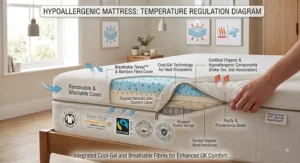
The OTTY Pure Plus achieves this through charcoal infusion, a material with a long track record in moisture and odour control thanks to its porous, absorbent structure. The Panda Hybrid Bamboo Mattress Pro relies on bamboo’s naturally occurring antibacterial compounds, present in the plant fibre itself rather than added afterward. Meanwhile, Simba’s approach layers graphite into Simbatex foam primarily for temperature regulation, with the antimicrobial benefit arriving as a useful side effect of a drier, cooler sleep surface where bacteria and mould struggle to establish themselves. The practical takeaway: genuinely effective antimicrobial protection tends to come from either the raw material itself (bamboo, latex, charcoal) or from moisture and temperature control, rather than from a spray-on chemical treatment that fades with washing over a couple of years.
Dust Mite Resistant Bedding: The Missing Piece
Here’s something that trips up a lot of allergy sufferers: they invest in a genuinely excellent hypoallergenic mattress, then undermine it entirely with untreated pillows, duvets, and sheets. Dust mite resistant bedding matters just as much as the mattress underneath it, because mites happily colonise feather pillows, wool duvets, and loosely woven sheets just as readily as an untreated mattress core.
Look for pillows and duvets with the same certification markers you’d want on a mattress, OEKO-TEX certification and clearly stated hypoallergenic fill materials, alongside tightly woven, high thread-count covers that physically restrict mite movement rather than just claiming to. Synthetic hollow-fibre fillings are generally more mite-resistant than natural down or feather, and crucially, they tolerate hot washing far better; most duvets and pillows should be washable at 60°C, a temperature that kills dust mites outright rather than just displacing their allergen residue temporarily. Pair your hypoallergenic mattress with matching bedding and you’re addressing the whole sleep system, not just one component of it.
Building an Allergy-Friendly Sleep Environment
Allergy friendly sleep isn’t just about what’s underneath your sheets, it’s about the entire bedroom ecosystem. Even the best hypoallergenic mattress works harder than it needs to in a room with heavy curtains, wall-to-wall carpet, and clutter under the bed, all classic dust and allergen reservoirs. If you’re serious about symptom reduction, consider swapping heavy curtains for washable blinds, and keep the space beneath your bed frame clear rather than using it for storage, since airflow restriction there creates exactly the warm, still microclimate dust mites favour.
Humidity control deserves particular attention. Dust mites struggle to survive when relative humidity drops below roughly 45-50%, so a modest dehumidifier or simply cracking a window daily can meaningfully reduce mite populations across your whole bedroom, not just your mattress. Combine that with weekly hot-washing of bedding, regular vacuuming with a HEPA-filter machine, and a hypoallergenic mattress from our list above, and you’re addressing allergens from multiple angles simultaneously rather than hoping one product does all the work alone.
Hypoallergenic vs Standard Mattresses: What Actually Changes
| Factor | Standard Mattress | Hypoallergenic Mattress |
|---|---|---|
| Dust mite survival | Thrives in open-cell foam | Resisted by dense latex/treated foam |
| Cover | Often fixed, non-washable | Frequently removable and washable |
| Certification | Rarely disclosed | OEKO-TEX/CertiPUR common |
| Moisture handling | Standard polyester traps heat | Bamboo/latex wick moisture actively |
| Typical price premium | Baseline | 10-30% higher on comparable builds |
The gap here isn’t cosmetic. A standard mattress isn’t “bad”, it’s simply not engineered with allergen resistance as a design priority, which means moisture, skin cells, and mites accumulate at a fairly predictable rate over a couple of years regardless of how often you vacuum. A genuinely hypoallergenic build, like the Emma Original or Dunlopillo Latex Mattress, tackles the problem structurally rather than relying on you to compensate through extra cleaning. The price premium, typically 10-30% over a comparable non-hypoallergenic model, buys you materials and certifications that do measurable, ongoing work rather than a one-off marketing claim.
Common Mistakes When Buying a Hypoallergenic Mattress
Even well-intentioned shoppers trip over a handful of recurring pitfalls. The biggest one? Trusting the word “hypoallergenic” alone without checking for actual certification, OEKO-TEX and CertiPUR marks exist precisely because the term itself isn’t independently regulated, so anyone can print it on a label. Another common mistake is buying based on price alone and skipping the cover-washability question entirely; a cheap mattress with a removable, washable cover can outperform a pricier one with a fixed cover for long-term allergen control.
Buyers also frequently overlook firmness and sleep position compatibility in the excitement of allergy-focused shopping, ending up with a technically hypoallergenic mattress that’s simply uncomfortable, which defeats the purpose since poor sleep itself worsens immune function and allergy symptoms. Finally, many people forget to budget for complementary dust mite resistant bedding, treating the mattress as a silver bullet rather than one part of a broader allergy-friendly sleep system.
Long-Term Cost & Maintenance
Thinking purely in upfront price misses half the picture. A budget pick like the Silentnight Essentials Mirapocket 1000 costs less initially but typically carries a shorter realistic lifespan, roughly 6-8 years before support noticeably degrades, whereas natural latex options like the Dunlopillo Latex Mattress commonly last 12-15 years thanks to latex’s superior resilience and resistance to the compression fatigue that affects foam over time.
| Mattress Tier | Typical Price Range | Expected Lifespan | Cost-Per-Year (approx.) |
|---|---|---|---|
| Budget (Silentnight, Sareer) | Under £400 | 6-8 years | £30-£65/year |
| Mid-range (Panda, Emma) | £300-£700 | 8-10 years | £35-£70/year |
| Premium (OTTY, Simba, Dunlopillo) | £500-£1,200+ | 10-15 years | £45-£80/year |
Run the numbers this way and the premium picks look considerably less extravagant, latex in particular tends to average out to a comparable or even lower annual cost than budget foam once you factor in longevity. Maintenance costs matter too: a washable-cover mattress saves you from ever needing a replacement protector cover, while a fixed-cover budget mattress may need a protector replaced every year or two as allergen build-up becomes harder to manage. Total cost of ownership, not sticker price, is the number that actually matters here.
Safety, Regulations & Certifications Guide
UK mattresses sold to consumers must comply with fire safety regulations under BS7177, covering flammability requirements for domestic furniture and bedding, so any mattress you buy from a reputable retailer should already meet that baseline regardless of its allergy credentials. Beyond fire safety, the certifications worth actively seeking out are OEKO-TEX STANDARD 100, which independently tests every textile component against over 1,000 regulated and unregulated chemicals, and CertiPUR®, which specifically verifies foam is produced without certain flame retardants, heavy metals, and, increasingly commonly checked for, fibreglass.
For the allergy side specifically, organisations like Which? independently lab-test mattress claims rather than simply reprinting manufacturer marketing, which makes their reviews genuinely useful cross-references before you buy. If your allergy symptoms are severe or medically diagnosed rather than mild seasonal irritation, it’s also worth knowing that the NHS provides practical guidance on reducing dust mites in the home that complements, rather than replaces, your choice of mattress. And for anyone whose symptoms persist despite a full hypoallergenic bedroom overhaul, it’s worth being aware that NHS-recommended treatment options for house dust mite allergy now extend beyond avoidance measures alone, so a mattress upgrade can sit alongside, not instead of, proper medical advice.
Frequently Asked Questions
❓ What makes a mattress hypoallergenic?
❓ Is memory foam or latex better for allergies?
❓ How often should I wash hypoallergenic bedding?
❓ Can a hypoallergenic mattress cure my allergies?
❓ Do hypoallergenic mattresses cost more?
Conclusion
If you’ve read this far while sneezing intermittently, here’s the short version: your mattress genuinely matters, but it’s one piece of a bigger allergy-management puzzle. For tight budgets, the Silentnight Essentials Mirapocket 1000 or Sareer Latex Pocket 1000 deliver real dust mite resistance without financial strain. For most households wanting a dependable all-rounder, the Emma Original Mattress earns its reputation through that genuinely useful washable cover. And if you’re ready to invest properly in long-term allergy relief, the Dunlopillo Latex Mattress, Simba Hybrid Original, or OTTY Pure Plus each bring certified, structurally hypoallergenic materials that do real, ongoing work rather than resting on a marketing buzzword.
Whichever you choose, pair it with dust mite resistant bedding, a washable protector, and a bit of bedroom humidity control, and you’ll be tackling allergens from every meaningful angle rather than hoping one product carries the whole load. Sweet dreams, and fewer sneezes, start with the right foundation underneath you.
✨ Don’t Miss These Exclusive Deals!
🔍 Take your allergy-friendly sleep setup to the next level with these carefully selected mattresses. Click on any highlighted item to check current pricing and availability. These picks will help you build a genuinely healthier bedroom your whole household will love!
Recommended for You
- Latex vs Memory Foam Mattress: 7 Picks Compared (2026)
- Latex Mattress for Back Pain: 7 Best Picks Tested for 2026
- Best Latex Mattress UK 2026: 7 Genuinely Cooler Picks
Disclaimer: This article contains affiliate links. As an Amazon Associate, I earn from qualifying purchases. If you purchase products through these links, we may earn a small commission at no additional cost to you.
✨ Found this helpful? Share it with your friends! 💬🤗
