
In This Article
Somewhere around 2am, most of us have had the same thought while flipping the pillow to its cool side: is my mattress the problem? Often, yes. And the decision at the root of it — latex vs memory foam mattress — is one that trips up even fairly decisive people, because both materials are genuinely good at different things, and the marketing copy rarely admits that.
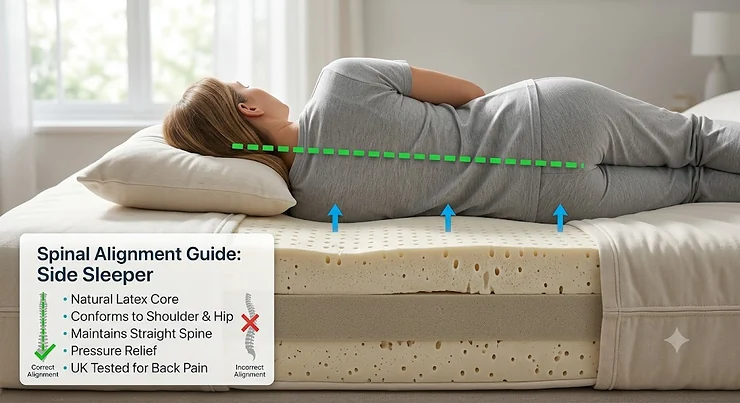
Here’s the short version. Memory foam is a viscoelastic polyurethane foam that softens with body heat and slowly moulds around you, which is why it’s brilliant for pressure relief but can feel a bit like sinking into warm porridge. Latex — whether natural Dunlop, Talalay, or a synthetic blend — pushes back almost instantly, sleeps noticeably cooler, and tends to outlast foam by several years. Neither is “better” in the abstract. One suits hot sleepers, restless movers and buyers who want a mattress that ages gracefully. The other suits people who want that famous hug-you-to-sleep feel and don’t mind paying less upfront.
This guide breaks down latex vs memory foam mattress performance across response time, temperature, durability and off-gassing, then walks through seven real mattresses — from budget-friendly foam to premium natural latex — so you can match the material to how you actually sleep, not how the adverts say you should.
Quick Comparison: Latex vs Memory Foam Mattress at a Glance
Before diving into individual products, here’s how the two materials stack up on the factors that matter most to UK buyers.
| Factor | Memory Foam | Latex |
|---|---|---|
| Response time | Slow (2-5 seconds to spring back) | Fast (near-instant rebound) |
| Sleeping temperature | Runs warmer, traps body heat | Sleeps cooler, more airflow |
| Durability | Typically 6-8 years before sagging | Typically 10-15+ years |
| Off-gassing | Noticeable “new mattress smell” for days | Minimal to none (natural latex especially) |
| Motion isolation | Excellent — barely feel a partner move | Good, but some bounce transfers through |
| Typical price bracket | Budget to mid-range | Mid-range to premium |
| Best for | Side sleepers, couples, pressure-point pain | Hot sleepers, allergy sufferers, long-term value |
Reading that table, the pattern is fairly clear: memory foam wins on initial comfort and price, latex wins on almost everything you notice after month six. If you run hot at night or you’re the kind of person who keeps a mattress until it’s practically see-through, latex’s durability advantage alone can justify the higher entry price — a £1,200 latex mattress that lasts 15 years works out cheaper per year of use than a £500 foam mattress replaced twice in that time. If you sleep cold, share a bed with someone who tosses and turns, or simply need to furnish a room on a tighter budget right now, memory foam remains a genuinely sound choice.
💬 Found a mattress you like the look of already? Jump straight to our full breakdown of all seven picks below.
Top 7 Latex and Memory Foam Mattresses: Expert Analysis
We’ve deliberately spread this list across both materials and every price bracket — budget, mid-range and premium — so whichever side of the latex vs memory foam mattress debate you’re leaning towards, there’s a genuine option here rather than a token afterthought.
1. Zinus Green Tea Memory Foam Mattress — best budget entry point
The Zinus Green Tea Memory Foam Mattress is one of the most widely bought all-foam mattresses on Amazon, largely because it makes memory foam accessible without a four-figure price tag.
Constructed from multiple layers of green-tea-and-charcoal-infused memory foam over a firmer support base, it’s built to CertiPUR-US standards, which caps VOC emissions and rules out ozone-depleting blowing agents. The infusion is a genuine odour-management feature rather than pure marketing — activated charcoal is a recognised absorbent, though it won’t eliminate off-gassing entirely, just dull the smell faster. Based on the spec sheet, this is a mattress engineered for one job: making memory foam’s pressure relief available at a price point that doesn’t require a finance plan.
It suits budget-conscious buyers, students, and anyone furnishing a spare room or first flat who wants genuine memory foam contouring rather than a cheap polyfoam substitute. It’s less convincing for heavier sleepers or committed hot sleepers, since thinner budget foams generally trap more heat than pricier gel-infused versions.
Reviewers consistently report that the compression-packed delivery expands within 24-48 hours and that the initial smell, while present, dissipates within about a week with ventilation — a common theme across budget memory foam listings rather than something unique to this model.
Pros:
- ✅ Genuinely low entry price for real memory foam
- ✅ CertiPUR-US certified, so VOC limits are independently verified
- ✅ Charcoal infusion helps manage the new-mattress smell faster
Cons:
- ❌ Thinner comfort layer than mid-range and premium foam beds
- ❌ Limited edge support for a mattress at this depth
At the time of research this sits firmly in the budget bracket, typically under £250 for a double — check current price and size availability before ordering, as stock varies. For the money, it’s a sound way to trial memory foam without overcommitting.
2. Silentnight 3 Zone Memory Foam Mattress — best budget pick from a household UK name
The Silentnight 3 Zone Memory Foam Mattress trades a little depth for brand trust, coming from the biggest name in UK mattress manufacturing rather than a newer direct-to-consumer challenger.
At around 18cm deep with a 3cm memory foam top layer over supportive base foam, it’s noticeably thinner than premium foam beds — that’s where most of the cost-cutting happens. The “3 zone” design firms up under the middle of the body while softening around the shoulders and feet, a sensible compromise for back and front sleepers of average weight. What most buyers overlook here is that zoned support does more real-world work than raw foam thickness; a well-zoned 18cm mattress can outperform an unzoned 25cm one for spinal alignment, even though the spec sheet makes the thinner mattress look like the lesser product.
It’s a strong pick for anyone who wants a recognisable, easily serviced UK brand at a genuinely low price, though heavier-set sleepers or committed side sleepers may find the thinner comfort layer offers less cushioning than they’d like.
Reviewers consistently rate this around 4.2 out of 5 on Amazon, with the most common praise centring on value for money and the most common complaint — echoed across thousands of reviews — being a lingering chemical smell on unboxing that most buyers say fades within days.
Pros:
- ✅ Trusted, long-established UK manufacturer
- ✅ Smart zonal support despite modest depth
- ✅ Consistently strong review volume and rating
Cons:
- ❌ Thinner profile than most competitors at this price
- ❌ Initial off-gassing smell is a frequently repeated complaint
Price sits in the budget-to-lower-mid bracket, generally under £300 for a double — prices may vary by retailer, so it’s worth checking current listings. As a straightforward, no-fuss memory foam mattress from a brand people already trust, it earns its spot.
3. EGOHOME Black 12″ Memory Foam Mattress — best edge support on a budget
The EGOHOME Black 12″ Memory Foam Mattress punches above its price bracket in one specific area that budget foam beds usually get wrong: the edges.
Built from a comfort foam layer over supportive base foams at roughly 12 inches (30cm) total height, it’s designed to mould to the shoulders and hips of side sleepers while keeping the perimeter firm enough that you’re not at risk of rolling off during the night — a genuine engineering win, since most low-cost all-foam mattresses collapse at the edge under any real weight. On paper this means couples who use the full width of the bed, or anyone who tends to sit on the edge to get dressed, will feel a meaningfully different experience than on a cheaper unzoned competitor.
It’s well suited to side sleepers on a tight budget and to couples who value a stable, usable edge over ultimate plushness; it’s a weaker fit for hot sleepers, since testers have noted it runs stuffier than its temperature-regulation marketing implies.
Aggregated review sentiment is notably consistent: buyers repeatedly single out the edge support and the comfort-to-support balance as standout strengths, while temperature regulation and overall plushness are the most frequently cited shortcomings.
Pros:
- ✅ Unusually strong edge support for a budget all-foam bed
- ✅ Comfortable, supportive feel across sleeping positions
- ✅ Reliable value at a low budget price point
Cons:
- ❌ Runs warmer than its cooling claims suggest
- ❌ Feels less plush than typical memory foam beds
Expect a price in the budget bracket, generally in the low-to-mid £200s for a double at the time of research — always check current pricing before buying. For side sleepers who hate the “sinking off the mattress” feeling, this is a smart budget compromise.
4. Emma Original Memory Foam Mattress — best all-round mid-range foam pick
The Emma Original Memory Foam Mattress is arguably the mattress that popularised the UK “bed in a box” category, and it remains one of the most reviewed memory foam mattresses on the market for good reason.
At 25cm deep with a firmer-than-average medium feel (rated around 5.5-7 out of 10 depending on the reviewer’s scale), it uses layered memory and support foams under a removable, washable cover. Here’s what to weigh: the Emma Original sits firmer than most pure memory foam competitors, which means it suits a wider range of body weights and sleeping positions than the ultra-soft “cloud” foam beds, but very heavy stomach sleepers or those wanting a deep, enveloping hug should look elsewhere. It’s manufactured in the UK and complies with BS 7177 fire safety regulation, which is worth knowing given how much attention UK buyers rightly pay to mattress fire standards — you can check the underlying rules yourself via the UK government’s furniture fire safety guidance.
It’s best suited to lighter and average-weight side and back sleepers who want firm-but-contouring support without paying hybrid prices; larger-framed or restless sleepers tend to prefer Emma’s springier hybrid models instead.
Reviewers consistently describe strong pressure relief around the shoulders and hips, with the most repeated criticism being that it runs warm for committed hot sleepers, despite the breathable cover.
Pros:
- ✅ Firmer, more universally suited feel than typical soft foam beds
- ✅ 200-night trial and 10-year guarantee reduce buying risk
- ✅ Manufactured in the UK to BS 7177 fire standards
Cons:
- ❌ Runs warm compared with hybrid or latex alternatives
- ❌ Too firm for committed side sleepers who prefer deep cushioning
Typically sold in the £350-£450 range for a double at RRP, though frequent promotions mean it’s often available for noticeably less — always check the current price rather than relying on RRP. As an all-rounder that doesn’t demand hybrid-level spending, this is hard to beat.
5. Simba Hybrid Original Mattress — best latex-feel hybrid without full latex pricing
The Simba Hybrid Original Mattress sits in an interesting middle ground for this comparison: it’s not a pure latex mattress, but its Simbatex layer is a synthetic latex designed specifically to bring latex-like responsiveness into a foam-dominant build.
Layered construction pairs a Simbatex comfort layer with graphite-infused open-cell foam, a smaller run of pocket springs (roughly 90% foam to 10% springs by Simba’s own description), and a firmer support base. What most buyers overlook about hybrids like this is that the spring percentage matters more than the marketing term “hybrid” suggests — a mattress that’s 90% foam will still behave much closer to an all-foam bed under load than a true spring-dominant hybrid, even though both get called “hybrid” on the box. That’s genuinely useful to know before assuming a hybrid automatically sleeps cooler or bounces more than a foam bed.
It suits restless sleepers and heavier sweaters better than pure memory foam, since the graphite layer and partial latex-style responsiveness both help with heat and quicker repositioning; it’s a weaker value pick for anyone who specifically wants full latex durability, since the foam-dominant build won’t match true latex lifespan.
Aggregated sentiment on the Simba range is generally positive on comfort and motion isolation, with the most consistent criticism being that it costs meaningfully more than comparable all-foam beds like the Emma Original or Nectar for a build that’s still mostly foam.
Pros:
- ✅ Simbatex layer adds latex-style responsiveness foam alone lacks
- ✅ Graphite infusion genuinely helps with heat compared with plain foam
- ✅ 100-night trial and solid UK manufacturing credentials
Cons:
- ❌ Costs around £150-£250 more than comparable all-foam beds
- ❌ Still foam-dominant, so durability trails true latex mattresses
Price generally falls in the mid-to-upper-mid bracket, often £550-£750 for a double depending on promotions — check current pricing, as Simba runs frequent seasonal offers. It’s a sensible stepping stone for buyers curious about latex’s responsiveness who aren’t ready to commit to a fully latex mattress.
6. Dunlopillo Elite Supreme 2200 Latex Hybrid Mattress — best premium latex-spring hybrid
Dunlopillo has been manufacturing latex mattresses since the 1920s, and the Dunlopillo Elite Supreme 2200 Latex Hybrid Mattress reflects a century of refining a single material rather than chasing every new foam trend.
It combines 2,200 individually wrapped pocket springs across two tiers with a generous topping of Talalay latex, landing at a medium-firm feel that suits back sleepers and combination sleepers particularly well. Based on the spec comparison with foam-only beds, the dual-tier spring system does something memory foam structurally can’t: it responds to different areas of the body independently while the latex layer adds cushioning without the slow “sinking” sensation, so you get contouring and support at the same time rather than one at the expense of the other. Talalay latex specifically is processed to be more consistent and slightly softer than Dunlop latex, which is why Dunlopillo positions this model as comfortable enough for shoulders and hips without losing the firm base heavier sleepers need.
It’s an excellent fit for back sleepers, combination sleepers, and anyone who’s outgrown a sagging foam mattress and wants genuine longevity; it’s a harder sell for strict budget shoppers, since Dunlopillo’s premium positioning reflects the cost of natural latex production.
Dunlopillo’s aggregated Trustpilot rating sits around a strong 4.7 out of 5, and the brand carries “Which? Best Buy” recognition on latex models, both of which speak to sustained, real customer satisfaction rather than a single good review batch — a systematic literature review of mattress-type studies also notes that medium-firm latex and pocket-sprung constructions consistently produced better outcomes for people with musculoskeletal complaints, which aligns with how this model is built.
Pros:
- ✅ Talalay latex plus dual-tier springs gives support and cushioning together
- ✅ Backed by a century of specialist latex manufacturing
- ✅ Strong Trustpilot rating and Which? recognition
Cons:
- ❌ Premium pricing puts it out of reach for tight budgets
- ❌ Firmer feel may not suit committed soft-mattress side sleepers
Firmly in the premium bracket, typically upwards of £1,500 for a double, with pricing varying by retailer and finance options — always check current price before ordering, and expect a longer delivery window than bed-in-a-box competitors. For buyers prioritising durability and spinal support over upfront cost, this is one of the most credible latex hybrids on the UK market.
7. Naturalmat Tencel Latex Mattress — best fully organic latex option
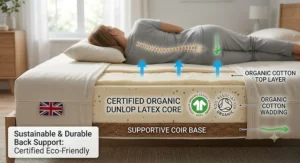
The Naturalmat Tencel Latex Mattress is the purist’s choice on this list: a single slab of certified organic Dunlop latex, wrapped in a Tencel eucalyptus-fibre cover, with no synthetic foam layers at all.
Made by a Devon-based manufacturer producing natural mattresses since 2001, the construction leans supportive rather than plush, which tends to suit back and stomach sleepers better than committed side sleepers wanting deep contouring. Here’s what the spec sheet doesn’t fully convey: because it’s a single latex slab rather than layered foams, there’s no compression-set risk between layers over time — a common failure point in cheaper mattresses — which is a meaningful part of why Naturalmat and comparable organic latex brands quote 15-plus year lifespans rather than the 6-8 years typical of budget foam. It’s also worth noting that all UK mattresses, regardless of material, must meet the ignition-resistance requirements set out in BS 7177, so “natural” doesn’t mean “less fire-safe” here.
It’s the strongest fit for allergy sufferers, sustainability-conscious buyers, and anyone who’s replaced two or three foam mattresses already and wants something built to be the last mattress they buy for a long while; it’s a poor fit for anyone wanting instant, deep-sink comfort or working with a tight budget.
Verified reviews for niche organic manufacturers like Naturalmat are harder to aggregate at scale than for major foam brands, so rather than invent a sentiment we can’t verify, it’s fairer to say this: what is independently verifiable is that natural latex carries recognised hypoallergenic and antimicrobial properties, and that genuinely organic, single-material construction removes several of the durability failure points layered foam beds are prone to.
Pros:
- ✅ Single-slab organic latex avoids layer-compression failure points
- ✅ Naturally hypoallergenic, antimicrobial and dust-mite resistant
- ✅ Built for a 15-plus year lifespan, genuinely reducing long-term cost
Cons:
- ❌ Among the most expensive options in this guide
- ❌ Firmer, less “sink-in” feel than latex or foam hybrids
Expect a premium price, typically starting upwards of £1,200 for a double and rising with size and firmness options, often made to order with a longer lead time — check current pricing directly, as this isn’t a mass-stocked line. If total cost of ownership and genuine sustainability matter more to you than day-one plushness, this is the standout pick on this list.
Top 7 Products: Full Comparison Table
| Product | Material | Depth | Firmness | Price Bracket | Best For |
|---|---|---|---|---|---|
| Zinus Green Tea Memory Foam Mattress | Memory foam | ~25-30cm | Medium | Budget | First-time buyers, spare rooms |
| Silentnight 3 Zone Memory Foam Mattress | Memory foam | ~18cm | Medium-firm | Budget | Trusted-brand budget shoppers |
| EGOHOME Black 12″ Memory Foam Mattress | Memory foam | ~30cm | Medium | Budget | Side sleepers wanting edge support |
| Emma Original Memory Foam Mattress | Memory foam | 25cm | Medium-firm | Mid-range | All-round comfort, UK-made |
| Simba Hybrid Original Mattress | Foam + synthetic latex + springs | 25cm | Medium-firm | Mid-to-upper | Hot sleepers wanting some bounce |
| Dunlopillo Elite Supreme 2200 Latex Hybrid Mattress | Talalay latex + springs | ~27cm | Medium-firm | Premium | Back sleepers, long-term durability |
| Naturalmat Tencel Latex Mattress | 100% organic Dunlop latex | Varies | Firm-supportive | Premium | Allergy sufferers, sustainability |
Looking at the table, the price-to-durability relationship is the story worth paying attention to: the three budget foam picks cluster under £300 but carry the shortest expected lifespans, while the two latex options at the bottom cost four to six times more yet are built to last two to three times as long. The Simba Hybrid Original Mattress occupies a genuinely useful middle position for buyers who want a taste of latex-style responsiveness without the full premium spend. If you’re deciding purely on material rather than price, the pattern holds across every row: latex options trade upfront cost for temperature control and lifespan, foam options trade some of both for accessibility.
Response Time Comparison: Why It Matters More Than You’d Think
“Response time” refers to how quickly a mattress springs back to its original shape after you shift position — and it’s arguably the most underrated spec in the entire latex vs memory foam mattress debate.
Memory foam is viscoelastic, meaning it softens with body heat and slowly returns to shape over roughly two to five seconds once pressure is removed. That slow return is exactly why memory foam feels like it’s “hugging” you — but it’s also why turning over in the night on memory foam can feel like wading through treacle, since the foam hasn’t sprung back from your last position before you’re already in a new one. Latex, by contrast, has almost instant recoil — often described as feeling more like firm, cushioned support than a slow-sink material. For restless sleepers or anyone who changes position frequently through the night, that difference is not subtle once you’ve slept on both.
What this means practically: if you or a partner move around a lot, a memory foam mattress can genuinely feel like you’re fighting the mattress to reposition, while a latex or latex-hybrid mattress like the Dunlopillo Elite Supreme 2200 Latex Hybrid Mattress responds immediately, reducing that “stuck” sensation. Conversely, if you’re a back or side sleeper who settles into one position and stays there most of the night, memory foam’s slow-mould pressure relief on the Emma Original Memory Foam Mattress or Zinus Green Tea Memory Foam Mattress becomes a genuine advantage rather than a drawback, because you’re not fighting the material’s recovery time in the first place.
Off-Gassing Comparison: What’s Actually in That New Mattress Smell
That distinctive “new mattress smell” is off-gassing — volatile organic compounds (VOCs) escaping from the foam as it decompresses after being vacuum-packed for shipping. It’s one of the most searched concerns around memory foam specifically, and it deserves a straight answer rather than a scare story or a dismissal.
The honest picture, based on the available research, is this: a peer-reviewed VOC emissions study on memory foam mattresses found the levels detected were unlikely to pose a meaningful health risk to consumers, and mattresses certified to schemes like CertiPUR-US are independently tested to keep total VOC emissions below 0.5 parts per million — well under thresholds linked to documented health effects. That said, regulatory bodies including the EU Commission do acknowledge that VOCs can cause temporary eye, nose and throat irritation at sufficient exposure levels, which lines up with why some buyers genuinely do notice mild symptoms during the first few days of unboxing a new foam mattress, particularly in a poorly ventilated room.
Latex fares meaningfully better here, and it’s not just marketing spin — natural latex is derived from rubber tree sap through a relatively low-chemical process, and typically off-gasses far less than polyurethane-based memory foam. Products like the Naturalmat Tencel Latex Mattress, made from a single slab of certified organic latex with no synthetic foam layers, essentially sidestep the issue altogether. If off-gassing sensitivity is a genuine concern for you — whether due to asthma, chemical sensitivity, or simply not wanting to smell “new mattress” for a week — that’s one of the clearest, most evidence-backed reasons to lean latex over foam. If you do go with a foam option like the Silentnight 3 Zone Memory Foam Mattress or EGOHOME Black 12″ Memory Foam Mattress, unbox it in a well-ventilated room a few days before you plan to sleep on it, and the smell should fade well within a week.
Mattress Durability: Latex vs Foam Over the Long Term
Durability is where the latex vs memory foam mattress decision often gets decided in hindsight — usually around year six or seven, when a foam mattress that felt great on day one has developed a noticeable dip in the middle.
Standard memory foam mattresses, particularly at the budget end like the Zinus Green Tea Memory Foam Mattress or EGOHOME Black 12″ Memory Foam Mattress, typically show visible sagging or “body impressions” within six to eight years of regular use. This isn’t necessarily a manufacturing flaw — it’s the nature of polyurethane foam’s cell structure gradually breaking down under repeated compression. Mid-range foam beds with denser, higher-quality foam layers, like the Emma Original Memory Foam Mattress, tend to hold their shape somewhat longer, but they’re still working with the same underlying material limitation.
Latex behaves differently at a molecular level. Its cellular rubber structure resists compression set far more effectively, which is why brands like Dunlopillo can credibly offer 15-year guarantees on models such as the Dunlopillo Elite Supreme 2200 Latex Hybrid Mattress — nearly double the typical 8-year guarantee on foam mattresses. Single-slab organic latex beds like the Naturalmat Tencel Latex Mattress push this further still, since there’s no layer-to-layer compression mismatch to develop over time. Run the numbers over a decade and a half: a £1,500 latex mattress lasting 15 years costs roughly £100 a year, while a £250 foam mattress replaced every 7 years costs about £36 a year upfront — but that comparison flatters foam only if you ignore the two replacement mattresses, disposal costs, and disrupted sleep quality in the sagging years before each replacement. Total cost of ownership, not sticker price, is the fairer lens here.
Practical Guide: Setting Up and Maintaining Your New Mattress
Whichever material you choose, the first 30 days genuinely affect how the mattress performs for years afterward — and this is exactly the kind of practical detail an Amazon listing won’t walk you through.
On delivery: Most bed-in-a-box mattresses, foam or latex, arrive compressed and rolled. Unbox in the room you intend to use it in if possible — rolled mattresses are surprisingly heavy and awkward on stairs once they’ve begun expanding. Cut the plastic carefully away from the mattress fabric, not toward it, to avoid nicking the cover.
Expansion time: Memory foam mattresses like the Zinus Green Tea Memory Foam Mattress typically reach full size within 24-48 hours but can take up to a week to reach full firmness as the foam fully re-establishes its cell structure. Latex mattresses, including hybrids like the Simba Hybrid Original Mattress, tend to expand faster and reach stable firmness sooner, since latex doesn’t rely on the same slow heat-responsive softening process.
First 30 days — common mistakes: Don’t judge final firmness in the first 48 hours; most mattresses soften slightly as sleepers “break them in.” Avoid placing a heavy mattress topper on top immediately, as this can mask how the mattress actually performs and make later returns within a trial period harder to justify. Rotate — not flip — most modern foam and latex mattresses every three months for the first year, unless the manufacturer specifically states otherwise (many one-sided foam mattresses shouldn’t be flipped at all).
Ongoing maintenance: Use a breathable, washable mattress protector from day one — it protects your trial-period return rights as much as it protects the mattress itself. Vacuum the surface every few months to remove dust and skin cells, and keep the room ventilated; humidity is a bigger long-term enemy of both foam and latex than most buyers realise, since trapped moisture accelerates material breakdown and can encourage mould in the base layers.
Real-World Scenarios: Which Mattress Type Fits Your Life
The hot-sleeping couple in a converted loft bedroom: Warm rooms and two body temperatures overnight make heat retention the priority, not price. A latex-forward pick like the Dunlopillo Elite Supreme 2200 Latex Hybrid Mattress or the latex-infused Simba Hybrid Original Mattress will outperform pure memory foam here, since both sleep measurably cooler and the spring layers add airflow foam alone can’t.
The budget-conscious student moving into a first flat: Low upfront cost and easy setup matter more than 15-year durability when you might move again in two years. The Zinus Green Tea Memory Foam Mattress or Silentnight 3 Zone Memory Foam Mattress covers the essentials without the premium latex spend, and both compress well for moving day.
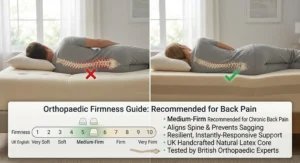
The back-pain sufferer in their 40s who’s tired of replacing sagging mattresses: Someone here should prioritise spinal support and genuine longevity over initial plushness. A medium-firm latex or latex-hybrid option — the Dunlopillo Elite Supreme 2200 Latex Hybrid Mattress or the fully organic Naturalmat Tencel Latex Mattress — lines up well with research suggesting medium-firm, correctly supported mattresses reduce musculoskeletal discomfort more reliably than either very soft or very firm options.
How to Choose Between Latex and Memory Foam
- Identify your dominant sleep temperature first. If you regularly wake up too warm, weight your decision toward latex or a latex-hybrid regardless of other preferences — temperature complaints are the single most common regret among foam mattress buyers.
- Be honest about how much you move at night. Restless sleepers and couples benefit from latex’s faster response time; still sleepers get more from memory foam’s slow, deep contouring.
- Work out your realistic budget as a decade-long figure, not a single purchase. Divide the price by expected lifespan (roughly 7 years for foam, 12-15 for latex) to compare true annual cost rather than sticker shock.
- Consider allergies and chemical sensitivity honestly. If off-gassing or dust mites are a genuine concern, natural latex has a real, evidence-backed edge over synthetic foam.
- Match firmness to sleep position, not to what “sounds premium.” Side sleepers generally want a softer top layer for shoulder and hip relief; back and stomach sleepers do better on medium-firm to firm.
- Check the trial period and returns policy before firmness, not after. Even the best-matched mattress on paper can feel wrong in practice, and a proper trial (100-200 nights is standard) removes most of the risk either material carries.
- Don’t ignore your bed base. Both latex and memory foam perform best on a solid, well-supported base — a worn-out or unsuitable divan base can undermine even a premium mattress’s performance.
Latex vs Memory Foam for Specific Sleepers
For side sleepers: Memory foam’s deep contouring generally wins for pressure relief at the shoulder and hip, which is why softer foam beds like the Emma Original Memory Foam Mattress remain popular with this group. That said, Talalay latex in models like the Dunlopillo Elite Supreme 2200 Latex Hybrid Mattress offers a softer, more cushioned latex feel than firmer Dunlop latex, narrowing the gap.
For back and combination sleepers: Latex and latex-hybrids tend to edge ahead here, since the faster response time supports position changes without the “stuck” feeling memory foam can create, while still offering enough give for spinal alignment.
For allergy sufferers: Natural latex is naturally hypoallergenic, antimicrobial and dust-mite resistant without any added chemical treatment, giving products like the Naturalmat Tencel Latex Mattress a clear structural advantage over foam for this group specifically.
For couples with different preferences: This is genuinely one of the harder scenarios to solve with a single mattress, and it’s worth being upfront about that rather than pretending one bed suits everyone. Medium-firm hybrids that blend both materials, such as the Simba Hybrid Original Mattress, often represent the most workable middle ground.
Long-Term Cost and Maintenance: The Real Total Cost of Ownership
It’s tempting to compare mattresses purely on sticker price, but that’s a genuinely misleading way to shop given how differently latex and memory foam age.
Take a straightforward budget foam mattress like the Silentnight 3 Zone Memory Foam Mattress at roughly £250-£300, with a realistic 7-year lifespan before sagging becomes noticeable — that works out to around £35-£45 per year, plus the hassle and cost of disposal and replacement shopping every 7 years. Compare that with the Dunlopillo Elite Supreme 2200 Latex Hybrid Mattress at a premium price point, but backed by a 15-year guarantee and genuinely built to reach it — the annual cost narrows dramatically once you stretch the comparison across a decade and a half, and you avoid the disrupted sleep quality that comes in the final year or two before a sagging mattress gets replaced. Add in that latex mattresses generally need less intervention — no periodic topper purchases to compensate for developing dips — and the gap closes further still.
None of this means foam is a bad financial choice; for renters, students, or anyone who genuinely expects to move or upgrade within a few years, spreading a smaller upfront cost over a shorter realistic lifespan can still make sound financial sense. It simply means the “latex is expensive” framing only tells half the story.
Features That Actually Matter (And Marketing Terms That Don’t)
Actually matters — density and layer thickness. A higher-density memory foam (roughly 50kg/m³ and above) genuinely lasts longer and sleeps more consistently than a low-density foam padded out to look thick on a spec sheet.
Actually matters — certification, not just claims. CertiPUR-US, OEKO-TEX Standard 100, or equivalent independent certifications verify VOC limits and material safety claims rather than relying on brand marketing alone.
Doesn’t matter much — “infinite” or exaggerated cooling claims. Gel infusions and graphite layers genuinely help marginally with heat, but no foam mattress “sleeps as cool as latex” — treat aggressive cooling marketing on foam beds with healthy scepticism.
Doesn’t matter much — spring count alone. A higher pocket spring count sounds impressive, but spring gauge, zoning, and how the springs interact with the comfort layer above them matter more than a raw number on the box.
Actually matters — trial length and return logistics. A 100-200 night trial is now standard across the market; anything shorter is a meaningful red flag given how long it genuinely takes to judge whether a mattress suits you.
Safety, Regulations and Fire Compliance in the UK
Every mattress sold in the UK — foam, latex, or hybrid — must comply with fire safety regulation, and it’s worth understanding roughly what that means as a buyer rather than just trusting the label.
The core standard is BS 7177, which sets ignition-resistance requirements for mattresses, mattress pads, divans and bed bases, operating alongside the Furniture and Furnishings (Fire) (Safety) Regulations 1988. You can review the current rules, including 2025 amendments, directly via gov.uk’s guidance on furniture fire safety regulations. In practice, this means every mattress in this guide — from the budget Zinus Green Tea Memory Foam Mattress through to the premium Naturalmat Tencel Latex Mattress — must pass the same Low Hazard ignition testing regardless of whether the filling is synthetic foam or natural latex. A genuine mattress will carry a permanent label confirming compliance; if you’re ever buying second-hand or from an unfamiliar seller, checking for that label is a legitimate, worthwhile safety step.
Beyond fire safety, it’s worth knowing that mattress material choice has been studied specifically in relation to musculoskeletal health. A systematic literature review of mattress-type studies found that medium-firm constructions, including pocket-sprung and latex builds, were consistently associated with better outcomes for people with back and shoulder discomfort than very soft or very firm alternatives — a useful, evidence-based anchor if you’re choosing partly with an existing bad back in mind, alongside general NHS guidance that a supportive, well-aligned sleep surface plays a genuine role in managing non-specific back pain.
Frequently Asked Questions
❓ Is latex or memory foam better for hot sleepers?
❓ How long does a latex mattress last compared to memory foam?
❓ Does memory foam off-gassing pose a real health risk?
❓ Is a latex mattress worth the extra cost over memory foam?
❓ Can you combine latex and memory foam in one mattress?
Conclusion: Making the Latex vs Memory Foam Mattress Call
There’s no single correct answer buried in the latex vs memory foam mattress debate — only a correct answer for how you actually sleep. If you run warm, move around a lot at night, or you’re tired of replacing a sagging mattress every few years, the evidence genuinely favours latex options like the Dunlopillo Elite Supreme 2200 Latex Hybrid Mattress or the fully organic Naturalmat Tencel Latex Mattress — the higher upfront cost is doing real work in temperature control and longevity, not just brand positioning.
If budget is the deciding factor right now, or you specifically love that slow, enveloping “hug” that only viscoelastic foam delivers, a well-reviewed memory foam mattress like the Emma Original Memory Foam Mattress or the properly budget-friendly Zinus Green Tea Memory Foam Mattress remains a completely sound choice — just go in with realistic expectations about heat retention and a 6-8 year lifespan rather than assuming it’ll perform identically to latex. And if you’re genuinely torn, the Simba Hybrid Original Mattress offers a reasonable middle path, borrowing enough from both materials to soften the trade-off either direction.
Whichever way you land, prioritise the trial period, check the fire safety labelling, and give the mattress a proper few weeks to settle before judging it — the right choice here is less about finding a mythical “best” mattress and more about matching real materials to your real sleep habits.
✨ Don’t Miss These Exclusive Deals!
🔍 Take your sleep setup to the next level with the picks above. Click through on any highlighted mattress to check current pricing and availability on Amazon.co.uk — and give your body the support it’s genuinely been asking for.
Recommended for You
- Latex Mattress for Back Pain: 7 Best Picks Tested for 2026
- Best Latex Mattress UK 2026: 7 Genuinely Cooler Picks
- Latex Hybrid Vs Memory Foam Hybrid: 7 Best UK Picks for 2026
Disclaimer: This article contains affiliate links. As an Amazon Associate, I earn from qualifying purchases. If you purchase products through these links, we may earn a small commission at no additional cost to you.
✨ Found this helpful? Share it with your friends! 💬🤗
