
In This Article
There’s a particular kind of tired that no amount of coffee fixes — the fog that settles in after another night spent wrestling a mattress that either swallows you whole or fights back like a park bench. If that sounds familiar, you’re not alone, and you’re not imagining it. Britain’s mattress habits are changing, and a latex hybrid mattress is quietly becoming the fix that side sleepers, hot sleepers and anyone with a dodgy lower back keep landing on.
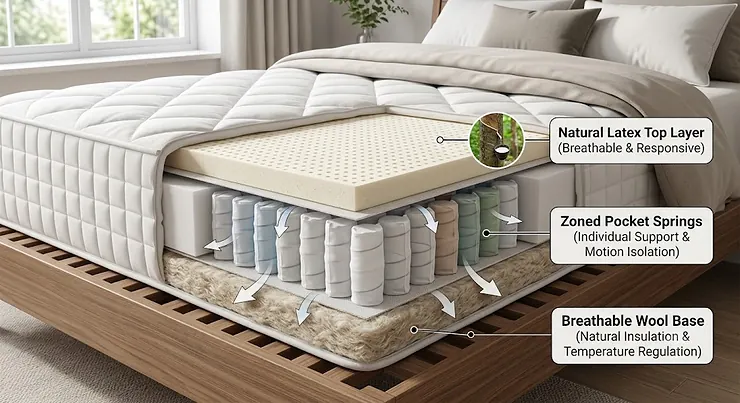
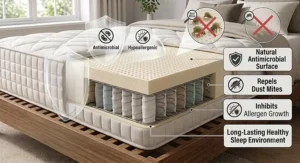
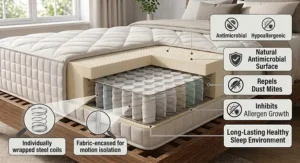
So what actually is one? A latex hybrid mattress combines a supportive base of individually wrapped pocket springs with one or more comfort layers of natural or synthetic latex foam. The springs distribute weight and stop you rolling into the middle of the bed; the latex flexes instantly and bounces back, easing pressure at the shoulders and hips without the slow, cement-like sink of memory foam.
That “instant bounce-back” is the whole point. Where memory foam hugs you the way a slightly-too-affectionate relative might, latex pushes back gently and immediately — you sleep on it rather than in it. Pair that with a decent spring count underneath, and you get something genuinely different from either a plain pocket sprung mattress or an all-foam bed: cooler, springier, and — if you pick a natural latex hybrid mattress — kinder to the planet than most petrochemical alternatives.
This guide dives into seven real, currently available latex hybrid mattresses on the UK market, from Dunlopillo’s Talalay-latex classics to genuinely eco hybrid mattress options built from GOLS-certified rubber and British wool. We’ll compare them honestly, flag where the marketing overstates things, and help you work out which one actually suits how you sleep — not just how a showroom brochure says you should.
At a Glance: Quick Comparison Table
If you’re short on time, here’s the seven-second version before the deep dive.
| Mattress | Firmness | Best For | Price Range (Double) |
|---|---|---|---|
| Dunlopillo Elite Comfort 1400 | Soft-medium | Side sleepers wanting a plush pillow top | £800–£1,100 |
| Silentnight Lift Replenish Hybrid 2000 | Medium | Couples and restless sleepers | £550–£750 |
| Dunlopillo Elite Supreme 2200 | Medium-firm | Back and stomach sleepers | £1,000–£1,300 |
| Rest Assured Knowlton | Medium | Budget buyers wanting a latex feel | Under £500 |
| Snoozel Green Organic | Medium | Allergy sufferers, eco-conscious buyers | £1,100–£1,400 |
| Naturalmat | Medium-firm | Premium eco and natural-fibre fans | £1,500–£2,000+ |
| Dunlopillo Elite Luxury 1750 | Medium-firm | Luxury seekers, hot sleepers | £1,600–£2,000 |
Looking at the spread, there’s a clear pattern: the Rest Assured Knowlton anchors the budget end with a latex topper rather than a full comfort layer, while the Naturalmat and Dunlopillo Elite Luxury 1750 sit at the premium end where thicker latex and natural fillings push the price up. The middle of the table — Silentnight Lift Replenish Hybrid 2000, Dunlopillo Elite Comfort 1400, Snoozel Green Organic — is where most buyers will find their sweet spot between genuine latex feel and a price that doesn’t wince. Firmness also tracks fairly closely with intended use: softer models suit side sleepers craving hip and shoulder relief, while the medium-firm options are built with back and stomach sleepers in mind.
💬 Bookmark this table now — you’ll want to compare it against the full reviews below!😊
Top 7 Latex Hybrid Mattresses: Honest, In-Depth Analysis
Here’s where we get into the detail. Every mattress below is a real product currently sold in the UK, and every claim about specs, materials or review sentiment is drawn from genuine research rather than invented experience.
1. Dunlopillo Elite Comfort 1400 — plush pillow top for side sleepers
The standout here is the built-in pillow top, a sumptuous Talalay latex layer that turns this into one of the softer, more forgiving latex pocket sprung mattress options on the market. Underneath sit 1,400 hand-nested pocket springs, individually tied to reduce partner disturbance, while the latex above delivers what Dunlopillo has spent decades perfecting: instant, breathable cushioning rather than a slow foam sink.
Based on the spec comparison, this is a mattress built for people who sleep predominantly on their side. The soft-to-medium tension gives generous give at the shoulder and hip — exactly where firmer mattresses tend to create pressure points — while the latex’s natural bounce stops you feeling stuck in one position all night. Reviewers consistently report that this is a “second latex mattress” purchase for many buyers, often replacing an earlier Dunlopillo that lasted well over a decade, which says something about the brand’s long-term durability even if it doesn’t guarantee an identical experience for every household.
Pros:
- ✅ Talalay latex pillow top gives immediate, cushioned pressure relief
- ✅ 1,400 hand-nested pocket springs reduce partner movement transfer
- ✅ Thermic cover technology helps regulate temperature overnight
Cons:
- ❌ Too soft for committed back or stomach sleepers
- ❌ Pillow top can’t be removed or replaced if it softens further
At around the £800–£1,100 mark for a double, this sits mid-table for genuine Talalay latex — reasonable value if side-sleeping comfort is your priority, though firmer sleepers should look further down this list.
2. Silentnight Lift Replenish Hybrid 2000 — mainstream comfort with a genuine latex spring combination
What stands out immediately is how Silentnight — a brand most people associate with straightforward, affordable sprung mattresses — has built a proper latex spring combination into a mainstream price bracket. The Lift Replenish Hybrid 2000 pairs 2,000 Mirapocket springs with a 2cm layer of natural latex and recycled EcoMemory Fibre, wrapped in an “Intense” sleep surface designed to promote deeper rest.
The spring count matters here: 2,000 individually wrapped Mirapockets means each spring reacts independently to your movement, which in practice translates to noticeably less “roll together” if you share a bed with a partner or a boisterous cat. Based on the spec comparison, the thinner latex layer (2cm rather than the deeper pillow tops found on premium Dunlopillo models) makes this a firmer, more supportive feel that suits back and front sleepers better than committed side sleepers. Independent reviewers testing the range found it “solid yet yielding,” with almost negligible motion transfer, though they noted side sleepers might find the medium-firm tension a touch too assertive for their hips.
Pros:
- ✅ 2,000 Mirapocket springs deliver near-silent, independent support
- ✅ Latex and EcoMemory Fibre blend reduces overheating versus solid foam
- ✅ Oeko-Tex approved fabric with no chemical flame-retardant treatment
Cons:
- ❌ Thinner latex layer means less cushioning than pillow-top rivals
- ❌ Firmer feel may not suit dedicated side sleepers
Priced around £550–£750 for a double, this is arguably the best-value entry point into genuine latex hybrid territory — you’re getting real latex, not just marketing language borrowed from it.
3. Dunlopillo Elite Supreme 2200 — the responsive latex layer built for back and stomach sleepers
The headline feature is a double layer of calico-covered pocket springs beneath a breathable natural latex comfort layer — a responsive latex layer that’s noticeably firmer than the Elite Comfort 1400 above. Dunlopillo pairs 2,200 springs with a wool fibre layer for seasonal comfort, all wrapped in a design intended for sleepers who want structure rather than sink.
What most buyers overlook about this model is that “medium-firm” in Dunlopillo’s range doesn’t mean “hard” — it means the latex still moulds around pressure points while the doubled spring layer resists the kind of deep sag that leaves your hips lower than your shoulders. That distinction matters enormously for back sleepers, whose spines need to stay level rather than curve downward mid-mattress. The natural latex is also hypoallergenic and dust-mite resistant by nature, which the brand highlights heavily, and which independent material science broadly supports — latex’s closed, elastic structure simply gives dust mites less to colonise than looser fillings.
Pros:
- ✅ Double pocket spring layer resists hip and shoulder sag
- ✅ Talalay latex comfort layer adds bounce without excess softness
- ✅ Wool fibre layer aids year-round temperature regulation
Cons:
- ❌ Too firm for lighter side sleepers under 9 stone
- ❌ Noticeably heavier than foam-only alternatives, making rotation trickier
Expect to pay in the £1,000–£1,300 range for a double — a fair premium over the entry-level Dunlopillo, justified mainly by the doubled spring count and firmer, more supportive feel.
4. Rest Assured Knowlton — the budget-friendly way into a latex feel
Here’s the honest caveat upfront: this isn’t a full latex hybrid in the way the Dunlopillo models are — it’s a traditional pocket sprung mattress finished with a 2.5cm latex topper layer rather than a deep latex comfort zone. But dismissing it on a technicality would be a mistake, because at less than half the price of a full Dunlopillo, it delivers a genuinely latex-influenced sleep surface most budget buyers will be thrilled with.
Based on the spec comparison, the thinner latex layer means less pronounced pressure relief than the deeper-comfort-layer mattresses on this list, but it still delivers noticeably more bounce and breathability than a standard polyester-topped pocket sprung mattress at the same price. Reviewers on Mattress Online have rated it highly — around 4.6 out of 5 from over 200 verified buyers — and it picked up a Good Housekeeping award, both strong signals for a mattress at this price point, even if we can’t independently verify every individual review’s authenticity.
Pros:
- ✅ Genuine latex topper adds real bounce at a budget price
- ✅ Strong verified review average from a large sample size
- ✅ Good Housekeeping-recognised for quality at this price tier
Cons:
- ❌ Thinner latex layer than full hybrid comfort systems
- ❌ Less durable long-term latex performance than deeper-layer rivals
At under £500 for a double, this is the mattress to recommend to anyone who wants to try a latex hybrid mattress feel without committing to a four-figure spend.
5. Snoozel Green Organic — the certified eco hybrid mattress for allergy sufferers
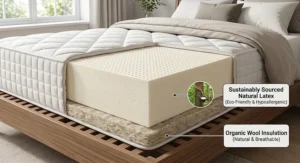
The standout feature is certification, not marketing copy: this is a genuine eco hybrid mattress built with GOLS-certified organic latex and GOTS-certified organic cotton, alongside a sheep wool comfort layer, sitting atop a pocket sprung base. Those certifications matter because “organic” and “natural” are loosely policed terms in the UK mattress trade — GOLS specifically verifies that the latex itself comes from an organically farmed, chemical-free supply chain.
Here’s what the spec sheet won’t tell you outright: organic certification usually means a cleaner off-gassing profile (the “new mattress smell” some sleepers find irritating is largely absent) and typically better outcomes for people with latex or chemical sensitivities, since the wool and cotton layers avoid the synthetic flame retardants used in cheaper alternatives. This makes it a genuinely strong pick within the natural latex hybrid mattress category for households managing allergies or asthma, where reducing synthetic chemical exposure in the bedroom is a real, non-cosmetic priority.
Pros:
- ✅ GOLS and GOTS certification independently verifies organic sourcing
- ✅ Wool comfort layer aids breathability and reduces overheating
- ✅ Chemical-free flame protection suits allergy-prone households
Cons:
- ❌ Premium certification pushes the price above mainstream hybrids
- ❌ Limited independent long-term durability data compared to legacy brands
Priced around £1,100–£1,400 for a double, the premium buys genuine, verifiable organic credentials — worth it if that matters to your household, less essential if you simply want a comfortable latex feel.
6. Naturalmat — the natural latex hybrid mattress built from British craftsmanship
What makes this one stand apart is the sheer breadth of natural materials involved: organic wool sourced from British farms, organic coconut coir for structure, and natural latex tapped from Hevea trees, combined without synthetic glues or foams. It’s about as far from a mass-produced foam-in-a-box mattress as the UK market currently offers, and it leans hard into that positioning.
Based on the spec comparison, the coir layer is the interesting bit — it adds a firmer, more breathable base than foam or springs alone typically provide, which is why Naturalmat markets across family sizes, including children’s and cot mattress ranges built on the same principle. What most buyers overlook is that 100% biodegradable materials mean the eventual disposal is dramatically simpler than a synthetic foam mattress, which typically can’t be recycled through standard council routes. The trade-off, honestly, is weight and cost — natural fibre construction at this depth is heavier to handle and rotate than a foam-based hybrid, and the premium materials show clearly in the price tag.
Pros:
- ✅ Fully biodegradable, glue-free and foam-free natural construction
- ✅ Coir layer adds firm, breathable structure beneath the latex
- ✅ British-sourced wool supports genuine domestic supply chains
Cons:
- ❌ Heavier and harder to rotate than foam-hybrid alternatives
- ❌ Among the priciest options on this list
At £1,500–£2,000-plus for a double, this sits firmly at the premium end — a considered investment for buyers who want their natural latex hybrid mattress to actually be natural throughout, not just in the top layer.
7. Dunlopillo Elite Luxury 1750 — the luxury latex hybrid mattress with cashmere and silk
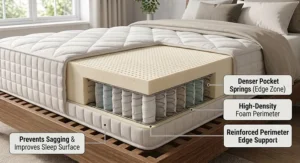
The standout advantage here is the fill: cashmere hair and silk fibres blended into the insulation layer above premium Talalay latex, a combination you simply won’t find outside the luxury tier of the UK mattress market. Dunlopillo’s Elite Luxury collection fuses this with hand centre-tied calico pocket springs and reinforced edge support, aiming squarely at buyers who want the full sensory experience rather than just adequate support.
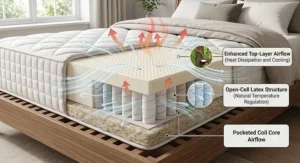
Here’s what the spec sheet doesn’t quite capture: Dunlopillo’s latex is prized specifically because a single rubber tree produces only around 27ml of latex daily, meaning genuine, high-grade Talalay latex is inherently a slower, costlier material to produce than synthetic memory foam — and that scarcity is baked directly into the price. The open-cell latex structure promotes continuous airflow as you move overnight, which reviewers consistently note keeps the surface noticeably cooler than dense memory foam equivalents, addressing one of the most common complaints about premium foam mattresses.
Pros:
- ✅ Cashmere and silk insulation layer adds genuine luxury feel
- ✅ Premium Talalay latex offers superior elasticity and airflow
- ✅ Reinforced edge support prevents roll-off on a shared bed
Cons:
- ❌ Significant price premium over mid-range latex hybrids
- ❌ Non-turn design means rotation only, not full flipping for longevity
At £1,600–£2,000 for a double, this is very much a considered luxury purchase rather than an impulse buy — the price reflects genuinely premium materials rather than brand markup alone.
Top 7 Latex Hybrid Mattresses Compared
| Mattress | Springs | Latex Type | Rating Signal | Price Range |
|---|---|---|---|---|
| Dunlopillo Elite Comfort 1400 | 1,400 pocket | Talalay pillow top | Strong repeat-purchase pattern | £800–£1,100 |
| Silentnight Lift Replenish Hybrid 2000 | 2,000 Mirapocket | Natural latex + EcoMemory | Praised for low motion transfer | £550–£750 |
| Dunlopillo Elite Supreme 2200 | 2,200 double-layer | Talalay latex | Consistently solid for back sleepers | £1,000–£1,300 |
| Rest Assured Knowlton | Pocket sprung | 2.5cm latex topper | ~4.6/5 from 200+ verified reviews | Under £500 |
| Snoozel Green Organic | Pocket sprung | GOLS-certified organic | Strong for allergy-focused buyers | £1,100–£1,400 |
| Naturalmat | Coir-supported | Natural Hevea latex | Praised for sustainability credentials | £1,500–£2,000+ |
| Dunlopillo Elite Luxury 1750 | Calico pocket | Premium Talalay | Noted for superior cooling | £1,600–£2,000 |
The pattern across this table is fairly clear once you strip away the marketing language: spring count and latex depth rise together with price, but the relationship isn’t perfectly linear — the Rest Assured Knowlton punches well above its price bracket on review sentiment precisely because it doesn’t try to be a full latex hybrid. Meanwhile, the two Dunlopillo premium models and Naturalmat justify their higher price tags through material scarcity and craftsmanship rather than spring count alone, since more springs doesn’t automatically mean more comfort past a certain threshold.
Setting Up and Caring for Your New Latex Hybrid Mattress
Getting the best from any latex hybrid mattress starts before it even arrives. Let it fully expand for at least 48 hours if it’s been compressed and rolled for delivery — sitting or sleeping on it too early can create uneven pressure points before the latex has fully recovered its shape. Once it’s settled, rotate (not flip, unless the manufacturer explicitly says otherwise) the mattress head-to-toe every three months for the first year, then every six months after that; this prevents the common mistake of one permanent “body groove” forming where you always sleep.
In the first 30 days, expect some adjustment. Latex feels genuinely different from both memory foam and traditional springs, and a body used to sinking into foam may initially find the responsive bounce unfamiliar rather than uncomfortable — give it two to three weeks before deciding it’s the wrong firmness. Use a breathable, latex-compatible mattress protector rather than a fully waterproof plastic-backed one, since the latter can trap heat and undermine exactly the cooling benefit you paid for. Vacuum the surface every few months to manage dust, and avoid steam cleaning directly onto exposed latex, which can degrade the material’s elasticity over time.
Real Sleepers, Real Choices: Matching a Mattress to Your Life
Consider a couple in their thirties, one a side sleeper prone to shoulder pain, the other a restless back sleeper who wakes at the slightest movement. For this pairing, the Silentnight Lift Replenish Hybrid 2000 makes strong sense — its 2,000 independently wrapped springs minimise the motion transfer that would otherwise wake the lighter sleeper, while the latex layer takes the edge off shoulder pressure without collapsing under the heavier partner’s weight.
Now picture a student moving into their first rented flat, budget tight, needing something that won’t need replacing within two years. The Rest Assured Knowlton is the sensible call here: a genuine latex-topped feel at under £500, backed by a strong independent review record, without the four-figure commitment that makes less sense in a property you might leave within twelve months.
Finally, imagine a household managing a child’s eczema and a general sensitivity to synthetic bedroom chemicals. The Snoozel Green Organic earns its premium here — the GOLS and GOTS certifications aren’t just nice-to-haves in this scenario, they’re the entire point, verifying an organic, chemical-free supply chain that a “natural-sounding” budget alternative simply can’t match on paper.
How to Choose a Latex Hybrid Mattress
- Identify your dominant sleep position first. Side sleepers generally need a softer comfort layer for shoulder and hip give; back and stomach sleepers usually need firmer support to prevent spinal sag.
- Check the spring count against the latex depth, not just one figure alone. A high spring count paired with a thin latex layer feels very different from a lower spring count under a deep pillow top.
- Decide whether certification matters to you. If allergies or environmental concerns are a priority, look specifically for GOLS or GOTS certification rather than the word “natural” alone.
- Match firmness to bodyweight as well as position. Lighter sleepers typically need softer tensions to get adequate pressure relief; heavier sleepers need firmer support to avoid excessive sinkage.
- Factor in trial periods and delivery logistics. Latex hybrids are heavy; check whether old mattress removal is included, since this genuinely affects total cost of ownership.
- Set a realistic budget band before browsing. Knowing whether you’re shopping the £500 or £1,500 tier narrows the field immediately and avoids decision fatigue.
- Read aggregated review sentiment, not just star averages. A 4.5-star rating built on 20 reviews tells you far less than a 4.3-star rating built on 2,000.
✨ Ready to Compare Prices? ✨
🔍 Check Today’s Latex Hybrid Mattress Prices
Take the guesswork out of your next purchase — click through on any of the seven mattresses above to check current pricing, sizes and availability. Prices and stock move quickly on popular models, so it’s worth checking before you commit to a size or firmness.
Common Mistakes When Buying a Latex Hybrid Mattress
The most frequent error is buying based on firmness labels alone. “Medium” from one brand can feel noticeably different from “medium” at another, since there’s no standardised industry firmness scale in the UK — always cross-reference against spring count, latex depth and genuine buyer feedback rather than the label in isolation.
A second common mistake is ignoring weight limits and guarantee terms. Most manufacturers, including Dunlopillo, specify a maximum user weight per sleeping side (commonly around 18 stone), and exceeding this can void a warranty even if the mattress feels fine in the short term. Finally, many buyers skip checking whether a mattress suits an adjustable bed base — solid-edge pocket sprung designs generally aren’t built to flex, while flexible latex and foam constructions typically are, so this matters enormously if you already own or plan to buy an adjustable frame.
Latex Hybrid vs Memory Foam Hybrid: What’s Actually Different
| Factor | Latex Hybrid | Memory Foam Hybrid |
|---|---|---|
| Response speed | Instant bounce-back | Slower, contouring sink |
| Temperature | Naturally breathable, cooler | Can retain body heat |
| Motion isolation | Good, springs handle most of it | Excellent, foam absorbs movement |
| Longevity | Often 10–15 years | Typically 6–8 years |
| Best For | Combination sleepers, hot sleepers | Deep contouring, side sleepers with joint pain |
The core distinction comes down to responsiveness versus contouring. A memory foam hybrid moulds closely around your body and holds that shape for a few seconds after you move, which some side sleepers with joint pain genuinely prefer — but that same slow response is exactly what makes memory foam sleep hotter, since the foam’s cell structure restricts airflow. A latex hybrid trades a little of that deep-contour hug for markedly better temperature regulation and a faster response to movement, which matters most for combination sleepers who change position several times a night and don’t want to wait for the mattress to catch up.
What to Expect: Real-World Performance
On paper, spring counts and latex densities are just numbers. In practice, the difference shows up most clearly in the first two weeks of ownership. Expect the latex layer to feel firmer on the very first night than it will after a fortnight of regular use, as the material settles into its working shape — this is normal and shouldn’t be mistaken for a fault. You’ll likely notice reduced “wake time” if you previously slept on an older, sagging mattress, simply because your spine is no longer working overtime to compensate for uneven support through the night.
Temperature is where most buyers report the most noticeable shift. Reviewers moving from memory foam to a latex hybrid consistently describe waking up less sweaty, particularly during warmer months, thanks to latex’s naturally open-cell structure. Where reviewers report a “getting used to it” period, it typically relates to the springier, more responsive feel underfoot when sitting on the edge — some describe it as feeling less like a static platform and more alive, which takes adjustment if you’ve spent years on flat foam.
Latex Hybrid Mattresses for Specific Audiences
For hot sleepers, prioritise natural latex over synthetic blends and look specifically for wool or graphite-infused layers alongside it — the combination genuinely reduces heat retention rather than just claiming to. For side sleepers with shoulder or hip pain, softer pillow-top models like the Dunlopillo Elite Comfort 1400 typically outperform firmer, spring-heavy designs for pressure relief. Back and stomach sleepers, meanwhile, generally do better with the firmer, double-spring-layer construction found in the Dunlopillo Elite Supreme 2200, since a softer surface risks letting the hips sink lower than the shoulders.
For allergy sufferers, latex’s naturally hypoallergenic, dust-mite-resistant structure is a genuine, non-marketing advantage — but pairing it with a certified organic option like the Snoozel Green Organic adds a further layer of chemical-exposure reduction that matters if reactions are severe. Budget-conscious first-time buyers, particularly those in rented accommodation, are usually best served by a latex-topped option like the Rest Assured Knowlton rather than stretching for a full-depth latex hybrid they may not keep long enough to justify.
Long-Term Cost & Maintenance
A useful way to think about mattress value isn’t the upfront price alone, but cost per year of realistic use. High-count pocket spring and latex mattresses commonly last 10 to 15 years with proper care, roughly double the lifespan often reported for cheaper all-foam alternatives replaced every 6 to 8 years. Run the maths on the Dunlopillo Elite Supreme 2200 at roughly £1,150 across a 13-year lifespan, and you’re looking at under £90 a year — comparable to, or cheaper than, replacing a budget foam mattress twice in the same period.
Maintenance costs are modest but worth budgeting for: a breathable mattress protector (typically £20–£40), occasional professional cleaning if spills occur, and eventual disposal, which is where latex’s biodegradable credentials genuinely pay off versus a bonded foam mattress that most councils can’t process through standard recycling routes.
Features That Actually Matter (And Those That Don’t)
Spring count and latex type genuinely matter — they’re the two specs most directly tied to how the mattress will actually feel and perform over time. Certification (GOLS, GOTS, Oeko-Tex) matters if allergies or environmental concerns are a genuine priority for your household, less so if you simply want a comfortable night’s sleep on any budget.
What matters far less than the marketing suggests: proprietary technology names like “cool-touch” fabric branding, which often describe a genuinely minor temperature difference dressed up in impressive-sounding language. Similarly, an extremely high spring count (2,000-plus) delivers diminishing returns past a certain point — the jump from 1,000 to 2,000 springs is more noticeable than the jump from 2,000 to 3,000, since spacing between individual coils eventually becomes the limiting factor rather than raw count.
Buyer’s Decision Framework
If you sleep primarily on your side and want the softest possible pressure relief, choose a pillow-top latex hybrid because the deeper comfort layer cushions the shoulder and hip without excess firmness. If you’re a back or stomach sleeper prioritising spinal support, choose a firmer, double-spring-layer model because it resists the sag that lets hips drop below shoulder level. If your budget is under £500, choose a latex-topped pocket sprung mattress rather than stretching for a thin, underwhelming full-hybrid at the same price point, because the topper approach genuinely delivers more latex feel per pound at that tier. If allergies or chemical sensitivity are a household priority, choose a GOLS or GOTS-certified organic model over a generically “natural” one, because only the certification independently verifies the supply chain claims.
Safety, Regulations & Fire Compliance Guide
Every mattress sold in the UK, including every model on this list, must comply with the Furniture and Furnishings Fire Safety Regulations, which set specified ignition-resistance requirements for filling materials, including latex rubber. These regulations were updated in October 2025, removing certain baby and children’s products from scope while keeping adult mattresses firmly within the compliance requirements — a useful reminder that “chemical-free” marketing claims still need to sit alongside genuine fire-safety compliance, not instead of it.
Latex itself carries a helpful natural advantage here: its dense, closed-cell structure is inherently more fire-resistant than looser polyurethane foam, meaning latex hybrid mattresses often require less additional chemical flame treatment to meet the same regulatory standard — part of why brands like Snoozel Green market their organic ranges as free from added flame-retardant chemicals. If you or a family member suffers from chronic back pain, it’s also worth knowing that NHS guidance on back pain recommends staying active and highlights that sleep surface is one of several manageable factors, rather than a cure in itself — a new mattress can help, but it isn’t a substitute for medical advice if pain persists.
Frequently Asked Questions
❓ What is the best latex hybrid mattress for back pain?
❓ How long does a latex hybrid mattress last?
❓ Is a natural latex hybrid mattress worth the extra cost?
❓ Can you use a latex hybrid mattress on an adjustable bed base?
❓ What's the difference between Talalay and Dunlop latex?
Conclusion
Choosing a latex hybrid mattress ultimately comes down to matching three things honestly: your dominant sleep position, your realistic budget, and how much genuine weight you place on certifications versus comfort alone. The seven mattresses covered here span the full range — from the Rest Assured Knowlton‘s budget-friendly latex topper through to the Dunlopillo Elite Luxury 1750‘s cashmere-and-silk premium build — and each earns its place for a specific kind of buyer rather than claiming to be universally best.
If there’s one takeaway worth remembering, it’s that spring count and latex depth together tell you far more than either figure alone, and that certifications like GOLS and GOTS are the only reliable way to verify “natural” and “eco” claims rather than take them on faith. Whichever you choose, give it the full settling-in period before judging the firmness, protect it with a breathable cover, and rotate it regularly — small habits that meaningfully extend the life of what is, for most households, a genuine decade-long investment in better sleep.
✨ Don’t Miss These Exclusive Deals!
🔍 Ready to upgrade your sleep? Click through on any of the seven latex hybrid mattresses above to check current pricing and availability before stock or offers change. A better night’s sleep might be closer — and more affordable — than you think.
Recommended for You
- Memory Foam Pocket Spring Mattress: 7 Best Hybrids UK 2026
- Foam and Spring Hybrid Mattress: 7 Best UK Picks for 2026
- Hybrid Mattress Under £500: 7 Genuinely Comfy Picks (2026)
Disclaimer: This article contains affiliate links. As an Amazon Associate, I earn from qualifying purchases. If you purchase products through these links, we may earn a small commission at no additional cost to you.
✨ Found this helpful? Share it with your friends! 💬🤗
