

In This Article
Waking up with a dead arm or a throbbing hip isn’t just bad luck — it’s usually a sign your mattress and your sleeping position have never actually been introduced. If you’re one of the roughly two-thirds of adults who sleep predominantly on their side, the maths is unforgiving: your shoulder and hip are carrying almost all your body weight through a fairly small contact area, all night, every night. Get the wrong mattress for side sleepers and that pressure has nowhere to go, which is exactly how you end up with pins and needles at 3am or a stiff lower back by breakfast.

This guide exists to cut through the marketing fog. We’ve dug into real specs, real UK pricing, and genuine aggregated review sentiment from testers and verified buyers — not invented quotes — to find seven mattresses that actually earn their keep for side sleeping. You’ll get a side sleeper mattress shortlist spanning budget, mid-range and premium, a proper look at what pressure relief actually means in practice, a dedicated section on the best cooling mattress for side sleepers if you tend to run warm, and honest guidance on how your sleeping position should steer your choice. If you’re dealing with ongoing discomfort rather than just a bad night here and there, it’s worth reading the NHS’s guidance on back pain alongside this guide, since a new mattress is only ever part of the picture.
Firmness sits at the centre of all this. Too firm, and your shoulder and hip can’t sink in enough to keep your spine level. Too soft, and your midsection sinks further than your shoulders, twisting your lumbar spine out of alignment. The sweet spot for most side sleepers is medium to medium-firm — soft enough to cushion, firm enough to hold your hips level with your shoulders.
Quick Comparison Table
| Mattress | Type | Firmness | Best For |
|---|---|---|---|
| Simba Hybrid | Hybrid (springs + foam) | Medium-firm | Best overall side sleeper pick |
| Emma Original | All-foam | Medium | Budget-friendly pressure relief |
| Nectar Memory Foam | Memory foam | Medium-firm | Deep contouring, heavier builds |
| Panda Hybrid Bamboo | Hybrid (bamboo/foam/springs) | Medium-firm | Best cooling mattress for side sleepers |
| Otty Original Hybrid | Hybrid | Medium-firm | Combination sleepers who run warm |
| Silentnight Pocket 1200 Eco Comfort | Pocket sprung | Medium-firm | Budget pocket-sprung pick |
| Brook + Wilde Elite | Hybrid, adjustable firmness | Soft–Extra firm | Premium pick, choose-your-tension |
Looking across the table, there’s a clear pattern: every genuinely good side sleeper mattress here sits somewhere in the medium to medium-firm band, and the hybrids generally edge out the all-foam options on temperature control simply because springs let air move through the mattress. Budget doesn’t automatically mean worse pressure relief either — the Silentnight Pocket 1200 Eco Comfort and Emma Original both use targeted, zoned support to punch above their price. If you already know cooling is your priority, jump ahead to the dedicated section below; if back pain is the bigger issue, the “How to Choose” section covers that specifically.
Just one click — help others make better buying decisions too!😊
Top 7 Mattresses for Side Sleepers: Expert Analysis
We’ve picked seven real, currently available mattresses covering every budget bracket, prioritising models with genuine zoned support, adequate depth for shoulder and hip cushioning, and — where relevant — real cooling technology rather than marketing buzzwords.
1. Simba Hybrid — best all-round pick for side sleepers
The Simba Hybrid earns its top spot by doing the fundamentals brilliantly rather than chasing gimmicks. Its five-layer construction pairs up to 2,500 conical Aerocoil micro springs with graphite-infused Simbatex foam, and that combination is doing real work: the springs compress individually under your shoulder and hip, so pressure is distributed zone-by-zone rather than spread evenly across a flat foam slab that can’t tell the difference between your ribcage and your ankle. The graphite foam layer adds meaningful airflow too — roughly thirty times more than standard memory foam, according to the brand’s own testing, which matters if you tend to overheat mid-sleep.
Reviewers at Tom’s Guide who slept on the Hybrid for over three weeks rated it well for both back and side sleeping specifically, though they noted lighter-weight sleepers might find it slightly on the firmer side. That tracks with what most side sleepers actually need: enough give to cushion the hip, but not so much that your midsection sinks and twists your spine. Edge Lift Technology along the perimeter also means you won’t feel like you’re rolling off if you sleep close to the edge, which matters more than people expect until they’ve had a mattress without it.
Pros:
- ✅ Aerocoil zoned springs give targeted hip and shoulder cushioning
- ✅ Graphite-infused foam noticeably reduces heat build-up
- ✅ Strong edge support even close to the mattress perimeter
Cons:
- ❌ Firmer than expected for lightweight side sleepers
- ❌ Sits at the pricier end of the hybrid mid-range
Double mattresses typically land in the £650-£750 range depending on current offers, and given the 200-night trial and 10-year guarantee, it’s a genuinely strong value proposition for anyone who wants hybrid support without going premium.

2. Emma Original — best budget all-foam pick
The Emma Original has quietly become the UK’s most-awarded bed-in-a-box mattress, and its budget-friendly price doesn’t tell the whole story. Three layers of foam — a breathable Airgocell top, Halo memory foam for contouring, and a dense HRX support base — work together with five adaptive cut-out zones designed to spread body weight evenly rather than let any single pressure point bear the load. For side sleepers on a tighter budget, that zoning is the difference between a mattress that just happens to be soft and one that’s actually engineered for pressure relief.
Emma rates it medium on its own 1–10 scale, but TechRadar’s testers found it ran slightly firmer than advertised — useful context if you’re deciding between sizes or firmness options elsewhere in the range. What most buyers overlook is that all-foam construction like this tends to isolate motion beautifully, so if you share a bed, a restless partner is far less likely to wake you. Reviewers on Wayfair and DIY.com consistently mention the mattress “moulding” comfortably to the body, with the main recurring gripe being a lack of reinforced edge support compared with hybrid alternatives.
Pros:
- ✅ Five-zone foam design spreads weight away from pressure points
- ✅ Excellent motion isolation for couples
- ✅ 10-year guarantee and 200-night trial at an accessible price
Cons:
- ❌ Softer edge support than hybrid competitors
- ❌ All-foam builds retain more heat than hybrids in summer
Expect a double to sit in the £400-£500 range, making this one of the most cost-effective ways to get proper zoned pressure relief without stretching to a hybrid.
3. Nectar Memory Foam — best for deep, sink-in pressure relief
If the Emma feels too restrained, the Nectar sits at the plusher end of memory foam, and that’s precisely why it suits average-to-heavier side sleepers who need serious cushioning at the hips and shoulders. Its multiple foam layers — including a gel-infused comfort layer over a dense support base — allow deeper sinkage than the Emma while a quilted cooling cover works to offset memory foam’s usual heat retention.
What the spec sheet won’t fully convey is how forgiving this mattress feels on pressure points specifically; the trade-off is a slower response time when you change position, which some combination sleepers find takes adjusting to. Which? has tested the Nectar and rates it among mattresses worth considering for body support, and the brand’s unusually long 365-night trial period signals real confidence in long-term comfort rather than a first-week honeymoon effect. Aggregated customer sentiment across retailer reviews consistently flags the “cloud-like” sink-in feel as the standout, with occasional mentions of warmth on very hot nights despite the cooling cover.
Pros:
- ✅ Deep contouring ideal for heavier-build side sleepers
- ✅ Quilted cooling cover offsets typical memory foam warmth
- ✅ Exceptionally long trial period reduces buying risk
Cons:
- ❌ Slower response time when changing sleep position
- ❌ Can still run warm compared with hybrid alternatives
A double typically falls in the £450-£550 range outside of promotional periods, positioning it firmly as a mid-range, foam-first option.
4. Panda Hybrid Bamboo — best cooling mattress for side sleepers
For anyone specifically hunting the best cooling mattress for side sleepers, this is where the research consistently points. The Panda Hybrid Bamboo’s sleeping surface is infused with 34% bamboo yarn — naturally hypoallergenic and genuinely effective at wicking moisture — sitting above an open-cell “BioCell” foam layer designed to let heat escape rather than trap it against your skin. Underneath, up to 960 individually pocketed springs, four to seven layers deep depending on size, add the zoned support side sleepers actually need.
Expert Reviews ran a heat-pad test on this exact mattress and recorded the surface temperature dropping rapidly from 50°C to under 27°C, which is about as close to an objective cooling verdict as you’ll find outside a lab. Tom’s Guide’s testers, meanwhile, praised the temperature regulation specifically but noted the mattress felt firmer underfoot than Panda’s stated 6.5/10 rating suggests — worth knowing if you’re a lighter-build side sleeper who wants real softness rather than just breathability. Reviewers on Mumsnet echo this: strong marks for cooling and construction quality, with occasional comments that it runs firmer than expected out of the box before it settles in over the first few weeks.
Pros:
- ✅ Genuinely effective, lab-tested cooling performance
- ✅ Bamboo cover is hypoallergenic and machine-washable
- ✅ Zoned pocket springs support hip and shoulder alignment
Cons:
- ❌ Firmer than its stated rating for lighter sleepers
- ❌ Among the pricier mid-range hybrids on this list
Prices start from around £650 for a single, with doubles generally sitting in the £750-£900 range — a premium over pure foam options, but justified if overheating is your main complaint.
5. Otty Original Hybrid — best for combination sleepers who run warm
Otty’s flagship hybrid splits the difference nicely between plush and supportive. Over 2,000 encapsulated pocket springs sit beneath layers of memory and support foam, with small perforations running through the foam specifically to help air move and regulate temperature — a lower-key cooling approach than Panda’s bamboo, but a real one nonetheless. Otty rates it 7/10 on firmness, which testers at both Tom’s Guide and TechRadar independently confirmed felt accurate, describing it as firm enough for back and front sleepers while still cushioning side-sleeping testers comfortably.
What’s genuinely useful here is how well it handles people who don’t stay in one position all night. Mumsnet’s tester, a self-described combination sleeper, found it supportive across side, back and front positions alike, attributing the consistency to the hybrid’s balance of springy responsiveness and foam contouring — you’re not fighting the mattress every time you roll over, which happens more than people admit with softer all-foam beds. Reviewers across the board single out the motion isolation as a strong point for couples, alongside genuinely reasonable edge support for the price bracket.
Pros:
- ✅ Handles multiple sleep positions without losing support
- ✅ Perforated foam layers noticeably reduce heat build-up
- ✅ Strong motion isolation for shared beds
Cons:
- ❌ On the firmer side for petite or lightweight side sleepers
- ❌ Corner support is a little softer than the centre and edges
A double typically retails in the £500-£650 range, making it a sensible mid-tier hybrid for anyone torn between softness and support.
6. Silentnight Pocket 1200 Eco Comfort — best budget pocket-sprung pick
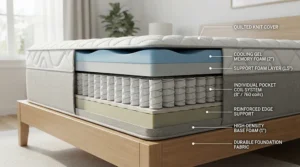
Proof that pocket springs don’t have to cost a fortune, the Silentnight Pocket 1200 uses the brand’s Mirapocket spring system — 1,200 individually nested springs that respond independently to your body’s weight and movement, offering genuine zoning rather than a single uniform bounce. Eco Comfort fibre layers sit above the springs to add cushioning and encourage airflow, and the whole thing comes finished with a soft knit cover.
Which? has tested this exact model and rates it a cold-sleeping, pocket-sprung option aimed squarely at buyers who want breathability without paying hybrid-foam prices. Aggregated verified buyer reviews on Mattressman are strikingly consistent: shoppers repeatedly praise the firmness-to-comfort balance for reducing back pain, note that the added depth minimises disturbance from a partner’s movement, and flag the mattress’s competitive price as genuinely good value rather than a compromise. The most common practical complaint isn’t comfort at all — it’s that the mattress’s depth means some existing fitted sheets won’t fit, which is worth checking before you buy.
Pros:
- ✅ Individually nested springs provide real zoned support
- ✅ Consistently praised for reducing back discomfort
- ✅ Genuinely competitive price for pocket-sprung construction
Cons:
- ❌ Extra depth may not suit standard-depth fitted sheets
- ❌ Shorter guarantee period than most rivals on this list
Pricing varies significantly by retailer and promotion, but expect a double somewhere in the £350-£550 range, making this one of the most accessible genuinely-sprung options for side sleepers.
7. Brook + Wilde Elite — best premium pick with adjustable firmness
The Elite earns its premium positioning through a genuinely useful feature the rest of this list can’t match: you choose your firmness at the point of purchase — Soft (3/10), Medium (5/10), Firm (7/10) or Extra Firm — rather than hoping the brand’s “medium” matches yours. For side sleepers specifically, that’s a significant advantage, because the Soft and Medium options are explicitly positioned by the brand as suited to side sleeping and smaller or lighter builds, while heavier or back/front sleepers can select Firm.
Eight layers, including two spring layers totalling roughly 3,000 springs, sit around Brook + Wilde’s “Wave Technology” foam — a contoured (rather than flat) foam layer designed to add extra depth precisely where the upper spine and shoulders need it. TechRadar’s reviewer, testing the Firm option, described the mattress as remaining comfortably cool throughout testing and singled out the motion isolation as strong enough that a restless partner barely registers. Ideal Home’s tester, sleeping on the Elite specifically as a side sleeper, noted a decent amount of give for shoulder and hip cushioning, though found it slightly softer than her personal preference — a useful reminder that firmness selection genuinely matters here rather than being a marketing afterthought.
Pros:
- ✅ Choice of four firmness levels tailored to sleep position
- ✅ Wave Technology foam targets shoulder and upper spine support
- ✅ Excellent temperature regulation and motion isolation
Cons:
- ❌ Among the most expensive options on this list
- ❌ Not recommended for sleepers over roughly 18 stone even on Extra Firm
RRP for a double sits around £1,200-£1,300, though the brand runs frequent, substantial promotions that can bring it closer to the £600-£700 range — worth checking current pricing before you rule it out on cost alone.
What Is a Side Sleeper Mattress?
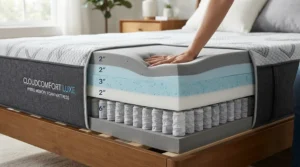
A side sleeper mattress is a bed built with enough give at the shoulder and hip to let them sink slightly, while staying firm enough elsewhere to keep the spine level from neck to tailbone. Unlike back- or firmness-focused mattresses, a genuine side sleeper mattress typically uses zoned support — either pocket springs or layered foam — rather than uniform firmness across the whole surface.
That distinction matters more than most shoppers realise. A mattress can be “medium firm” on paper and still be a poor side sleeper mattress if it doesn’t zone that firmness appropriately. This is one reason the products above vary so much in construction — foam, hybrid, and pocket-sprung designs all achieve pressure relief through different mechanical routes, and which route suits you best comes down to body weight, temperature preference and budget as much as sleep position alone.
How to Choose the Best Mattress for Side Sleepers
- Start with firmness, not brand. Aim for medium to medium-firm (roughly 4-7 on a 10-point scale) — soft enough to cushion the shoulder and hip, firm enough to prevent your midsection sinking and twisting your spine.
- Match firmness to body weight. Lighter sleepers (under roughly 60kg) generally need a softer setting to get any real sink-in; heavier sleepers (over roughly 90kg) need firmer support and stronger edge structure to avoid bottoming out.
- Prioritise zoned support over raw thickness. A thick mattress with no zoning can still leave pressure points unsupported — look specifically for pocket springs, cut-out foam zones, or named “zoned” support layers.
- Factor in temperature separately from firmness. If you sleep hot, weight hybrid or bamboo-infused options more heavily than pure memory foam, regardless of how good the pressure relief sounds on paper.
- Check the trial period, not just the guarantee. Mattresses that feel right in a showroom can feel very different after two weeks of actual side sleeping — a 100+ night trial gives you room to be wrong.
- Read aggregated review sentiment, not star ratings alone. A 4.5-star average tells you little; look for recurring specific comments about pressure points, heat, or edge support from real side sleepers.
- Budget for delivery and old mattress removal. Many bed-in-a-box brands include this, but always confirm before comparing final prices, since it can shift the real cost by £40-£60.
Best Cooling Mattress for Side Sleepers: What Actually Works
Side sleeping puts more surface area of your body in direct contact with the mattress than back sleeping does, which is part of why overheating complaints cluster disproportionately among side sleepers. Cooling technology broadly falls into three genuine categories, and it’s worth knowing the difference before you pay a premium for a buzzword.
Open-cell, graphite-infused foams — used in the Simba Hybrid — work by creating more surface area for heat to escape through than standard memory foam, which is notoriously dense and heat-retentive. Bamboo-infused covers and foams, as in the Panda Hybrid Bamboo, work differently: bamboo fibre is naturally moisture-wicking, pulling sweat and warmth away from the skin rather than just allowing airflow. And perforated foam layers, like those in the Otty Original Hybrid, physically punch channels through the foam to let warm air move rather than sit trapped against your body.
Based on the spec comparison, hybrid and bamboo-hybrid constructions consistently outperform pure memory foam for temperature regulation, simply because springs create natural air gaps that foam alone cannot replicate. If cooling is genuinely your top priority over ultimate softness, the Panda Hybrid Bamboo currently has the strongest independently tested cooling performance of anything on this list — Expert Reviews’ heat-pad test showed a rapid surface temperature drop that few competitors can match, though it comes at a firmer, pricier position than some shoppers expect.
Understanding Pressure Relief: Why It Matters for Side Sleepers
Pressure relief is the mattress’s ability to reduce concentrated force at specific points on your body — primarily the shoulder and hip for side sleepers — rather than letting your full body weight rest on a small contact area. Without it, blood flow to that area can be restricted enough to wake you, which is the physiological root of that “dead arm” feeling many side sleepers know too well.
Reviewers consistently note that pressure relief isn’t purely about softness; a mattress can be soft everywhere and still fail to relieve pressure if it lacks zoning, because the surrounding areas simply aren’t firm enough to hold your spine level while your hip sinks. This is what most buyers overlook about memory foam in particular — its slow-recovery, body-contouring properties genuinely help pressure points, but only when paired with a supportive base layer underneath, which is why the base foam or spring layer matters just as much as the comfort layer on top. Among the mattresses reviewed here, the Nectar Memory Foam and Simba Hybrid both scored strongly for pressure point relief in independent testing, achieving it through very different mechanisms — deep sink-in foam versus zoned micro-springs — which illustrates there’s more than one legitimate engineering route to the same outcome.
Sleeping Position and Spinal Alignment: The Science Bit
Spinal alignment during sleep essentially means keeping your spine in the same gentle, neutral curve it holds when you’re standing upright with good posture. For side sleepers, that means your shoulders, hips and head should sit roughly level with each other, with your spine running in a straight (not sagging, not arched) line between them.
According to physiotherapy guidance summarised by NHS trusts, side sleepers should keep their head and neck in line with the rest of the spine, using enough pillow support to prevent the neck tilting down or up, with the lower arm positioned in front of the body rather than trapped underneath. A mattress plays its part by supporting the pelvis at the same height as the ribcage and shoulders — too soft, and the hip sinks below the shoulder line; too firm, and the shoulder can’t sink enough to compensate, forcing the spine into a slight curve at the neck instead. This is a large part of why the “medium to medium-firm” recommendation appears so consistently across the products in this guide — it isn’t a lack of imagination from manufacturers, it’s genuinely where the biomechanics work best for most side sleepers.
Practical Usage Guide: Getting the Most From Your New Mattress
Buying the right mattress for side sleepers is only half the job — how you set it up and live with it in the first month affects both comfort and lifespan. Most bed-in-a-box mattresses arrive rolled and vacuum-packed; allow the full 24-72 hours manufacturers recommend for the mattress to fully expand before judging its firmness, since a mattress fresh out of the box can feel noticeably different a few days later.
During the first 30 days, resist the urge to judge too early — foam and hybrid mattresses both need a genuine adjustment period, and several reviewers cited in this guide specifically noted mattresses felt firmer on night one than they did a few weeks in. Rotate the mattress head-to-toe roughly once a month for the first six months (check your specific product’s care instructions, as some are designed not to need this), which helps prevent early body-shaped indentations, particularly with memory foam. Use a breathable, fitted mattress protector from day one rather than waiting until you need one — most warranties are voided by stains, and a good protector adds negligible heat retention on modern breathable designs. Finally, check your bed base compatibility before you buy: slatted bases need slats no more than roughly 3 inches apart, or the mattress (and its warranty) can be compromised.

Real-World Scenarios: Which Mattress Suits Your Sleep Life?
The side sleeper with a restless partner. If you share a bed and either of you moves around a lot, motion isolation matters as much as pressure relief. The Simba Hybrid and Emma Original both perform strongly here — the former through individually responsive micro springs, the latter through dense, motion-absorbing all-foam construction — meaning a partner turning over at 2am is far less likely to wake you.
The hot sleeper on a mid-range budget. If overheating is your dominant complaint but a premium hybrid feels like overkill, the Otty Original Hybrid offers a genuinely useful middle ground: perforated cooling foam without the bamboo-hybrid price tag of the Panda, at a firmness most side sleepers find workable straight out of the box.
The lighter-build side sleeper on a budget. If you’re a smaller-framed side sleeper who needs real sink-in softness without stretching to premium pricing, the Silentnight Pocket 1200 Eco Comfort consistently earns praise in aggregated reviews for exactly this — enough give to cushion properly, at a price point that doesn’t demand compromise elsewhere in your bedroom budget.
Side Sleeper Mattress vs Mattresses for Back and Stomach Sleepers
| Factor | Side Sleeper Mattress | Back Sleeper Mattress | Stomach Sleeper Mattress |
|---|---|---|---|
| Ideal firmness | Medium to medium-firm | Medium-firm to firm | Firm to extra-firm |
| Priority | Shoulder/hip pressure relief | Lumbar support | Preventing hip sink |
| Zoning need | High (targeted softness) | Moderate | Low |
| Best construction | Hybrid or zoned foam | Hybrid or pocket sprung | Firm foam or firm hybrid |
The core difference comes down to where pressure concentrates. Side sleepers need targeted softness at two relatively small points; back sleepers need broader, even support along the length of the spine with extra lumbar reinforcement; stomach sleepers need enough firmness overall to stop the hips sinking below the shoulder line, which is why genuinely soft mattresses are rarely recommended for that position at all. Combination sleepers, who shift between positions through the night, are usually best served by a medium-firm hybrid like the Otty Original Hybrid or Simba Hybrid, since these adapt reasonably well across all three positions rather than excelling narrowly at one.
Common Mistakes When Buying a Mattress for Side Sleepers
The single most common mistake is choosing based on a showroom test rather than a real trial period — five minutes of lying on a mattress in a shop tells you almost nothing about how it performs after three hours of actual side sleeping, which is why every mattress on this list comes with a genuine 60-100+ night home trial. A close second is ignoring body weight entirely: a firmness rating is only meaningful relative to how much weight is pressing into it, so a “medium” mattress can feel firm to a lighter sleeper and soft to a heavier one. Buyers also frequently underweight cooling technology until after purchase, then discover their beautifully pressure-relieving memory foam mattress runs uncomfortably warm in summer — worth front-loading that consideration rather than treating it as an afterthought. Finally, skipping pillow height when choosing a mattress is a mistake reviewers rarely flag but physiotherapists consistently raise: even the best side sleeper mattress can’t correct a neck that’s tilted by the wrong pillow height.
Long-Term Cost & Maintenance: What Your Mattress Really Costs
| Price Bracket | Typical Double Price Range | Expected Lifespan | Approx. Cost Per Night (7yr use) |
|---|---|---|---|
| Budget | £350-£500 | 6-7 years | Under 20p |
| Mid-range | £500-£750 | 7-8 years | 20-30p |
| Premium | £750-£1,300+ | 8-10 years | 25-45p |
Looking at the table, the cost-per-night gap between budget and premium mattresses is smaller than the upfront price difference suggests, since premium hybrids like the Brook + Wilde Elite and Panda Hybrid Bamboo tend to hold their support and cooling performance for longer. That said, a well-built budget pick like the Silentnight Pocket 1200 Eco Comfort can still deliver excellent value if replaced on schedule. Maintenance costs are modest but real: budget for a mattress protector (£20-£40), occasional professional cleaning if needed, and factor in that most warranties require rotation to remain valid, which costs nothing but a few minutes every month.
Safety, Regulations & Certifications to Look For
UK mattresses sold to consumers must meet fire safety regulations, and several products in this guide carry the UKFR (UK Fire Retardant) certification specifically, confirming compliance with UK flammability standards for domestic furniture. Look also for CertiPUR or OEKO-TEX certification on foam components, which confirm the foam has been independently tested for harmful substances, VOC emissions and durability — genuinely useful reassurance given how much time you spend in direct contact with the material. If allergies are a concern, hypoallergenic claims (common on bamboo-covered mattresses like the Panda Hybrid Bamboo) are worth verifying against an actual certification rather than taking the marketing copy at face value. None of this replaces medical advice if you have a diagnosed spinal condition or chronic pain — if that applies to you, it’s worth discussing mattress firmness with a GP or physiotherapist directly rather than relying on general guidance alone.

Frequently Asked Questions
❓ What firmness is best for side sleepers?
❓ Is memory foam or hybrid better for side sleepers?
❓ How often should side sleepers replace their mattress?
❓ Can a mattress fix back pain from side sleeping?
❓ Do side sleepers need a specific pillow too?
Conclusion
There’s no single “best” mattress for side sleepers — there’s the best one for your body weight, your temperature preference, and your budget, and this guide has tried to map real options against all three. If you want a confident, well-rounded all-rounder, the Simba Hybrid is difficult to beat. If cooling is your dominant concern, the Panda Hybrid Bamboo has the independently tested results to back up the claim. And if budget is tight, both the Emma Original and Silentnight Pocket 1200 Eco Comfort prove that proper zoned pressure relief doesn’t require a premium price tag.
Whichever you choose, lean on the trial period. A mattress that feels promising on paper can still be wrong for your specific shoulders and hips, and every product here gives you genuine time to find out before committing. Sleep is too important — and too large a chunk of your life — to get wrong for the sake of rushing a decision.
Recommended for You
- Open Coil vs Pocket Sprung Mattress: 7 Best UK Picks (2026)
- Open Coil Mattress: 7 Best Budget Picks (Honest UK Guide 2026)
- Medium Firm Mattress for Back Pain: 7 Best UK Picks (2026)
Disclaimer: This article contains affiliate links. As an Amazon Associate, I earn from qualifying purchases. If you purchase products through these links, we may earn a small commission at no additional cost to you.
✨ Found this helpful? Share it with your friends! 💬🤗
