

In This Article
You know the routine. The alarm goes off, you roll towards the edge of the bed, and your lower back lodges a formal complaint before your feet touch the carpet. If you sleep face-up and that ache keeps turning up uninvited, choosing a mattress for back sleepers with lower back pain stops being a shopping errand and becomes a small act of self-defence.
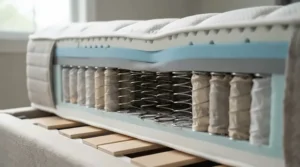
Here’s the honest bit first. Back pain is common, and it often improves on its own within a few weeks, according to the NHS back pain guide, which also lists the warning signs that deserve a prompt call to your GP. A mattress will not fix a slipped disc or free a trapped nerve. What it can do is stop making matters worse. A bed that sags beneath the hips tips the pelvis, flattens the natural curve of the lower spine and leaves your muscles working the night shift when they should be clocking off.
So this guide does three jobs. It ranks seven real, UK-available beds by how they are likely to treat a back sleeper’s spine, using published specifications and aggregated review sentiment rather than brochure gloss. It unpicks what “medium firm” actually means (spoiler: the label is slipperier than a wet bar of soap). And it gives you a practical plan for trialling, setting up and living with your choice, because sleep ergonomics is about the whole bed, not just the foam.
One promise on honesty: I haven’t slept on any of these, so there are no invented bedroom diaries here. You’ll find spec analysis, reviewer consensus and the occasional raised eyebrow. Prices are ranges at the time of research, so check current price and availability on Amazon UK before you commit.
Mattress for Back Sleepers With Lower Back Pain: Quick Comparison Table
Here are all seven contenders side by side. “Reported feel” reflects what manufacturers and reviewers say, and as you’ll see, they don’t always agree.
| Mattress | Type | Reported feel | Depth | Price range (list) | Best For |
|---|---|---|---|---|---|
| Silentnight 800 Mirapocket | Pocket-sprung | Medium to firm | Check listing | £200-£450 | Budget-conscious back sleepers |
| Dormeo Octasmart Hybrid | Hybrid | Medium/firm | 22cm | £450-£800 | Value hybrid seekers |
| Emma Original | All-foam | Medium to medium-firm | 25cm | £500-£900 | Lighter back sleepers |
| Origin Hybrid Pro | Hybrid | Medium-firm to medium-plush | 28-31cm | Mid-£500s to around £1,000 | Hot sleepers wanting cushioned support |
| Simba Hybrid Pro | Hybrid | Medium-firm | 28cm | £900-£1,600 | All-round back-sleeping comfort |
| Eve Premium Hybrid | Hybrid | Medium to firm (reviewers split) | About 28cm | £950-£1,250 | Back sleepers who want a firmer base |
| Nectar Premier Hybrid | Hybrid | Medium-firm | 28cm | £1,500 and up | Combination sleepers, luxury buyers |
Looking at the comparison above, the Silentnight 800 Mirapocket delivers the strongest value under £500. If you want deeper cushioning layers and a long home trial, the Simba Hybrid Pro justifies the extra spend. Buyers chasing a firmer feel should note that the Eve Premium Hybrid is described very differently from one reviewer to the next, so trial terms matter more than labels. Heavier back sleepers should approach the Emma Original with caution, because several review panels found it soft for bigger bodies.
💬 Just one click — help others make better buying decisions too!😊
Top 7 Mattresses for Back Sleepers With Lower Back Pain: Expert Analysis
Not every model is stocked by every retailer all the time, so treat Amazon UK as the place to check availability and current price. Each entry below is analysed from published specs and reviewer feedback.
1. Silentnight 800 Mirapocket — best budget medium-to-firm support
If your budget is tight but your back is not, this British-made pocket-sprung bed is the sensible starting point. It uses 800 individually pocketed springs, zoned for extra support around the back, hips and joints, with a medium-to-firm feel and UK handcrafting. Zoning matters because the hips are the heaviest region, and a firmer zone there stops the pelvis dipping and dragging the lumbar spine with it.
On paper, 800 springs is modest next to the thousands in premium hybrids, so expect a simpler, bouncier feel with less layered cushioning. That suits average-build back sleepers who want “firm but not hard”. Lighter side-switchers may find the top comfort thin. Silentnight sells several versions at different depths, so confirm the exact listing before buying.
Retailer reviews for Silentnight’s 800-spring range mostly praise value and back-friendly support, though a few buyers found it firmer than they expected.
Pros:
- ✅ Zoned springs support hips and lower back
- ✅ Cheapest route to genuine medium-to-firm support
- ✅ UK-made with breathable fibre fillings
Cons:
- ❌ Fewer comfort layers than premium hybrids
- ❌ Some owners find it firmer than “medium”
Expect around £200-£450 depending on size. Excellent value if you buy somewhere with sensible return terms.

2. Dormeo Octasmart Hybrid — springs-on-springs cooling support
Dormeo’s party trick is the Octaspring layer: hundreds of 5cm springs sitting above conventional pocket springs. Dormeo lists this model as medium/firm and 22cm deep, and pitches it at back sleepers. That shallower profile fits existing frames easily, though it offers less plush cushioning than the 28cm giants here.
The Octasprings are arranged in zones, with more support under the hips and shoulders so the spine can settle into its natural shape. In practice, that is a sensible recipe for back sleepers who like a traditional, springy feel. Be careful with naming: the “Plus” version uses memory foam and is rated softer, so for firmness choose the plain Hybrid. Retailer Q&A for the range cites a weight limit of 22 stone per side.
Aggregated retailer reviews for the Octasmart range are warm. Buyers describe better comfort and reduced back pain, though some mention firmness and difficulty handling the mattress.
Pros:
- ✅ Octaspring zones target back, hips and shoulders
- ✅ Breathable build suits warmer sleepers
- ✅ Medium/firm tension aimed at back sleepers
Cons:
- ❌ Shallow 22cm profile limits plush cushioning
- ❌ Heavy and awkward to manoeuvre
Roughly £450-£800 at list price, and Dormeo runs frequent promotions, so check current price.
3. Emma Original — foam comfort with a contested firmness
Emma’s best-seller is the all-foam entry on this list and the most argued-over when it comes to firmness. It is a 25cm all-foam mattress. Reviewers cannot agree on how it feels: one panel rated it a medium 5 out of 10, while another called it surprisingly firm at 7 out of 10. A two-point swing like that is exactly why a long trial matters, and Emma has advertised a 365-night sleep trial.
For lighter back sleepers, memory foam cradles the hips and lumbar curve nicely. Heavier sleepers are the risk: testers over 230lb (about 16 stone 6lb) sank too deeply around the hips, which is the opposite of what a sore lower back wants. TechRadar also warned the medium feel may not support some back and stomach sleepers.
Retailer reviews of the Emma Original frequently mention comfort, value for money and support for back issues.
Pros:
- ✅ Layered foam relieves hip and shoulder pressure
- ✅ Long home trial window advertised
- ✅ Strong value for an all-foam bed
Cons:
- ❌ Can feel soft for heavier back sleepers
- ❌ Firmness descriptions vary between reviewers
Around £500-£900 depending on size, which is good value if your weight suits it.
4. Origin Hybrid Pro — wool-and-spring cooling for hot back sleepers
Origin built its flagship around temperature as much as support. It has eight layers, including a bamboo-infused wool layer, and on a double the spring base holds around 5,700 titanium springs. Wool and bamboo breathe, which matters because foam-topped beds that trap heat make you fidget, and fidgeting is no friend of a sore back.
Descriptions of feel differ: Expert Reviews judged medium-firm to be accurate, while Origin’s own wording, quoted by Mumsnet, is medium-plush. Treat it as supportive springs under a soft top. Depth is reported at 28cm to 31cm across sources, so check fitted-sheet sizes. Being online-only, you can’t lie on it in a showroom, which makes the 200-night trial your real test. The same review noted motion isolation could be better.
Independent owner reviews are thinner than for high-street brands, so lean on the published expert reviews and your trial.
Pros:
- ✅ Breathable bamboo-infused wool layer
- ✅ 200-night trial period
- ✅ Cushioned top over a spring base
Cons:
- ❌ Motion isolation could be better
- ❌ Deep profile needs deep-pocket sheets
Mid-£500s to around £1,000 across sizes; good value among premium hybrids.
5. Simba Hybrid Pro — the benchmark all-rounder
Simba’s best-seller is the bed the others get measured against. Tom’s Guide describes an eight-layer hybrid with 4,800 springs, medium-firm feel and a 28cm depth. Multiple spring layers provide push-back so the hips don’t hammock, while the soft wool top keeps shoulders comfortable.
Expert Reviews’ tester, who suffers lower back pain on soft mattresses, reported no such problem on this one. That is one reviewer, not a clinical result, but it fits the design logic. The same review cautioned that larger back sleepers who love very hard beds may not find it firm enough. Note too that one reviewer found the odour strong for the first two nights, which is common for boxed foam and fades with airing.
Simba backs it with a 200-night trial and a 10-year guarantee.
Pros:
- ✅ Medium-firm balance suits most back sleepers
- ✅ Eight layers and generous 28cm depth
- ✅ 200-night trial and 10-year guarantee
Cons:
- ❌ Premium list price
- ❌ Initial odour reported by some reviewers
Around £900-£1,600 at list price depending on size. Pricey, but arguably the safest premium bet.

6. Eve Premium Hybrid — firmest-feeling support for back sleeping
Here’s a bed where the reviewer disagreement is itself the story. Benson for Beds describes it as medium-firm, about 28cm deep, with over 1,400 pocket springs. Yet Real Homes rated it firm, the firmest its panel had tested, Tom’s Guide gave it a medium 6 out of 10, and Woman & Home placed it closer to medium-high.
Reconcile those and a picture emerges: a soft quilted top over a body-support layer that doesn’t let you sink. That is precisely what many back sleepers need, and Woman & Home noted it suits those prone to back or hip pain. Lighter side sleepers, though, may find it unforgiving. If you swap sides through the night, the pricier two-sided Wunderflip variant exists, but it’s a different product.
Review sentiment here is really a firmness debate rather than a complaint, so insist on a trial.
Pros:
- ✅ Stable, non-sinking support for back sleeping
- ✅ Breathable spring core suits hot sleepers
- ✅ Plush quilted top softens a firm base
Cons:
- ❌ Firmness reads differently across reviewers
- ❌ Light side sleepers may lack shoulder give
Roughly £950-£1,250 at list price; strong for firmer-leaning back sleepers.
7. Nectar Premier Hybrid — luxury depth and balanced support
Nectar’s flagship is the most luxurious (and priciest) bed here. It stands 28cm thick, combining deep springs, micro springs and memory foam, with Nectar rating it 6.5 on its firmness scale. Think of it as a plush medium-firm: support underneath, memory foam pillow of comfort above.
Expert Reviews’ tester, who moves between side, back and front, said it felt equally supported in every position. That versatility suits combination sleepers. A word of caution from a separate panel reviewing Nectar’s foam Premier: heavier back sleepers may sink too deeply into the memory foam, so weight matters here too. Nectar is also known for a 365-night trial on its Premier range, so confirm the terms on the hybrid listing.
The recurring complaint isn’t comfort but cost: the price tag was the main reservation.
Pros:
- ✅ Deep 28cm spring-and-foam construction
- ✅ Supportive in multiple sleeping positions
- ✅ Long home trial on the Premier range
Cons:
- ❌ Highest list price on this list
- ❌ Hard to justify unless discounted
List pricing starts above £1,500 before discounts. Buy only after checking current price and trial terms.
Sleep Ergonomics: Set Up Your Bed So the Mattress Can Do Its Job
A great mattress on a poor setup is a sports car on flat tyres. Sleep ergonomics is simply arranging mattress, base, pillow and posture so your spine stays close to neutral, and most of it costs nothing.
- Prop the knees. If you sleep on your back, a pillow under the knees, or a small rolled towel under the curve of the lower back, helps support the spine.
- Pick a modest head pillow. Thick pillows tip the chin towards the chest. You want support behind the neck without propping the head up.
- Inspect the base. Widely spaced slats let foam sag between them, and a tired divan top will drag any new mattress down.
- Let it expand. Boxed mattresses need time to reach full shape: one retailer cites between four and 24 hours for a foam model. Open a window for any odour.
- Follow the care rules. Silentnight’s listing says to rotate the mattress regularly, while Origin says its Hybrid Pro does not need rotating. Read your own instructions rather than assuming.
- Use a protector from day one. Some exchange policies require one: Benson for Beds says you must have used a protector to qualify.
- Judge fairly. Give your body a couple of weeks to adapt, but don’t grit your teeth for months if the pain is worse. That’s what the trial is for.
The classic first-month mistakes are judging after a single night, swapping pillow and mattress simultaneously (so you can’t tell which helped) and skipping the protector.

Real-World Scenarios: Which Mattress Fits Which Back Sleeper?
These are illustrative profiles built from the specs and review findings above, not personal stories.
The renter on £300. You’re around 11 stone, sleep on your back and have a perfectly fine divan. The Silentnight 800 Mirapocket is the logical fit: zoned pocket springs, a medium-to-firm feel and a price that leaves room for a decent pillow. You use it nightly for years, so check the return terms of whichever retailer you choose.
The hot-sleeping couple with £1,200. One of you is 12 stone and sleeps on their back, the other is 9 stone and sleeps on their side, and you both overheat. The Origin Hybrid Pro (wool-and-spring airflow) or Simba Hybrid Pro (medium-firm balance) suits this mix, because softer top layers look after the side sleeper while the spring base keeps the heavier partner level. Use the 200-night trial and test both sides of the bed.
The heavier back sleeper with chronic back pain. At 17 stone, soft foam is the enemy. Review panels flagged sinking on the Emma Original for bigger bodies, so shortlist the Eve Premium Hybrid, which several reviewers describe as non-sinking. Confirm the manufacturer’s weight limit (retailer Q&A for the Dormeo Octasmart Hybrid range cites 22 stone per side), and mention the pain to your GP rather than relying on the bed alone.
Buyer’s Decision Framework: If This, Choose That
Think of this as a quick priority checklist.
- If you weigh under about 10 stone and wake with hip soreness, choose a medium-firm bed with a plush top, such as the Emma Original or Origin Hybrid Pro, because they cushion lighter frames without letting the pelvis sag.
- If you sleep hot, choose a breathable hybrid like the Origin Hybrid Pro or Eve Premium Hybrid, because airflow means fewer restless, back-aggravating nights.
- If money is tight, choose the Silentnight 800 Mirapocket or Dormeo Octasmart Hybrid, because pocket-spring support delivers the key benefit at a lower cost.
- If you’re unsure what firmness you need, choose the longest trial available, such as the Emma Original or Nectar Premier Hybrid, because feel is personal.
- If your pain comes with leg weakness, numbness or other red flags, stop shopping. In many areas you can self-refer to NHS musculoskeletal services for physiotherapy, as explained on the NHS back pain treatment page.
What Is a Mattress for Back Sleepers With Lower Back Pain?
A mattress for back sleepers with lower back pain is a medium-firm to firm bed that holds the hips level and supports the natural curve of the lumbar spine while you lie face-up. It cushions the shoulders and buttocks enough to avoid pressure points, but never lets the pelvis sag.
Back sleeping spreads weight across the largest surface, which is kind to joints. The catch is the gap beneath the small of your back: if the mattress is too soft, the heavy pelvis sinks and the spine bows like a hammock. One ergonomics study found that sagging mattresses impair spinal alignment and hurt sleep. Go too hard, though, and the bony hips and shoulders take the pressure instead. The goal is the middle ground, where the spine stays close to neutral and the muscles can finally switch off.
How to Choose a Mattress for Back Sleepers With Lower Back Pain
- Start at medium-firm, not rock-hard. A medium firm mattress for back sleepers keeps hips level while still cushioning the shoulders. Trial evidence (covered below) favoured it over very firm.
- Match firmness to body weight. Heavier sleepers sink further, so they usually need a firmer tension than the label suggests, while lighter sleepers may find “medium-firm” unyielding.
- Check what sits under the comfort layer. Pocket springs or dense foam do the supporting; thick tops merely cushion. Don’t pay for depth alone.
- Treat the trial as your test drive. Trials vary from 60 nights at some retailers to a year with certain brands. Read return terms, including protector requirements.
- Think about temperature. Heat causes restless sleep, so breathable fillings and spring cores help.
- Check your base. Slats or a worn divan can undermine a new mattress.
- Respect weight and size limits. Some makers publish per-side maximums, so check them for your build.
Medium Firm Mattress for Back Sleepers: What the Label Really Means
Here’s the awkward truth: there is no standardised firmness system, so one manufacturer’s “firm” may be another’s “medium-firm”. This article proves it. The Emma Original has been rated 5 out of 10 by one panel and 7 out of 10 by another. Meanwhile, the Yorkshire Post’s reviewers called a 6-7 rating ideal for lower back pain, and Nectar Premier Hybrid sits at 6.5 on its maker’s scale.
As a rule of thumb, a medium firm mattress for back sleepers sits around 6-7 out of 10, though your weight shifts that. Panels commonly flag back sleepers above roughly 16 stone as needing something firmer than medium, and very light sleepers as needing more give. A showroom trick (or a trial-night check at home) is to lie on your back and slide a hand beneath your lower back. A small gap that fills with gentle pressure suggests good support. A large void suggests too firm; no gap and a sunken pelvis suggests too soft. Treat the label as a starting point and your body as the judge.

Chronic Back Pain and Your Mattress: What the Research Actually Says
For decades the received wisdom for chronic back pain was simple: sleep on something hard. Then researchers tested it. In a randomised, double-blind trial published in The Lancet, 313 people had their mattresses replaced with either a firm or a medium-firm model, and the medium-firm group was about twice as likely to report improvements in pain lying in bed, pain on rising and disability.
A few caveats keep this honest. It’s a single trial from 2003. It used a European scale where “firm” scored 2.3 and “medium-firm” 5.6, so today’s retail “firm” may behave like the study’s medium. Participants also had non-specific low back pain without referred pain, so sciatica-type symptoms are a different matter.
The practical takeaway for chronic back pain: medium-firm is a sensible starting point, not a guarantee. Chronic back pain also responds to movement, and the NHS notes that walking, swimming, yoga and pilates may help ease back pain. Consider your mattress one tool among several.
Hybrid vs Memory Foam Mattresses for Back Sleepers: Which Wins?
| Feature | Hybrid (springs + foam) | All-foam | Traditional pocket-sprung (budget) |
|---|---|---|---|
| Spinal support | Spring push-back under the hips | Depends on foam density; heavier sleepers may sink | Even support, thinner padding |
| Pressure relief | Good with deep comfort layers | Excellent contouring | Limited |
| Temperature | Cooler; air moves through the core | Can run warm | Breathable |
| Motion isolation | Moderate to good | Usually best | Moderate |
| Best For | Simba Hybrid Pro, Origin Hybrid Pro, Eve Premium Hybrid | Emma Original | Silentnight 800 Mirapocket |
Hybrids generally win for back sleepers because the springs resist the hammock effect while foam handles cushioning. All-foam beds like the Emma Original shine for lighter sleepers who want contouring and minimal partner disturbance. Traditional pocket-sprung beds are the budget route to support, trading plushness for price. If you’re heavier or run hot, lean hybrid.
Long-Term Cost & Maintenance: What Your Mattress Really Costs Per Night
A mattress isn’t a purchase so much as a nightly subscription you pay up front. Over eight years (about 2,900 nights), the arithmetic gets friendlier:
| Mattress | Price band (list) | Approx. cost per night over 8 years | Best For |
|---|---|---|---|
| Silentnight 800 Mirapocket | £200-£450 | About 7p-15p | Tight budgets |
| Dormeo Octasmart Hybrid | £450-£800 | About 15p-27p | Value hybrid buyers |
| Emma Original | £500-£900 | About 17p-31p | Lighter back sleepers |
| Origin Hybrid Pro | £570-£1,000 | About 20p-34p | Hot sleepers |
| Simba Hybrid Pro | £900-£1,600 | About 31p-55p | All-round comfort |
| Eve Premium Hybrid | £950-£1,250 | About 33p-43p | Firm-leaning back sleepers |
| Nectar Premier Hybrid | £1,500+ | About 51p+ | Luxury seekers |
Even the premium options cost pennies per night, which puts a wasted night of back pain in perspective. Cheaper beds are fine if they genuinely suit you, but a mismatched cheap bed is the costliest of all. Ergonomics guidance suggests replacing a regularly used mattress after roughly five to seven years, and warranties (such as Simba’s 10-year guarantee) are about defects, not comfort. Read the terms on sagging, since claims typically require visible dips beyond a stated depth.
Common Mistakes When Buying a Mattress for Lower Back Pain
- Assuming firmer is better. The Lancet trial challenged that idea for chronic back pain.
- Trusting the label. As shown above, one “medium-firm” can feel like another’s “firm”.
- Ignoring body weight. A bed that suits an 11-stone sleeper may swallow a 17-stone one.
- Skipping the trial small print. Check protector requirements and return logistics before you open the box.
- Forgetting the base. A sagging divan sabotages even the best mattress.
- Chasing discounts blindly. A big percentage off a poor fit is still a poor fit.
- Expecting an overnight cure. Any lasting change takes weeks, and persistent pain needs proper assessment.
Safety, Regulations and Compliance Guide
Buying in the UK gives you a safety net worth knowing about. The Furniture and Furnishings (Fire) (Safety) Regulations 1988 set flammability standards for domestic upholstered furniture, and Schedule 2 includes an ignitability test for the composite fillings of mattresses and bed bases. Mattresses that meet the requirements must carry permanent labels, and the Regulations were amended in October 2025, so look for the label on any new bed.
Used mattresses aren’t exempt: second-hand furniture must meet the same flammability standards as new. A new boxed mattress may smell for a few days, which is normal. Dormeo says its Octasmart range holds OEKO-TEX certification, a useful extra check if you have sensitivities.
Finally, treat terms like “orthopaedic” as marketing unless a maker explains exactly what it means. One retailer’s Q&A for a Dormeo model even states that no specified medical benefits come with that mattress. Judge by firmness, fit and trial terms.

Frequently Asked Questions
❓ How much should I spend on a mattress for back sleepers with lower back pain?
❓ Does chronic back pain mean I need an orthopaedic mattress?
❓ Can a topper fix a mattress that feels too firm for lower back pain?
❓ How often should I replace my mattress if I have lower back pain?
❓ Will a new mattress cure my lower back pain?
Conclusion
Choosing a mattress for back sleepers with lower back pain comes down to a surprisingly short list of ideas: aim for medium-firm, respect your body weight, favour support over mere depth, and never buy without a proper trial. The evidence for chronic back pain suggests medium-firm beats very firm, but no study can tell you how a particular bed will feel under your hips.
For most budgets, here’s the short version. The Silentnight 800 Mirapocket is the value pick, and the Dormeo Octasmart Hybrid is a springy alternative. The Simba Hybrid Pro is the safest premium all-rounder, with the Origin Hybrid Pro as the cooler, wool-topped option. The Eve Premium Hybrid suits back sleepers who prefer a firmer base. The Emma Original works best for lighter sleepers, while the Nectar Premier Hybrid is the luxury choice if you can find it at a sensible price.
Pair whichever you choose with good sleep ergonomics (a pillow under the knees, a sound base, a protector) and give it a fair few weeks. Use the medium firm mattress for back sleepers rule as your starting point, then let the trial decide.
Recommended for You
- Mattress For Back Sleepers: 7 Best Picks For Spinal Support (2026)
- Hybrid Mattress For Side Sleepers: 7 Best UK Picks (2026)
- Mattress For Side Sleepers With Hip Pain: 7 Best UK Picks (2026)
Disclaimer: This article contains affiliate links. As an Amazon Associate, I earn from qualifying purchases. If you purchase products through these links, we may earn a small commission at no additional cost to you.
✨ Found this helpful? Share it with your friends! 💬🤗
