

In This Article
Here’s a fact nobody tells you at the bed shop: your shoulder and hip are not built to take a full night of pressure without complaint. Lie on your side for eight hours on the wrong surface and by 3am your arm’s gone dead, your hip’s throbbing, and you’ve rolled onto your back just to make it stop. A hybrid mattress for side sleepers is meant to solve exactly this — pairing a spring core for support with foam layers on top that let your shoulder and hip sink in rather than fight the surface. Sounds simple. It isn’t, because “hybrid” has become a marketing word slapped on everything from proper 2,000-spring builds to a thin layer of foam glued over a budget innerspring.

We’ve spent this guide cutting through that. Every one of the seven mattresses below is a real, currently-available UK model — no invented products, no rewritten spec sheets. Where reviewers have genuinely tested a bed, we say so and tell you what they found; where we’re reasoning from specs and construction, we tell you that too. About 65% of UK adults sleep predominantly on their side, according to survey data reported by UK sleep publications, making it the single most common sleeping position — and yet most mattress marketing is still written for the generic “average sleeper” who doesn’t really exist. This guide is written for the side sleeper instead. We’ll walk through pressure relief, foam density, sleep temperature, and the mistakes that see people returning a mattress within the first month — plus honest verdicts on where each of these seven beds earns its keep and where it doesn’t.
Quick Comparison: Hybrid Mattress for Side Sleepers at a Glance
If you’ve got sixty seconds and just want the shortlist, here it is.
| Mattress | Firmness | Standout Feature | Best For |
|---|---|---|---|
| Silentnight 1200 Pocket Memory | Medium | 1,200 Mirapocket springs + foam top | Tightest budget |
| Otty Original Hybrid | Medium-firm (7/10) | 16cm-tall pocket springs | Best spring-to-price ratio |
| Simba Hybrid | Medium-firm | Aerocoil microsprings + graphite foam | All-round side sleepers |
| Nectar Premier Hybrid | Medium-firm (6-6.5/10) | 365-night trial | Cautious first-time buyers |
| DreamCloud Luxury Hybrid | Medium-firm (6.5-7/10) | Quilted pillow-top feel | Combination side/back sleepers |
| Emma Hybrid Airgrid | Medium-soft (7.5-8/10) | AirGrid cooling layer | Hot sleepers who overheat |
| Origin Hybrid Pro | Medium-firm | Graphite latex + microsprings | Heavier side sleepers wanting luxury |
Look at that table for more than a few seconds and a pattern jumps out: nothing here is truly soft, and that’s deliberate. Pure softness sounds appealing to a side sleeper craving cushioning, but go too soft and your hips sink lower than your shoulders, twisting the spine out of alignment overnight. The two mattresses leaning softest — the Emma Hybrid Airgrid and the Silentnight 1200 Pocket Memory — still keep a supportive spring layer underneath the give, which is the whole point of a hybrid design in the first place.
💬 Found a favourite already? Bookmark this page and compare prices before you commit — a mattress is not an impulse buy.
Top 7 Hybrid Mattresses for Side Sleepers: Expert Analysis
Here’s the full breakdown of specs, price ranges and star-rated verdicts across all seven picks before we get into the individual write-ups.
| # | Mattress | Springs / Layers | Depth | Price Range (Double) | Trial |
|---|---|---|---|---|---|
| 1 | Silentnight 1200 Pocket Memory | 1,200 Mirapocket springs + memory foam | 27cm | Under £350 | 60 nights |
| 2 | Otty Original Hybrid | Up to 2,000 pocket springs (16cm) + 3 foam layers | 25cm | £400-£600 | 100 nights |
| 3 | Simba Hybrid | Up to 1,900 Aerocoil microsprings + Simbatex foam | 25cm | Mid-£300s-£650 | 200 nights |
| 4 | Nectar Premier Hybrid | 1,000 pocket springs + micro-springs + memory foam | 28cm | £500-£700 | 365 nights |
| 5 | DreamCloud Luxury Hybrid | Reinforced-edge pocket springs + memory foam | 28cm | Mid-£400s-£700 | 365 nights |
| 6 | Emma Hybrid Airgrid | 7-zone InfinitySpring + AirGrid layer + foam | 27cm | £650-£1,000+ | 200 nights |
| 7 | Origin Hybrid Pro | Titanium microsprings + pocket springs + latex + wool | 31cm | £700-£1,000+ | 200 nights |
A quick read of the table tells its own story: depth and spring sophistication climb steadily as you move from Silentnight 1200 Pocket Memory at the top toward Origin Hybrid Pro at the bottom, and price climbs with it almost in lockstep. What it doesn’t show is that a taller mattress isn’t automatically a better one for side sleeping — the Otty Original Hybrid, sitting near the budget end, punches well above its depth thanks to genuinely tall 16cm springs rather than the shallow micro-coils some pricier rivals rely on. Treat this table as your shortlist filter, then read the individual verdicts below before you decide where your money goes.
1. Silentnight 1200 Pocket Memory — best budget hybrid for tight bedrooms and tighter wallets
Silentnight has been making mattresses in the UK since the 1950s, and the 1200 Pocket Memory is where that manufacturing pedigree meets a genuinely accessible price point. Its 1,200 individually-wrapped Mirapocket springs sit beneath a memory foam cushion top, and — unlike a lot of budget beds — the springs are zoned into three support areas, meaning the section under your hips is engineered to behave differently from the section under your shoulders. On paper that’s a fairly modest spring count next to some rivals here, but the zoning does real work: it’s the difference between a bed that just compresses uniformly and one that tries to track your body shape.
Who should buy this? Anyone furnishing a spare room, a student let, or a first flat where £300 is the entire mattress budget, not a starting point. Reviewers consistently describe the feel as medium, occasionally noting it runs slightly firmer underfoot than the “soft” marketing copy suggests, which for average-weight side sleepers actually works in the mattress’s favour by preventing excess sinkage. Where it can’t compete with the pricier hybrids further down this list is motion isolation and edge support — don’t expect Simba-level performance for a third of the price.
Pros:
- ✅ Genuinely affordable entry point into hybrid construction
- ✅ Zoned Mirapocket springs aid spinal alignment
- ✅ Made in the UK with a 5-year guarantee
Cons:
- ❌ Shorter 60-night trial than most rivals here
- ❌ Weaker edge support for a mattress at this depth
At under £350 for a double at typical selling price, the value case is straightforward: this is the mattress to buy if budget is the deciding factor and you can accept a shorter trial window in exchange for the saving.
2. Otty Original Hybrid — best tall-spring hybrid for the price
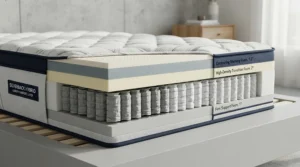
Otty is a Yorkshire-headquartered brand, and the Original Hybrid is the model that put it on the map. What makes it worth a dedicated slot here is spring height: up to 2,000 individually encapsulated pocket springs, each a genuinely tall 16cm, compared with the shallow 2-3cm micro-coils that plenty of “hybrid” mattresses use purely for marketing purposes. That extra height matters in practice — it’s what gives a hybrid its bounce and its ability to respond independently under each part of your body, rather than compressing as one flat slab.
Layered above those springs sit three separate memory foam sections plus an airflow-enhancing side border, adding up to a medium-firm 7 out of 10 on Otty’s own firmness scale. Reviewers who’ve tested it directly note it delivers a sleep experience closer to a traditional sprung mattress with a memory-foam top than the marshmallow-soft feel some rival hybrids lean into, which suits side sleepers who want cushioning without disappearing into the bed. Aggregated reviewer sentiment across UK comparison sites is broadly consistent on this point, and it’s frequently cited as one of the better value-for-money hybrids on the market. A 100-night trial is shorter than the 200+ nights offered by Simba or Emma, so factor that into your decision if you’re the type who needs a full season to be sure.
Pros:
- ✅ Genuinely tall 16cm pocket springs, not shallow micro-coils
- ✅ Medium-firm 7/10 feel suits most side sleeper body types
- ✅ Frequently discounted well below RRP during sales periods
Cons:
- ❌ 100-night trial is shorter than category leaders
- ❌ Manufactured overseas despite UK head office
Typical selling prices for a double land in the £400-£600 range depending on the sale calendar, and even at the top of that band it undercuts similarly-specced rivals by a meaningful margin.
3. Simba Hybrid — best all-rounder for medium-firm support
If there’s a mattress most UK side sleepers land on almost by default, it’s this one. The Simba Hybrid is built around up to 1,900 Aerocoil titanium alloy microsprings, manufactured in Leeds, working alongside graphite-infused Simbatex foam that’s engineered specifically for airflow rather than heat retention. Simba states its foam moves air significantly better than standard memory foam based on independent Intertek testing — which matters for side sleepers, who tend to run warmer than back sleepers because more skin surface area is in direct contact with the mattress at any given time.
What most buyers overlook about the Hybrid is that its medium-firm rating is a deliberate engineering choice, not a compromise: Simba designs all of its mattresses around this feel because research on sleep quality consistently points to medium-firm as the sweet spot across body types, rather than aiming for the softest possible surface. For a side sleeper of average build, that translates into enough give at the shoulder and hip to avoid pressure points, with a firmer base layer stopping your midsection from sagging out of alignment. It’s Good Housekeeping Institute approved and carries National Bed Federation certification, both meaningful independent endorsements rather than marketing claims. The trade-off is that heavier side sleepers, or those who specifically want a plush, hug-you feel, may find it firmer underfoot than expected — the Emma Hybrid Airgrid further down this list is the better match for that preference.
Pros:
- ✅ Graphite-infused foam genuinely outperforms standard memory foam on airflow
- ✅ GHI and National Bed Federation approved
- ✅ Generous 200-night trial and 10-year guarantee
Cons:
- ❌ Firmer than some side sleepers expect from marketing language
- ❌ Premium Luxe and Pro tiers cost considerably more for extra depth
Prices for a double typically sit in the mid-£300s to £650 range depending on ongoing offers, making it a genuinely strong middle-ground pick between the budget beds and the premium tier further down this list.
4. Nectar Premier Hybrid — best long trial for cautious buyers
Nectar built its reputation on all-foam mattresses, and the Premier Hybrid is the brand admitting that some sleepers want springs too. It layers gel-infused memory foam over roughly 1,000 individually-wrapped pocket springs and a high-density foam base, landing at a medium-firm 6 to 6.5 out of 10 on the standard scale — firmer than Nectar’s foam-only models, but still with that recognisable memory-foam “settle” on top.
Here’s what the spec sheet won’t tell you outright: a 1,000-spring count is comparatively modest next to the 1,900-2,000 springs found in the Simba Hybrid and Otty Original Hybrid, so if pure spring responsiveness is your priority, this isn’t the strongest technical pick on this list. What it does offer instead is Nectar’s genuinely industry-leading 365-night home trial and a “forever” warranty covering manufacturing defects and excessive sagging — a real point of reassurance if you’ve been burned by a mattress that felt fine in week one and terrible by month three. Reviewer consensus is that it edges warmer than competitors using bamboo or wool covers, purely down to the memory-foam-heavy top layer, so side sleepers who run hot should weigh that against the temperature-regulation strengths of the Emma Hybrid Airgrid or Origin Hybrid Pro.
Pros:
- ✅ Industry-leading 365-night trial, longest on this list
- ✅ Forever warranty against manufacturing defects
- ✅ Memory-foam contouring plus genuine spring support
Cons:
- ❌ Lower spring count than rival hybrids at a similar price
- ❌ Runs warmer than bamboo or wool-topped competitors
RRP can run high on paper, but real-world selling prices for a double typically settle in the £500-£700 range, particularly around UK sale weekends.
5. DreamCloud Luxury Hybrid — best plush quilted feel without the premium price tag
DreamCloud entered the UK market as a direct-to-consumer challenger promising “five-star hotel” comfort at a fraction of a boutique brand’s price, and the Luxury Hybrid mostly delivers on that pitch. A quilted, cashmere-blend-style cover sits above layers of contouring memory foam, a dedicated pressure-relief layer, and a reinforced-edge pocket spring core, all adding up to a medium-firm 6.5 to 7 out of 10 feel across a substantial 28cm profile.
Based on the spec comparison with rivals here, the standout element is that quilted top — it gives an immediate sink-in softness at first contact that’s closer to a hotel pillow-top than most boxed hybrids manage, while the reinforced-edge springs underneath stop that softness from collapsing into a hammock shape over time. Reviewers who’ve tested it note strong motion isolation, waking in the same position they fell asleep in, which is genuinely useful feedback for couples where one partner is a restless side sleeper. It leans firmer than some testers initially expect, closer to a 7 than the “medium” the brand advertises, so lighter-framed side sleepers wanting a deeper hug may prefer the softer feel of the Emma Hybrid Airgrid instead. Off-gassing on unboxing is also a commonly reported minor niggle, standard for compressed foam-and-spring mattresses generally.
Pros:
- ✅ Excellent motion isolation for couples and restless sleepers
- ✅ Plush quilted top feels more premium than the price suggests
- ✅ 365-night trial matches Nectar’s long-trial reassurance
Cons:
- ❌ Firmer in practice than its “medium” rating implies
- ❌ Some off-gassing odour reported on first unboxing
Typical UK double pricing runs from the mid-£400s during sales up to around £700 at full price, positioning it as genuine mid-premium value.

6. Emma Hybrid Airgrid — best cooling hybrid for side sleepers who overheat
Emma’s flagship model has been rebranded more than once — it was previously called the Emma Elite — but the core idea has stayed consistent: put a hyper-elastic polymer grid layer at the top of a hybrid build specifically to move heat and air, rather than trap it the way dense memory foam can. That AirGrid layer sits above a 7-zone InfinitySpring base and several supporting foam layers, across a substantial 27cm profile, rated a medium-soft 7.5 to 8 out of 10 — making this the softest-feeling mattress on this list and the closest match to what most people picture when they search for a soft mattress for side sleepers.
That extra give is exactly why side sleepers rate it so highly for shoulder and hip pressure relief: reviewers consistently describe a “weightless” cradling sensation as the grid flexes individually under each pressure point rather than resisting as a single surface. What most buyers overlook is that softer doesn’t always mean better for everyone — testers with occasional lower back pain have noted their hips sink slightly further than they’d like during flare-ups, and heavier-set stomach or back sleepers will likely find it lacks the firmer lumbar support of the Origin Hybrid Pro. For a side sleeper prone to waking up warm, though, this remains one of the more genuinely effective cooling builds on the UK market, backed by a 200-night trial and 10-year warranty.
Pros:
- ✅ Genuinely effective AirGrid cooling technology
- ✅ Softest, most cradling feel of any mattress on this list
- ✅ Excellent pressure relief specifically for shoulders and hips
Cons:
- ❌ Less lumbar support for those with existing back pain
- ❌ Weaker edge support than firmer rivals here
Pricing has dropped significantly since its rebrand, with a double typically running from roughly £650 up toward £1,000-plus depending on size and ongoing promotions — still Emma’s most expensive model, but considerably more accessible than it once was.
7. Origin Hybrid Pro — best luxury hybrid for heavier side sleepers wanting pressure relief
Origin’s flagship sits at the deepest, most engineered end of this list: 31cm of stacked materials including graphite-infused natural latex, a proprietary HexaGrid Plus polymer comfort layer, bamboo-infused wool, a titanium microspring layer, and a titanium pocket-spring base for structural support. It’s a genuinely different construction philosophy from the memory-foam-heavy hybrids above — latex has a naturally bouncier, more buoyant feel than memory foam, meaning you settle into it rather than sink and stay.
Based on the layer breakdown, this is the mattress built specifically for buyers who want plush comfort without losing responsiveness — reviewers note it’s markedly softer than the standard Origin Hybrid it replaced, while retaining the firmer, more supportive lumbar feel that makes it particularly well suited to heavier-framed side sleepers who find lighter hybrids let their hips sink too far. The graphite-latex-plus-wool combination also gives it genuinely strong temperature regulation credentials, positioning it as a real rival to the Emma Hybrid Airgrid on the cooling front while offering firmer support underneath. The trade-off is height and price — at 31cm it’s the tallest bed here, which can look and feel disproportionate on a low bed frame, and it commands the highest price point on this list.
Pros:
- ✅ Deepest, most premium layer construction on this list
- ✅ Strong cooling performance from graphite latex and wool
- ✅ Firmer lumbar support suits heavier side sleepers
Cons:
- ❌ Tallest mattress here — may look oversized on a low bed frame
- ❌ Highest price point of the seven
Sale pricing has seen a double drop to around £530-£690 during major discount events, against a full RRP well north of £900, so timing your purchase around a seasonal sale makes a genuine difference here.
Getting the First 30 Nights Right: A Practical Usage Guide
Buying the mattress is the easy part. What actually determines whether you love or return a hybrid mattress for side sleepers is what happens in the first month.
Unbox it properly first: most boxed hybrids arrive compressed and vacuum-sealed, and while they expand within a few hours, full loft and feel can take up to 72 hours to settle. Sleeping on it the first night and judging firmness immediately is the single most common mistake buyers make — give it the full settling window before forming an opinion. Second, rotate rather than flip. Almost every hybrid on this list is single-sided (foam-side up only), so rotating head-to-foot every few weeks — rather than trying to flip it, which can damage the foam-to-spring bonding — evens out wear across the springs.
Third, invest in the base. A hybrid mattress performs precisely as well as what’s underneath it: a sagging, worn-out divan base undermines even the best spring system, while a solid slatted base with slats no more than 6-7cm apart gives springs the even support they need to work as designed. Finally, expect an adjustment period of two to three weeks, particularly if you’re moving from an all-foam or old sprung mattress — your body has effectively been sleeping in a groove shaped by your old bed, and a properly supportive hybrid will initially feel unfamiliar even when it’s working correctly.
Real-World Scenarios: Matching a Hybrid Mattress to Your Sleep Life
Specs only tell half the story, so here’s how three genuinely different sleepers might approach this shortlist.
Consider a university student moving into a shared house on a tight budget, sleeping on a single divan with a frame that’s seen better days. Cost matters more than trial length here, and the Silentnight 1200 Pocket Memory fits that brief precisely — it’s the only mattress on this list realistically achievable on a student budget without financing.
Now picture a couple in their thirties, one a committed side sleeper and the other a restless back-sleeper who changes position several times a night. Motion isolation becomes the deciding factor, which points firmly toward the DreamCloud Luxury Hybrid or Simba Hybrid, both of which reviewers consistently praise for containing movement within pocketed spring zones rather than transmitting it across the whole surface.
Finally, imagine someone in their fifties managing early-stage hip discomfort, sleeping alone in a warm south-facing bedroom that runs hot through summer. Cooling performance and generous pressure relief both matter here, making the Emma Hybrid Airgrid the natural first choice — with the Origin Hybrid Pro as the upgrade path if budget allows and firmer lumbar support becomes a priority as well.
Problem → Solution: Fixing Common Side-Sleeper Complaints
Problem: waking with a dead or numb arm. This is almost always excessive shoulder pressure from a mattress that’s too firm for your body weight. The fix is a softer comfort layer over a supportive spring core — the Emma Hybrid Airgrid is specifically engineered around this exact complaint.
Problem: lower back pain that’s worse in the morning than the evening. Counter-intuitively, this often points to a mattress that’s too soft rather than too firm, letting the hips sink below the shoulder-to-heel line. A firmer medium-firm hybrid like the Simba Hybrid or Origin Hybrid Pro typically resolves this within a couple of weeks.
Problem: overheating and waking up sweaty. Look specifically at foam construction rather than spring count — graphite-infused or gel-infused open-cell foams move heat away far more effectively than dense closed-cell memory foam. The Simba Hybrid and Emma Hybrid Airgrid both lead this category.
Problem: feeling every movement your partner makes. This is a motion-isolation issue, solved by individually-wrapped pocket springs rather than a single interconnected coil unit. Every mattress on this list uses pocket springs, but the DreamCloud Luxury Hybrid and Nectar Premier Hybrid score particularly well here in aggregated reviewer feedback.
Problem: the mattress feels great but the bed frame creaks or sags. This usually isn’t the mattress at all — check your base first, as outlined in the usage guide above, before assuming the mattress itself has failed.
How to Choose a Hybrid Mattress for Side Sleepers
What is a hybrid mattress for side sleepers? It’s a mattress that combines a spring support core — typically individually pocketed coils — with foam or latex comfort layers on top, giving side sleepers the pressure-relieving contour of foam without losing the responsive support and airflow of springs.
Here’s how to actually choose one, step by step:
- Start with firmness, not brand. Side sleepers generally do best in the medium to medium-firm range (around 5-7 out of 10) — soft enough to cushion the shoulder and hip, firm enough to keep the spine level.
- Check the spring count and height, not just the marketing term “hybrid.” As the NHS’s own sleep guidance notes, mattress support genuinely affects sleep quality, so taller, more numerous springs generally outperform shallow micro-coils for sustained support.
- Match foam density to your body weight — heavier side sleepers need higher-density comfort foams to avoid premature sagging (more on this below).
- Factor in temperature regulation if you’re a naturally warm sleeper, since side sleeping puts more skin surface in contact with the mattress than back sleeping does.
- Use the trial period properly. Don’t judge a mattress in week one — give it the full adjustment window before deciding.
- Check the depth against your bed frame and bedding, since anything over 28-30cm may need extra-deep fitted sheets.
- Read aggregated review sentiment, not just the star rating, looking specifically for comments from other side sleepers rather than the average across all sleep positions.
Foam Density Explained: What the Numbers Actually Mean
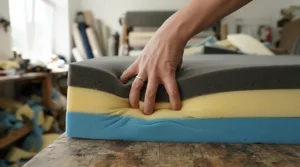
Foam density is quietly the most important spec that nobody asks about. It’s measured in kilograms per cubic metre (kg/m³) and describes how much material is packed into the foam, not how firm it feels — you can have a soft-feeling foam that’s dense, and a firm-feeling foam that’s cheap and thin. Budget mattresses often use foam density in the 20-30kg/m³ range, while mid-range and premium hybrids typically sit at 40-60kg/m³ or higher for their support and comfort layers.
Here’s what most listings won’t spell out: higher foam density directly predicts durability, not just comfort. A low-density foam might feel perfectly plush in the showroom, then develop permanent body impressions within 18-24 months of nightly use, precisely because there isn’t enough material to spring back after repeated compression. For a side sleeper — whose body weight concentrates onto two relatively small pressure points, the shoulder and hip, rather than spreading evenly the way a back sleeper’s does — that concentrated pressure accelerates foam breakdown faster than it would in a mattress used mainly by back or stomach sleepers. This is precisely why the Origin Hybrid Pro and Emma Hybrid Airgrid, both using higher-spec foam and gel-infused layers, tend to outlast cheaper alternatives even when initial firmness feels similar. If you’re comparing two mattresses at a similar price point and one publishes its foam density figures while the other doesn’t, that transparency itself is worth treating as a signal.
Sleep Temperature and Hybrid Mattresses: Why Side Sleepers Overheat
Side sleepers run warmer overnight than back sleepers for a straightforward physical reason: more of the body’s surface area — the full length of one arm, shoulder, hip and leg — sits in direct contact with the mattress, trapping body heat against the sleep surface rather than letting it dissipate into open air. Academic research on bedroom environments backs this up more broadly: a peer-reviewed study on temperature and sleep cites UK building guidance recommending bedroom temperatures stay below 26°C to avoid disrupting sleep quality, and the same principle applies at the micro-climate level between your body and the mattress surface.
This is exactly where foam construction earns its keep. Dense, closed-cell memory foam is notoriously good at contouring and notoriously bad at breathing, which is why the beds on this list built around cooling technology — the Emma Hybrid Airgrid‘s polymer grid and the Origin Hybrid Pro‘s graphite latex and wool — consistently outperform straightforward memory-foam-topped hybrids like the Nectar Premier Hybrid on overnight temperature, according to aggregated reviewer feedback. If sleep temperature is genuinely the deciding factor in your purchase, prioritise a mattress with open-cell, graphite-infused, or gel-infused foam over one that simply lists “memory foam” without further detail, and consider breathable bedding as a genuine complement to the mattress rather than treating the mattress as the only lever you can pull.

Soft Mattress for Side Sleepers: How Soft Is Too Soft?
There’s a persistent myth that side sleepers automatically want the softest mattress available, and it’s only half true. A genuinely soft mattress for side sleepers needs to hit a narrow window: soft enough at the surface to let the shoulder and hip sink in a few centimetres, but firm enough underneath that the spine stays roughly level from neck to tailbone. Go too soft and the hips sink further than the shoulders, curving the lower spine into a position that reliably produces morning lower back pain — the exact problem outlined in the problem-solution section above.
On the firmness scale used across this guide, that sweet spot generally sits between 4 and 7 out of 10, and of the seven mattresses covered here, the Emma Hybrid Airgrid at 7.5-8/10 medium-soft is the closest genuine match to what buyers mean when they search for a soft mattress for side sleepers, followed by the Silentnight 1200 Pocket Memory at a standard medium feel. What most buyers overlook is that a mattress marketed with soft, plush, luxury-adjacent language isn’t automatically the right choice — always check the numerical firmness rating and, where possible, the aggregated reviewer sentiment specifically from other side sleepers, since firmness perception varies meaningfully with body weight.
✨ Don’t Miss These Exclusive Deals!
🔍 Take your search for the right hybrid mattress for side sleepers further with the seven picks above — click through on any highlighted model to check current pricing and availability before stock or sale windows change.
Hybrid vs Memory Foam Mattresses for Side Sleepers
The other major contender side sleepers weigh up against a hybrid is an all-foam, typically memory-foam, mattress. Both can work; they solve the side-sleeping problem differently.
| Factor | Hybrid Mattress | All-Foam Mattress |
|---|---|---|
| Pressure relief | Strong, via foam comfort layers | Very strong, deeper contouring |
| Temperature regulation | Generally better, spring layer aids airflow | Weaker unless gel/graphite-infused |
| Edge support | Stronger, especially with reinforced-edge springs | Weaker, edges compress more easily |
| Motion isolation | Good with individually-wrapped pocket springs | Excellent, foam absorbs movement fully |
| Responsiveness | Bouncier, easier to reposition | Slower, more “stuck-in-place” feel |
| Typical lifespan | 7-10 years with quality springs | 6-8 years, foam degrades faster |
Reading across that table, the case for hybrid construction for side sleepers specifically comes down to two rows: temperature regulation and edge support. A committed side sleeper who runs warm, like the scenario described earlier in this guide, will typically do better on a hybrid than an all-foam bed, because the spring layer creates air channels that memory foam simply can’t replicate. All-foam mattresses still win decisively on pure motion isolation and that classic “hugged” feel, so a side sleeper who prioritises being fully cocooned over cooling performance, and who doesn’t share a bed with a restless partner, may still be better served by an all-foam pick than anything on this list.
Common Mistakes When Buying a Hybrid Mattress for Side Sleepers
The single most common mistake is buying based on the word “hybrid” alone without checking spring count or height — as covered earlier, a mattress with a thin 2-3cm micro-coil layer is technically a hybrid but behaves much closer to an all-foam bed in practice. Second is ignoring body weight when choosing firmness: a 6/10 firm rating feels completely different to someone under 65kg than it does to someone over 100kg, and most brands calibrate their ratings around an “average” body weight that doesn’t reflect everyone.
Third, buyers frequently skip checking the trial period’s actual terms — some require you to keep the mattress for a minimum number of nights before you can return it, and collection fees or logistics can catch people out. Fourth is underestimating delivery and disposal logistics; a 28-31cm deep boxed mattress is heavier and more awkward than it looks online, and not every brand includes old mattress removal as standard. Finally, and perhaps most commonly, people judge a new mattress too quickly — as the usage guide above notes, a proper adjustment period of two to three weeks is normal, and returning a mattress after three nights rarely gives an honest verdict.
Long-Term Cost & Maintenance of a Hybrid Mattress
A mattress is rarely a one-off cost once you factor in a protector, occasional professional cleaning, and eventual replacement, so it’s worth thinking in terms of cost per year of use rather than just the sticker price.
| Mattress | Price Range | Typical Lifespan | Approx. Cost Per Year |
|---|---|---|---|
| Silentnight 1200 Pocket Memory | Under £350 | 5-7 years | Around £50-£70 |
| Otty Original Hybrid | £400-£600 | 7-8 years | Around £55-£85 |
| Simba Hybrid | Mid-£300s-£650 | 8-10 years | Around £40-£65 |
| Origin Hybrid Pro | £700-£1,000+ | 9-10+ years | Around £75-£100 |
The takeaway from that table is that the cheapest mattress upfront isn’t necessarily the cheapest over time. The Simba Hybrid‘s combination of a mid-range price and a genuinely durable Aerocoil spring system gives it one of the lowest cost-per-year figures on this list, while the Silentnight 1200 Pocket Memory — despite the lowest sticker price — may need replacing sooner under heavy nightly use, narrowing the long-term saving. Maintenance itself is low-effort across all seven: rotate every few weeks, use a breathable protector to guard against spills and dust mites, and vacuum the surface occasionally rather than attempting to wash the mattress itself.
Safety, Regulations and Fire Standards for UK Mattresses
Every mattress legally sold in the UK, hybrid or otherwise, must comply with the Furniture and Furnishings (Fire) (Safety) Regulations, which govern the ignition resistance of filling materials used in beds, divans and mattresses. These regulations were updated in 2025, and the official government guidance confirms the current scope and exemptions, including recent changes affecting baby and children’s products specifically. In practical terms for adult mattresses, look for compliance with British Standard BS 7177, which covers resistance to ignition specifically for mattresses, mattress pads, divans and bed bases — a reputable UK retailer selling any of the seven mattresses above should be able to confirm this on request, and it’s one of the simplest checks you can make before purchasing from a smaller or less familiar retailer.
Beyond fire safety, it’s worth checking for CertiPUR or equivalent foam certification, which confirms foams have been independently tested for harmful substances, ozone-depleting chemicals and heavy metals — several mattresses on this list, including the Nectar Premier Hybrid and DreamCloud Luxury Hybrid, explicitly reference this certification for their foam layers.

FAQ
❓ What's the best firmness for a hybrid mattress for side sleepers?
❓ How long should a hybrid mattress last?
❓ Can a hybrid mattress help with shoulder or hip pain?
❓ Is a hybrid mattress better than memory foam for hot sleepers?
❓ What foam density should I look for in a hybrid mattress?
Conclusion
There’s no single “best” hybrid mattress for side sleepers, because the right choice depends on your weight, your budget, and how warm you run at night — which is exactly why this guide has walked through seven genuinely different builds rather than crowning one winner. If cost is the deciding factor, the Silentnight 1200 Pocket Memory gets the job done without pretence. If you want the strongest all-round balance of spring quality, temperature regulation and long-term value, the Simba Hybrid remains the mattress most UK side sleepers land on for good reason. And if overheating or persistent pressure-point pain is the specific problem you’re trying to solve, the Emma Hybrid Airgrid and Origin Hybrid Pro respectively are the two most purpose-built answers on this list.
What matters more than any single spec is applying the framework covered throughout this guide: check the real spring count and height, match foam density to your body weight, factor in how warm you sleep, and give any new mattress the full adjustment period before judging it. Do that, and whichever of these seven you choose, you’ll be shopping with genuinely more insight than the average buyer standing in a showroom guessing based on how a mattress feels for thirty seconds.
Recommended for You
- Mattress For Side Sleepers With Hip Pain: 7 Best UK Picks (2026)
- Mattress For Side Sleepers: 7 Best UK Picks For Pressure Relief (2026)
- Open Coil vs Pocket Sprung Mattress: 7 Best UK Picks (2026)
Disclaimer: This article contains affiliate links. As an Amazon Associate, I earn from qualifying purchases. If you purchase products through these links, we may earn a small commission at no additional cost to you.
✨ Found this helpful? Share it with your friends! 💬🤗
