

In This Article
Lie on your back at 2am and your spine tells the truth. Too soft, and your hips sink like a dropped anchor, folding your lower back into a shallow hammock. Too hard, and the small of your back hovers above the surface while your shoulder blades and heels take the whole load. Either way, you wake up feeling like you’ve done a shift in a removal van. 🚛
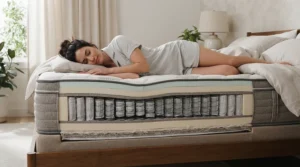
Choosing the right mattress for back sleepers is less about luxury and more about geometry. Lying face-up spreads your weight across the widest possible surface, but only if the bed respects the natural curves of your spine. That job has a name: lumbar alignment. Get it right and the mattress disappears; get it wrong and it becomes the first thing you think about every morning.
A quick reality check before we start. Back pain is very common, and the NHS explains that it usually improves within a few weeks, though it can linger or return. A mattress is not a medical treatment, and if your pain is severe, persistent or worse at night, see a GP. What a good bed can do is stop making things harder.
Here’s what you’ll get below: seven real, UK-available options, a proper look at every hybrid mattress for back sleepers worth your attention, honest guidance on finding a mattress for back and side sleepers if you switch positions, and practical advice Amazon listings rarely bother to give you. One transparency note: this article is built on published expert reviews and aggregated reviewer sentiment, not on me claiming to have slept on each bed. Prices are given as ranges only, so always check the current price before buying.
Quick Comparison: Seven Mattresses at a Glance
Skim this first, then dig into the detail.
| Mattress | Construction | Feel | Best For |
|---|---|---|---|
| Silentnight 7 Zone Memory Foam | Zoned memory foam | Supportive, orthopaedic-style zoning | Budget-conscious back sleepers |
| Origin Hybrid | Foam + zoned pocket springs | Firm | Back and stomach sleepers, heavier bodies |
| Otty Original Hybrid | Foam + pocket springs | Medium-firm | Hot sleepers and couples |
| Nectar Essential Hybrid | Six-layer foam + springs | Medium-firm | Back sleepers wanting pressure relief |
| DreamCloud Luxury Hybrid | Foam + coils | Medium-firm with plush top | Back sleepers with lumbar pain |
| Emma Hybrid Airgrid | Airgrid foam + springs | Softer, cradling | Back and side sleepers, lighter to average builds |
| Panda Hybrid Bamboo Mattress Pro | Springs + memory and orthopaedic foam | Medium-firm | Hot back sleepers wanting luxury |
Looking at the comparison above, the Origin Hybrid and Nectar Essential Hybrid cover most back sleepers at sensible prices, while the Emma Hybrid Airgrid is the outlier because it deliberately leans soft. That softness suits people who split their night between back and side, but it is the wrong tool for heavier sleepers who need a firmer platform. Budget buyers should note that the Silentnight 7 Zone Memory Foam trades premium materials for a friendlier entry price.
💬 Just one click — help others make better buying decisions too!😊
Top 7 Mattress for Back Sleepers: Expert Analysis
1. Silentnight 7 Zone Memory Foam — best budget zoning for the lower back
The headline here is the seven-zone layout, which is a fancy way of saying the foam is firmer under your hips and lumbar region and softer under your shoulders and legs. For a back sleeper, that matters because your pelvis is the heaviest part touching the bed. Give it firm backing and your spine stays closer to a neutral line.
On the analysis side, this is a mattress for people who want orthopaedic-style logic without a four-figure bill. Comparison sites credit it with genuine support at under £350 for common sizes. That said, I couldn’t find a deep bench of independent lab-style testing for it, so treat that praise as directional rather than gospel.
On aggregated feedback: I couldn’t verify a consistent, independent review set for this model, so I won’t pretend otherwise. Before ordering, scan the most recent amazon.co.uk reviews for two things: comments about sagging after 12 months, and mentions of heat. All-foam beds tend to sleep warmer than coil-based ones.
Pros:
- ✅ Zoned support aimed at hips and lumbar area
- ✅ Very accessible price for a zoned design
- ✅ Familiar UK brand with easy-to-find bedding
Cons:
- ❌ Limited independent testing data available
- ❌ All-foam construction may sleep warm
Price: broadly under £350 for typical sizes at the time of research, so check the current price. Verdict: a sensible starter bed, not a forever bed.

2. Origin Hybrid — firm zoned support for heavier back sleepers
The Origin Hybrid is built around a zoned foam layer, with extra firmness concentrated in the centre third of the mattress where your hips and lower back sit. Add a pocket-spring base, a bamboo-infused Tencel cover and a depth of around 25 to 26cm, and you get a bed that behaves like a proper orthopaedic mattress at a mid-range price.
Here’s the part the spec sheet won’t tell you: the brand rates it as medium-firm at roughly 6.5 out of 10, yet Tom’s Guide’s testers found it closer to 8 out of 10, and customer feedback reportedly agrees. Treat it as a firm bed. That’s precisely why it holds up for average to heavier back sleepers, keeping hips level rather than letting them sink.
Reviewers consistently describe it as excellent for back and stomach sleeping and too firm for side sleepers, especially lighter ones. Cooling is generally praised, thanks to the bamboo cover and open spring structure.
Pros:
- ✅ Zoned centre section supports hips and lower back
- ✅ Firm feel suits back and stomach sleepers
- ✅ Breathable cover and coil layer keep heat down
Cons:
- ❌ Too firm for most side sleepers
- ❌ Lighter back sleepers may find it unyielding
Price: roughly £300–£550 across sizes at list, with frequent promotions. Verdict: the strongest value pick here for firm-leaning back sleepers.
3. Otty Original Hybrid — cool-running, medium-firm all-rounder
The Otty Original Hybrid typically sits around 7 out of 10 on the firmness scale, which lands squarely in medium-firm territory. In practice, that’s the sweet spot for a lot of back sleepers: firm enough to stop the pelvis sinking, soft enough to avoid that hovering-lower-back sensation.
The combination of foam layers and a springy hybrid core means air can move through the bed instead of pooling under you. Reviewers, including a Mumsnet tester who spent a month on it, repeatedly highlight temperature control, easier handling when rotating the mattress, and a supportive feel that suits couples and hot sleepers alike.
Who is it for? If you sleep mostly on your back but occasionally roll onto your side, this is a strong contender for a mattress for back and side sleepers. Heavier sleepers who want a firmer, more rigid feel may prefer Otty’s firmer options, and lightweight side sleepers may want something plusher.
Pros:
- ✅ Medium-firm feel suits many sleeping positions
- ✅ Good airflow and temperature regulation
- ✅ Easier to manoeuvre and rotate than heavier beds
Cons:
- ❌ Not as firm as dedicated orthopaedic designs
- ❌ Heavier sleepers may want firmer alternatives
Price: broadly £450–£700 depending on size and promotions, so check the current price. Verdict: a well-balanced mid-range buy.
4. Nectar Essential Hybrid — pressure relief with a back-friendly feel
Nectar’s entry-level hybrid still packs a six-layer construction, which is more than most budget-flavoured beds bother with. Tester panels found it slightly firmer than the brand’s own rating (about 6 to 6.5 out of 10 by Nectar, closer to 6.5 to 7 by the reviewers), and that small shift is exactly what keeps spinal alignment on track for back sleepers.
Think of it as a hybrid mattress for back sleepers who want a gentle cushion at the surface without losing the deeper support. Reviewers rate its pressure relief highly for back sleepers of all weights, and describe surprisingly good motion isolation for a coil-based bed, which is helpful if your partner tosses and turns.
The trade-off is price: it’s Nectar’s cheapest hybrid, but it’s still mid-range overall. Lighter side sleepers may find it too firm, and those who love a deep memory-foam hug should look elsewhere.
Pros:
- ✅ Excellent pressure relief for back sleepers
- ✅ Slightly firmer feel maintains neutral alignment
- ✅ Good motion isolation for a hybrid
Cons:
- ❌ Mid-range pricing at full list
- ❌ Can feel firm for lighter side sleepers
Price: around the £750–£1,000 mark at list, though promotions regularly reduce this. Verdict: worth it if you catch a sensible discount.
5. DreamCloud Luxury Hybrid — lumbar support wrapped in plush comfort
The DreamCloud Luxury Hybrid is the mattress on this list that tries hardest to be two things at once: properly supportive underneath, properly cushioned on top. Reviewers describe strong back support and pressure relief, and the cushioning foams mean side sleepers should also be comfortable, which puts it in the running as a mattress for back and side sleepers.
In practical terms, the coil system is what keeps your lumbar region from sagging, while the foam and quilted top take the sting out of pressure points at the hips and shoulders. It’s a classic “hotel-style” construction, with the benefits (comfort, support, durability) and drawbacks (weight, price) that implies.
It’s worth knowing that list prices look eye-watering while sale prices look bargain-like. That discount pattern is common in the UK mattress market, so I’d judge value by the sale-period price range rather than the headline “was” figure.
Pros:
- ✅ Strong lumbar support for back pain sufferers
- ✅ Plush top eases hip and shoulder pressure
- ✅ Works for back and lighter side sleeping
Cons:
- ❌ Heavy and awkward to move around
- ❌ Pricing swings widely between list and sale
Price: broadly £375–£950 depending on size and promotions. Verdict: excellent value at the lower end of that range.

6. Emma Hybrid Airgrid — cradling comfort for back and side sleepers
This is the softest bed in the round-up, and it says so on the tin. Tom’s Guide’s UK team named it their favourite mattress overall, praising it for side and back sleepers, and noted that stomach sleepers should look for something firmer because its cradling feel can create pressure at the lower back.
That last point is the key analytical takeaway. If you’re a dedicated back sleeper, particularly a heavier one, this mattress may let your hips sink further than ideal. If, on the other hand, you toss between back and side, or you’re a lighter to average build, the cushioning is a feature. The reviewer who has slept on every Emma UK mattress calls it the softest of the range, and suggests heavier back sleepers (over about 250lbs) steer clear.
It’s a premium bed, and discounts on this model are less frequent than on some rivals, so budget accordingly.
Pros:
- ✅ Cradling comfort eases hip and shoulder pressure
- ✅ Strong option for combination sleepers
- ✅ Well-known brand with UK availability
Cons:
- ❌ Too soft for heavy back sleepers
- ❌ Premium price with fewer discounts
Price: premium bracket, generally north of £800 at list. Verdict: only worth it if you genuinely split time between back and side.
7. Panda Hybrid Bamboo Mattress Pro — medium-firm luxury that stays cool
This is the London-based brand’s flagship, built from springs, memory foam and orthopaedic foam under a bamboo-rich top. Testers rated it around 7.5 out of 10 on firmness, which makes it a true medium-firm, and particularly comfortable for back and stomach sleepers.
The bamboo is the star of the temperature story: reviewers describe excellent breathability, which matters for back sleepers because lying face-up means more of your body is in contact with the bed. If you overheat, that contact is a problem.
Because it’s priced in the middle of the luxury bracket, it makes most sense for buyers who value materials, cooling and a long-term investment feel over raw value. Lighter side sleepers may prefer a softer alternative.
Pros:
- ✅ Medium-firm feel supports back and stomach sleeping
- ✅ Excellent breathability from bamboo materials
- ✅ Premium build for long-term use
Cons:
- ❌ Higher price than most rivals here
- ❌ Lighter side sleepers may want plusher
Price: roughly £650–£1,300 depending on size and promotions. Verdict: a premium purchase that makes sense if you sleep hot.
Here’s how the seven stack up when you put price, feel and body type side by side.
| Mattress | Price Range (check current) | Firmness Feel | Best For |
|---|---|---|---|
| Silentnight 7 Zone Memory Foam | Under £350 | Supportive, zoned | Tight budgets |
| Origin Hybrid | £300–£550 | Firm (nearer 8/10 per testers) | Heavier back sleepers |
| Otty Original Hybrid | £450–£700 | Medium-firm (~7/10) | Couples, hot sleepers |
| Nectar Essential Hybrid | £750–£1,000 list | Medium-firm (~6.5–7/10) | Pressure-sensitive back sleepers |
| DreamCloud Luxury Hybrid | £375–£950 | Medium-firm, plush top | Lumbar pain, mixed sleepers |
| Emma Hybrid Airgrid | £800+ list | Softer | Lighter back and side sleepers |
| Panda Hybrid Bamboo Mattress Pro | £650–£1,300 | Medium-firm (~7.5/10) | Hot sleepers, luxury seekers |
The pattern here is clear: the Origin Hybrid wins on value per pound, the Panda Hybrid Bamboo Mattress Pro wins on materials and cooling, and the Emma Hybrid Airgrid wins on softness. The DreamCloud Luxury Hybrid is the wildcard, because its sale-period price makes it one of the best bargains of the bunch if you time it well.
What Is a Mattress for Back Sleepers?
A mattress for back sleepers is a mattress designed to support the natural curve of the lower spine while keeping the hips and shoulders level. It typically sits in the medium-firm to firm range, uses zoned support under the pelvis, and adds enough surface cushioning to relieve pressure without letting your body sink too far.
That definition sounds simple, and it is. The complication is that “mattress” covers a huge range of constructions, from pure foam to pocket-sprung to the hybrid designs that dominate this list. If you want the wider background on how these designs evolved, the Wikipedia entry on mattresses offers a decent overview of materials and history.
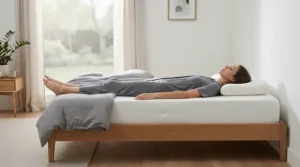
What’s different about back sleepers? Unlike side sleepers, whose shoulders and hips need deep cushioning, back sleepers need consistent support along the whole spine, especially under the lumbar region. Unlike stomach sleepers, they don’t need extra-firm resistance to stop the pelvis from dropping. It’s a middle path, and that’s why medium-firm dominates.
How to Choose a Mattress for Back Sleepers
Follow these six steps and you’ll avoid most of the expensive mistakes.
- Start with your body weight. Heavier sleepers compress foam and springs more, so they generally need firmer feels. Lighter sleepers can find firm beds punishing and should lean medium.
- Target medium-firm as your baseline. For most back sleepers, roughly 6.5 to 7.5 out of 10 is the sweet spot. Remember that brand firmness ratings can differ from tester ratings, as the Origin Hybrid proves.
- Look for zoned support. Firmer zones under the hips and lumbar area keep your lumbar alignment on track without making the whole bed feel like a plank.
- Prefer hybrid constructions if you sleep hot. Springs promote airflow, which is one reason a hybrid mattress for back sleepers often outperforms all-foam beds for temperature.
- Check the trial period and returns policy. You cannot judge a mattress in ten minutes; you need weeks. Long trials are the best safeguard you have.
- Be honest about your other positions. If you regularly end up on your side, prioritise a mattress for back and side sleepers rather than a pure firm option.
Lumbar Alignment: The Idea That Decides Everything
Lumbar alignment is simply the state where the natural inward curve of your lower back is supported, rather than flattened or exaggerated. When you stand, your body manages this automatically. When you lie down, the mattress takes over that job.
Here’s the spatial logic. Your pelvis is heavy, so it sinks first. If the mattress is too soft, the pelvis drops and the lumbar curve collapses, which can leave your lower back feeling stiff. If it’s too firm, the gap under the small of your back stays unsupported, and the muscles there keep working when they should be resting.
Good design solves this with zoning, meaning a slightly firmer band under the hips, and with layered comfort foams that fill the gap under the lumbar curve. That’s the logic behind the Origin Hybrid‘s centre zone and the Silentnight 7 Zone Memory Foam‘s seven-zone layout.
A simple test can help you judge a bed: lie on your back and slide a flat hand under the small of your back. A snug fit suggests decent lumbar alignment. A large gap means too firm; no gap at all and a sinking feeling means too soft. Pillow height matters too, but that’s a story for the usage guide below.
Hybrid Mattress for Back Sleepers vs Memory Foam vs Pocket Sprung
Most people arrive at this decision confused, so let’s untangle it. A pocket-sprung mattress uses individually wrapped springs, a memory foam mattress relies on foam layers, and a hybrid combines both. For back sleepers, that combination is often the sweet spot, which is why most of the picks above are hybrids.
The logic is straightforward. Coils give you push-back and airflow, and foam gives you contouring and pressure relief. A hybrid mattress for back sleepers therefore delivers support where the lumbar region needs it and cushioning where the shoulders and heels need it. Independent testers, including the Tom’s Guide UK mattress team, routinely favour hybrids in their top picks for exactly this reason.
| Feature | Hybrid | Memory Foam | Pocket Sprung | Best For |
|---|---|---|---|---|
| Spinal support | Strong, zoned | Good, depends on density | Strong, responsive | Hybrid for most back sleepers |
| Pressure relief | Very good | Excellent | Moderate | Memory foam for pressure-sensitive |
| Temperature | Cool-leaning | Warmer | Coolest | Pocket sprung for hot sleepers |
| Motion isolation | Good | Excellent | Good | Memory foam for light sleepers |
| Weight and handling | Heavy | Moderate | Heavy | Foam for easier manoeuvring |
Read this table carefully: a hybrid isn’t the winner in every row, but it’s the only design that avoids a serious weakness in any category. If temperature is your main issue, a spring-dominant design may edge it. If pressure relief matters most, a foam-led bed wins. For most back sleepers, though, the balance of a hybrid is the safest starting point.
Mattress for Back and Side Sleepers: Can One Bed Do Both?
Yes, but with compromises, and the compromise depends on which position wins most nights.
If you sleep on your back for roughly two-thirds of the night, choose a firmer-leaning medium-firm bed and accept that side sleeping will be slightly less cushioned. The Otty Original Hybrid and Nectar Essential Hybrid are decent examples. If you split evenly, choose a mattress with a softer comfort layer above a supportive core, such as the DreamCloud Luxury Hybrid. If you lean toward side sleeping, the Emma Hybrid Airgrid is the most natural fit.
Why does this matter? Side sleeping puts intense pressure on the shoulder and hip, so those areas need to sink in a little. Back sleeping distributes pressure more evenly but demands lumbar support. A good mattress for back and side sleepers has zoned foam that yields at the shoulders and hips while holding firm in the middle.
Combination sleepers should also consider mattress responsiveness. Foam that traps you slows movement; springs and responsive foam make position changes easier. That’s a small detail with big consequences at 3am.
Features That Actually Matter (And Those That Don’t)
The mattress industry loves a buzzword. Here’s what deserves your attention, and what doesn’t.
What matters:
- Zoned support. It’s the most direct route to better lumbar alignment.
- Firmness relative to your weight. A “medium-firm” label means different things to different bodies.
- Cooling design. Airflow and breathable covers reduce the overheating that ruins sleep.
- Trial and return policy. It’s your safety net when marketing meets reality.
- Edge support. A stable perimeter matters if you sit on the bed’s edge or share it.
What doesn’t matter as much:
- Headline coil counts. A bigger number sounds better but doesn’t guarantee quality.
- Fancy foam names. “HexaGrid,” “Airgrid” and similar branding describe specific designs, but you should judge them by feel and reviewer feedback, not by the name.
- Discount countdown clocks. UK mattress sales cycle constantly; patience is cheaper than panic.
- Exotic cover materials. Bamboo and Tencel are nice, but they don’t replace core support.
Common Mistakes When Buying a Mattress for Back Sleepers
The first mistake is buying purely on firmness labels. As the Origin Hybrid shows, a brand can call a mattress medium-firm while independent testers call it firm. Read multiple reviews before trusting a single number.
The second is going too firm. Many people assume back pain means “buy the hardest bed available.” That can backfire, because an overly firm surface leaves the lumbar region unsupported. Medium-firm is usually kinder.
Third, ignoring pillow and base compatibility. A great mattress on a sagging slatted base or a tired divan will perform badly. Check that your frame is solid and that slats are properly spaced.
Fourth, dismissing the trial period. Your body needs a few weeks to adapt to a new sleeping surface, so anything shorter than a month tells you little.
Fifth, forgetting your partner. A mattress that works for you but ruins your partner’s night is a bad purchase. Look at motion isolation and firmness compromises before committing.

Practical Usage Guide: Your First 30 Days on a New Mattress
Buying the bed is half the job. The other half is settling in properly.
Week one: give it time. New hybrids often have a slight smell as materials off-gas, and it typically fades in a few days. Let the mattress air in a well-ventilated room before making the bed, and remember that your body needs time to adapt. Don’t judge it on night one.
Weeks one to two: fix your pillow. For back sleeping, your neck should sit in line with your spine, so choose a pillow that’s not too high. If your chin tucks toward your chest, it’s too tall. Try a small pillow or rolled towel under your knees to reduce lumbar strain.
Weeks two to three: rotate if advised. Some mattresses recommend rotating head-to-toe every few months to spread wear. Check your specific guidance rather than assuming.
Week four: assess honestly. Ask yourself whether you wake with less stiffness, whether you’re overheating, and whether your partner is disturbed. Use the trial period if the answers are poor.
Finally, remember that movement matters. The Chartered Society of Physiotherapy offers video exercises for back pain, and staying active is consistently recommended over long stretches of bed rest. A mattress helps; movement heals.
Real-World Scenarios: Which Mattress Fits Which Sleeper?
Scenario 1: The student on a budget. You’re 20, living in a rented room, and back pain from a sagging student mattress is wrecking your revision. Your budget is tight. The Silentnight 7 Zone Memory Foam or a promotional Origin Hybrid are sensible fits, because each targets lumbar support without a premium price. Check reviews for durability, as rented rooms mean frequent movement.
Scenario 2: The heavier-built back sleeper. You weigh over 16 stone, sleep on your back, and find most beds sag around the hips. The Origin Hybrid‘s firm feel and zoned centre suit you, as does the Panda Hybrid Bamboo Mattress Pro if your budget allows. Avoid the softer Emma Hybrid Airgrid.
Scenario 3: The hot-sleeping couple. One of you overheats, the other wants a supportive bed, and you both sleep mostly on your backs. The Otty Original Hybrid and Panda Hybrid Bamboo Mattress Pro prioritise airflow, while the Nectar Essential Hybrid adds decent motion isolation. Trial periods are especially valuable here, because two preferences must be satisfied.
Each scenario turns on the same principle: match firmness to body weight, then filter for temperature and budget. It’s rarely about finding the “best” mattress; it’s about finding the best mattress for you.
Problem → Solution Guide: Fixing Common Sleep Complaints
Problem: waking with a stiff lower back. Check for a gap under your lumbar curve. If there’s a big one, the bed may be too firm; if you sink, too soft. A small pillow under the knees can also ease pressure while you decide.
Problem: overheating. Choose a breathable hybrid, such as the Panda Hybrid Bamboo Mattress Pro or Otty Original Hybrid, and pair it with natural-fibre bedding. Avoid heavy waterproof protectors that trap heat.
Problem: partner disturbance. Look for strong motion isolation. The Nectar Essential Hybrid earns praise here, and foam-led designs generally do too.
Problem: sagging after a year. Rotate where advised, use a solid base, and avoid sitting repeatedly on the same edge. If sagging exceeds the manufacturer’s stated depth for warranty claims, contact the retailer promptly.
Problem: unsure after two weeks. Don’t panic-return on night three, but don’t ignore genuine pain either. Keep a simple sleep diary noting how you feel each morning, and use it to decide within the trial window.
Long-Term Cost and Maintenance: The Real Price of a Mattress
A mattress is one of the few purchases you use for roughly a third of your life, so cost per night is the sensible way to judge value. A bed costing £600 that lasts eight years works out at around 20p a night; a £300 bed that needs replacing in four years costs roughly the same per night but gives you worse sleep in between.
Maintenance is refreshingly simple: use a breathable protector, rotate where the manufacturer advises, vacuum occasionally, and air the room. Avoid drenching foam in cleaning fluids, and check your slatted base for cracked slats.
| Mattress | Value Tier | Long-Term Consideration | Best For |
|---|---|---|---|
| Silentnight 7 Zone Memory Foam | Budget | Check durability reports after 12+ months | Short-term or spare-room use |
| Origin Hybrid | Value | Firm support may age well for heavier sleepers | Value-focused long-term buyers |
| Otty Original Hybrid | Mid-range | Reviewers report shape retention over years | Couples wanting durability |
| Nectar Essential Hybrid | Mid-range | Watch for discount timing | Buyers who can wait for sales |
| DreamCloud Luxury Hybrid | Mid to premium | Sale pricing improves value sharply | Bargain hunters |
| Emma Hybrid Airgrid | Premium | Softer feel may not suit long-term if needs change | Combination sleepers |
| Panda Hybrid Bamboo Mattress Pro | Premium | Materials quality supports longevity | Long-term luxury buyers |
Interpreting the numbers, the Origin Hybrid and DreamCloud Luxury Hybrid offer the lowest cost per night if you buy in a sensible sale window. The Panda Hybrid Bamboo Mattress Pro costs more up front, but materials quality can justify that if you keep it a decade. The Silentnight 7 Zone Memory Foam is the smart pick only if you accept a shorter expected lifespan.
UK Safety and Regulations: What to Check Before You Buy
British mattresses must meet fire safety rules under the Furniture and Furnishings (Fire) (Safety) Regulations 1988, which is why a permanent fire safety label should be attached to any new mattress sold in the UK. If a mattress arrives without one, treat it as a red flag and contact the seller.
Beyond fire safety, check the delivery and returns terms carefully. Bed-in-a-box mattresses arrive compressed and need time to expand, and some retailers restrict returns once the mattress has been unpacked. Read the trial terms before you buy.
Also confirm dimensions. UK bed sizes differ from US ones, so a “double” or “king” must match your frame. Measure your frame, and check the mattress depth if you use a bed with a shallow headboard or a built-in storage base.
Finally, if you’re buying second-hand, be cautious. Used mattresses can carry allergens and wear you can’t see, and fire-label compliance may be unclear. A new mattress is rarely a place to save money by gambling.

Frequently Asked Questions
❓ How firm should a mattress for back sleepers be?
❓ Is a hybrid mattress for back sleepers better than memory foam?
❓ Can lumbar alignment be checked at home?
❓ What mattress for back and side sleepers suits combination sleepers?
❓ How long should I trial a new mattress?
Conclusion
Choosing the right mattress for back sleepers comes down to a handful of decisions: match firmness to your body weight, insist on zoned support for lumbar alignment, favour hybrids if you sleep hot, and never skip the trial period.
If you want firm, value-led support, the Origin Hybrid is the standout. For a balanced, cool-running all-rounder, the Otty Original Hybrid is hard to fault. If you want pressure relief without losing alignment, look at the Nectar Essential Hybrid and DreamCloud Luxury Hybrid. If you switch between back and side, the Emma Hybrid Airgrid deserves a look, provided you’re not a heavier back sleeper. For luxury materials and cooling, the Panda Hybrid Bamboo Mattress Pro leads, and on a tight budget, the Silentnight 7 Zone Memory Foam is a sensible starting point.
Whichever you choose, remember that a mattress is one piece of a bigger picture. Stay active, mind your pillow height, and speak to a GP if pain persists. A good bed can’t fix everything, but it can stop being the reason you dread the alarm.
Recommended for You
- Hybrid Mattress For Side Sleepers: 7 Best UK Picks (2026)
- Mattress For Side Sleepers With Hip Pain: 7 Best UK Picks (2026)
- Mattress For Side Sleepers: 7 Best UK Picks For Pressure Relief (2026)
Disclaimer: This article contains affiliate links. As an Amazon Associate, I earn from qualifying purchases. If you purchase products through these links, we may earn a small commission at no additional cost to you.
✨ Found this helpful? Share it with your friends! 💬🤗
