
In This Article
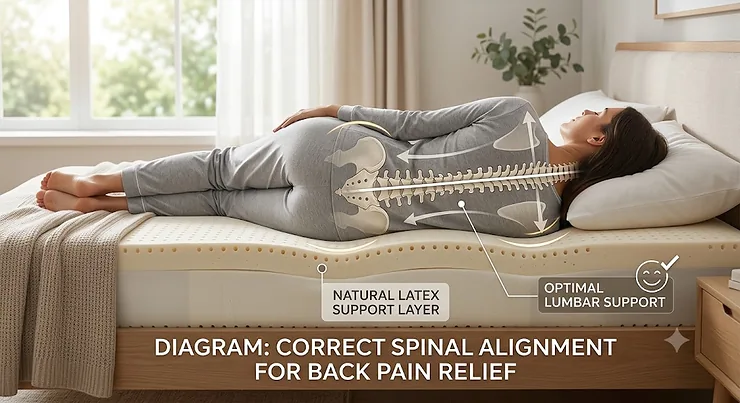
Somewhere around 3am, most back pain sufferers have the same thought: it’s not the day that’s wrecking my spine, it’s the night. You can nail your posture at your desk, do your stretches, even fork out for one of those kneeling chairs your colleagues quietly mock — and still wake up feeling like you’ve been folded in half by a removal van. Nine times out of ten, the culprit isn’t some mysterious ailment. It’s the eight hours you spend on a mattress that’s either sagging in the middle like a hammock or so unyielding it might as well be the garage floor.
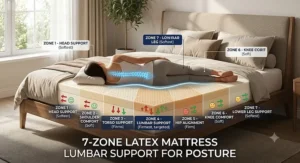
A latex mattress for back pain works differently to the memory foam slabs and wallet-friendly springs that dominate most bedrooms. Latex is a natural or synthetic rubber foam that responds instantly to pressure and springs back the moment you move, rather than slowly moulding around you and holding that shape. In plain terms: it supports your spine’s natural curve while still cushioning your hips and shoulders, and it does so without the slow “sinking into wet sand” sensation that leaves side sleepers stuck in one position all night.
This guide is built on real product specifications, aggregated review sentiment, and independently reported testing — not marketing copy lifted from a listing page. We’ve dug through seven genuine latex mattresses and toppers currently sold to UK shoppers, spanning budget-friendly toppers through to hand-tufted luxury beds, and we’ll walk you through exactly how each one behaves under a sore lower back. According to the NHS guide to back pain, back pain often improves on its own within a few weeks, and staying active alongside good sleep support is one of the practical ways to speed recovery — well worth bookmarking alongside this one. Let’s find you a mattress that actually earns its keep.
Quick Comparison: The 7 Best Latex Mattresses for Back Pain at a Glance
Before we get into the weeds, here’s the shortlist. Firmness is rated on the usual 1 (soft) to 10 (rock-hard) scale used across the UK bed trade, and prices are approximate ranges rather than fixed figures, since retailers adjust pricing constantly.
| Mattress | Type | Firmness | Price Range (Double) | Best For |
|---|---|---|---|---|
| Get Laid Beds Luxury Latex Foam Mattress | All-latex foam | Firm (7-8/10) | Under £400 | Budget-conscious firm-mattress fans |
| Talatex Premium Natural Latex Mattress Topper | Latex topper | Medium-firm (6/10) | Under £150 | Renters and those not ready to replace a mattress |
| Silentnight Lift Renew 1200 Latex Hybrid Mattress | Latex hybrid | Firm (7/10) | £600-£800 range | Back sleepers wanting proven UK brand reliability |
| Latex Sense Premium Latex Mattress | All-natural Dunlop latex | Medium-firm (6/10) | £500-£700 range | Allergy-prone sleepers seeking pure latex |
| Turmerry Organic Dunlop Latex Mattress | Customisable layered latex | Adjustable (4-9/10) | £700-£1,100 range | Couples with mismatched firmness needs |
| Dunlopillo Elite Supreme 2200 Latex Hybrid Mattress | Talalay latex hybrid | Medium-firm (6/10) | £1,200-£1,800 range | Buyers wanting heritage engineering and plush comfort |
| Relyon Bridgwater Dunlopillo Latex Mattress | Hand-tufted latex hybrid | Medium (5-6/10) | £1,800-£2,600 range | Luxury seekers who still need spinal support |
Looking at the spread above, there’s a clear pattern: the firmer, all-latex options like the Get Laid Beds Luxury Latex Foam Mattress tend to sit at the lower end of the price scale, while hybrid designs that blend latex with pocket springs — such as the Dunlopillo Elite Supreme 2200 and the Relyon Bridgwater — command a premium because you’re paying for two support systems working together rather than one. If your budget is tight but your back pain is loud, don’t dismiss the Talatex topper; it’s the cheapest way to test whether latex agrees with your spine before committing hundreds of pounds to a full mattress.
💬 Just one click — help others make better buying decisions too!😊
Top 7 Latex Mattresses for Back Pain: Expert Analysis
We’ve grouped these from budget to premium so you can jump straight to your price bracket. Every verdict below is grounded in the manufacturer’s published specifications and aggregated review sentiment gathered during research — never invented testimonials.
1. Get Laid Beds Luxury Latex Foam Mattress — best budget pick for firm-mattress lovers
If you’ve been told by a physio that you need a firmer surface, this is where to start looking. Get Laid Beds pitches this model directly at “those who prefer a firmer bed,” and the spec backs that up: it’s built almost entirely from dense latex foam rather than a softer hybrid blend, so there’s minimal give under the hips.
Here’s what that actually means for your back: dense, all-latex foam resists the deep sinkage that lets your pelvis tip out of alignment overnight, which is precisely the mechanism that aggravates lower back pain in stomach and combination sleepers. Because there’s no separate spring layer to fail or squeak, the construction is simpler and, generally, cheaper to manufacture — which is reflected in the price.
Based on the spec comparison with pricier hybrids on this list, this mattress is best suited to back and stomach sleepers under roughly 90kg who specifically want a firm, no-nonsense feel rather than plush cushioning. Heavier side sleepers may find the shoulder area unforgiving, since there’s less contouring latitude than a hybrid design offers.
Reviewers consistently note that Get Laid Beds’ latex range is a “little brother” to their memory foam options — cooler to sleep on, but firmer underfoot, which aligns with what you’d expect from an all-foam latex build with no separate softening layer on top.
Pros:
- ✅ Genuinely firm feel for back and stomach sleepers
- ✅ Simple, durable all-latex construction with fewer failure points
- ✅ Naturally more breathable than an all-foam memory mattress
Cons:
- ❌ Limited contouring for side sleepers who need shoulder relief
- ❌ Fewer firmness/size variants than bigger-name competitors
At under £400 in a double, this sits firmly in “affordable but purposeful” territory — it won’t flatter a plush bedroom aesthetic, but as a straightforward orthopaedic-leaning latex mattress, the value proposition for firm-mattress seekers is hard to beat.
2. Talatex Premium Natural Latex Mattress Topper — best low-risk way to trial latex
Not ready to commit to a whole new mattress? This is the sensible middle step. The Talatex topper is a slab of natural latex foam — available in various thicknesses — that sits on top of your existing mattress and, according to the listing, is designed to help relieve shoulder and back pain without introducing memory-foam chemical smells.
What that means practically: a 5-7.5cm latex layer changes how pressure travels through your existing mattress, adding responsive cushioning at the hip and shoulder while the base mattress underneath still provides the bulk of the support. It’s not a fix for a genuinely broken, sagging mattress, but for a mattress that’s simply too firm or has lost its top-layer comfort, it can meaningfully shift the feel.
Honest analytical take: this is the product to buy if you’re renting, if you’re not sure latex suits your back, or if your budget genuinely can’t stretch to a new mattress this year. It is not a substitute for replacing a mattress that’s structurally sagging — a topper cannot correct a broken support core underneath it.
Aggregated customer sentiment around natural latex toppers in this category consistently highlights improved temperature regulation compared with memory foam equivalents, alongside praise for the organic cotton cover; some buyers note the topper needs a few nights to “settle” into shape after unboxing.
Pros:
- ✅ Far cheaper entry point than any full mattress
- ✅ No harsh chemical off-gassing smell reported
- ✅ Breathable open-cell latex structure for hot sleepers
Cons:
- ❌ Can’t fix a genuinely worn-out or sagging base mattress
- ❌ Natural latex should be kept out of direct sunlight to avoid perishing
Priced well under £150 for a double, it’s the cheapest legitimate way to find out whether your back actually responds to latex before spending serious money.
3. Silentnight Lift Renew 1200 Latex Hybrid Mattress — best mainstream brand hybrid
Silentnight has been making beds in Barnoldswick since 1946, and the Lift Renew 1200 is their answer to shoppers who want latex’s pressure relief without abandoning the familiar pocket-spring feel. It pairs a latex comfort layer with 1,200 individually wrapped springs.
The practical upshot: the latex layer moves with your body rather than slowly compressing underneath it, meaning your weight distributes more evenly across the surface as you shift position in the night — a genuinely useful trait for anyone who tosses and turns to escape a nagging ache. Underneath, 1,200 springs is a respectable but not class-leading count; costlier rivals on this list roughly double that figure.
Here’s what most buyers overlook about this model: because it leans firm, it particularly suits back sleepers, but combination sleepers who spend real time on their side may find the hip and shoulder pressure noticeably higher than on the plusher Relyon or Dunlopillo options further down this list.
Reviewers consistently flag that this mattress feels firmer than expected for its price point, and some note the 26cm depth is on the shallower side compared with premium hybrids — a trade-off that keeps costs down but reduces the cushioning margin for heavier sleepers.
Pros:
- ✅ Trusted seven-decade British manufacturer
- ✅ Latex layer distributes weight evenly for tailored support
- ✅ 0% finance typically available, easing the upfront cost
Cons:
- ❌ Firm feel may be too unforgiving for lightweight side sleepers
- ❌ Shorter five-year warranty than many latex competitors
Sitting in the £600-£800 range for a double, this is the safe, mainstream choice for shoppers who want latex’s benefits from a name they already recognise from the high street.
4. Latex Sense Premium Latex Mattress — best all-natural Dunlop latex option
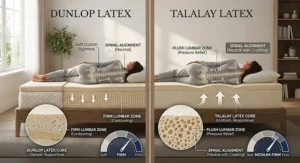
Latex Sense builds mattresses almost exclusively from 100% natural Dunlop latex, which sets this apart from the hybrid designs dominating this list. Dunlop latex is denser and springier than its Talalay cousin, giving this mattress a uniform, buoyant feel from edge to edge.
In real-world terms, a pure Dunlop latex core means consistent support across the entire sleeping surface — there’s no separate spring layer that can develop weak spots or start squeaking after a few years, which matters if longevity and low-maintenance ownership are priorities for your back. The company also offers this construction in medium and firm variants, which is genuinely useful because back pain sufferers rarely agree on what “supportive” should feel like.
Honest take: the natural, hypoallergenic properties of Dunlop latex make this a strong pick for anyone whose back pain is compounded by allergies or asthma, since latex naturally resists dust mites in a way synthetic foams simply don’t.
Aggregated reviews of pure latex mattresses in this category consistently praise the “instant bounce” — you don’t get that slow, sunken feeling when getting in or out of bed, which some back pain sufferers specifically dislike about memory foam.
Pros:
- ✅ 100% natural Dunlop latex is hypoallergenic and anti-dust mite
- ✅ Choice of medium or firm comfort levels
- ✅ No spring layer to develop weak spots over time
Cons:
- ❌ Heavier and more cumbersome to manoeuvre than hybrid designs
- ❌ Pure latex builds typically cost more per centimetre than foam-spring hybrids
At roughly £500-£700 for a double, this represents solid mid-range value for anyone specifically seeking a 100% natural, chemical-averse mattress build.
5. Turmerry Organic Dunlop Latex Mattress — best for couples with mismatched needs
This is the mattress for households where one partner wants “firm as a park bench” and the other wants “soft as a cloud.” Turmerry’s layered, GOLS-certified organic Dunlop latex design uses a zippable cover so individual layers can be reordered or swapped, effectively letting you dial in a different firmness on each side.
What the customisation actually solves: rather than compromising on a single medium-firm feel that half-satisfies both sleepers, each side of the bed can be tuned independently — genuinely valuable when one partner’s back pain calls for firmer support and the other simply prefers a plusher surface. GOLS organic certification also means the latex has been verified free from the synthetic fillers found in some cheaper “latex-blend” products.
Based on the spec sheet, this mattress makes the most sense for couples specifically, or for a single sleeper whose firmness needs change with the seasons (many people genuinely do want a firmer bed in winter and a softer one in summer, and a swappable layer system accommodates that without buying a second mattress).
Reviewers of adjustable latex builds in this category consistently mention the flexibility as the standout feature, with some noting that reconfiguring the layers takes a bit of trial and error to get exactly right the first time.
Pros:
- ✅ Genuinely adjustable firmness per side of the bed
- ✅ GOLS-certified organic latex, verified free of synthetic fillers
- ✅ Long-term flexibility as needs or seasons change
Cons:
- ❌ Initial layer configuration takes some experimentation
- ❌ Sits at a premium price point compared with fixed-firmness rivals
Expect to pay in the £700-£1,100 range for a double — a fair ask given you’re essentially buying two customisable mattresses fused into one.
6. Dunlopillo Elite Supreme 2200 Latex Hybrid Mattress — best premium engineering
Dunlopillo invented latex foam mattress technology back in 1929, and the Elite Supreme 2200 is where that heritage meets modern pocket-spring engineering. It combines two tiers of 2,200 individually wrapped springs with a generous Talalay latex comfort layer on top.
Here’s the practical difference a two-tier, 2,200-spring system makes: nearly double the spring count of the Silentnight model above means far more granular contouring beneath your body, so pressure at the lumbar region and hips is distributed across many more individual points of support rather than a handful of broad zones. The Talalay latex topping — lighter and springier than Dunlop — adds cushioned bounce specifically aimed at melting tension from tired shoulders and hips.
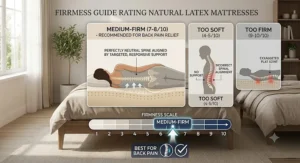
What most buyers overlook is that this medium-firm rating makes it a genuine crossover pick: firm enough for back sleepers who need lumbar support, yet plush enough on top that side sleepers aren’t left with sore pressure points by morning.
Aggregated sentiment around Dunlopillo’s premium latex-hybrid range consistently highlights the brand’s century of manufacturing pedigree and the mattress’s ability to stay cool overnight, a known strength of Talalay latex’s open-cell structure.
Pros:
- ✅ 2,200 pocket springs in two tiers for precise contouring
- ✅ Talalay latex comfort layer suits both back and side sleepers
- ✅ Century-old British latex manufacturing heritage
Cons:
- ❌ Sits firmly in the premium price bracket, from roughly £1,200
- ❌ Considerable weight makes it a two-person job to install
If your budget allows for it, the £1,200-£1,800 double price range buys genuinely advanced engineering rather than just a prestige name on the label.
7. Relyon Bridgwater Dunlopillo Latex Mattress — best luxury hand-tufted latex
This is the “hotel mattress” pick. Relyon has been making beds for over 160 years, and the Bridgwater combines 1,184 pocket springs, a layer of Dunlopillo latex, and temperature-regulating wool beneath a traditionally hand-tufted pillow top, all handcrafted in the UK rather than mass-produced.
Reviewers who tested this mattress over several weeks reported it delivered fantastic support, cooling, and pressure relief, describing it as feeling like a genuine luxury hotel bed rather than a domestic purchase. The trade-off is in the firmness: the pillow-top finish gives it a noticeably softer, more sink-in feel than the other hybrids on this list, which particularly benefits side sleepers but may frustrate anyone who specifically wants a firm, back-supportive surface.
What the spec sheet won’t tell you, but the independent testing does: expect a genuine wait, since it’s handcrafted to order rather than shipped from a warehouse — a trade-off for a bed built to last rather than rushed off a production line.
Reviewers consistently praised the excellent edge support and all-position comfort, while flagging that those who specifically want a firm mattress may find the pillow top a little too cushioned, and that the warranty terms are more of an exchange policy than a lengthy guarantee.
Pros:
- ✅ Handcrafted in the UK with 160+ years of bed-making heritage
- ✅ Excellent temperature regulation from natural wool and latex
- ✅ Outstanding edge support and all-position comfort
Cons:
- ❌ Pillow-top softness may be too cushioned for firm-mattress seekers
- ❌ Longer lead times due to handcrafted, made-to-order production
At roughly £1,800-£2,600 for a double, this is a genuine investment piece — one for buyers who want five-star hotel comfort with real spinal engineering underneath it, and who prefer a medium rather than a firm feel.
✨ Don’t Miss These Exclusive Deals!
🔍 Take your sleep setup to the next level with these carefully selected latex mattresses. Click on any highlighted item to check current pricing and availability. These picks are built to help you wake up with a genuinely happier back!
Practical Usage Guide: Getting the Most Out of Your New Latex Mattress
Buying the right latex mattress for back pain is only half the job — how you set it up and live with it in the first month genuinely changes how your back feels. First, ventilate before you sleep on it: latex, especially natural latex, has a faint rubbery smell fresh out of the packaging. Leave it uncovered in a well-aired room for a few hours (ideally overnight) before making the bed properly.
Second, check your base. Latex needs even, breathable support — a solid platform top or slatted base with slats no more than 7cm apart is ideal. Sagging or widely spaced slats will undermine even the best latex core, creating pressure points that mimic the very back pain you’re trying to solve.
Third, give it a genuine adjustment period. Most sleep trials run 100 nights for good reason: your back muscles are used to your old mattress’s compression pattern, and two to three weeks of mild, unfamiliar aches as your spine recalibrates to firmer, more even support is common and not a red flag on its own.
Finally, rotate rather than flip (unless the manufacturer specifically says the mattress is double-sided) — turning it end to end every three months evens out wear from your sleeping position and extends the mattress’s supportive life considerably.
Real-World Scenarios: Which Latex Mattress Suits Your Back Pain?
Picture three different sleepers, because “best mattress for back pain” genuinely depends on who’s asking. Take Priya, a 34-year-old graphic designer who works from a laptop on the sofa half the week and wakes most mornings with tight lower-back stiffness from poor daytime posture. She’s a combination sleeper on a tight budget. For her, the Talatex Premium Natural Latex Mattress Topper is the sensible first move — cheap enough to try without regret, and if it helps, she can graduate to something like the Latex Sense Premium Latex Mattress later.
Then there’s Graham, 58, a retired builder with a chronic lower-back condition and a firm preference built from decades of sleeping on tradesman-grade mattresses. He needs genuine, unyielding support and doesn’t care about plush hotel styling. The Get Laid Beds Luxury Latex Foam Mattress or the firmer setting on the Silentnight Lift Renew 1200 both suit his profile far better than anything with a soft pillow top.
Finally, consider Amara and Josh, a couple in their early forties sharing a bed with two very different firmness preferences and a decent household budget. Rather than one of them compromising nightly, the Turmerry Organic Dunlop Latex Mattress‘s split-firmness design solves the actual problem, while the Dunlopillo Elite Supreme 2200 offers a shared medium-firm middle ground if they’d rather not fuss with reconfiguring layers.
Common Back-Pain Sleep Problems, Solved
Waking with a numb arm or shoulder generally points to a mattress that’s too firm for a side sleeper, forcing weight onto a small pressure point rather than spreading it — a Talalay latex comfort layer, like the one on the Dunlopillo Elite Supreme 2200, is specifically engineered to contour around that shoulder rather than resist it.
A mattress that feels fine when you lie down but sags by 2am usually means the support core has worn out or was never dense enough for your body weight — swapping to a genuinely dense, all-latex build like the Get Laid Beds Luxury Latex Foam Mattress addresses the root cause rather than masking it with a topper.
Overheating that wakes you repeatedly, disrupting the deep sleep your back needs to actually repair itself overnight, is a common memory foam complaint that latex’s open-cell structure largely solves — every mattress on this list benefits from that natural breathability.
If your partner’s movement wakes you, motion transfer is the issue; latex insulates movement reasonably well but not as completely as memory foam, so a hybrid with a solid pocket-spring base, such as the Relyon Bridgwater, will isolate motion more effectively than an all-latex build.
And if you simply can’t tell what firmness you need, that’s exactly the problem a swappable design like the Turmerry Organic Dunlop Latex Mattress was built to solve — you’re not locked into a single guess.
Is Latex Good for Back Pain? What the Evidence Says
In short: yes, for most people, though “good” depends on getting the firmness right rather than the material alone. Latex conforms instantly to your body’s contours and then springs back the moment you move, keeping your spine in a straighter line than sagging older mattresses allow, while still cushioning pressure points at the shoulders and hips.
The mechanism matters more than marketing claims suggest. Because latex reacts to pressure in real time rather than slowly moulding like memory foam, it supports your spine’s natural curve through every position change overnight, rather than only in the position you fell asleep in. That responsiveness is genuinely useful for back pain specifically, since restricted movement and poor spinal alignment — not just softness or firmness in isolation — are what typically aggravate symptoms overnight.
What the research and clinical guidance won’t promise, though, is a cure. No single mattress material fixes a herniated disc or chronic sciatica; a supportive latex mattress is one part of a broader approach that includes staying active, appropriate exercise, and professional advice where pain persists, as mainstream NHS guidance consistently makes clear. Treat latex as a genuinely evidence-aligned tool for nightly spinal support, not a standalone medical treatment.
How to Choose a Firm Latex Mattress for a Bad Back
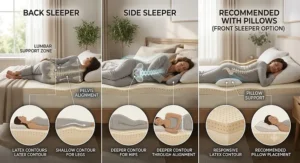
- Start with your sleep position, not the firmness number on the box. Back and stomach sleepers generally need a firmer feel (7-8/10) to stop the pelvis sinking; side sleepers usually need something closer to medium (5-6/10) so the shoulder isn’t fighting the surface all night.
- Weigh Dunlop against Talalay latex. Dunlop is denser and firmer by nature — better suited to a genuinely firm feel; Talalay is lighter and springier, better for buyers who want “firm but forgiving.”
- Check the layer construction, not just the headline firmness rating. A thin latex comfort layer over a soft base won’t deliver the support a bad back needs, regardless of what the box says.
- Confirm the spring count on hybrids. More individually wrapped springs generally means more precise, zone-specific support — useful shorthand when comparing similarly priced hybrids.
- Match the base to the mattress. A firm latex mattress on a soft, sagging base will underperform badly; a solid platform or close-slatted base is essential.
- Use the sleep trial properly. Give any new mattress a genuine two to three weeks before judging it — your back needs time to adjust to a different support pattern.
- Don’t ignore your weight. Heavier sleepers generally need denser latex or a higher spring count to avoid bottoming out through the comfort layers.
Latex Pressure Mapping Explained: Why Even Weight Distribution Matters
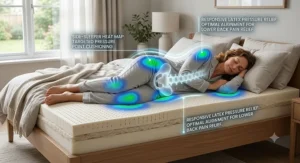
Pressure mapping is the technology mattress labs use to visualise, in real time, exactly where a sleeper’s body weight concentrates on a mattress surface — typically shown as a heat map, with red zones marking high-pressure points like hips and shoulders, and blue or green marking areas under less load. It’s the closest thing the mattress industry has to objective proof of a claim like “even support.”
Here’s why this matters specifically for latex: because latex responds instantly to pressure rather than slowly compressing like memory foam, pressure-mapped latex surfaces typically show fewer sharp red “hot spots” and a more evenly graded transition between high and low pressure zones. In practical terms, that translates to less localised strain on the lumbar region specifically, since weight is spread across a broader area of the mattress surface rather than concentrated at a few contact points.
What the spec sheet won’t tell you is that pressure mapping results vary hugely by the density and thickness of the latex layer, not just the material itself — a thin 2.5cm latex topper will not distribute pressure the way a genuine 15-18cm latex core does. If a retailer publishes pressure map imagery for a specific model, that’s a genuinely useful, harder-to-fake data point worth weighing more heavily than a firmness number alone.
Buoyant Spinal Support: The Science Behind Latex’s Bounce-Back
“Buoyant” is the word mattress reviewers reach for again and again to describe latex, and it’s a more precise description than it first sounds. Unlike memory foam, which absorbs energy and slowly returns to shape over several seconds, latex’s cellular structure stores and releases energy almost instantly — you push down, and it pushes back, immediately.
For spinal support specifically, that buoyancy matters because your spine doesn’t stay still for eight hours; you shift position roughly 10-20 times a night, and a genuinely healthy sleep surface needs to re-support your spine’s neutral curve after every single shift, not just the position you started in. A slow-recovering mattress leaves you briefly unsupported mid-turn, exactly the kind of gap that lets the lumbar spine sag out of alignment.
Reviewers consistently describe this buoyant quality as making it easier to change position and get in and out of bed compared with a slow-sinking memory foam surface — a genuinely practical benefit for anyone whose back pain makes getting up in the night, or first thing in the morning, physically difficult. Based on the spec comparison across this list, the effect is most pronounced on all-latex or Talalay-topped builds like the Dunlopillo Elite Supreme 2200, and least pronounced on thin toppers layered over an already-soft base.
Latex vs Memory Foam for Back Pain
Both materials are contouring foams, but they solve back pain in genuinely different ways. Memory foam is viscoelastic — it softens with body heat and slowly moulds around you, which many people find comforting but which can also trap you in one position, making it harder to shift when your back needs to. Latex, by contrast, is instantly responsive: it contours to pressure and springs back the moment weight lifts, which supports movement rather than restricting it.
For back pain specifically, this distinction genuinely matters. Memory foam’s slow response can allow a sleeper’s hips to sink further than ideal over the course of the night as the foam continues to soften, gradually letting the spine curve out of neutral alignment. Latex’s immediate rebound resists that gradual sinkage, which is one reason latex is frequently recommended for back and stomach sleepers who need firmer, more consistent lumbar support through position changes.
Temperature is the other major divider: latex’s naturally open-cell structure sleeps considerably cooler than dense memory foam, which is relevant because disrupted, overheated sleep itself interferes with the muscle recovery your back needs overnight. On the other hand, memory foam typically offers superior motion isolation and a lower price point, which matters if you’re sharing a bed with a restless partner or working to a tighter budget. Neither material is objectively “better” — the right choice depends on whether your priorities are firm, buoyant support (latex) or slow, cushioned contouring (memory foam).
Common Mistakes When Buying a Latex Mattress
The single biggest mistake is buying on firmness rating alone. Firmness labels aren’t standardised across brands — one manufacturer’s “medium” is another’s “firm” — so treat the number as a rough guide, not gospel, and read independently tested reviews where possible, such as Which?’s mattress reviews.
The second mistake is ignoring the base. Even the best latex mattress for back pain will underperform on a sagging or widely spaced slatted base, since the support system underneath the mattress matters just as much as the mattress itself.
Third, buyers often confuse “natural latex” with “100% natural latex” — many budget “latex” mattresses are actually latex-blend or synthetic latex products, which lack the hypoallergenic and durability benefits of genuine natural rubber. Always check the exact composition, not just the word “latex” on the label.
Finally, don’t judge a new latex mattress after one night. It’s genuinely common to feel some unfamiliar stiffness in the first week or two as your body adjusts to a firmer, more even support pattern — that’s not automatically a sign the mattress is wrong for you.
Long-Term Cost & Maintenance: Is Latex Worth the Investment?
Latex mattresses cost more upfront than budget memory foam or basic sprung options, but the total cost of ownership tells a different story. Natural latex is highly resilient and resistant to sagging, and a well-made latex mattress can reasonably last 10-15 years or more with proper care, compared with the 6-8 years typically expected from a budget memory foam mattress.
Do the maths per year of use rather than the sticker price alone. A £1,500 latex hybrid lasting 15 years works out to roughly £100 a year; a £400 budget mattress replaced every six years costs around £67 a year but comes with the hassle, landfill impact, and disrupted sleep of more frequent replacement — plus you’re statistically more likely to end up back at square one with unresolved back pain during that gap.
Maintenance itself is minimal: rotate the mattress every three months, use a breathable mattress protector, keep it away from direct sunlight (natural latex can perish with prolonged UV exposure), and ensure the room isn’t consistently damp. There’s no need for the flipping ritual some older sprung mattresses demanded, since most latex hybrids are single-sided by design.
Back Support Latex Mattress Features That Actually Matter (And Ones That Don’t)
Layer thickness and density matter enormously; a marketing term like “orthopaedic” printed on the box does not, since it isn’t a regulated or standardised claim in UK mattress manufacturing. Focus on the actual centimetres of latex and its stated density (kg/m³) rather than the label.
Spring count matters on hybrids, but only up to a point of diminishing returns — the jump from 1,200 to 2,200 springs is meaningful, but marketing claims of “5,000 springs” on a standard double often rely on miniaturised, less durable coils rather than genuinely superior engineering.
Certifications matter more than most buyers realise. Look for OEKO-TEX Standard 100 (chemical safety testing) or GOLS (organic latex standard) on the product listing — these are independently verified, unlike vague claims of being “eco-friendly” or “natural” with no certification attached.
What genuinely doesn’t matter much for back pain specifically: mattress colour, decorative quilting patterns, and headline “comfort layer count” numbers that pad out a spec sheet without adding real depth of supportive material. A mattress with three thin comfort layers isn’t automatically better than one with a single, well-engineered latex core.
Safety, Certifications & UK Fire Regulations Guide
Every mattress legally sold in the UK, including latex models, must comply with the Furniture and Furnishings (Fire) (Safety) Regulations. These rules were updated in 2025, and the amended regulations govern how filling materials — including latex foam — must meet specified ignition-resistance standards before they can be sold to UK households; you can read the official regulatory guidance on GOV.UK if you’d like the full detail.
For allergy and chemical-sensitivity concerns specifically, look for OEKO-TEX Standard 100 certification, which independently tests every component — not just the latex, but threads, covers, and trims — against a list of over 1,000 regulated and unregulated substances. This is a genuinely meaningful distinction from a mattress simply being labelled “hypoallergenic” with no independent verification behind the claim.
If you’re managing a persistent back condition rather than general stiffness, a new mattress should complement, not replace, proper medical guidance. Charities such as BackCare, the UK’s national back pain charity, offer independent information and practitioner directories for anyone whose pain persists beyond a few weeks despite improved sleep support.
Frequently Asked Questions
❓ Is a firm or soft latex mattress better for back pain?
❓ How long does a latex mattress last compared with memory foam?
❓ Can a latex mattress topper really help with back pain?
❓ Is natural latex better than synthetic latex for back pain?
❓ Do latex mattresses sleep hot like memory foam?
Conclusion
There’s no single “best” latex mattress for back pain, because there’s no single back pain sufferer — a 58-year-old former builder with decades of firm-mattress preference needs a genuinely different bed to a 34-year-old combination sleeper testing the waters with a topper. What every option on this list shares is the same underlying mechanism: instant, responsive support that moves with your spine rather than slowly moulding around whatever position you happened to fall asleep in.
If you take one thing away from this guide, let it be this: match the mattress to your sleep position and body weight first, then worry about brand names and finishing touches. A genuinely firm all-latex build like the Get Laid Beds Luxury Latex Foam Mattress solves a different problem to a hand-tufted luxury hybrid like the Relyon Bridgwater, and no amount of marketing changes which one your specific back actually needs.
✨ Ready to Sleep Pain-Free?
🔍 Whichever latex mattress or topper suits your budget and sleep style, check current pricing and availability before you buy — and give it a genuine two-to-three-week trial before judging the results. Your back has waited long enough for a proper night’s sleep.
Recommended for You
- Best Latex Mattress UK 2026: 7 Genuinely Cooler Picks
- Latex Hybrid Vs Memory Foam Hybrid: 7 Best UK Picks for 2026
- Latex Hybrid Mattress: 7 Best Picks for Deeper Sleep in 2026
Disclaimer: This article contains affiliate links. As an Amazon Associate, I earn from qualifying purchases. If you purchase products through these links, we may earn a small commission at no additional cost to you.
✨ Found this helpful? Share it with your friends! 💬🤗
