
In This Article
Lie on your back and your body strikes a bargain with gravity. Your shoulders and bottom are the heavy bits, and your lower back is the bridge between them. If the mattress is too soft, the heavy bits sink and the bridge sags. If it’s too hard, the bridge hangs in mid-air. Either way, you wake up arguing with your own spine, and choosing the right orthopaedic mattress for back sleepers is how you end that argument.

Here’s the honest bit. The NHS notes that back pain, particularly lower back pain, is very common and often improves on its own within a few weeks. So no mattress is a miracle cure, and no trustworthy article will pretend otherwise. What the right bed can do is stop you spending eight hours a night making things worse.
The catch is that “orthopaedic” is a marketing word, not a protected standard. Some mattresses wearing the label are properly supportive, while others are simply firm and hopeful. This guide cuts through that with seven real mattresses you can find on Amazon UK, from a premium hybrid to a budget all-foam. It also covers firmness rating, spinal health, and the difference between a genuinely supportive firm mattress for back sleepers and one that’s merely hard.
A transparency note before we start: none of this comes from sleeping on the beds myself. It’s built from manufacturer specifications, published expert reviews and the patterns in genuine customer feedback. Where a detail couldn’t be verified, I say so. Prices are ranges at the time of research (October 2026) and will move.
Quick Comparison: Orthopaedic Mattress for Back Sleepers at a Glance
Not everyone wants a 4,500-word deep dive before breakfast. This table gives you the shape of the field in thirty seconds, and the detailed analysis follows below.
| Mattress | Construction | Feel | Best For |
|---|---|---|---|
| Simba Hybrid Pro | Micro-springs, pocket springs, foam and wool, 28cm | Medium-firm | Premium all-rounder, warm sleepers |
| Emma Original | Foam over 7-zone pocket springs, 25cm | Medium-firm (softer side) | Mid-range value, average-weight sleepers |
| Silentnight Eco Comfort Breathe 1400 | 1,400 pocket springs, fibre fillings, no memory foam | Firm | Heavier back sleepers wanting real firmness |
| Zinus Memory Foam & Pocket Spring (10-inch) | Foam and pocket springs, tight top | Medium-firm | Tight budgets, spare rooms, rentals |
| TeQsli 10 Inch 7-Zone Hybrid | Gel and wave memory foam, 7-zone pocket springs, 25cm | Medium-firm | Best features-per-pound, trial-friendly |
| Inofia Hybrid (12 Inch Airy Cooling) | Foam and pocket springs, cooling cover | Medium-firm | Hot back sleepers on a budget |
| Supreme Memory Foam Orthopaedic | All-foam | Very firm (per reviewers) | Simple, firm, lightweight foam |
Looking at the table, only the Silentnight Eco Comfort Breathe 1400 and the Supreme Memory Foam Orthopaedic lean truly firm. The rest cluster at medium-firm, which is where most guidance on back comfort lands. Your body weight should break the tie. Heavier sleepers should look to the firmer end, and average or lighter sleepers will usually be happier in the middle.
💬 Just one click — help others make better buying decisions too!😊
The Top 7 Picks: Orthopaedic Mattress for Back Sleepers, Analysed
Each pick below gets the same treatment: what the specification means in practice, who it suits, what reviewers keep saying, and whether the price is justified.
1. Simba Hybrid Pro — premium all-rounder with breathable wool
The standout is the construction. Eight layers in a 28cm frame put two tiers of titanium Aerocoil micro-springs under graphite-infused foam, topped with British wool. In practice, that means lots of small, quick-reacting springs cradling the lumbar curve, plus a natural fibre that helps manage heat.
Simba calls the feel medium-firm, and reviewers broadly agree. One tester’s tall, well-built partner scored it around six out of ten for firmness. Ideal Home gave it 4.5 out of 5 but flagged that it may lack enough firmness for heavier sleepers or front sleepers. Based on the spec comparison, it suits average-weight back sleepers who want pressure relief without feeling propped on a plank.
Wider reviewer sentiment points to back and stomach sleepers as the best match. Common gripes are weight (it’s a two-person lift) and a new-foam smell for the first couple of nights. Expert Reviews reports that Simba’s own Amazon storefront ships it with the 200-night trial and 10-year warranty, so confirm that on the live listing.
Pros:
- ✅ Medium-firm support with a breathable wool layer
- ✅ Long trial and warranty via Simba’s storefront
- ✅ Consistently strong expert review scores
Cons:
- ❌ Premium price tag
- ❌ Heavy, with a noticeable first-nights smell
Price: roughly £900-£1,300 for a double, depending on promotions. It’s expensive, but it’s the most complete package here if you can stretch to it.

2. Emma Original — balanced 25cm hybrid with seven-zone springs
Emma has moved on from its all-foam roots. The current Original is a 25cm hybrid with memory foam over seven-zone pocket springs and a breathable cover. Seven zones means firmer springs under your hips and softer ones under your shoulders, which is what a back sleeper’s torso needs.
UK comparison sites place it medium-firm with a softer feel than the Simba. That makes it a better match for average and lighter back sleepers than for heavier ones. Older reviews praising a 6-7 out of 10 firmness for lower back comfort often describe the previous all-foam design, so treat those with care. The hybrid is a different animal.
Here’s the catch on review evidence. The Amazon listings found during research showed 4.2 stars, but from only a small number of ratings. That’s too thin to lean on. The stronger signal is the brand’s long UK track record, and retailers list a 10-year guarantee. Emma also describes itself as a five-time Which? award winner, which is a brand claim, so check the awards yourself.
Pros:
- ✅ Balanced medium-firm feel with zoned support
- ✅ Established brand with a 10-year guarantee listed
- ✅ Breathable cover suits warm sleepers
Cons:
- ❌ Softer than many back sleepers prefer
- ❌ Few verified ratings on Amazon
Price: roughly £300-£500, depending on size and promotions. Good mid-range value for average-weight sleepers.
3. Silentnight Eco Comfort Breathe 1400 — genuinely firm, springs-only support
This is the odd one out, deliberately. Silentnight states there’s no memory foam in its Eco ranges. You get 1,400 zoned Mirapocket springs under recycled-fibre fillings, in a profile of roughly 25-26cm, and the result is a properly firm feel.
Why does that matter? Memory foam hugs, while springs push back. For heavier sleepers, or anyone who sinks too far into contouring foam, a springs-and-fibre build keeps the hips level. The fibres also breathe better than foam, which helps hot sleepers. A retailer listing states Silentnight tests its mattresses to around 32 stone.
Reviewers on retailer sites keep returning to one word: firm. Several say “very firm” and note it suits back sleepers better than side sleepers. A few suggest adding a topper if it’s too hard. One reviewer credited it with easing lower back aches, but that’s anecdote rather than evidence. Expect a heavy mattress (around 38kg in king) and possibly a smell when new.
Pros:
- ✅ Genuinely firm support for back sleepers
- ✅ Cooler springs-and-fibre construction
- ✅ High stated weight tolerance
Cons:
- ❌ No memory foam contouring at all
- ❌ Too firm for side-sleeping partners
Price: roughly £350-£650, depending on size and retailer. Fair value if firm is what you’re after.
4. Zinus Memory Foam & Pocket Spring (10-inch) — best budget hybrid with a tight top
A tight top, meaning a flat, minimally quilted cover, is an unglamorous feature that suits back sleepers. There’s less pillow to sink into and more consistent support. Underneath sit recycled padding, high-density foam and individually wrapped pocket springs, giving a 10-inch medium-firm hybrid with OEKO-TEX certification.
On paper, ten inches is slim next to the Simba, so heavier sleepers should be cautious. For average-weight back sleepers on a tight budget, such as a spare room, student bed or rental, the specification is sensible.
The double listing found during research showed 4.6 stars from over 400 ratings, which is reassuring volume at this price. One caution: when Tom’s Guide looked at the Zinus pocket spring listing, it didn’t mention a trial, only Amazon’s standard 30-day returns. Check the current wording. A 10-year limited warranty is listed.
Pros:
- ✅ Very low cost for a hybrid build
- ✅ Tight top gives consistent back support
- ✅ Strong rating volume on Amazon
Cons:
- ❌ Slim profile for heavier sleepers
- ❌ Shorter returns window than trial-based rivals
Price: roughly £100-£200 for a double. It’s hard to beat on cost, with sensible trade-offs.
5. TeQsli 10 Inch 7-Zone Hybrid — most features per pound
Gel memory foam, wave-shaped foam beneath it, reinforced edges and seven pocket-spring zones is a lot of mid-range engineering at a budget price. The double uses 650 individually pocketed springs in a 25cm build, with 3D mesh sides to push air through.
The wave foam is the clever bit. The contoured surface compresses where you want give (lumbar curve, neck) and stays supportive elsewhere. For back sleepers, the zoned springs do the heavy lifting under the hips while the foam handles pressure relief.
Star ratings are consistently strong across size variants, mostly 4.5 to 4.7 with several hundred ratings each. The mattress also appears in Amazon’s mattress best-seller lists. Specific review themes couldn’t be verified from the sources available, so read the three-star reviews on the live page for comments on firmness. The seller advertises a 100-night trial and 10-year support, which is real reassurance on a budget purchase.
Pros:
- ✅ Seven-zone springs with wave memory foam
- ✅ 100-night trial advertised on a budget bed
- ✅ CertiPUR-US and OEKO-TEX certifications
Cons:
- ❌ Medium-firm rather than truly firm
- ❌ Shorter brand track record than the big names
Price: roughly £150-£250 for a double. It offers strong value for features.

6. Inofia Hybrid (12 Inch Airy Cooling) — cooling comfort for warm sleepers
The pitch is temperature. An airy cooling cover, mesh sides and a pocket-spring core move air better than an all-foam slab. Back sleepers lie flat with maximum body contact, so they can run warm, and they’re the natural audience here.
One independent buyer who reviewed an Inofia hybrid in king size rated the firmness about 7 out of 10 and called it medium-firm. They also noted it sleeps cool because there isn’t much memory foam on top. That model may differ from this listing, but it shows the brand’s character: supportive, springy and breathable rather than plush.
The listing carries roughly 4.7 stars from nearly 800 ratings. Inofia advertises a 100-night trial, suggests allowing 72 hours for expansion, and says your body may need up to four weeks to adjust. Rotating every two to three months is recommended.
Pros:
- ✅ Cooling cover and breathable mesh sides
- ✅ High rating volume at a low price
- ✅ 100-night trial advertised
Cons:
- ❌ Medium-firm, so not for firm-bed purists
- ❌ Less contouring than thick memory foam
Price: roughly £150-£250 for a double. It’s a smart pick for hot sleepers who want the benefits of a hybrid.
7. Supreme Memory Foam Orthopaedic Mattress — simple, very firm all-foam
This is orthopaedic in the old-school sense: no springs, just firm foam. It’s also the clearest budget argument for a straightforward firm mattress for back sleepers. All-foam builds tend to be lighter and quieter, and they’re easier to carry up narrow stairs, which is a genuine advantage in rentals.
Customer feedback on the Amazon listing is where it gets interesting. Reviewers describe it as comfortable and good quality, yet several are surprised by how firm it is, and one two-star review simply says “very firm”. That’s a feature if you’ve been sinking into a saggy bed and a problem if you expect plush.
Without zoned springs, support depends on foam density, which listings rarely spell out. Check the thickness option and any density information before buying, and confirm the returns terms.
Pros:
- ✅ Firm, simple, springless support
- ✅ Lightweight and easy to manoeuvre
- ✅ Budget-level outlay
Cons:
- ❌ Foam density rarely detailed
- ❌ Too firm for many sleepers
Price: budget-level, varying by thickness. A reliable current range couldn’t be verified, so check the listing.
| Mattress | Depth | Price Range (Double) | Rating Signal | Best For |
|---|---|---|---|---|
| Simba Hybrid Pro | 28cm | £900-£1,300 | 4.5/5 Ideal Home; Best Buy at Expert Reviews | Premium comfort |
| Emma Original | 25cm | £300-£500 | 4.2 stars, few Amazon ratings | Mid-range value |
| Silentnight Eco Comfort Breathe 1400 | c.25-26cm | £350-£650 | Retailer reviews stress firmness | Heavier back sleepers |
| Zinus Memory Foam & Pocket Spring | 10 in | £100-£200 | 4.6 stars, 400+ ratings | Tight budgets |
| TeQsli 10 Inch 7-Zone Hybrid | 25cm | £150-£250 | c.4.5-4.7 stars, hundreds of ratings | Value seekers |
| Inofia Hybrid (12 Inch Airy Cooling) | 12 in | £150-£250 | c.4.7 stars, 780+ ratings | Hot sleepers |
| Supreme Memory Foam Orthopaedic | Varies | Budget, check listing | Mixed on firmness | Firm-foam fans |
The pattern is clear. Each step up in price buys better materials and, usually, longer trials, not a different kind of back support. The TeQsli 10 Inch 7-Zone Hybrid and Inofia Hybrid punch above their price for features, while the Simba Hybrid Pro earns its premium through depth and expert validation. If firmness is your priority, the Silentnight Eco Comfort Breathe 1400 is the only springs-based pick here that leans truly firm.
What Is an Orthopaedic Mattress for Back Sleepers?
An orthopaedic mattress for back sleepers is a supportive mattress, usually medium-firm to firm, designed to keep the spine in neutral alignment while you lie face-up. It pairs zoned springs or dense foam with a thin comfort layer, so the hips don’t sink and the lumbar curve stays supported.
Remember that “orthopaedic” is a label, not a regulated standard. UK retailers themselves admit there are no hard and fast rules for applying it. In practice it usually signals a firmer feel and a structured support system. It doesn’t signal clinical approval or a guarantee of pain relief.
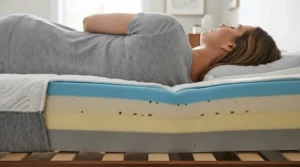
For back sleepers, the practical test is simple. Lying face-up, your hips and shoulders should be held roughly level, and there should be no big gap under your lower back. Too much sink and your spine bows. Too little give and your lumbar curve hovers unsupported. Good orthopaedic support closes that gap without making the surface feel like a pavement.
How to Choose an Orthopaedic Mattress for Back Sleepers
Follow these seven steps, in order, and you’ll avoid most expensive mistakes.
- Start with your weight. Heavier bodies sink further, so they need firmer, deeper support. Lighter bodies can find firm mattresses unforgiving.
- Aim for medium-firm to firm. Retailer guidance for back sleepers typically lands here, with extra-firm reserved for people with chronic pain or heavier builds.
- Check the support system. Pocket springs in zones give targeted support under the hips. All-foam depends on density, which is rarely listed.
- Mind the comfort layer. A thin layer of foam gives pressure relief without swallowing you. A thick, soft layer undoes the alignment you’re paying for.
- Think about heat. Back sleepers have more body in contact with the surface, so breathable covers and spring cores matter.
- Read the trial and returns terms. Bodies need three to four weeks to adapt, so a short returns window is a risk.
- Check delivery and handling. Rolled mattresses fit tight stairwells, but they’re heavy and need 72 hours to expand.
Based on the spec comparison, most disappointment comes from steps one and six: buying for someone else’s weight, and discovering the returns window is too short.
Firmness Rating: What the Numbers Mean
Every brand has a firmness rating, and almost none agree. Some scales run from soft to firm, and others run the opposite way. Emma, for example, describes its feel on a scale where one is firm and ten is soft. So “7” means very different things on different websites, and cross-brand comparisons of the number alone are close to useless.
The best-known evidence comes from a randomised, double-blind Lancet trial of 313 adults with chronic non-specific low-back pain. It used the European firmness scale (1.0 firmest, 10.0 softest) and compared firm mattresses (2.3) against medium-firm ones (5.6). At 90 days, the medium-firm group did better on pain in bed and disability.
Two caveats keep this honest. First, the trial wasn’t restricted to back sleepers. Second, commentators note that many participants improved on either mattress. The takeaway isn’t “buy medium-firm and you’re cured”. It’s that “firmest” is not automatically “best”.
So treat firmness rating as a rough guide. Judge by feel: neutral hips, no lumbar gap, and no pressure hot-spots at your shoulder blades.
Firm Mattress for Back Sleepers: When Firmer Helps (and When It Doesn’t)
A firm mattress for back sleepers earns its keep in three situations: heavier body weight, a tendency to sink into soft beds, and chronic discomfort where retailers suggest extra postural control. The Silentnight Eco Comfort Breathe 1400 and the Supreme Memory Foam Orthopaedic are the two firm options in this guide, and reviewer feedback on both says the same thing: they’re properly firm.
The risk is overshooting. A surface that’s too hard stops your lumbar curve from resting on anything, and your shoulder blades and tailbone take all the pressure. That’s the “bridge hanging in mid-air” problem from the introduction. Reviewers of firm beds often mention adding a topper to take the edge off.
Partners complicate things too. If you sleep on your back and they sleep on their side, a very firm bed will suit you far better than them. In that case, a medium-firm hybrid like the Emma Original or TeQsli 10 Inch 7-Zone Hybrid is the sensible compromise, because pocket springs and a thicker comfort layer give the side sleeper somewhere to sink.
Memory Foam Mattress for Back Sleepers: Hybrid or All-Foam?
A memory foam mattress for back sleepers can fill the small gap under your lumbar curve, which is exactly where pain often starts. The trick is thickness. A thin comfort layer of a few centimetres contours without swallowing you. A deep, soft slab lets your hips sink, and your spine follows.
That’s why hybrids dominate this list. Pocket springs provide the structural support, while memory foam on top handles pressure relief. The TeQsli 10 Inch 7-Zone Hybrid adds wave-shaped foam to ease pressure points, and the Simba Hybrid Pro layers foam with micro-springs for a lively but supportive feel.
All-foam has its place. It’s lighter, quieter and usually cheaper, as the Supreme Memory Foam Orthopaedic shows. But foam alone relies on density, and density figures are often missing from listings. All-foam can also run warmer. One independent Inofia buyer noted the brand sleeps cooler precisely because there’s less memory foam on top.
For most back sleepers, a hybrid with a thin-to-moderate foam top is the safest bet.
Orthopaedic Support and Spinal Health: What Actually Matters
Spinal health in bed comes down to alignment. Lying on your back, your spine should follow its natural gentle curves: a slight inward curve at the lower back, and level hips and shoulders. Good orthopaedic support holds that shape for eight hours rather than letting it drift.
A mattress is only part of the picture. UK sleep experts commonly suggest a small pillow under the knees for back sleepers, which helps the lower back keep its natural curve. Your pillow height also matters, since it should keep your neck in line with your chest rather than propping it forward. And the NHS advice on back pain emphasises staying active and keeping moving, not resting for long periods.
If you have severe pain, numbness, weakness in the legs or pain that isn’t improving after several weeks, see a GP or an NHS physiotherapy service rather than shopping your way out of it. The NHS notes that back pain can very rarely signal something serious.
A good mattress supports recovery and comfort. It doesn’t replace proper assessment.
Orthopaedic vs Standard Mattresses: Why the Difference Shows
| Feature | Orthopaedic Hybrid | Standard Soft Mattress | Best For |
|---|---|---|---|
| Support | Zoned springs or dense foam | Soft, uniform fillings | Back sleepers need the first |
| Hip position | Held level | Tends to sink | Alignment |
| Lifespan feel | Resists early sagging | Dips sooner | Long-term value, e.g. Simba Hybrid Pro |
| Partner disturbance | Pocket springs limit movement | Varies | Couples, e.g. Emma Original |
| Cost | Wide range, from budget to premium | Often cheaper | Tight budgets, e.g. Zinus Memory Foam & Pocket Spring |
The table shows why orthopaedic constructions suit back sleepers better. They stop the hips drifting down relative to the shoulders, which is the core alignment problem. Standard soft mattresses feel lovely for the first week and then reveal their limits.
That said, the label alone proves nothing. A budget “orthopaedic” mattress with a thick, soft top can behave like a standard soft one. Read the construction rather than the headline.

Your First 30 Days: A Setup and Break-In Guide
Most returns happen in the first week, often because people judge the bed before it has finished arriving. This simple timeline avoids that.
Day 1: Unbox and give it room. Cut the plastic away carefully, as many mattresses arrive vacuum-packed and rolled. Allow up to 72 hours for full expansion, as brands like Inofia and TeQsli advise. Don’t judge firmness until then.
Day 1-3: Air it. New foam can smell, and reviewers of the Simba Hybrid Pro mention odour for the first couple of nights. Open a window and keep the mattress uncovered for a while.
Check your base. A sagging or widely spaced slatted base undermines even the best mattress. Check the manufacturer’s slat-spacing guidance before assembling.
Weeks 1-4: Give your body time. Brands commonly say three to four weeks are needed to adapt. Keep a note each morning of how your back feels, not just how the bed feels.
Add small supports. Try a thin pillow under your knees and check your neck alignment.
Rotate regularly. Inofia suggests rotating every two to three months, and Silentnight recommends rotating its no-turn mattresses regularly.
Keep your paperwork and packaging until the trial ends. If the mattress isn’t right, you’ll want a clean return process.
Real-World Scenarios: Which Mattress Fits Which Back Sleeper?
These are illustrative profiles, not testimonials, but they show how the analysis plays out.
The warm, average-weight professional. Imagine a back sleeper in a centrally heated flat who overheats and has around £1,000 to spend. The Simba Hybrid Pro fits: medium-firm support, a breathable wool layer, and a long trial. If the budget were nearer £250, the Inofia Hybrid (12 Inch Airy Cooling) would cover the cooling brief.
The renter on a tight budget. Picture a student or young renter moving every year with £100-£250 to spend. Rolled delivery matters, and so does a trial. The TeQsli 10 Inch 7-Zone Hybrid offers seven-zone support and a long trial. The Zinus Memory Foam & Pocket Spring is the cheaper alternative if the returns terms suit.
The heavier back sleeper with morning stiffness. Take a sleeper who sinks into soft beds and wakes stiff. Here the Silentnight Eco Comfort Breathe 1400 stands out: firm, springs-based and tested to a high stated weight. A very firm all-foam like the Supreme Memory Foam Orthopaedic is the lower-cost alternative, though foam density is harder to verify.
The thread through all three is that body weight, temperature and returns flexibility matter more than brand prestige.
Buyer’s Decision Framework: If This, Choose That
Use this quick checklist when you’re stuck between two options.
- If you’re heavier or sink easily, choose a firm, spring-based build such as the Silentnight Eco Comfort Breathe 1400, because springs resist sinking better than soft foam.
- If you’re average weight and want contouring, choose a medium-firm hybrid like the Emma Original or Simba Hybrid Pro, because the thin foam layer relieves pressure without sacrificing alignment.
- If you sleep hot, choose a breathable spring-core hybrid like the Inofia Hybrid (12 Inch Airy Cooling), because spring cores move air better than deep foam.
- If your budget is tight, choose the TeQsli 10 Inch 7-Zone Hybrid or Zinus Memory Foam & Pocket Spring, because both pair pocket springs with foam at low cost.
- If you share the bed with a side sleeper, choose medium-firm rather than firm, because pocket springs and a thicker comfort layer give them somewhere to sink.
- If you can’t tolerate any risk, prioritise the longest trial and clearest returns terms, because it takes weeks to judge a mattress properly.
Priorities in order: fit your weight, check the returns terms, then think about brand and extras.
Long-Term Cost and Maintenance
| Mattress | Double Price Range | Trial / Guarantee (as listed) | Rough Cost Per Night (8 Years) |
|---|---|---|---|
| Simba Hybrid Pro | £900-£1,300 | 200-night trial; 10-year warranty | c.31-45p |
| Emma Original | £300-£500 | 10-year guarantee (retailer listing) | c.10-17p |
| Silentnight Eco Comfort Breathe 1400 | £350-£650 | Varies by retailer | c.12-22p |
| Zinus Memory Foam & Pocket Spring | £100-£200 | 10-year limited warranty; standard Amazon returns | c.3-7p |
| TeQsli 10 Inch 7-Zone Hybrid | £150-£250 | 100-night trial; 10-year support | c.5-9p |
| Inofia Hybrid (12 Inch Airy Cooling) | £150-£250 | 100-night trial | c.5-9p |
The cost-per-night column assumes an eight-year lifespan, since commonly cited guidance suggests replacing mattresses every eight to ten years. On that maths, the premium Simba Hybrid Pro costs a few tens of pence a night, which is modest if it genuinely keeps your back comfortable. Budget models cost pennies, but they may wear sooner, so the real saving depends on durability that nobody can fully verify from a listing.
To get the most from any of them, rotate regularly, use a mattress protector, and make sure the base is supportive. Visible body-shaped dips are your cue that support has gone.
Common Mistakes When Buying an Orthopaedic Mattress for Back Sleepers
Trusting the label. “Orthopaedic” isn’t a guarantee. Look at construction, depth and reviews.
Chasing the firmest option. As the Lancet trial showed, firmest isn’t automatically best for pain. Medium-firm did better in that study.
Comparing firmness numbers across brands. Scales run in different directions, so a 7 isn’t a 7.
Ignoring the returns terms. A trial of 100-200 nights gives your body time to adapt. A 30-day window is a gamble.
Forgetting the base. A sagging base can ruin a good mattress.
Ignoring your partner. A bed that’s perfect for you and miserable for them is a false economy.
Buying on discount alone. A mattress is only a bargain if it suits your weight, position and temperature.
UK Safety and Regulations: What to Check
Fire safety is the headline rule. The Furniture and Furnishings (Fire) (Safety) Regulations 1988 are the main UK rules for domestic upholstered furniture, and the legislation carves mattresses out of the retail display-label requirement. Trading Standards guidance indicates mattresses are still covered for flammability, and the regulations were amended in October 2025. You won’t see the familiar permanent label on a mattress, so if you want reassurance on compliance, ask the seller or check the product page.
Certifications such as OEKO-TEX and CertiPUR-US, which appear on the TeQsli 10 Inch 7-Zone Hybrid, speak to materials and chemical content. They say nothing about back support, so don’t treat them as a stand-in for firmness or alignment.
On Amazon, also check who sells and ships the mattress. A brand storefront and a third-party marketplace seller may offer very different trial terms and warranty handling. Read the returns wording on the live listing before ordering.

FAQs
❓ How long should I try a new orthopaedic mattress for back sleepers before deciding?
❓ Can I return a mattress bought on Amazon UK if it's too firm?
❓ Do I need a topper on a firm mattress for back sleepers?
❓ How much should I spend on an orthopaedic mattress for back sleepers?
❓ How often should I replace my mattress if I have back pain?
Conclusion
The best orthopaedic mattress for back sleepers isn’t the firmest or the most expensive. It’s the one that holds your spine level for your weight, sleeps at a temperature you can live with, and comes with a trial long enough to prove it.
If you want the most complete package and can stretch the budget, the Simba Hybrid Pro is the premium pick. The Emma Original offers balanced mid-range value for average-weight sleepers. For genuine firmness, especially if you’re heavier, the Silentnight Eco Comfort Breathe 1400 is the standout. On a tight budget, the TeQsli 10 Inch 7-Zone Hybrid and Inofia Hybrid (12 Inch Airy Cooling) deliver a lot of features for the money, and the Zinus Memory Foam & Pocket Spring goes lower still. The Supreme Memory Foam Orthopaedic suits anyone who simply wants a very firm, simple foam bed.
Whatever you choose, remember the basics of firmness rating, orthopaedic support and spinal health: neutral hips, no lumbar gap, and a fair trial. If pain persists, speak to a GP.
✨ Ready to sleep better?
🔍 Click on any highlighted product name above to check current pricing and availability on Amazon.co.uk. Your spine will thank you tomorrow morning!
Recommended for You
- Mattress For Back Sleepers With Lower Back Pain: 7 Proven Picks 2026
- Mattress For Back Sleepers: 7 Best Picks For Spinal Support (2026)
- Hybrid Mattress For Side Sleepers: 7 Best UK Picks (2026)
Disclaimer: This article contains affiliate links. As an Amazon Associate, I earn from qualifying purchases. If you purchase products through these links, we may earn a small commission at no additional cost to you.
✨ Found this helpful? Share it with your friends! 💬🤗
