
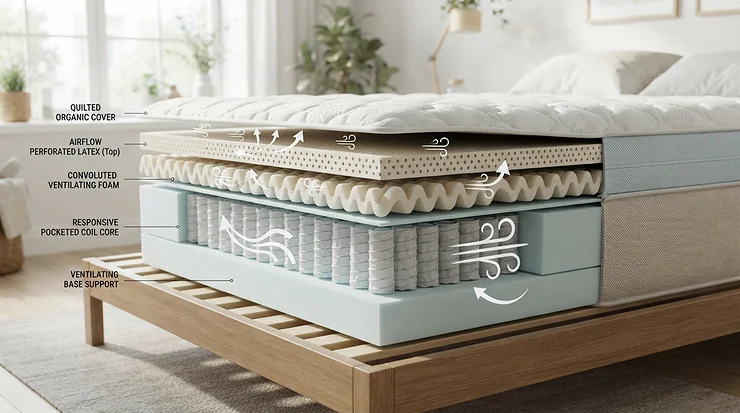
In This Article
Lying face down is the Marmite of sleep positions. Fans can’t imagine nodding off any other way, and everyone else looks on with mild alarm. If you’re a fan, choosing the right mattress for front sleepers isn’t a luxury. It’s the difference between waking up refreshed and waking up feeling folded like a deckchair. Most beds are tuned for side and back sleeping, so plenty of mattresses that feel heavenly in a showroom let a front sleeper’s hips sink like a hammock.

That’s the gap this guide closes. I’ve pulled together real specifications, independent UK testing verdicts and the recurring themes in published customer reviews to shortlist seven beds, from budget-friendly foam to a premium zoned hybrid. Along the way we’ll unpick stomach sleeping itself and explain why spinal alignment is the whole game. We’ll also show how to choose a firmness level without guesswork, and ask whether one bed can work as a mattress for front and back sleepers.
One honest note first: I haven’t slept on any of these beds and won’t pretend otherwise. Everything below is analysis built on specs and independently published testing, framed so you can decide faster. Prices shift constantly, so you’ll see ranges rather than exact figures. Always check the current listing on Amazon.co.uk, including size, trial terms and who is actually selling the mattress.
What Is a Mattress for Front Sleepers?
A mattress for front sleepers is a firm or medium-firm bed that stops your hips and midsection, the heaviest part of your body, from sinking lower than your shoulders. By keeping the pelvis lifted and the spine roughly level, it limits the lower-back strain that comes from lying face down.
Expert Reviews’ front sleeper guide makes the same core point: soft, springy beds are best avoided in favour of something firmer and more solid. One UK retailer’s guide estimates that roughly one in six people sleep this way. You’re in a smaller club than the side-sleeping majority, but hardly a lonely one.
Quick Comparison: The Best Mattress for Front Sleepers at a Glance
Short on time? This table puts all seven contenders side by side. Prices are indicative ranges at the time of research, so check current price before you commit.
| Mattress | Type | Feel for front sleepers | Price range | Best For |
|---|---|---|---|---|
| Simba Hybrid Pro | Wool, foam and micro-spring hybrid | Zoned, supportive | High-£700s upwards, size-dependent | Premium all-round comfort and temperature control |
| OTTY Firm Hybrid | Flippable hybrid | Very firm | Mid-£400s upwards | Front sleepers who want a firm bed without paying premium |
| Origin Hybrid | Hybrid with grid foam | Firm (tested at roughly 8/10) | £400–£560 at full price, often less | Budget front and back sleepers |
| Nectar Memory Foam | All-foam | Medium-firm | Mid-£300s to mid-£500s | Foam lovers who want a very long trial |
| Eve Original | All-foam, seven zones | Firm for a foam bed | Low-£300s upwards | Tight budgets and quiet, motion-absorbing foam |
| Emma NextGen Premium | Spring-heavy hybrid | Supportive, not soft | High-£300s upwards, frequent sales | Hot front sleepers |
| REM-Fit 500 Ortho Hybrid | Orthopaedic hybrid | Firm (roughly 8/10) | £500–£1,050 by size and promotion | Heavier sleepers and aching backs |
Looking at the comparison above, Origin Hybrid and Eve Original are the value leaders. Simba Hybrid Pro earns its premium through comfort and heat control rather than sheer firmness. If you run hot, the spring-based Emma NextGen Premium beats all-foam options like Nectar Memory Foam, while REM-Fit 500 Ortho Hybrid sits at the unapologetically firm end for anyone whose back needs serious backup.
💬 Just one click — help others make better buying decisions too!😊
The Top 7 Picks: Best Mattress for Front Sleepers, Analysed
Each bed below gets the same treatment: what the specs mean in practice, who it suits, what reviewers consistently say, and where it falls short. Where I couldn’t verify a pool of buyer reviews, I say so rather than papering over the gap.
1. Simba Hybrid Pro — premium zoned support with temperature control
The headline feature is a zoned foam foundation that changes how hard the bed pushes back along your body, rather than treating you as one flat slab.
This wool, foam and micro pocket-spring hybrid is 28cm deep, with wool beneath the cover to help manage heat. In practice, zoning means the area under your hips resists sinking while the shoulder zone yields slightly, which is exactly what a face-down body needs for good spinal alignment. Expert Reviews reports that despite the depth, it still suits most fitted sheets.
Based on the spec comparison, this is the pick for front sleepers who’d rather stop obsessing over firmness level altogether. It’s supportive without the plank-like feel of the firmest beds. Simba advises rotating monthly for the first six months, then every three to six months, so factor in that small chore.
I couldn’t verify a large pool of buyer reviews for this exact model, so the evidence is editorial rather than crowd-sourced. Expert Reviews names it its top choice for front sleepers and the most comfortable bed-in-a-box it has tested. Skim recent verified reviews on the listing before buying.
Pros:
- ✅ Zoned foam keeps hips supported and spine neutral
- ✅ Wool layer helps regulate temperature
- ✅ Generous 200-night trial, 10-year warranty
Cons:
- ❌ Premium price tag stretches tighter budgets
- ❌ Needs regular rotation, especially early on
Price range: from the high-£700s for a single, rising with size, so check current price. Value verdict: expensive, but sensible if it saves you buying twice.
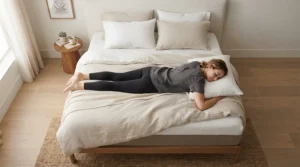
2. OTTY Firm Hybrid — flippable, with a deliberately firm surface
Its party trick is two feels in one mattress: flip it over and the firmness changes.
Tom’s Guide describes this 25cm hybrid as an upper mid-range, flippable bed built to deliver a firmer sleep surface. A FlexFoam layer under the firm side gives it that planted feel. Otty also says it uses larger, thicker pocket springs than its other hybrids. Translation: more resistance under the hips and a better chance of avoiding the hammock effect that plagues front sleepers on softer beds.
Here’s what to weigh. The Tom’s Guide lead tester called it one of the firmest beds she’d slept on, yet her average-weight, combination-sleeping co-sleeper found it comfortable from the first night. By comparison, Otty rates the medium-firm OTTY Original Hybrid at around seven out of ten. The OTTY Firm Hybrid is the one to pick when support matters more than cosiness, though lightweight sleepers who like some give should think twice.
Reviewers across UK sites consistently place Otty at the firmer end of the bed-in-a-box market, and the published review was positive after four weeks of testing. I couldn’t verify review volumes for this specific model on Amazon, so check the listing.
Pros:
- ✅ Firm side-up surface resists hip sink
- ✅ Two firmness feels thanks to flippable design
- ✅ Cheaper than other hybrids in Otty’s range
Cons:
- ❌ Flipping a hybrid mattress is awkward work
- ❌ Very firm feel may overwhelm lighter sleepers
Price range: mid-£400s upwards for smaller sizes at the time of the 2024 review; check current price. Value verdict: strong for dedicated firm-seekers.
3. Origin Hybrid — firm support that doesn’t wreck the budget
The standout is value: genuinely firm, properly lifted support at a price where many rivals offer only soft and sinky.
Expert Reviews describes six layers, including HexaGrid foam, bamboo-infused wool, a cooling cover and a tapered pocket-spring layer. That grid-style foam acts like a springy honeycomb, giving gentle contouring without letting your hips drop. Origin rates the bed 6.5 on its own firmness scale, yet Tom’s Guide’s panel scored it closer to eight.
That mismatch is a useful lesson: brand firmness numbers are marketing, while independent panels and sleep trials are evidence. For front and back sleepers the firmer reality is good news, since testers reported no excess sink at the hips. That’s the whole point of a mattress for front sleepers. The weak spot is the perimeter, which gives more than the centre, so sleeping right on the edge shrinks your usable space.
Tom’s Guide notes an average user rating of roughly four and a half stars across more than 2,600 reviews on Origin’s own site. It found no third-party reviews, so independent verification is limited. Origin sells mainly direct, so check whether an Amazon.co.uk listing is live.
Pros:
- ✅ Firm, even support keeps hips lifted
- ✅ Excellent motion isolation for couples
- ✅ 200-night trial and 15-year guarantee
Cons:
- ❌ Weaker edges reduce usable sleep surface
- ❌ Too firm for most side sleepers
Price range: roughly £400–£560 at full price depending on size, often discounted. Value verdict: arguably the best-value firm bed in this list.
4. Nectar Memory Foam — long trial, medium-firm foam comfort
What sets it apart is peace of mind: a 365-night trial and a lifetime guarantee, which are premium extras for a mid-range bed.
Tom’s Guide says gentle cradling comes from dynamic and memory foam on top, with a dense castellated foam base providing zoned support. The result is a medium-firm feel its panel recommended for back and front sleeping. Unlike old-school quicksand memory foam, there’s little deep sink, and testers found the temperature stayed neutral overnight.
The caveat for front sleepers is that foams can soften as they break in, so watch whether your hips start to dip over the first weeks. Lighter and average-weight sleepers should be fine, whereas heavier ones may prefer the firmer REM-Fit 500 Ortho Hybrid. Edge support is the weak point, and the lack of bounce makes turning over feel slower.
Tom’s Guide reports a user score averaging around four and a half stars across more than 2,000 reviews on Nectar’s site plus over 5,000 on Amazon, a sizeable pool. It also notes that Amazon versions can differ in extras, so confirm trial and guarantee terms on the listing.
Pros:
- ✅ 365-night trial plus lifetime guarantee
- ✅ Zoned base foam supports the hips
- ✅ Superb motion isolation for restless partners
Cons:
- ❌ Edges feel weak when you sit on them
- ❌ Foam lacks bounce, so repositioning feels slow
Price range: mid-£300s to mid-£500s across common sizes in typical sales; prices may vary. Value verdict: excellent, mainly for that trial.
5. Eve Original — surprisingly firm for an all-foam bed
Seven support zones sit beneath the surface, easing pressure at the shoulders and hips while holding up the midsection.
Expert Reviews says the Eve Original is much firmer than the vast majority of all-foam competitors. Foam also soaks up movement, so a restless partner is less likely to wake you. Rotate it every four to six months to even out wear, and expect a 365-night trial and 10-year warranty.
The trade-off is warmth. Reviewers note it runs hotter than pocket-sprung alternatives. If you’re a front sleeper who sweats, weigh that against the lower price. If you sleep cool, it’s a bargain. Eve Sleep was rescued by Bensons for Beds after its 2022 administration, so check who ships and services the bed you’re buying.
Expert Reviews rates it great for support and comfort but not so great for keeping cool. A 2021 UK news roundup listed an Amazon route to buy it, but I couldn’t confirm the current listing or review volume, so verify both.
Pros:
- ✅ Seven-zone foam support under hips and shoulders
- ✅ Firmer than most all-foam beds
- ✅ 365-night trial and 10-year warranty
Cons:
- ❌ Sleeps warmer than spring-based beds
- ❌ Needs rotating every few months
Price range: from the low-£300s for a single, rising with size; check current price. Value verdict: good, provided heat isn’t your enemy.

6. Emma NextGen Premium — the cooler, spring-heavy option
Its calling card is airflow: more pocket springs than the average hybrid means air circulates freely instead of pooling under you.
Expert Reviews picks it for temperature regulation. The springs are arranged in adaptive zones that support the body along its length. It’s a one-sided design, so there’s no flipping, and Emma says no rotating either. You also get a 200-night trial and 10-year warranty.
A word of caution: Emma’s range isn’t uniformly firm. Tom’s Guide found the Emma Hybrid Airgrid too soft for stomach sleepers, lacking the lumbar support they need, and called the Emma Original soft and squishy. Brand loyalty won’t help you here, so make sure you’re buying the Emma NextGen Premium specifically. Expert Reviews’ own caveat is that it isn’t soft, which for a front sleeper is a feature.
I couldn’t verify a robust pool of independent reviews for this model, so the verdict rests on Expert Reviews’ testing. Emma promotes frequently, which makes list price a poor guide. Judge it on the price you’d actually pay.
Pros:
- ✅ High spring count boosts airflow for hot sleepers
- ✅ Adaptive zones support the whole body
- ✅ No flipping or rotating needed
Cons:
- ❌ Not plush if you crave softness
- ❌ Promotion-led pricing muddies true value
Price range: from the high-£300s for a single at review, with frequent promotions; check current price. Value verdict: strong for hot sleepers.
7. REM-Fit 500 Ortho Hybrid — firmest orthopaedic support in this list
Tom’s Guide rated it roughly eight out of ten for firmness, calling it a bed you lie on rather than sink into.
Zoned foam combined with tall springs keeps the lumbar region supported for front and back sleeping, with edge-to-edge stability and a wide size range. It earned full marks for motion isolation, thanks to hardly any bounce. Warranty is 15 years, with a 200-night trial.
Tom’s Guide prefers it to the Origin Hybrid for chronic back pain and for sturdier edges. That makes it the sensible pick for heavier front sleepers, or anyone whose spine has already voted against softer beds. Its guidance is that heavier builds, around 16 stone and over, do well on firm mattresses. The flip side is limited cushioning: bony hips and shoulders might want a topper, and side sleepers risk shoulder ache.
Tom’s Guide highly commends it, but I couldn’t verify a large pool of independent buyer reviews. Treat the editorial verdict as the main evidence and read recent reviews on the listing.
Pros:
- ✅ Strong lumbar support for front and back sleeping
- ✅ Stable edge-to-edge sleep surface
- ✅ Full-marks motion isolation
Cons:
- ❌ Little cushioning for bony frames
- ❌ Can cause shoulder ache for side sleepers
Price range: roughly £500–£1,050 depending on size and promotions; list prices run well above sale prices, so check current price. Value verdict: worth it when back support is the priority.
Top 7 Specs and Verdicts Compared
| Mattress | Build | Trial and guarantee | Independent verdict | Best For |
|---|---|---|---|---|
| Simba Hybrid Pro | 28cm wool, foam and micro-spring | 200 nights, 10 years | Expert Reviews: best overall for front sleepers | Comfort plus support |
| OTTY Firm Hybrid | 25cm flippable hybrid | Check listing (Otty’s range has carried 100 nights) | Tom’s Guide: one of the firmest beds tested | Firm-seekers |
| Origin Hybrid | Six layers, up to 3,000 springs | 200 nights, 15 years | Tom’s Guide: best budget pick for back and stomach sleepers | Value hunters |
| Nectar Memory Foam | All-foam, zoned base | 365 nights, lifetime | Tom’s Guide: best memory foam for back and front sleepers | Foam fans |
| Eve Original | All-foam, seven-zone foundation | 365 nights, 10 years | Expert Reviews: best foam pick for front sleepers | Tight budgets |
| Emma NextGen Premium | Spring-heavy hybrid, adaptive zones | 200 nights, 10 years | Expert Reviews: best for temperature regulation | Hot sleepers |
| REM-Fit 500 Ortho Hybrid | Zoned foam, tall springs | 200 nights, 15 years | Tom’s Guide: highly commended for back and front sleepers | Back pain, heavier builds |
Notice how the trial periods vary from 200 to 365 nights. For a position as fussy as face-down sleeping, a long trial is arguably worth more than any single spec. Nectar Memory Foam and Eve Original lead on that front, while Origin Hybrid and REM-Fit 500 Ortho Hybrid back their firm builds with 15-year guarantees.
✨ Don’t Miss These Top Picks! 🛏️
🔍 Take your nights to the next level with these carefully selected mattresses. Click any highlighted product name to check current pricing and availability. They’ll help you wake up straighter, fresher and ready for the day!
Setting Up Your Mattress for Front Sleepers: A 30-Day Guide
Your first month decides whether a good bed gets a fair chance. Unbox it in the room it will live in, remove all packaging and let a roll-packed mattress expand fully. Tom’s Guide notes that boxed beds gradually inflate to their full height. Then check the base. Gappy slats or a tired platform can mimic a saggy mattress, and many brands specify maximum slat gaps in their guarantee terms.
Next, give your body time. Tom’s Guide says it takes roughly three weeks to adjust to a new bed, so resist verdicts in week one. Keep a simple diary rating morning back ache, neck stiffness and heat from one to five. If aches worsen steadily past week three, that’s evidence to use your sleep trial.
Pillow strategy matters as much as the bed. For stomach sleeping, Mayo Clinic’s guide to sleeping positions suggests placing a pillow under your hips and lower stomach if you can’t sleep any other way, and using a head pillow only if it doesn’t add strain.
Finally, follow the care schedule: monthly early on for the Simba Hybrid Pro, every four to six months for the Eve Original, and none for the Emma NextGen Premium.
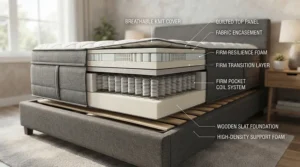
Real-World Scenarios: Matching a Mattress for Front Sleepers to Your Life
The renter on a tight budget. Picture a 24-year-old in a rented flat with a small double and roughly £400 to spend, sleeping face down every night. The Origin Hybrid offers firm support and a long trial, and Tom’s Guide says it’s delivered to your chosen room, though you set it up yourself. If you run cold and prefer foam, the Eve Original is the alternative.
The hot-sleeping couple. Imagine a top-floor flat, one front sleeper and one back sleeper, with £500–£700 to spend. The Emma NextGen Premium delivers airflow without flipping, and Expert Reviews lists it as suitable for back and side sleepers too. Waiting for a promotion is sensible. If budget flexes, the Simba Hybrid Pro is the premium alternative.
The heavier front sleeper with a grumpy lower back. Say you’re over 16 stone, wake stiff and can spend £700 or more. The REM-Fit 500 Ortho Hybrid is the logical shortlist leader, given Tom’s Guide’s emphasis on firm support for heavier builds. If the pain persists regardless of mattress, see your GP.
Problem → Solution: Fixing the Classic Front-Sleeper Aches
- Lower back ache on waking. Usually hips sinking. Move to a firmer bed such as the Origin Hybrid or REM-Fit 500 Ortho Hybrid, or try the pillow-under-pelvis trick.
- Neck and shoulder stiffness. Face-down sleeping twists the head to one side, which Expert Reviews links to strain over time. Use a very thin pillow, or none, and stay alert to persistent pain.
- Overheating. All-foam beds retain more warmth. Choose spring-led designs like the Emma NextGen Premium, or the wool-topped Simba Hybrid Pro.
- Rolling toward the middle. Weak edges encourage it. Expert Reviews notes that good edge support reduces the tendency, and REM-Fit 500 Ortho Hybrid is strong here while Origin Hybrid and Nectar Memory Foam are weaker.
- “It’s too firm!” in week one. Often just adjustment. Give it around three weeks, then judge within your trial.
How to Choose a Mattress for Front Sleepers: 7 Steps
The short answer: choose a medium-firm to firm bed with zoned hip support, decent edges and a long trial. Here’s how to get there.
- Start at medium-firm to firm. Expert Reviews recommends firm or medium-firm for the best weight distribution.
- Match firmness to your weight. Lighter builds can lean medium-firm, heavier builds firm.
- Prioritise hip support. Look for zoned foam or springs that resist sinking where you’re heaviest.
- Check the edges. Stronger perimeters stop you rolling inwards and keep the full surface usable.
- Decide foam or springs. Springs sleep cooler. Foam isolates motion better.
- Demand a long trial. Aim for 100 nights at least, ideally 200 or more, and read return terms.
- Check your base. A flat, well-slatted base lets even a firm mattress perform properly.
Firmness Level: How Firm Is Firm Enough?
Firmness level is the single most argued-over spec in mattress shopping, mostly because nobody agrees on the numbers. Tom’s Guide’s mattress guide uses a one-to-ten scale. Medium-firm beds at roughly seven to seven and a half suit front sleepers and bad backs. Firm beds at eight to nine and a half suit stomach sleepers who need hip stability, plus heavier builds. A ten is rock-like and divisive.
Weight shifts the maths. Lighter sleepers often prefer more cushioning, average builds lean medium to medium-firm, and heavier sleepers, around 16 stone (roughly 104kg) and over, benefit from firm. For stomach sleeping specifically, the same guide suggests medium to medium-firm for lighter builds and medium-firm to firm for heavier ones.
The wrinkle is that brands label differently. Origin Hybrid calls itself 6.5 while testers found it nearer eight. Judge a firmness level by independent tests and your own trial, not the label. A quick sanity test: lie face down and have someone photograph you from the side. If your hips sit noticeably lower than your ribs, the bed is too soft. Think of it as a hammock detector.
Spinal Alignment: Why Your Hips Hold the Key
When you lie face down, your midsection carries most of your weight. If the bed lets it sink, your lower spine arches backwards, a posture Expert Reviews links to long-term back problems. Add a head twisted to one side for breathing, and your neck gets involved too. Spinal alignment, in plain terms, means keeping ears, shoulders and hips roughly level, and for front sleepers that begins with hip support.
That’s why zoning matters. Beds like the Simba Hybrid Pro and Eve Original vary resistance along the body, while firm builds like REM-Fit 500 Ortho Hybrid hold everything high. Keep expectations realistic, though: no mattress cancels out a poor position entirely.
The NHS says back pain is very common and usually improves within a few weeks or months, and that staying active helps. For symptoms that linger or worsen, NHS guidance on back pain explains when to seek help. If you wake with aches daily despite a supportive bed, a GP or physiotherapist is a better next step than another mattress.

Stomach Sleeping: Is It Really as Bad as They Say?
Stomach sleeping gets a rough press, and partly deservedly. Expert Reviews calls it far from the healthiest position, citing curvature of the spine and a twisted neck. Mayo Clinic likewise suggests trying other positions if you can. Yet habits are stubborn. If your body only sleeps this way, the practical goal is to make it as kind to your back as possible.
There’s even a silver lining. Expert Reviews notes that lying face down might ease sleep apnoea and the snoring that goes with it. That’s hardly a prescription, but it’s a reason some people drift there instinctively.
Here’s the pragmatic playbook for stomach sleeping. Choose a firmer bed, use a very thin or no head pillow, and consider a pillow under the hips as Mayo Clinic describes. Gradually experiment with side sleeping if you’re keen, because many people find a hybrid habit easier than a total switch.
One important note: this guide is for adults. Babies should not sleep on their front, as it increases suffocation risk, and any infant sleeping advice should come from health professionals rather than mattress guides.
Mattress for Front and Back Sleepers: Can One Bed Do Both?
Often, yes. Back sleepers benefit from medium-firm beds with strong lumbar support, while front sleepers need medium-firm to firm, so the overlap sits comfortably in medium-firm to firm territory. Tom’s Guide recommends the Origin Hybrid for both back and stomach sleepers, and highlights Nectar Memory Foam and REM-Fit 500 Ortho Hybrid for back and front sleeping too.
A mattress for front and back sleepers works best when it’s supportive but not punishing. That’s where the Simba Hybrid Pro and Emma NextGen Premium shine, since both pair zoned support with a touch of forgiveness. If you share a bed, remember the partner who prefers lying on their side. Tom’s Guide warns the Origin Hybrid is too firm for most side sleepers and the REM-Fit 500 Ortho Hybrid can cause shoulder ache, so a mixed-position couple may want the more forgiving builds.
The takeaway: a good mattress for front and back sleepers exists, but combination sleepers who flip onto their sides should favour medium-firm over truly firm, and use the trial period honestly.
Common Mistakes When Buying a Mattress for Front Sleepers
- Assuming a brand suits everyone. Tom’s Guide found the Emma Hybrid Airgrid and DreamCloud Luxury Hybrid too soft for most front sleepers, despite both being excellent for side sleepers.
- Believing firmness labels. Brand numbers and independent tests can differ by a point or more, as with Origin Hybrid.
- Overshooting into extra-firm. A ten out of ten is rare and divisive. Eight is usually plenty.
- Ignoring the base. A sagging platform undermines even the best mattress.
- Overlooking edges. Weak perimeters tip you towards the middle and shrink the bed.
- Skipping the small print. Some brands charge for trial returns, so read the terms before ordering.
- Using a thick pillow. It can force your neck into an awkward angle regardless of mattress quality.
Hybrid vs Memory Foam vs Pocket Spring: Which Wins for Front Sleepers?
Any mattress type can work if it’s firm enough, but each has a personality. Hybrids excel at support and breathability, though they’re bouncier. Memory foam is a motion-absorbing champion and often cheaper, but can run warm, and soft versions let you sink. Traditional pocket-sprung beds offer buoyant support with limited cushioning, while latex is durable, bouncy and naturally breathable.
| Mattress type | Front-sleeper support | Heat | Motion isolation | Best For |
|---|---|---|---|---|
| Hybrid | Strong, lifted spring base | Cooler, airy | Good, but bouncier | Hot sleepers: Simba Hybrid Pro, Origin Hybrid, Emma NextGen Premium |
| Memory foam | Firm models work, soft ones sink | Can run warm | Excellent | Couples and spring-averse sleepers: Nectar Memory Foam, Eve Original |
| Pocket spring | Firm, buoyant, limited cushioning | Breathable | Moderate | Budget buyers who like a traditional feel |
| Latex | Bouncy, supportive, durable | Naturally breathable | Lower | Eco-minded buyers wanting longevity |
For most front sleepers, hybrids deliver the best balance, which is why four of our seven picks are springs-plus-foam designs. Foam options like Nectar Memory Foam still earn their place for couples who value quiet. Your priorities, whether heat, partner disturbance or budget, should break the tie.
Long-Term Cost & Maintenance: What a Mattress Really Costs
Price per night is a better yardstick than sticker price. Tom’s Guide suggests replacing mattresses every six to ten years, or around four for a cheap bed. Spread a £500-range mattress over eight years (about 2,900 nights) and it works out at roughly 17p a night. A £900-range bed kept for ten years is about 25p. Sometimes the dearer bed is the cheaper one.
| Budget band (double, approx.) | Typical range | Featured examples | Trade-off | Best For |
|---|---|---|---|---|
| Value | Up to around £450 | Origin Hybrid, Eve Original | Weaker edges or warmer foam | First-time buyers, spare rooms |
| Mid-range | Around £450–£800 | Nectar Memory Foam, OTTY Firm Hybrid, Emma NextGen Premium, REM-Fit 500 Ortho Hybrid | Fewer luxury finishes | Most front sleepers |
| Premium | £800 and above | Simba Hybrid Pro | Highest outlay | Long-term, no-compromise comfort |
The table shows that most front sleepers will land in the mid-range, where quality materials and strong support coincide. Premium buys the polish and heat control of the Simba Hybrid Pro, while value-band beds like the Origin Hybrid prove you don’t need to overspend to get firm support.
Maintenance is cheap insurance. Follow rotation schedules, use a washable protector and keep the base flat. Tom’s Guide also notes that bank holidays and Black Friday are typically the best times to buy, with late November approaching, so patience can pay off. Prices may vary, so always check the current price.

FAQ
❓ How much should I spend on a mattress for front sleepers?
❓ Can a mattress topper rescue a soft bed for front sleeping?
❓ How long should I test a new mattress before judging it?
❓ How often should front sleepers replace their mattress?
❓ Do front sleepers run hot, and which beds help?
Conclusion
Front sleepers need two things from a bed: hips that stay lifted, and enough patience from the brand to let you find out whether it works. Every mattress for front sleepers in this guide delivers the first, and most deliver the second through generous trials.
If I had to sum it up: choose the Simba Hybrid Pro for premium, zoned comfort, the Origin Hybrid for firm value, and the REM-Fit 500 Ortho Hybrid when your back needs real firmness. Pick the Nectar Memory Foam if a 365-night trial calms your nerves, the Emma NextGen Premium if you sleep hot, the Eve Original if budget is tight, and the OTTY Firm Hybrid if you want a flippable, unapologetically firm feel.
Whichever you choose, remember the basics. Pay attention to firmness level, protect your spinal alignment with a thin pillow and a pillow under the hips if stomach sleeping is non-negotiable, and use your trial period properly. Whether you need a dedicated mattress for front sleepers or a flexible mattress for front and back sleepers, the right bed should make mornings feel a lot less like an apology to your spine.
✨ Ready to Wake Up Straighter?
🛏️ Click any highlighted product name above to check current pricing, size options and trial terms on Amazon.co.uk. Your spine will thank you tomorrow morning!
Recommended for You
- Orthopaedic Mattress For Back Sleepers: 7 Proven Picks (2026)
- Mattress For Back Sleepers With Lower Back Pain: 7 Proven Picks 2026
- Mattress For Back Sleepers: 7 Best Picks For Spinal Support (2026)
Disclaimer: This article contains affiliate links. As an Amazon Associate, I earn from qualifying purchases. If you purchase products through these links, we may earn a small commission at no additional cost to you.
✨ Found this helpful? Share it with your friends! 💬🤗
