

In This Article
You know that specific kind of morning where you wake up before your alarm, not because you’re refreshed, but because your lower back has staged a quiet rebellion against the mattress underneath you? That’s usually the moment people start Googling mattress for back pain at 6am with one eye open. A mattress for back pain, in the simplest terms, is a mattress engineered — through firmness, zoning, or material choice — to keep your spine in a neutral line while supporting your heavier body parts, rather than letting your hips sink or your shoulders get squeezed. It’s not a medical device, and it won’t fix a slipped disc on its own, but the wrong one can absolutely make an existing problem worse.
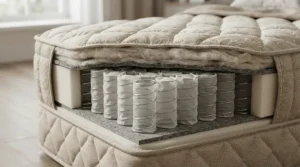
Roughly one in six adults in the UK deals with back pain at some point, and a surprising chunk of that discomfort has nothing to do with lifting boxes or gardening injuries — it’s simply hours spent every night on a mattress that’s sagging, too soft, or too aggressively firm. The NHS notes that back pain usually improves within a few weeks with the right self-care, and your sleep surface is one of the few variables you can actually control without a GP referral.
This guide pulls together seven real mattresses currently available in the UK, an honest look at what the research actually says about firmness, and a set of practical frameworks so you’re not just guessing. No fabricated five-star reviews, no invented lab results — just spec sheets, aggregated review sentiment, and straightforward reasoning about who each mattress genuinely suits.
Quick Comparison Table
| Mattress | Type | Firmness | Best For |
|---|---|---|---|
| Silentnight Miracoil Ortho | Coil-sprung, ortho | Firm | Budget buyers wanting classic firm support |
| Emma Original | All-foam | Medium | Side sleepers on a mid-range budget |
| Nectar Essential Hybrid | Hybrid | Medium-firm | Back and stomach sleepers |
| Simba Hybrid Essential | Hybrid | Medium | Couples who move around a lot |
| Silentnight 2800 Pocket Memory Foam | Hybrid (pocket + foam) | Medium-firm | Balanced pressure relief and support |
| Dormeo Octasmart Hybrid Deluxe | Hybrid (Octaspring) | Medium-firm | Hot sleepers wanting airflow |
| Otty Original Hybrid | Hybrid | Medium-firm | Buyers wanting a flagship all-rounder |
Glance down that “Best For” column and a pattern jumps out immediately: nearly every serious back pain contender lands somewhere in the medium to medium-firm zone rather than at the rock-hard end of the scale. That’s not an accident of marketing — it lines up with what happens when a mattress is asked to do two contradictory jobs at once, supporting the heavy midsection while cushioning bony contact points at the shoulders and hips. The Silentnight Miracoil Ortho is the outlier here, sitting properly firm, and it earns its place precisely because some back sleepers and heavier-set buyers genuinely do better without much sink at all.
💬 Found a pick you like already? Bookmark this page so you can come back and compare before you commit.
Top 7 Mattresses for Back Pain: Expert Analysis
Picking a mattress for a bad back isn’t just a case of “buy the firmest thing on the shelf” — that’s a myth we’ll dismantle properly later in this guide. What follows are seven genuinely available UK mattresses spanning budget orthopaedic coil beds through to premium hybrids, each broken down on specs, who it suits, and what reviewers consistently say once they’ve slept on it for more than one night.
1. Silentnight Miracoil Ortho Mattress — best budget firm support
The standout here is right there in the name: Miracoil is Silentnight’s open-coil spring system, tuned specifically to sit at the firmer end of the scale without tipping into “sleeping on a park bench” territory. Underneath a quilted cover, the mattress uses a network of interlinked coils rather than foam layers, which means it responds instantly rather than slowly moulding to your shape.
That coil construction translates into something concrete: because the springs push back evenly across the whole surface, your hips and shoulders don’t sink further than your midsection, which is exactly the sinking pattern that throws your spine out of line overnight. Silentnight markets this range at people dealing with “niggling aches and pains,” and on paper the firm-but-not-punishing feel supports that claim reasonably well, particularly for back and front sleepers who need a stable base.
Based on the spec comparison with softer foam beds in this guide, the Miracoil Ortho is best suited to back sleepers, heavier-set buyers who’d otherwise sink through softer layers, and anyone replacing a genuinely sagging old mattress on a tight budget. Reviewers consistently report that it feels supportive “out of the box” with minimal settling-in period, though a recurring theme in aggregated feedback is that side sleepers with narrower hips can find it a touch unforgiving at the shoulder.
Pros:
- ✅ Firm, consistent support straight from delivery
- ✅ Genuinely budget-friendly compared with hybrid rivals
- ✅ Simple coil construction with fewer failure points
Cons:
- ❌ Too firm for most side sleepers
- ❌ Lacks the pressure-relieving contour of foam layers
Expect the Silentnight Miracoil Ortho to sit in the under-£300 range for a double, making it one of the most accessible entries here — a sensible value pick if you want proven ortho-style support without hybrid pricing.

2. Emma Original — best all-foam contouring on a mid-range budget
Emma built its reputation on this exact mattress, and the standout feature is the three-layer foam stack working together rather than one single slab of memory foam. You get 3cm of breathable Airgocell foam up top, 2cm of pressure-relieving visco-elastic memory foam beneath that, and roughly 19cm of denser cold foam doing the structural heavy lifting underneath.
What that layering means in practice is a mattress that contours closely enough to cushion shoulders and hips, while the thick cold-foam base stops you sinking all the way through to a hammock shape — the exact failure mode that aggravates lower back pain overnight. At 25cm deep with a medium firmness rating, it sits right in the middle of the firmness spectrum research tends to favour for chronic back pain sufferers.
Here’s what the spec sheet won’t tell you outright: all-foam beds like this trade off some of the “bounce” and edge support you’d get from a hybrid, in exchange for near-silent operation and excellent motion isolation — useful if a restless partner is part of why you’re not sleeping well in the first place. This is a strong match for side sleepers on a budget and combination sleepers who shift position through the night, since the memory foam adapts as you move rather than forcing one posture.
Pros:
- ✅ Three-layer foam design balances contour and support
- ✅ Machine-washable cover, useful for allergy sufferers
- ✅ Excellent motion isolation for couples
Cons:
- ❌ Softer edge support than hybrid alternatives
- ❌ Can retain more heat than spring-based designs
Pricing for the Emma Original typically falls in the low-to-mid £300s-£500s range for a double, positioning it as one of the more accessible all-foam options built specifically around pressure relief.
3. Nectar Essential Hybrid — best for back sleepers specifically
Nectar’s entry-level hybrid earns its standout tag because independent testers rate it firmer than Nectar’s own 6/6.5-out-of-10 claim — closer to 6.5-7 in practice — which happens to be a sweet spot for back sleepers needing genuine support rather than a soft hug.
The build combines open-cell foam, a memory foam comfort layer, and a base of steel coils, all wrapped in a 25cm-deep construction. In real-world terms, that steel coil base is doing something the all-foam Emma Original can’t: providing responsive push-back that stops your hips dropping below your shoulder line when you’re lying flat on your back, while the foam layers above still cushion pressure points.
What most buyers overlook about this model is that its firmness is genuinely directional — it’s built with back and stomach sleepers as the primary audience, not side sleepers. Reviewers consistently note excellent motion isolation and strong edge support, useful for couples of different sizes sharing one bed, but lightweight side sleepers report the surface feeling too firm at the shoulder without extra cushioning.
Pros:
- ✅ Excellent pressure relief specifically for back sleepers
- ✅ 365-night trial with a Forever Guarantee
- ✅ Strong edge support for couples
Cons:
- ❌ Too firm for lightweight side sleepers
- ❌ Non-washable cover
The Nectar Essential Hybrid generally sits in the £400-£600 range for a double, and given the trial length and lifetime warranty, that positions it as strong value for anyone specifically dealing with back-sleeper-related lower back pain.
4. Simba Hybrid Essential — best for couples with different sleep styles
Simba’s cooling Simbatex foam is the headline feature, sitting above a base of individually wrapped micro-coils that move independently of one another rather than as a single connected unit. That independence is the standout: when your partner rolls over, the coils beneath them compress without dragging or tilting the coils under you.
The practical upshot of individually wrapped coils is targeted support — your heavier hip area gets pushed back against more firmly than your lighter calves and shoulders, which is precisely the zoned response a neutral spine position needs. Combined with the Simbatex foam’s quicker heat dissipation than standard memory foam, this is a genuinely different proposition from the all-foam Emma Original in both feel and thermal behaviour.
On paper, this makes the Essential a strong pick for couples who don’t share the same sleep position or body weight, since the wrapped-coil structure adapts locally rather than sagging as one shared trough. Aggregated review sentiment consistently flags reduced motion transfer as a major win, alongside solid all-round comfort, with the more common complaint centring on the mattress needing a week or two to fully “open out” and reach its intended loft after unboxing.
Pros:
- ✅ Individually wrapped coils reduce motion transfer
- ✅ Cooling Simbatex foam suits warmer sleepers
- ✅ Zoned support flatters mixed-weight couples
Cons:
- ❌ Takes days to fully expand after delivery
- ❌ Medium feel may be too soft for very firm-mattress fans
Prices for the Simba Hybrid Essential commonly land in the £500-£800 range for a double, making it a mid-range hybrid pick rather than a true budget option, but one that punches above its price point on couple-friendly features.
5. Silentnight 2800 Pocket Memory Foam Mattress — best pocket-spring and foam balance
The number in the name is the tell here: 2800 individual pocket springs, each compressing independently, topped with a genuine layer of body-hugging memory foam. That’s the standout — most budget hybrids skimp on either spring count or foam depth, and this one doesn’t cut corners on either side of the equation.
Silentnight’s Mirapocket technology means each spring reacts to localised pressure rather than the whole mattress flexing as a unit, which is the mechanical basis for what Silentnight describes as “zoned support … scientifically proven to ensure better spinal alignment.” Layered memory foam sits above that spring base, softening the surface enough to prevent pressure points at the shoulder without undermining the springs’ job of holding your midsection level.
What this means in practice is a medium-firm feel that suits people who switch between back and side sleeping through the night — a genuinely common pattern among people with lower back pain who shift position to find relief. Aggregated customer feedback consistently praises the “hypoallergenic knitted cover” for comfort and the delivery experience, with efficient courier handling coming up repeatedly in reviews; there isn’t a strong pattern of durability complaints in the feedback we could verify, though as with any pocket-spring bed, expect gradual softening over several years of nightly use.
Pros:
- ✅ 2800 individually pocketed springs for zoned support
- ✅ Genuine memory foam comfort layer, not just a topper
- ✅ Suits combination back-and-side sleepers
Cons:
- ❌ Heavier than all-foam alternatives, harder to manoeuvre
- ❌ Premium pocket-spring feel comes at a mid-range price
You’ll typically find the Silentnight 2800 Pocket Memory Foam Mattress priced in the £400-£700 range for a double depending on retailer promotions, positioning it firmly as a mid-range hybrid rather than a budget buy.
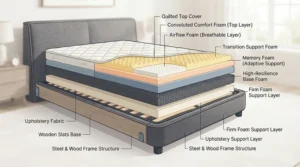
6. Dormeo Octasmart Hybrid Deluxe — best for hot sleepers wanting airflow
Octaspring technology is Dormeo’s standout: rather than flat memory foam layers, the comfort layer is built from individual spring-shaped foam cylinders with open channels running through them, designed specifically to let air move rather than trap body heat.
That structural difference matters more than it sounds — traditional memory foam is notorious for holding warmth, which disrupts sleep and, indirectly, worsens perceived pain sensitivity since poor sleep quality and pain amplify each other. The Octaspring cylinders flex independently under pressure too, giving a responsive, slightly bouncier feel than solid foam while still contouring around the lumbar region.
Here’s what the marketing copy tends to underplay: this hybrid works best layered on a supportive base, and its medium-firm feel leans toward suiting back and combination sleepers rather than committed stomach sleepers who need something closer to firm. Reviewers consistently note the “luxury memory foam” comfort layer feels noticeably cooler overnight than standard all-foam beds, which lines up with the ventilated Octaspring design doing its intended job.
Pros:
- ✅ Ventilated Octaspring layer sleeps noticeably cooler
- ✅ Responsive, slightly bouncier feel than solid foam
- ✅ Good lumbar contouring for combination sleepers
Cons:
- ❌ Not firm enough for committed stomach sleepers
- ❌ Bouncier feel isn’t to everyone’s taste
Expect the Dormeo Octasmart Hybrid Deluxe to sit in the mid-to-upper £400-£700 range for a king size, placing it as a premium-leaning hybrid built around temperature regulation as much as spinal support.
7. Otty Original Hybrid — best flagship all-rounder
Otty’s Original Hybrid combines encapsulated pocket springs with three distinct foam layers, and the standout here is that “encapsulated” detail — each spring is individually wrapped in its own fabric pocket, isolating movement far more effectively than open-coil designs like the Silentnight Miracoil Ortho.
In practical terms, encapsulated springs plus three foam layers gives you a mattress that responds locally to wherever your body applies pressure, rather than the whole surface shifting as one connected piece. For back pain specifically, that localised response means your lumbar region gets consistent support even as your shoulders and hips sink to slightly different depths — which is the entire mechanical goal of a “spinal decompression” style mattress, minus the marketing buzzword.
Based on how Otty positions the range, this model is built to rival the likes of Emma and Simba at a comparable price point, and it’s a solid match for buyers who haven’t settled on one fixed sleep position and want a genuinely capable all-rounder rather than a mattress optimised for one narrow use case. Otty also sells variant models — the Hybrid Pure and Pure+ add bamboo and charcoal-infused layers for odour control — though the brand’s core specialism remains hybrid designs rather than all-memory-foam beds, so buyers wanting a pure foam feel should look elsewhere in this list.
Pros:
- ✅ Encapsulated pocket springs minimise partner disturbance
- ✅ Three-layer foam comfort system for genuine versatility
- ✅ Available in bamboo/charcoal variants for odour control
Cons:
- ❌ Premium encapsulated-spring construction costs more than open-coil rivals
- ❌ Limited all-foam options if that’s your preferred feel
The Otty Original Hybrid generally sits in the £500-£800 range for a double, comparable with the Simba Hybrid Essential, and reflects its position as a flagship rather than an entry-level model.
Achieving a Neutral Spine Position While You Sleep
Neutral spine is the phrase you’ll see thrown around constantly, and it simply means your spine keeps its natural, gentle S-curve rather than bowing, arching, or twisting while you sleep. Getting there isn’t only about the mattress — position and pillow placement do real work too.
If you sleep on your back, try a slim pillow under your knees; this tilts your pelvis slightly and takes the arch out of your lower spine, a trick recommended widely in sleep-health guidance. Side sleepers should place a pillow between the knees to stop the top leg rotating your hips forward, and stomach sleepers — who genuinely struggle with neutral spine regardless of mattress choice — do best with a flatter pillow or none at all, plus a slightly firmer mattress like the Silentnight Miracoil Ortho so the midsection doesn’t sink and twist the lower back.
Setting up a new mattress correctly also matters more than people expect. Give a hybrid or foam bed like the Nectar Essential Hybrid or Emma Original a genuine 30-night adjustment window before judging it — most brands’ trial periods exist precisely because your body needs time to recalibrate to a new support profile. In the first month, avoid the common mistake of piling on a thick topper straight away “just in case,” since that can undo the exact firmness balance you paid for. A quick fortnightly rotation (head to foot, not flipping if the mattress isn’t double-sided) also keeps support even across the whole surface for longer.

Real-World Scenarios: Which Mattress Fits Your Life
Picture Priya, a 29-year-old graphic designer who spends her days hunched over a laptop and sleeps almost exclusively on her side. Her lower back pain flares by mid-afternoon most days, and she’s on a tight post-rent budget. The Emma Original suits this profile well — its foam-forward build cushions the shoulder and hip pressure points that side sleepers with desk-job posture tend to aggravate, and it’s priced accessibly enough to fit around other outgoings.
Now consider Tom and Nadia, a couple in their 40s who share a bed but sleep completely differently — Tom’s a committed back sleeper who runs warm, Nadia’s a lighter side sleeper who’s constantly disturbed by his movement. The Simba Hybrid Essential, with its individually wrapped coils and cooling foam, directly answers both problems: motion isolation for Nadia’s undisturbed sleep, and zoned, cooler support for Tom’s back-sleeping needs.
Then there’s Geoff, 61, recently diagnosed with early-stage degenerative disc changes and told by his physio that a firmer, more stable surface would help his rising-in-the-morning stiffness. He’s not chasing luxury — he wants proven support without hybrid pricing. The Silentnight Miracoil Ortho matches that brief precisely: firm, immediately supportive, and budget-conscious, without sacrificing the structural stability his physio recommended.
Your Back Pain Mattress Decision Framework
Use this as a rough priority checklist rather than a rigid rulebook — your body is the final judge, but these patterns hold up consistently across the research and review data gathered for this guide.
If you sleep mainly on your back or stomach, choose a medium-firm to firm option like the Silentnight Miracoil Ortho or Nectar Essential Hybrid, because your midsection needs strong upward support to avoid sagging into a U-shape. If you’re primarily a side sleeper, lean toward medium options such as the Emma Original, since your shoulders and hips need more give to avoid pressure points. If you share a bed with someone of a different weight or sleep style, prioritise zoned or individually wrapped coil designs like the Simba Hybrid Essential or Otty Original Hybrid over a single-firmness all-foam bed. If you run hot overnight, favour ventilated builds such as the Dormeo Octasmart Hybrid Deluxe over dense traditional memory foam. And if your budget is the primary constraint, the Silentnight Miracoil Ortho and Emma Original deliver genuine spinal support without hybrid-level spend.
How to Choose a Mattress for Back Pain
Choosing the right mattress for back pain comes down to matching firmness, materials and zoning to your sleep position and body weight, using a real trial period to confirm the fit. Here’s the process broken into concrete steps:
- Identify your dominant sleep position — back, side, stomach or combination — since this single factor drives firmness needs more than any other.
- Match firmness to that position, leaning medium for side sleepers and medium-firm to firm for back and stomach sleepers.
- Factor in body weight, since heavier bodies generally need firmer support to avoid excessive sinking, while lighter bodies often do better on softer surfaces.
- Check for zoned or individually wrapped support, particularly if you share a bed, as this prevents one partner’s movement affecting the other.
- Consider temperature regulation if you’re prone to waking up overheated, since disrupted sleep independently worsens pain perception.
- Use the full trial period, ideally 100 nights or more, rather than judging a new mattress in the first uncomfortable week.
- Reassess every 5-7 years, since even a well-chosen mattress gradually loses its supportive structure over time.
Mattress for Lower Back Pain: What Matters Most
Lower back pain specifically responds to how well a mattress supports the lumbar curve — the small inward arch just above your hips — without letting it collapse flat or over-arch. This is a narrower, more specific problem than general back discomfort, and it’s why generic “supportive” marketing claims don’t always translate to lumbar relief.
For lower back pain, zoned support matters more than blanket firmness. A mattress like the Silentnight 2800 Pocket Memory Foam Mattress, with its individually compressing pocket springs, can offer firmer support directly under the lumbar region while still softening around the shoulders — something a single-density foam slab genuinely can’t replicate. Reviewers consistently note that hybrid designs with a defined coil count outperform basic all-foam beds specifically for this kind of localised lower-back complaint, largely because the springs respond to exact pressure distribution rather than an averaged sink across the whole body.
If your lower back pain is worse first thing in the morning specifically, that’s often a sign your current mattress is either too soft (letting your hips drop overnight) or too old to hold its shape. Swapping to a medium-firm hybrid, alongside the pillow positioning covered earlier in this guide, addresses both the structural and postural sides of the problem simultaneously.
What Doctors and Physios Actually Recommend
Ask a GP or physiotherapist what mattress to buy and you’ll rarely get a specific brand name — and that’s actually useful information in itself. Clinical guidance tends to centre on principles rather than products: medium-firm support, a proper trial period, and reassessing after a set number of years, rather than any single “doctor recommended mattress” model.
What’s consistently echoed across physiotherapy advice is that a mattress alone won’t resolve back pain caused by an underlying issue like sciatica or a disc problem — it’s one part of a wider self-management approach that includes staying active, correct lifting technique, and, where pain persists beyond a few weeks, professional assessment. The NHS’s back pain treatment guidance recommends staying active and continuing normal activities as a first-line approach, alongside appropriate pain relief, rather than prolonged bed rest — a mattress upgrade supports that goal by making activity and quality sleep more achievable, but it isn’t a standalone treatment.
Where clinicians do tend to align is on firmness: as covered in more detail below, the research consistently favours medium-firm surfaces over very firm ones for chronic non-specific low back pain, which is a notably different message from the “always buy firm” advice that was common a generation ago.
Sleep and Back Pain Research: What the Studies Actually Show
The single most cited piece of sleep and back pain research is a 2003 randomised, double-blind, controlled trial published in The Lancet by Kovacs and colleagues, which directly challenged the long-held assumption that firmer is always better. Researchers assigned 313 adults with chronic non-specific low back pain to either a firm or a medium-firm mattress, rated on the European Committee for Standardisation’s firmness scale, and tracked outcomes over 90 days.
The results were striking: participants on medium-firm mattresses were roughly twice as likely to report improvements in pain while lying in bed, pain on rising, and overall disability compared with those on firm mattresses. As the study published in The Lancet concluded, a mattress of medium firmness improves both pain and disability outcomes among people with chronic non-specific low back pain — directly undercutting the old “buy the firmest bed you can find” folk wisdom.
More recent reviews have broadened that picture further. A systematic summary of mattress and sleep quality research collating multiple trials found that while results vary by study design, mattresses in the medium-firm range consistently show up as beneficial for chronic low back pain, with some evidence also favouring foam-based designs over traditional firm coil beds for symptom reduction. What most buyers overlook about this body of research is that “medium-firm” isn’t a marketing buzzword invented by mattress brands — it’s the specific range that clinical trial data actually supports, which is exactly why five of the seven mattresses in this guide land in that same medium-to-medium-firm zone.

Spinal Decompression Mattress: Fact vs Marketing Hype
“Spinal decompression mattress” is a phrase that’s crept into product marketing more than clinical literature, and it’s worth separating the genuine mechanism from the buzzword. True spinal decompression, in a medical sense, usually refers to therapeutic traction — stretching the spine to relieve pressure on discs and nerves, typically under professional supervision. No mattress, however well engineered, replicates that clinical process simply by you lying on it.
What a well-designed mattress can genuinely do is prevent unnecessary compression by supporting your spine in its natural alignment rather than allowing it to bow or twist under uneven pressure — which is a real, measurable benefit, just a different one from clinical decompression therapy. Zoned hybrids like the Otty Original Hybrid and Silentnight 2800 Pocket Memory Foam Mattress achieve this through localised spring response, while the layered foam in the Emma Original achieves a similar end through gradual density changes rather than springs.
Here’s the honest verdict: features that actually matter for this goal are firmness matched to your sleep position, zoned or individually wrapped support, and adequate depth (most quality options here sit at 25cm or deeper). Features that matter far less than the marketing suggests include exaggerated firmness claims with no supporting spec, and vague “orthopaedic” labelling with no explanation of what’s structurally different underneath.
Common Mistakes When Buying a Mattress for a Bad Back
The single most common mistake with a bad back is defaulting to the firmest mattress available on the assumption that firm equals supportive — a belief the Lancet research above directly contradicts for most chronic sufferers. A close second is buying based on price alone without checking the trial period, since a mattress that feels fine after ten minutes in a showroom can feel very different after three weeks of actual sleep.
Another recurring pitfall is ignoring body weight in the firmness equation; a mattress that’s ideal for a 60kg side sleeper can feel completely different under an 85kg back sleeper, yet both are often sold the exact same “medium” rating. Buyers also frequently skip checking edge support, only to discover months later that sitting on the bed’s edge to put on shoes causes an uncomfortable dip — a bigger issue on all-foam beds like the Emma Original than on coil-based designs.
Finally, plenty of people wait far too long to replace a genuinely worn-out mattress, riding out visible sagging for years because the upfront cost feels unjustifiable. Given the research linking old, sagging mattresses to worsened pain and disability, that delay often costs more in discomfort — and sometimes in physio appointments — than simply budgeting for a mid-range replacement like the Silentnight 2800 Pocket Memory Foam Mattress sooner rather than later.
Mattress vs Traditional Bed Alternatives: Hybrid, Foam, Spring and Ortho Compared
| Type | Support Style | Typical Firmness Range | Best For |
|---|---|---|---|
| All-foam (e.g. Emma Original) | Gradual density layering | Medium | Pressure relief, side sleepers |
| Hybrid (e.g. Nectar Essential Hybrid, Otty Original Hybrid) | Springs + foam combined | Medium to medium-firm | Zoned support, couples |
| Traditional open-coil (e.g. Silentnight Miracoil Ortho) | Interlinked springs | Firm | Budget, immediate firm feel |
| Pocket-spring foam hybrid (e.g. Silentnight 2800 Pocket Memory Foam) | Individually wrapped springs + foam | Medium-firm | Combination sleepers, localised support |
Looking at the comparison above, hybrids generally offer the best middle ground for back pain specifically, since they combine the responsive support of springs with the pressure relief of foam — which is exactly the dual requirement research keeps pointing toward. All-foam beds like the Emma Original win on motion isolation and quiet operation but concede some edge support, while traditional open-coil options like the Silentnight Miracoil Ortho remain the most budget-friendly route to genuinely firm support if that’s what your body specifically needs.
Long-Term Cost & Maintenance of a Back-Pain Mattress
A mattress is rarely a single upfront cost once you factor in its full lifespan — most quality options here carry warranties stretching from several years to a lifetime guarantee, and trial periods up to 365 nights, which meaningfully reduces the financial risk of getting the firmness wrong. Spread across a typical 7-year lifespan, even a mid-range hybrid like the Dormeo Octasmart Hybrid Deluxe works out to a modest weekly cost for something you use every single night.
Maintenance is minimal but matters: rotate the mattress head-to-foot roughly every two weeks for the first few months and monthly after that, use a breathable mattress protector to guard against spills and allergens, and avoid sitting in the exact same spot repeatedly (like the edge, to put on shoes) since that accelerates uneven wear. Washable covers, as found on the Emma Original, add a small ongoing maintenance advantage over non-washable alternatives like the Nectar Essential Hybrid, particularly for allergy-prone households.
The real long-term cost consideration is what happens if you don’t replace a failing mattress: research consistently links old, sagging mattresses to worsened back pain and reduced sleep quality, and the resulting cumulative impact on productivity, mood and even physio costs can dwarf the price difference between a budget and mid-range replacement.
Safety, Regulations and Sleep Standards in the UK
UK mattresses sold to consumers must comply with fire safety regulations under the Furniture and Furnishings (Fire) (Safety) Regulations, meaning any legitimately sold mattress — including every product featured in this guide — has passed flammability testing before reaching a UK retailer. When shopping on Amazon UK or elsewhere, checking for this compliance (usually referenced in the product listing or included fire safety label) is a straightforward way to rule out grey-market imports that may not meet UK standards.
Beyond fire safety, look for recognised material certifications like CertiPUR or OEKO-TEX on foam components, which confirm the foams have been tested for harmful substances — relevant if you or a household member has sensitivities. There’s no official UK regulatory body specifically certifying “back pain” claims on mattresses, which is exactly why independent research like the Kovacs trial referenced earlier carries more weight than marketing copy alone; regulation covers safety and material content, not therapeutic effectiveness claims.

FAQ
❓ What is the best mattress firmness for back pain?
❓ Is a firm or soft mattress better for lower back pain?
❓ How often should I replace my mattress for back pain?
❓ Can a mattress alone cure back pain?
❓ Do doctors recommend memory foam or hybrid mattresses for back pain?
Conclusion
There’s no single “best” mattress for back pain that works identically for everyone — your sleep position, body weight, and whether you share a bed all shape which of these seven genuinely moves the needle for you. What the research and the review data consistently point toward, though, is that medium-firm support beats extreme firmness for most chronic sufferers, and that zoned, hybrid construction tends to outperform single-density basics for anyone with a specific lower back complaint.
If you’re working with a tight budget and know you need firm support, the Silentnight Miracoil Ortho remains a genuinely sound starting point. If you’re chasing the best all-round balance of pressure relief and structural support, hybrids like the Nectar Essential Hybrid, Silentnight 2800 Pocket Memory Foam Mattress, or Otty Original Hybrid are worth the extra spend. And if temperature regulation or couple compatibility is your bigger pain point, the Dormeo Octasmart Hybrid Deluxe and Simba Hybrid Essential respectively deserve a close look.
Whichever direction you go, use the full trial period properly, give your body a genuine adjustment window, and remember that a mattress supports your recovery — it isn’t a substitute for professional advice if your back pain persists or worsens.
✨ Ready to stop waking up sore? Compare current prices on any of these seven mattresses and check availability before you decide — your back will thank you tonight! 🛏️
Recommended for You
- Best Orthopaedic Mattress UK 2026: 7 Tried-and-Tested Picks for a Happier Back
- Natural vs Synthetic Latex Mattress: 7 Real Picks Ranked
- Synthetic Latex Mattress UK 2026: 7 Affordable Picks Worth Buying
Disclaimer: This article contains affiliate links. As an Amazon Associate, I earn from qualifying purchases. If you purchase products through these links, we may earn a small commission at no additional cost to you.
✨ Found this helpful? Share it with your friends! 💬🤗
