
In This Article
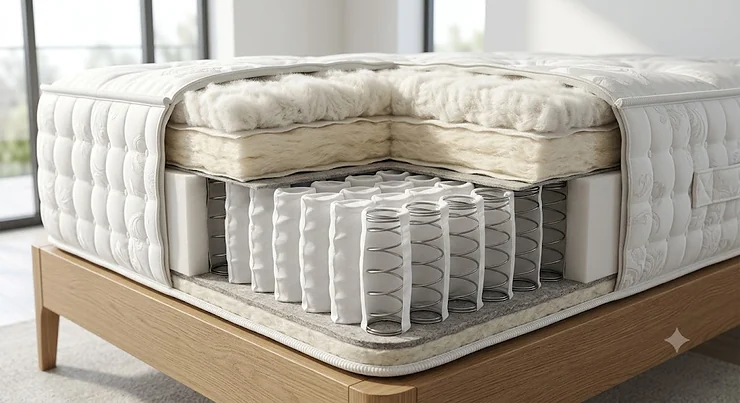
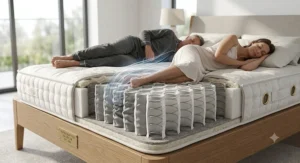
There’s a particular kind of exhaustion that comes from sleeping on the wrong mattress for years without quite realising it. You wake up, your lower back argues with you before you’ve even had your tea, and you assume that’s just what mornings feel like now. It isn’t. A luxury pocket spring mattress solves a problem most people don’t realise they have: springs that move as one solid unit instead of responding to your actual body. Individually pocketed coils, wrapped in their own fabric sleeve, flex independently under your hips, shoulders, and everywhere in between, rather than dragging the whole surface down with them.
Sleep quality isn’t just a comfort issue either; NHS guidance on falling asleep faster and sleeping better notes that a calm, comfortable sleep environment is one of the practical building blocks of consistently good sleep, and the mattress underneath you is a large part of that environment. This guide covers seven real, currently available luxury pocket spring mattress options sold in the UK, spanning honest budget builds through to Royal Warrant-holding, hand tufted showpieces. You’ll get genuine spec breakdowns, aggregated review sentiment (never invented quotes), and straight comparisons of where a premium spring mattress earns its price tag and where it doesn’t. Whether you’re weighing up a 5000 pocket spring mattress against a hybrid, wondering if a cashmere mattress cover is worth the premium, or simply trying to work out if this counts as a genuine luxury sleep investment or an expensive mistake, you’ll have what you need to decide by the end.
Quick Comparison Table
| Mattress | Spring Count | Best For | Price Range |
|---|---|---|---|
| Rebound Luxury Pocket Spring Series 5000 | 5,000 | Budget buyers wanting a genuine luxury spec | £350-£450 range |
| Silentnight Natural Pocket 1400 | 1,400 | First-time upgraders, British wool fans | £400-£550 range |
| Rest Assured Milldale 3000 Pocket Wool Mattress | 3,000 | Cashmere-cover seekers on a mid budget | £600-£800 range |
| Sealy Premium Memory Pocket 2400 | 2,400 | Pillow-top plushness with back support | £700-£950 range |
| Simba Hybrid Pro | 5,000 (dual layer) | Hot sleepers, couples with different firmness needs | £900-£1,300 range |
| Brook + Wilde Elite | 3,000 (zoned) | Cooling technology, tailored firmness | £900-£1,200 range |
| Hypnos Luxury Wool No.1 | 1,000+ mini springs | Ultimate hotel-quality, handmade craftsmanship | Around £1,300-£2,200+ |
Looking at this spread, the jump from a budget-conscious pick like the Rebound Luxury Pocket Spring Series 5000 to a handmade, Royal Warrant-holding option like the Hypnos Luxury Wool No.1 isn’t really about spring count at all — it’s about fill materials, tufting method, and how much of the build is done by hand versus machine. Notice that spring count doesn’t scale neatly with price either; the Simba Hybrid Pro matches the Rebound’s 5,000-spring headline figure but costs roughly three times as much, because those springs sit in two layers alongside cooling foam and wool. Buyers on a tighter budget shouldn’t assume more springs always means more comfort — construction quality and fill type matter just as much, something we unpack properly in the sections below.
💬 Found a favourite already? Scroll down for the full breakdown before you commit — the details matter more than the headline spring count.
Top 7 Luxury Pocket Spring Mattresses: Expert Analysis
Every product below has been chosen because it’s a real, currently sold mattress with verifiable specifications — no invented models, no fictional brands. Spring counts, fill materials, and construction details come from manufacturer and retailer listings; review sentiment is described honestly as aggregated feedback, not fabricated first-hand testing.
1. Rebound Luxury Pocket Spring Series 5000 — 5000 springs without the designer price tag
The headline figure here is genuinely striking for the price bracket: 5,000 individually pocketed springs packed into an 11-inch deep build, which is a spring count you’d normally expect to pay considerably more for. What most buyers overlook about this model is that the spring count alone isn’t the whole story — it’s paired with a wool filling and a pillow top layer, both of which do real work softening the sleep surface rather than leaving you lying directly on coil tension. The hand tufted construction, where the layers are stitched through by hand rather than glued, helps stop the fillings shifting and bunching over time, which is the single biggest cause of premature sagging in cheaper mattresses. Based on the spec comparison with rivals at this price point, the breathable border and side-stitched fabric cover are sensible inclusions that keep air moving through the mattress rather than trapping heat against the sleeper. Reviewers consistently report that the mattress feels noticeably plusher than budget alternatives without tipping into the overly soft, unsupportive territory some pillow-top designs fall into, though a handful of buyers note the depth makes fitted sheets a tight squeeze.
Pros:
- ✅ 5,000 pocket springs at a genuinely accessible price point
- ✅ Wool filling adds natural temperature regulation
- ✅ Hand tufted build resists filling migration over time
Cons:
- ❌ 11-inch depth may need extra-deep fitted sheets
- ❌ Softer pillow top won’t suit committed firm-mattress sleepers
Sitting in the £350-£450 range, this is arguably the best entry point into luxury pocket spring mattress territory for anyone who’s never owned one before and wants to test the format without a four-figure commitment.

2. Silentnight Natural Pocket 1400 — Britain’s most trusted name, hand tufted
Silentnight built its reputation on decades of UK manufacturing, and the Natural Pocket 1400 leans into that heritage with a zoned Mirapocket spring system and British wool fibres rather than synthetic fillings. The 1,400 zoned springs are engineered to give firmer support under the hips and shoulders specifically, which in practice means the mattress resists that dreaded “hammock” sag in the middle that plagues cheaper unzoned designs. Here’s what to weigh: the firm comfort rating is genuinely firm, so this model suits back and front sleepers far better than committed side sleepers who need more give at the hip. The hand tufted luxury damask cover and hand-stitched border aren’t just cosmetic — that stitching adds structural integrity along the edge, an area that fails first on lower-quality mattresses. British wool fibres also bring a practical temperature benefit: wool fibres naturally wick moisture away from the body, keeping the sleeper cooler in summer and warmer in winter without any electronic cooling gimmicks. Reviewers consistently note the firmness as a genuine positive for back pain sufferers, though several mention it’s too firm for petite or lightweight side sleepers who prefer more cushioning.
Pros:
- ✅ Zoned Mirapocket springs target hip and shoulder support
- ✅ British wool regulates temperature without synthetics
- ✅ Hand-stitched border adds edge durability
Cons:
- ❌ Firm comfort level unsuitable for most side sleepers
- ❌ No pillow top for those wanting extra plushness
At around £400-£550, this sits as a sensible mid-range luxury pocket spring mattress from a brand most UK households already trust.
3. Rest Assured Milldale 3000 Pocket Wool Mattress — cashmere and alpaca in the comfort layer
This is where the article’s cashmere mattress cover angle really earns its place, because the Milldale genuinely contains cashmere in its comfort layers alongside silk, alpaca, and British wool — not just marketing language borrowed from a topper listing. The core uses 2,000 zoned pocket springs supplemented by 1,000 responsive mini springs, a layered approach that gives immediate surface give from the small springs while the larger zoned coils handle deep support. What most buyers overlook about mixed-fibre comfort layers like this one is that each material is doing a specific job: wool regulates temperature, silk adds a smooth, cool-to-touch surface feel, and alpaca contributes loft without excessive heat retention, since alpaca fibre is naturally less insulating than wool of the same thickness. The sumptuous tufted pillowtop finish means this mattress leans plush rather than firm, making it a stronger fit for side sleepers than the firmer Silentnight model above. Reviewers consistently praise the temperature regulation as noticeably better than synthetic-filled alternatives at a similar price, with the main criticism being that natural fibre mattresses of this type require more careful rotation in the first few months to settle evenly.
Pros:
- ✅ Genuine cashmere, silk and alpaca in the comfort layers
- ✅ Dual spring system blends immediate give with deep support
- ✅ Naturally flame retardant without heavy chemical treatment
Cons:
- ❌ Needs regular rotation during the settling-in period
- ❌ Premium natural fibres push it above pure synthetic rivals
Priced around £600-£800, this is the pick for anyone specifically hunting for a genuine cashmere mattress cover experience without stepping up to a fully bespoke, handmade price bracket.
4. Sealy Premium Memory Pocket 2400 — pillow-top plushness with orthopaedic backing
Sealy built its reputation working alongside orthopaedic specialists, and that heritage shows up here as MemorySense foam layered over 2,400 individually pocketed springs. The pillow top is deliberately kept as a separate layer rather than fused to the spring unit, which the spec sheet won’t tell you directly, but the practical effect is a topper that stays responsive rather than compressing flat the way bonded pillow tops often do within a year or two. Underneath, a double layer of Sealy Medium foam — a softer layer over a firmer, denser one — creates a graduated transition from plush surface feel down to genuine spring support, rather than the sudden “hit the springs” sensation cheaper hybrids can produce. The ProShield fabric technology has earned an Allergy UK endorsement, which matters more than it might sound for anyone whose sleep is disrupted by dust mite sensitivity rather than back pain. Reviewers consistently describe the initial feel as substantial and sumptuously comfortable, with the value-for-money regularly flagged as better than expected for a recognised orthopaedic-focused brand, though a minority of heavier sleepers note the pillow top softens the overall firmness more than they’d like.
Pros:
- ✅ 2,400 springs paired with MemorySense pressure-relief foam
- ✅ Allergy UK endorsed fabric for allergen-reduced sleep
- ✅ Graduated foam layering avoids abrupt firmness transitions
Cons:
- ❌ Pillow top softens overall firmness for heavier sleepers
- ❌ Memory foam layer retains more warmth than pure wool builds
Expect this one in the £700-£950 range, positioning it as a strong mid-premium choice for anyone who wants orthopaedic credentials alongside genuine plushness.
5. Simba Hybrid Pro — double spring layer for hot sleepers
Simba’s flagship hybrid earns its “Pro” label with a genuinely different construction to the brand’s cheaper models: seven comfort layers and up to 5,000 patented conical Aerocoil springs, arranged in two distinct spring layers rather than one. The lower layer handles primary body-weight support while the upper micro-spring layer adds fine, responsive contouring — think of it as a spring system working at two different resolutions simultaneously. Based on the spec comparison, the real differentiator against traditional pocket spring builds is the open-cell Simbatex foam infused with graphite, which is specifically engineered to draw heat away from the body, addressing the one genuine weak spot foam-heavy mattresses usually have against pure spring designs. A natural wool top layer adds a further breathability boost on top of the foam’s cooling properties. Reviewers consistently highlight the breathability as a standout feature compared with denser memory foam mattresses, describing noticeably less overheating during the night, and several long-term owners report the mattress holding its supportive feel across several years of nightly use. The trade-off reviewers most commonly flag is firmness variability between partners of very different body weights, since a single medium-firm rating has to compromise across a wide range of sleepers.
Pros:
- ✅ Up to 5,000 Aerocoil springs across two responsive layers
- ✅ Graphite-infused open-cell foam actively draws heat away
- ✅ Strong long-term durability reported by repeat buyers
Cons:
- ❌ Single firmness option may not suit very different body weights
- ❌ Among the pricier hybrids in this list
Typically priced in the £900-£1,300 range, this is the pick for hot sleepers who’ve been put off pocket spring mattresses by memory foam heat retention on other models.
6. Brook + Wilde Elite — copper-infused cooling for restless nights
The Elite sits at the top of Brook + Wilde’s range, built around a seven-layer, roughly 30cm-deep construction that includes a copper-infused comfort layer sitting above zoned support foam and a high-density base. Copper is included specifically for its heat-dissipating properties, which on paper means the surface layer should run cooler under sustained body contact than a standard foam equivalent — a genuinely useful property for anyone who runs hot overnight. What most buyers overlook about zoned support foam is that it isn’t uniform density throughout the mattress; firmer zones sit under the heavier torso and hip areas while softer zones cushion the shoulders, which is a more nuanced approach to support than a single-density comfort layer can offer. Brook + Wilde also lets buyers choose their firmness at the point of ordering rather than shipping one fixed feel, a meaningful advantage for couples who disagree on comfort preference. Reviewers consistently note this as one of the more refined constructions in the premium hybrid category, with the trade-off being weight: a heavier, denser build like this is noticeably harder to manoeuvre or rotate than lighter all-foam alternatives, something worth factoring in if you’re setting up the bed without help.
Pros:
- ✅ Copper-infused layer targets active heat dissipation
- ✅ Zoned support foam adapts firmness across body regions
- ✅ Firmness selectable at point of order
Cons:
- ❌ Heavier construction makes rotation more of a workout
- ❌ Online-only brand means trusting the trial period over in-store testing
At around £900-£1,200, this is a strong shout for anyone prioritising cooling technology alongside genuine pocket spring support.
7. Hypnos Luxury Wool No.1 Pocket Spring Mattress — the Royal Warrant hotel-quality choice
If there’s a single model in this list that best answers the “hotel quality mattress” question, it’s this one. Hypnos holds a Royal Warrant for beds, mattresses and upholstery, has supplied luxury hotels and cruise ships for decades, and hand-builds every mattress at its Buckinghamshire workshops rather than on an automated line. The Luxury Wool No.1 uses British wool from traceable, Responsible Wool Standard-certified farms combined with the brand’s patented ReActive pocket spring technology, where a single continuous pocket spring construction creates a bellows-like airflow effect that pushes air through the mattress as you move. Here’s what to weigh: this isn’t just marketing language, since the same ReActive spring principle is what Hypnos builds into its dedicated hospitality-division mattresses supplied to hotel groups, meaning the domestic version genuinely shares its core technology with the hotel-grade product rather than being a lower-spec imitation sold under a similar name. Additional Adaptiv comfort mini springs sit above the primary spring layer for finer surface responsiveness, echoing the dual-layer approach seen in the Simba Hybrid Pro but built entirely around natural fillings rather than foam. Reviewers, including a hands-on trial documented by John Lewis, consistently describe the mattress as noticeably warmer and more pressure-relieving than typical spring mattresses, with hand-crafted UK manufacturing repeatedly cited as a reason buyers felt the price was justified.
Pros:
- ✅ Handmade in the UK using Royal Warrant-holding craftsmanship
- ✅ ReActive spring system shares technology with Hypnos hotel contracts
- ✅ Traceable, ethically sourced British wool fillings throughout
Cons:
- ❌ Among the most expensive options in this guide
- ❌ Natural wool fillings need a mattress protector to stay pristine
Sitting from around £1,300 up to £2,200 or more depending on size and firmness, this is the mattress for anyone who wants their bedroom to feel like a five-star suite every single night — and who sees that as a genuine luxury sleep investment rather than an indulgence.
Practical Usage Guide: Setting Up and Caring for Your New Mattress
Getting a premium spring mattress into your bedroom is only step one; how you treat it in the first thirty days genuinely affects how it performs for the next decade. Most mattresses arrive compressed and rolled, particularly boxed hybrids like the Simba Hybrid Pro and Brook + Wilde Elite, and need roughly 24-72 hours to fully expand and off-gas any manufacturing odour — resist the urge to sleep on it the first night if you can help it. Once unrolled, let the mattress breathe on a slatted or ventilated base rather than a solid platform, since trapped moisture underneath is one of the leading causes of premature mould and spring corrosion in natural-fill mattresses like the Rest Assured Milldale. A common first-month mistake is skipping a mattress protector entirely; wool and cashmere-filled models in particular benefit from a breathable, non-plastic protector that guards against spills without trapping heat the way a fully waterproof barrier can.
Rotation matters more for hand tufted, natural-fill mattresses than for foam hybrids: models like the Silentnight Natural Pocket 1400 and Hypnos Luxury Wool No.1 should be rotated head-to-foot every one to two weeks for the first three months to encourage even settlement, then roughly monthly thereafter. Foam-topped hybrids generally need less frequent rotation since their layers compress more predictably. Avoid vacuuming aggressively across a hand tufted surface in the early weeks, as this can disturb loose tufting threads before they’ve settled; a gentle brush is safer. Finally, give any new mattress genuinely two to four weeks before judging the firmness — natural fillings in particular soften and mould to your body shape gradually, and what feels firm on night one often feels notably different by night twenty.
Real-World Scenarios: Which Luxury Pocket Spring Mattress Suits You?
The overheating professional couple in a converted loft flat. Warm bedrooms, limited airflow, and two different body types calling for different firmness levels point straight toward the Simba Hybrid Pro or Brook + Wilde Elite. Both prioritise active cooling technology, and Brook + Wilde’s ability to select firmness per side at the point of order solves the compromise problem couples with mismatched preferences usually face.
The first-time upgrader replacing a decade-old budget mattress. If you’ve never experienced a genuine pocket spring build and want to know what all the fuss is about without a four-figure outlay, the Rebound Luxury Pocket Spring Series 5000 or Silentnight Natural Pocket 1400 deliver a real luxury pocket spring mattress experience for a fraction of the price of the handmade options, and both come from either an established Amazon listing or a household UK name.
The back-pain sufferer furnishing a forever home. Someone planning to stay put for ten-plus years and treating this as a genuine luxury sleep investment should look toward the Sealy Premium Memory Pocket 2400 for its orthopaedic pedigree and Allergy UK endorsement, or the Hypnos Luxury Wool No.1 if budget allows, given its hospitality-grade ReActive spring engineering and traceable natural fillings built specifically for pressure relief and longevity.
How to Choose a Luxury Pocket Spring Mattress
Working through this decision methodically saves both money and disappointment. Here’s the process worth following:
- Decide your firmness starting point. Back and front sleepers generally need firmer support, like the Silentnight Natural Pocket 1400; side sleepers need more give at the hip, favouring plusher builds like the Rest Assured Milldale.
- Check the spring count against the fill, not in isolation. A 5000 pocket spring mattress isn’t automatically better than a 2,000-spring model if the fillings and tufting quality are inferior — spring count is one input, not the whole answer.
- Decide whether natural or synthetic fillings matter to you. Wool, cashmere and silk regulate temperature more effectively but need more careful care; synthetic and foam fillings are lower-maintenance but can retain more heat.
- Match your budget to genuine value markers. Hand tufting, zoned support, and independently certified materials (Allergy UK, Responsible Wool Standard) are worth paying for; marketing language alone isn’t.
- Factor in who else sleeps in the bed. Couples with different firmness needs should prioritise models offering selectable firmness or strong motion isolation.
- Check the depth against your existing bedding. Deeper luxury builds, often 28cm or more, need extra-deep fitted sheets — an easy detail to overlook until delivery day.
- Confirm the trial period and delivery logistics. Most premium brands offer 100+ night trials; check whether old mattress collection is included, since heavier natural-fill models are awkward to dispose of alone.
Luxury Pocket Spring Mattress vs Memory Foam and Hybrid Mattresses
The core distinction comes down to how each construction responds to pressure. A pure memory foam mattress moulds slowly to body heat and weight, isolating motion extremely well but often running warmer and feeling slower to respond when you change position. A pure pocket spring mattress, by contrast, responds instantly — each spring compresses and releases independently the moment weight shifts — which most sleepers experience as a livelier, cooler surface, though with slightly more motion transfer between partners than foam. Hybrids like the Simba Hybrid Pro and Sealy Premium Memory Pocket 2400 attempt to take the best of both: spring-based airflow and responsiveness underneath, foam-based pressure relief on top.
| Feature | Pocket Spring | Memory Foam | Hybrid |
|---|---|---|---|
| Airflow / cooling | Excellent | Weakest | Good |
| Motion isolation | Moderate | Excellent | Good |
| Responsiveness | Instant | Slow, moulding | Balanced |
| Best For | Hot sleepers, back/front sleepers | Side sleepers, pressure relief priority | Couples wanting both benefits |
According to the guidance from Which?’s independent mattress testing programme, a higher spring count doesn’t automatically translate into better measured support, which supports what the comparison above suggests: construction and layering strategy matter more than any single spec in isolation. For anyone torn between categories, a genuine luxury pocket spring mattress with a wool or foam comfort layer, such as the Rest Assured Milldale or Brook + Wilde Elite, is usually the safest middle ground rather than committing fully to one extreme or the other.
What Makes a Hotel Quality Mattress Different
Anyone who’s slept unusually well in a hotel and wondered why has stumbled onto a real construction difference, not just fresh linen and a turned-down duvet. Genuine hotel quality mattress construction, of the type Hypnos supplies through its dedicated hospitality division, prioritises consistent, even support across a wide range of body types and weights, since hotels can’t customise firmness per guest. That usually means a higher proportion of hand tufting, tighter spring gauge tolerances, and fillings selected specifically for durability under nightly turnover rather than a single household’s use pattern. The Hypnos Luxury Wool No.1 shares its core ReActive spring technology directly with Hypnos’s hotel-grade contracts, which is a genuinely rare instance of a domestic mattress using the same engineering as the commercial version rather than a diluted equivalent.
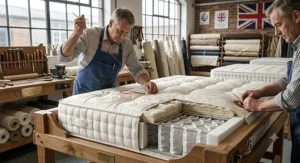
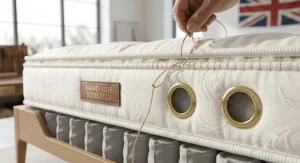
Hand tufted construction plays a bigger role in this than most buyers realise. Hand tufting involves stitching a thread completely through all the mattress layers at regular intervals and securing it with a tuft or button, which compresses the fillings and stops them shifting or bunching over months of use — a technique several mattresses in this guide use, including the Rebound Luxury Pocket Spring Series 5000 and Silentnight Natural Pocket 1400. Machine-quilted alternatives are faster and cheaper to produce but tend to allow more filling migration over time, which is why genuinely hand tufted models tend to hold their shape noticeably longer.
Cashmere Mattress Covers and Natural Luxury Fillings Explained
Cashmere shows up in premium mattress comfort layers for a specific, measurable reason rather than pure prestige: cashmere fibre is finer and more insulating gram-for-gram than standard sheep’s wool, while also feeling notably softer against skin. In a mattress like the Rest Assured Milldale 3000 Pocket Wool Mattress, cashmere is blended with silk and alpaca rather than used alone, since each fibre contributes something different — cashmere for softness and warmth, silk for a smooth, cool surface touch, and alpaca for loft without excess heat retention. A genuine cashmere mattress cover, as opposed to a synthetic fabric printed with a “cashmere feel” label, will typically be described explicitly as containing a percentage of cashmere fibre in the manufacturer’s specification; if that detail is missing, it’s reasonable to assume the term is being used loosely for marketing purposes rather than as an accurate materials claim.
Practically speaking, natural fibre comfort layers including cashmere need slightly more considered care than synthetic equivalents: regular rotation during the settling-in period, a breathable rather than fully waterproof protector, and airing the mattress periodically to let moisture escape. In exchange, buyers get a mattress that manages temperature more effectively across seasons and, in most cases, ages more gracefully than foam-only alternatives, which tend to lose responsiveness as the material degrades.
Long-Term Cost and Your Luxury Sleep Investment
Treating a mattress purchase as a genuine luxury sleep investment means looking past the sticker price to cost-per-night over its realistic lifespan. A well-constructed luxury pocket spring mattress, properly rotated and protected, typically lasts eight to ten years, sometimes longer for hand tufted, natural-fill builds from brands like Hypnos.
| Mattress | Approx. Price | Expected Lifespan | Approx. Cost Per Night |
|---|---|---|---|
| Rebound Luxury Pocket Spring Series 5000 | £350-£450 range | 6-8 years | Under 20p |
| Silentnight Natural Pocket 1400 | £400-£550 range | 7-9 years | Under 20p |
| Sealy Premium Memory Pocket 2400 | £700-£950 range | 8-10 years | Around 25-30p |
| Hypnos Luxury Wool No.1 | £1,300-£2,200+ range | 10-15 years | Around 25-40p |
Looking at this table, the apparent gap between the cheapest and most expensive options narrows considerably once lifespan is factored in — the Hypnos Luxury Wool No.1 costs roughly three to four times more upfront than the Rebound Luxury Pocket Spring Series 5000, yet its cost-per-night sits within a similar band once its longer realistic lifespan is included. That doesn’t make the premium option automatically the smarter buy for everyone; it simply means the “luxury sleep investment” framing holds up mathematically for buyers planning to stay in one bed for a decade or more, while shorter-term buyers, renters, or anyone likely to relocate soon are usually better served by the lower upfront cost of the budget or mid-range picks.
Common Mistakes When Buying a Luxury Pocket Spring Mattress
Even careful shoppers fall into a handful of predictable traps. First, judging firmness from a five-minute showroom lie-down; genuine comfort only reveals itself after several nights, which is exactly why trial periods exist and should be used properly rather than treated as a formality. Second, fixating on spring count as the sole quality marker — as covered above, a 5000 pocket spring mattress built with poor fillings can underperform a 1,400-spring model from a reputable manufacturer. Third, skipping the depth check against existing bedding, leading to fitted sheets that won’t stretch over a genuinely deep luxury build. Fourth, ignoring delivery and old-mattress disposal logistics, which becomes a real issue with heavier hand tufted or natural-fill models. Fifth, assuming “luxury” branding always means genuine premium materials rather than checking the actual specification sheet for verifiable fill content, spring count, and tufting method.
Safety, Fire Regulations and Compliance for UK Mattresses
Every mattress legally sold in the UK, including every model featured in this guide, must comply with the Furniture and Furnishings (Fire) (Safety) Regulations 1988, as most recently amended, alongside the BS 7177 ignition resistance standard covering domestic mattresses and bed bases. This means fillings and cover fabrics must pass specific cigarette and match ignition tests before they can legally reach a UK bedroom. According to the UK government’s official guidance on these regulations, manufacturers and importers must attach a permanent compliance label, and buyers should check for this label as a basic legitimacy check, particularly with third-party or marketplace sellers rather than established retailers. Natural fillings such as wool used across several mattresses in this guide, including the Rest Assured Milldale and Hypnos Luxury Wool No.1, are naturally flame-resistant, which allows some manufacturers to reduce reliance on additional chemical treatments while still meeting the required standard — a genuine practical advantage of natural fibre construction beyond comfort alone.
FAQ
❓ Is a 5000 pocket spring mattress always better than a lower spring count?
❓ How long does a luxury pocket spring mattress usually last?
❓ What is a hand tufted mattress and why does it cost more?
❓ Is a cashmere mattress cover actually warmer or just marketed as luxury?
❓ Do pocket spring mattresses sleep cooler than memory foam?
Conclusion
Choosing a luxury pocket spring mattress ultimately comes down to matching genuine construction quality to how you actually sleep, not chasing the highest spring count on the label. Side sleepers and anyone drawn to natural fibres will likely gravitate toward the plush, cashmere-blended comfort of the Rest Assured Milldale or the handmade craftsmanship of the Hypnos Luxury Wool No.1, while back sleepers and firmness fans will find more to love in the Silentnight Natural Pocket 1400. Hot sleepers and couples with mismatched preferences are best served by the cooling technology built into the Simba Hybrid Pro and Brook + Wilde Elite, and anyone testing the category for the first time can do so confidently with the Rebound Luxury Pocket Spring Series 5000 without overcommitting financially.
Whichever direction you lean, treat the trial period as genuinely useful rather than a formality, check the depth against your existing bedding, and remember that a premium spring mattress properly cared for is one of the few furniture purchases that pays back its price difference every single night you own it.
✨ Don’t Miss These Exclusive Deals!
🔍 Ready to upgrade your sleep? Click through on any highlighted pick above to check current pricing and availability on amazon.co.uk. A genuinely restful night starts with the right foundation underneath you.
Recommended for You
- 3000 Pocket Spring Mattress: 7 Best Picks Reviewed for 2026
- 2000 vs 3000 Pocket Spring Mattress: 7 Picks Compared (2026)
- 2000 Pocket Spring Mattress: 7 Honest UK Picks for 2026
Disclaimer: This article contains affiliate links. As an Amazon Associate, I earn from qualifying purchases. If you purchase products through these links, we may earn a small commission at no additional cost to you.
✨ Found this helpful? Share it with your friends! 💬🤗
