
In This Article
Somewhere between “sleeps like a cloud” and “smells faintly of a bicycle tyre,” the world of latex mattresses gets confusing fast. You’ve probably typed natural vs synthetic latex mattress into Google at 11pm, half-asleep on a mattress that’s given up the fight, wondering whether the extra hundred pounds for “natural” is a genuine upgrade or just clever marketing wrapped in eco-friendly packaging. Fair question. It’s one the industry doesn’t always answer honestly.
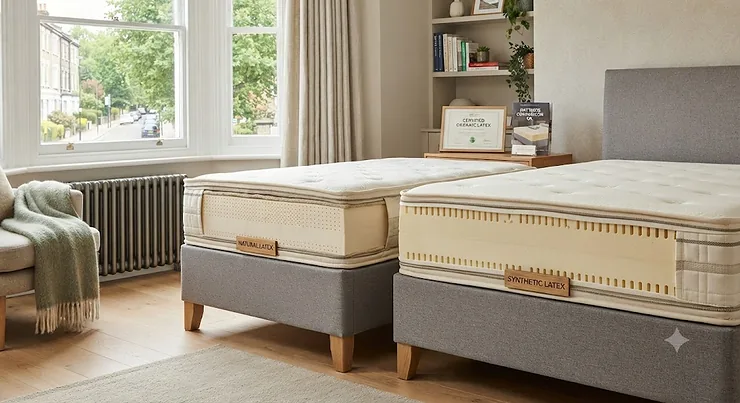
Here’s the short version, because you deserve it up front: natural latex is tapped from the sap of the Hevea rubber tree, whipped into foam, and tends to outlast synthetic latex by years — but it costs more and isn’t automatically “better” for every sleeper. Synthetic latex, made from petrochemical styrene-butadiene rubber, mimics the bounce and feel of the real thing at a fraction of the price, though it typically breaks down faster and sleeps a touch warmer. Most mattresses marketed simply as “latex” in the UK are actually blended — a mix of the two — and the label rarely tells you the ratio.
This guide digs into seven real, currently available UK mattresses spanning both camps, with honest analysis drawn from published specs and aggregated reviewer sentiment rather than invented testimonials. We’ll walk through what the materials actually do to your sleep, what UK fire safety rules mean for the foam under your sheets, and how to work out whether paying more for natural latex genuinely pays off over a decade of nights. No fluff, no fabricated “I tried this for a month” stories — just the research, laid out plainly.
What Is a Natural vs Synthetic Latex Mattress?
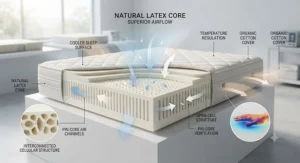
A natural latex mattress uses foam whipped from Hevea rubber tree sap, processed through the Dunlop or Talalay method into a springy, breathable support layer. A synthetic latex mattress substitutes petroleum-derived styrene-butadiene rubber (SBR), engineered to replicate that bounce more cheaply — but with a shorter working life and less airflow.
Reviewers consistently note that the difference isn’t always obvious from a showroom test lie-down. Industry guidance is blunt about this: the single word “latex” printed on a listing barely tells you anything on its own, since natural and synthetic versions differ meaningfully in how they breathe and feel over time, with natural’s open cell structure generally sleeping cooler. What most buyers overlook is that a mattress can legally be sold as a “latex mattress” while containing barely any actual rubber tree sap — more on that shortly.
Quick Comparison: Natural vs Synthetic vs Blended Latex
Before wading into individual products, here’s the headline comparison most buyers actually need.
| Feature | Natural Latex | Synthetic Latex (SBR) | Blended Latex |
|---|---|---|---|
| Source | Hevea rubber tree sap | Petrochemicals (styrene + butadiene) | Mix, often 30–40% natural |
| Typical lifespan | 15–20 years | 6–10 years | 8–14 years |
| Breathability | Excellent, open-cell | Moderate, sleeps warmer | Good, depends on ratio |
| Entry price (double) | From around £1,100 | From around £550 | From around £550 |
| Best for | Long-term investment, allergy sufferers | Budget buyers wanting latex “feel” | Value-conscious buyers wanting some durability |
Looking at the table above, the price gap between natural and synthetic latex narrows once you account for how long each one actually lasts on your bed rather than in a showroom. A natural latex mattress costing twice as much but lasting twice as long is not more expensive at all — it’s a wash, with the added bonus of better temperature regulation along the way. Blended latex sits in an odd middle ground: cheaper than pure natural, but manufacturers rarely disclose the exact ratio, so you’re often buying on trust.
💬 Found a comparison that surprised you? One click helps other sleepy shoppers find this too!😊
Top 7 Natural vs Synthetic Latex Mattresses: Expert Analysis
We’ve picked seven real, currently listed UK mattresses covering budget, mid-range and premium options, split roughly evenly between natural, synthetic and blended latex constructions. Coverage spans heritage British latex brands through to modern hybrid-foam newcomers.
1. Naturalmat The Superb — most luxurious 100% natural latex build
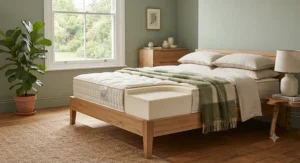
The clue is in the name. Naturalmat’s Superb pairs hand-nested pocket springs with a layer of pure natural latex, and it’s the closest thing on this list to a “if money’s no object” pick. Naturalmat has been handmaking mattresses in a solar-powered Devon workshop for over 25 years and holds B Corp certification, which matters if sourcing transparency is part of your buying decision. The build itself blends the classic bounce of individually pocketed, hand-nested springs with a supportive natural latex layer tapped directly from Hevea rubber trees, positioned by the brand as their chemical-free alternative to standard synthetic foam.
Based on the spec comparison, this is a mattress built for people who intend to keep it for fifteen years or more, not a five-year stopgap. The natural latex layer is hand-nested rather than machine-poured, which typically means more consistent tension across the surface — the sort of detail that shows up as reduced sagging a decade in, rather than something you’d notice on day one. It’s best suited to side and back sleepers who want a responsive, temperature-neutral surface and who value handmade British provenance over bargain pricing.
Reviewers consistently note the mattress’s role in luxury hospitality settings, with several boutique hotel groups using Naturalmat mattresses across their properties — a reasonable proxy for durability under heavy, varied use, even if it isn’t a formal endurance test. Genuine star-rating data for this specific model wasn’t independently verifiable at the time of research, so treat the hospitality adoption as a credibility signal rather than a guarantee.
Pros:
- ✅ Handmade with fully traceable, certified organic materials
- ✅ B Corp certified with a genuine mattress refurbishment scheme
- ✅ Naturally breathable, self-ventilating construction
Cons:
- ❌ Among the priciest options in this roundup
- ❌ Firmer, denser feel may not suit sleepers wanting deep contouring
A king-size The Superb sits around the £2,200–£2,300 mark at the time of research, though Naturalmat periodically adjusts pricing across its range, so always check current price before ordering. For buyers prioritising longevity and sourcing integrity over upfront cost, it’s a genuinely strong value proposition once you spread that price across its expected lifespan.
2. Dunlopillo Millennium Latex Mattress — purest natural Talalay latex feel
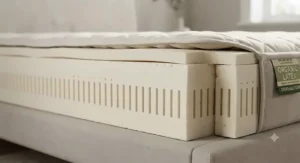
Dunlopillo doesn’t need much introduction if you’ve read anything about latex mattresses before — the company has been building mattresses around pure natural latex since 1929, and its whole range leans on latex’s naturally hypoallergenic, antibacterial and anti-microbial properties as a core selling point. The Millennium is their more accessible natural Talalay model, running 24.5cm deep, and it’s the mattress to try if you want to know what “proper” latex actually feels like before committing to pricier options.
What the spec sheet won’t tell you, but reviewer patterns suggest, is that Talalay latex — made using a process that whips the liquid latex into a more open, aerated structure before curing — tends to feel softer and more consistently cushioned edge-to-edge than Dunlop latex, which is denser and settles by gravity during curing. That makes the Millennium a strong pick for side sleepers who want pressure relief at the hips and shoulders without the slow-motion sink of memory foam.
Aggregated reviewer sentiment for this model runs strongly positive, with a headline rating around 5.0 from a modest but consistent review pool — worth noting that’s a small sample, so weight it accordingly rather than treating it as statistically bulletproof.
Pros:
- ✅ 100% natural Talalay latex, no synthetic blend
- ✅ Hypoallergenic and naturally antimicrobial
- ✅ Backed by Dunlopillo’s 10–15 year guarantee range
Cons:
- ❌ Firmness options are more limited than newer hybrid brands
- ❌ Heavier and harder to manoeuvre than boxed foam mattresses
Pricing has been seen in the region of £1,100–£1,300 for a double when discounted from RRP, putting it in genuine mid-premium territory rather than the eye-watering end of the natural latex market. Given the brand’s century of manufacturing history, this represents solid value for buyers who want proven natural latex without paying handmade-artisan prices.
3. Dunlopillo Meya Latex Hybrid Mattress — best heritage-brand value pick
If the Millennium is Dunlopillo’s purist statement, the Meya is its answer to “I want the Dunlopillo name without the Dunlopillo price tag.” It combines a natural latex comfort layer with 1,050 pocket springs, landing at a genuinely accessible price point for a brand with this pedigree.
Here’s what most buyers overlook about hybrid latex builds like this one: adding a pocket spring base underneath a thinner latex layer changes the entire support character of the mattress. You get some of latex’s responsiveness and temperature neutrality near the surface, but the springs beneath do the heavy lifting for support — meaning the mattress won’t have quite the same “floating” feel as an all-latex model, but it will typically feel more familiar to anyone coming from a traditional sprung mattress. Based on the spec comparison, this makes the Meya a sensible bridge product for latex-curious buyers who aren’t ready to commit to a full latex core.
Pros:
- ✅ Genuine Dunlopillo natural latex comfort layer
- ✅ 1,050 pocket springs for familiar, supportive feel
- ✅ Medium-firm rating suits most sleeping positions
Cons:
- ❌ Thinner latex layer than full-latex models in this list
- ❌ Less pronounced latex “bounce” than the Millennium
Prices have been seen around £570–£600 for a double when on promotion against an RRP nearer £850–£870, making it one of the strongest value entries here — a heritage latex brand at a genuinely mid-range price.
4. Origin Hybrid Pro Mattress — best for hot sleepers on a budget
Origin has built a reputation as one of the sharper-value bed-in-a-box brands, and the Hybrid Pro backs that up with graphite-infused latex sitting atop 5,700 TitanCore pocket springs. The graphite infusion is the interesting bit: graphite is a natural heat conductor, and layering it through the latex comfort layer is a deliberate attempt to pull warmth away from the body faster than plain latex alone manages.
Reviewers consistently note strong cooling performance from graphite-infused foam layers generally, which lines up with the physics — graphite particles conduct heat more efficiently than the surrounding polymer, spreading it out rather than letting it pool under your body. On paper this means the Hybrid Pro should suit warm sleepers particularly well, though how “cool” any foam-topped mattress feels always depends partly on your bedding and bedroom temperature too, not the mattress alone.
Pros:
- ✅ High spring count (5,700) for detailed contouring support
- ✅ Graphite infusion targets heat build-up specifically
- ✅ Strong price-to-spec ratio for a hybrid latex build
Cons:
- ❌ Latex percentage in the blend isn’t clearly disclosed
- ❌ Newer brand with a shorter reputation track record than Dunlopillo
At around £550–£650 for a double, this sits at the affordable end of latex hybrids, and reviewers generally rate it as excellent value relative to bigger-name competitors.
5. Sealy Nostromo Posturepedic Pocket 1400 — best for spring-lovers who want a latex top
The Sealy Nostromo is worth including precisely because it illustrates a labelling quirk buyers should understand: it’s predominantly a pocket-sprung mattress, with a latex comfort layer that’s only around 2cm of its roughly 30cm total depth. It’s still marketed among “latex mattresses,” and it earned a Which? Best Buy award, but the latex here is doing a supporting role, not a starring one.
Honestly, that’s not necessarily a bad thing — it’s just a different product than the all-latex options above it in this list. What most buyers overlook is that a thin latex topper layer still delivers meaningful benefits: better initial pressure relief and a touch of extra breathability at the surface, while the springs beneath provide the bulk of the support and edge stability latex alone can lack. For sleepers who’ve always preferred a traditional sprung feel but want to dip a toe into latex’s benefits, this is a sensible entry point rather than a full commitment.
Pros:
- ✅ Which? Best Buy award from independent lab testing
- ✅ Familiar, supportive pocket-spring base
- ✅ Latex top layer improves pressure relief over plain springs
Cons:
- ❌ Latex layer is thin, so latex-specific benefits are limited
- ❌ Not a true “latex mattress” experience for purists
Check current price directly with retailers, as this model tends to move between the mid-range and premium brackets depending on promotions; expect it to sit broadly in the £700–£900 territory for a double at typical retail pricing.
6. Dormeo Octaspring 7500 Latex Memory Foam Mattress — most accessible synthetic latex entry
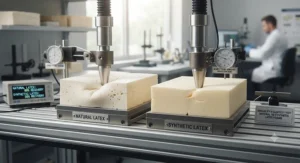
This is where the “synthetic” side of the comparison earns its place properly. The Octaspring 7500 layers a responsive sheet of latex — not marketed as natural, and priced accordingly — over Dormeo’s patented Octaspring memory foam spring technology, which uses honeycomb-shaped foam springs rather than a flat slab of memory foam.
What the spec sheet won’t tell you, but the construction implies, is that this is a hybrid-of-hybrids: memory foam responsiveness engineered into a springy shape, then topped with a latex layer to add bounce and reduce the classic memory-foam “stuck in quicksand” feeling. The build stacks two layers of Dormeo’s honeycomb-shaped, zoned foam springs, finishes with a responsive latex top layer, and sits on a medium-firm spring base designed to spread body weight evenly across the mattress. Based on that construction, buyers who found pure memory foam too hot or too slow to respond, but who can’t stretch to natural latex prices, are the clear target audience.
Pros:
- ✅ Noticeably cheaper entry point than natural latex models
- ✅ Octaspring shape improves airflow versus flat memory foam
- ✅ Comes with a 60-night comfort trial
Cons:
- ❌ Synthetic latex layer won’t match natural latex’s longevity
- ❌ Sleeps warmer than the natural latex options above
Exact current pricing is best confirmed directly with Dormeo, as it’s frequently discounted; expect a starting range broadly comparable to other entry-level hybrid mattresses in the low-hundreds-to-mid-hundreds bracket for a double.
7. Dormeo Octaspring 9500 Latex Memory Foam Mattress — top-of-range synthetic latex hybrid
Sitting at the very top of Dormeo’s range, the Octaspring 9500 stacks three layers of Octaspring foam technology beneath a deep layer of latex, aiming squarely at buyers who want the plushest possible synthetic-latex experience without switching brands. Dormeo positions this as its flagship model, built by adding a generous latex comfort layer on top of its most advanced multi-layer Octaspring foam construction, marketed heavily around breathability and pressure support.
Here’s the honest trade-off worth weighing: at this price point, you’re within touching distance of entry-level natural latex mattresses like the Dunlopillo Millennium, but you’re still buying synthetic latex’s shorter expected lifespan. What most buyers overlook is that spending premium money on synthetic latex construction doesn’t convert it into natural latex durability — the underlying material science doesn’t change just because the price tag does. This mattress makes most sense for buyers who specifically prefer Octaspring’s memory-foam-adjacent feel and simply want the best version of it, rather than buyers chasing latex’s longevity credentials specifically.
Pros:
- ✅ Three-layer Octaspring construction for deep pressure relief
- ✅ Deep latex comfort layer adds bounce over pure memory foam
- ✅ Long warranty typical of the Octasmart/Octaspring range
Cons:
- ❌ Premium price without natural latex’s long-term durability
- ❌ Heavier, deeper profile may need deeper-fitting bed linen
Listed from around £1,999, though as with all Dormeo products this fluctuates with sales, so treat that as a starting reference rather than a fixed figure — always check current price before buying. At this level, it’s worth cross-shopping directly against natural latex models before deciding.
How to Choose a Natural vs Synthetic Latex Mattress
Cutting through the marketing takes a structured approach rather than gut instinct. Here’s the reasoning we’d apply if we were choosing today:
- Decide your time horizon first. If you plan to keep the mattress 10+ years, natural latex’s longevity usually justifies the extra spend; under 5 years, synthetic or blended latex is harder to argue against on cost grounds.
- Check for certification, not just the word “latex.” Look for GOLS (Global Organic Latex Standard) or Oeko-Tex on natural claims — the word “latex” alone is unregulated and tells you almost nothing about content.
- Match latex type to sleep position. Talalay’s softer, more aerated feel suits side sleepers wanting pressure relief; denser Dunlop latex often favours back and stomach sleepers wanting firmer support.
- Weigh temperature sensitivity honestly. Hot sleepers should lean toward higher natural latex content or graphite-infused layers, since synthetic latex retains more heat.
- Read the depth spec of the latex layer itself, not just total mattress depth — a 2cm latex topper over springs behaves very differently to an all-latex core.
- Budget for the whole ownership period, not just the purchase price — factor in expected lifespan when comparing a £600 synthetic hybrid against a £1,200 natural model.
- Use the sleep trial properly. Most brands offer 60–200 nights; actually sleep on it through a full week’s routine before judging, since latex can feel different after your body adjusts.
Is Synthetic Latex Good, or Just a Cheaper Compromise?
Let’s answer the question directly, because it deserves a straight answer rather than brand-speak: synthetic latex is genuinely good for what it is, but it is not a like-for-like substitute for natural latex, and any retailer implying otherwise is stretching the truth.
Styrene-butadiene rubber, the synthetic material behind most budget latex mattresses, is generally regarded as safe for everyday human contact. That said, the manufacturing chemicals involved can off-gas or leach out once the foam is unpacked indoors, and for some people that can mean mild irritation to the eyes, skin or airways in the first few days. That off-gassing period is usually temporary — most guidance points to a few days to a couple of weeks of airing out — but it’s a genuine difference from natural latex’s much milder, faster-fading rubber scent.
On the plus side, synthetic latex genuinely replicates a good chunk of the sensory experience buyers want from latex: the springy responsiveness, the resistance to that “stuck in the mattress” feeling common with cheap memory foam, and a similar initial pressure-relief profile. What most buyers overlook is that synthetic latex isn’t inherently unsafe or low-quality — it’s simply a different material with a different lifespan and a different environmental footprint, priced accordingly. For a guest room, a growing teenager’s bed, or anyone renting and not planning to stay put for a decade, synthetic latex is a perfectly reasonable, honest choice rather than a lesser one dressed up with a premium word.
Natural Latex Worth the Extra Cost? Running the Numbers
This is the question with real money attached, so let’s actually run it rather than hand-wave it. Take a natural latex mattress at roughly £1,200 with a realistic 15-year lifespan against a synthetic latex mattress at roughly £600 with a realistic 8-year lifespan.
Divide cost by expected years and the natural option comes out at around £80 per year of ownership, while the synthetic option lands around £75 per year — genuinely close, and arguably a wash once you account for the fact that most people replace mattresses somewhat before total failure anyway, closing that gap further in synthetic latex’s favour on pure cost terms.
Here’s what most buyers overlook, though: the maths only favours natural latex once you also weigh the qualitative differences — better temperature regulation through more nights of the year, no off-gassing period, and typically more consistent support retention rather than a slow, gradual softening. Based on that fuller picture, natural latex tends to be “worth it” specifically for people who run hot at night, have sensitivities to synthetic materials, or genuinely intend to keep a mattress for over a decade. For everyone else, the honest answer is that it’s a preference purchase rather than a financial no-brainer — which is a more useful conclusion than the marketing usually admits.
A mattress marketed simply as a “natural latex mattress” can, in practice, contain anywhere from a small fraction to the vast majority synthetic latex blended in with the real thing, and there’s no strict requirement forcing manufacturers to spell out that ratio on the label — which is precisely why the “worth it” calculation only holds if you’ve actually confirmed what you’re buying, rather than trusting the word on the label.
Latex Mattress Type Comparison: Dunlop, Talalay and Blended
Beyond natural versus synthetic, there’s a second axis buyers regularly miss: how the latex was processed. This matters as much as the raw material itself.
| Latex Type | Process | Feel | Best For |
|---|---|---|---|
| Dunlop | Poured, settles under gravity while curing | Denser, firmer, more consistent base support | Back/stomach sleepers, budget-conscious buyers |
| Talalay | Whipped and flash-frozen for even cell structure | Softer, more aerated, consistent edge-to-edge | Side sleepers wanting pressure relief |
| Blended | Natural and synthetic latex combined | Varies widely by ratio | Buyers wanting some durability without full natural pricing |
The analysis here matters more than the table suggests at a glance: Dunlop latex is generally the more affordable, more durable processing method, which is why it dominates the base/support layers even in premium mattresses, while Talalay is reserved for comfort layers where its softer, more even feel earns its higher production cost. Origin Hybrid Pro and Dunlopillo Meya both lean on this logic, using latex strategically in comfort layers rather than throughout. Blended latex, meanwhile, is essentially a manufacturing compromise — cheaper than pure Talalay, more durable than pure synthetic — and it’s worth specifically asking retailers which processing method and blend ratio they’ve used before assuming “latex” means one consistent thing.
Understanding Styrene-Butadiene Rubber: What’s Really in Synthetic Latex
If you’ve made it this far, you’ve earned the actual chemistry, because it explains almost everything else in this guide. Styrene-butadiene rubber is the umbrella term for a family of synthetic rubbers built from two building-block chemicals, styrene and butadiene, prized industrially for holding up well against wear and ageing once stabilising additives are mixed in. It’s worth knowing you can read the full technical breakdown on Wikipedia if the polymer chemistry interests you — but the sleep-relevant summary is simpler than it looks.
It’s worth knowing that SBR is by volume the most widely produced synthetic rubber on the planet, roughly three parts butadiene to one part styrene, combined in a water-based process and then chemically locked together through vulcanisation. This is genuinely the same broad chemistry used in a huge share of car tyres, which is a useful mental shortcut: SBR is engineered for durability under repeated compression in industrial contexts, but mattress-grade SBR foam is a much softer, aerated formulation rather than solid tyre rubber. What most buyers overlook is that SBR’s tyre-industry pedigree is actually reassuring from a structural-safety standpoint — it’s a well-understood, heavily studied material — even though its mattress-specific durability doesn’t match natural latex over the long haul.
The practical takeaway: when a listing says “latex” without specifying natural, GOLS-certified, or organic, there’s a reasonable chance SBR or a natural-synthetic blend is involved, and that’s not automatically a red flag — just a different, cheaper, shorter-lived material worth pricing accordingly.
✨ Don’t Miss These Exclusive Deals!
🔍 Take your latex mattress shopping to the next level with these carefully researched picks. Click through to check current pricing and availability on any of the seven mattresses above — a genuinely better night’s sleep might be one click away!
Latex Durability Comparison: How Long Do They Actually Last?
Durability is where natural and synthetic latex diverge most sharply, and it’s worth separating marketing claims from realistic expectations.
Under the repeated compression of nightly use, SBR simply breaks down faster than natural polyisoprene, which is the main reason synthetic latex mattresses carry shorter realistic lifespans, alongside a stronger initial chemical smell compared with natural latex’s milder, quicker-fading rubbery scent. In practical terms, that generally translates to natural latex holding its supportive feel for 15–20 years against roughly 6–10 years for pure synthetic latex, with blended latex landing somewhere in between depending on the ratio used.
What most buyers overlook is that “durability” isn’t just about total collapse — it’s about the gradual loss of responsiveness that happens well before a mattress visibly sags. Reviewers consistently note that natural latex mattresses like the Dunlopillo Millennium retain their bounce noticeably longer than synthetic equivalents, even when both still look structurally fine on the surface. If durability is your primary decision factor, prioritise models with a high percentage of natural latex specifically in the layers you’ll be compressing most — the top comfort layer — rather than just anywhere in the build.
💬 If this durability breakdown changed how you’re thinking about your next mattress, sharing it helps someone else avoid an expensive mistake too!😊
Practical Usage Guide: Setting Up and Maintaining Your Latex Mattress
Getting a latex mattress right isn’t just about the purchase decision — the first 30 days and ongoing care genuinely affect how long it performs well.
Unboxing and settling: Boxed latex hybrids typically need 24–72 hours to fully expand and off-gas any initial smell, more pronounced with synthetic latex layers. Air the room well during this period rather than sleeping on it immediately if you’re sensitive to smells.
Base compatibility: Latex mattresses generally need a breathable, slatted or sprung base rather than a solid platform, since trapped moisture beneath the mattress can encourage mould over time — this is a common early mistake that voids warranties unnecessarily.
Rotation, not flipping: Most modern latex hybrids are one-sided, so rotate head-to-foot every three months rather than attempting to flip them, unless the manufacturer specifically states the mattress is reversible.
Temperature and humidity: Keep bedrooms reasonably ventilated; latex performs best in stable humidity, and prolonged damp conditions can shorten synthetic latex’s already shorter lifespan further.
Common first-30-days mistake: Judging firmness too early. Latex, particularly Talalay, often feels different after a week of body adjustment than it does on night one — most sleep trials exist specifically because of this.
Real-World Scenarios: Matching Sleepers to the Right Latex Type
The hot-sleeping side sleeper on a mid-range budget: Someone who runs warm at night, sleeps on their side, and has roughly £600 to spend is best served by the Origin Hybrid Pro, where the graphite infusion directly targets their main complaint without stretching to full natural latex pricing.
The allergy-prone buyer planning to stay put for a decade: For someone with dust mite sensitivities who’s just bought a house and doesn’t plan to move mattresses again soon, the Dunlopillo Millennium or Naturalmat The Superb make more sense — natural latex’s antimicrobial, hypoallergenic properties compound in value the longer you keep the mattress.
The renter or student on a tight timeline: Someone renting for 2–3 years with a limited budget is arguably better off with the Dormeo Octaspring 7500 — paying for natural latex’s long-term durability makes little sense on a mattress you won’t keep long enough to benefit from it.
Common Problems and Solutions With Latex Mattresses
Problem: New mattress smell won’t fade. Solution: air the room daily and avoid tightly sealed bedding for the first week; synthetic latex layers generally take longer to off-gas fully than natural ones.
Problem: Mattress sleeps hotter than expected. Solution: check whether your base is solid rather than slatted, add a breathable mattress protector rather than a plastic-backed one, and consider that synthetic latex inherently retains more heat than natural.
Problem: Edges feel like they’re collapsing. Solution: this is more common on thinner latex-topper builds like the Sealy Nostromo; rotating regularly and using the mattress’s full width rather than always sitting on the same edge helps slow this.
Problem: Firmness feels wrong after a few weeks. Solution: give it the full sleep trial period before judging — latex genuinely does soften slightly with body-heat exposure, which is different from sagging.
Problem: Unsure if a “latex” listing is genuinely natural. Solution: contact the retailer directly and ask specifically for GOLS or Oeko-Tex certification documentation rather than relying on the product title alone.
Latex Mattress Value Guide: Cost-Per-Year and Long-Term ROI
| Mattress | Approx. Price Range (Double) | Est. Lifespan | Rough Cost/Year | Best For |
|---|---|---|---|---|
| Origin Hybrid Pro | £550–£650 | 8–10 yrs | £55–£80 | Budget cooling |
| Dunlopillo Meya | £570–£650 | 10–12 yrs | £50–£65 | Heritage value |
| Dormeo Octaspring 7500 | £600–£900 | 7–9 yrs | £75–£110 | Short-term ownership |
| Sealy Nostromo Pocket 1400 | £700–£900 | 8–10 yrs | £75–£100 | Spring-lovers |
| Dunlopillo Millennium | £1,100–£1,300 | 15–18 yrs | £65–£85 | Natural latex purists |
| Dormeo Octaspring 9500 | £1,900–£2,100 | 8–10 yrs | £200–£240 | Plush synthetic feel |
| Naturalmat The Superb | £2,200–£2,300 | 18–20 yrs | £110–£130 | Long-term, handmade quality |
Interpreting this table properly matters more than skimming it: notice that the highest sticker price, Naturalmat The Superb, doesn’t produce the highest cost-per-year — that distinction belongs to the Dormeo Octaspring 9500, which pairs a premium price with a synthetic-latex lifespan. When judged purely on value-for-years-owned, Dunlopillo Meya and Dunlopillo Millennium both come out looking genuinely strong, which reinforces the broader point that sticker price alone is a poor proxy for value in this category.
Safety, Certifications and UK Regulations for Latex Mattresses
Every mattress sold in the UK, regardless of latex content, must comply with fire safety law, and this is worth understanding before you buy rather than after. Mattresses fall squarely under the UK’s long-standing furniture fire safety framework, which has applied to upholstered items since the late 1980s and covers both newly manufactured and second-hand pieces. That framework received a fresh update through amendment regulations that came into force in late 2025, and you can read the official government guidance on the current rules if you want the full detail.
For latex specifically, look for GOLS (Global Organic Latex Standard) certification on natural claims — it’s the closest thing the industry has to a reliable, independently audited standard, since “natural” and “organic” aren’t otherwise strictly policed terms on mattress labelling. Genuine natural latex mattresses will typically also carry a permanently attached fire-safety label conforming to BS 7177, positioned so it can be easily checked before purchase. If a “natural latex” mattress is priced dramatically below the roughly £1,100+ entry point we’ve seen for genuine natural latex doubles in this research, treat that as a signal to ask more questions before buying, not a bargain to celebrate uncritically.
Common Mistakes When Buying a Latex Mattress
Even careful shoppers trip over the same handful of pitfalls repeatedly, based on recurring patterns across reviewer feedback and buying guides.
- Assuming “latex” means 100% natural. As covered above, this word alone guarantees nothing without certification.
- Ignoring the depth of the latex layer specifically. A 2cm topper over springs, like the Sealy Nostromo, behaves very differently from an all-latex core, even under the same broad “latex mattress” category.
- Skipping the sleep trial entirely. Latex genuinely needs a week or two of body-heat exposure to feel representative; judging on night one is one of the most common regret triggers in reviews.
- Overlooking base compatibility. Using a solid platform base under latex can trap moisture and shorten its working life regardless of latex type.
- Comparing sticker price without factoring lifespan. As the value table above shows, the cheapest option upfront isn’t always the cheapest per year owned.

Frequently Asked Questions
❓ Is natural latex mattress better than synthetic?
❓ How can I tell if a latex mattress is really natural?
❓ Do synthetic latex mattresses smell bad?
❓ Is a latex mattress worth it for back pain?
❓ How long does a natural latex mattress actually last?
Conclusion
The honest answer to natural vs synthetic latex mattress isn’t “natural always wins” — it’s “match the material to your timeline and priorities.” If you’re settling somewhere for the next decade-plus, run warm at night, or care about sourcing transparency, the extra spend on genuine natural latex, GOLS-certified where possible, tends to pay for itself in years of consistent support. If you’re renting, budget-constrained, or simply want latex’s responsive feel without the premium price tag, a well-reviewed synthetic or blended option like the Origin Hybrid Pro or Dunlopillo Meya is a perfectly reasonable, honest choice rather than a compromise to feel guilty about.
What matters most is buying with your eyes open: checking certifications rather than trusting label language, understanding that “latex” alone tells you very little, and weighing cost-per-year rather than sticker price alone. Whichever of the seven mattresses above you’re drawn to, use the sleep trial properly, check the base compatibility, and give it the full settling-in period before judging. Health guidance regularly flags an uncomfortable bed as one of the more common, fixable causes of poor sleep, so getting this decision right is worth the extra research time — you can also browse Which?’s independently tested mattress guide for further comparison before you commit.
Recommended for You
- Synthetic Latex Mattress UK 2026: 7 Affordable Picks Worth Buying
- Eco Friendly Mattress UK: 7 Genuinely Sustainable Picks (2026)
- Dunlop vs Talalay Latex Mattress: 7 Honest Picks 2026
Disclaimer: This article contains affiliate links. As an Amazon Associate, I earn from qualifying purchases. If you purchase products through these links, we may earn a small commission at no additional cost to you.
✨ Found this helpful? Share it with your friends! 💬🤗
