
In This Article
We spend roughly a third of our lives horizontal. You’d think, given that staggering statistic, that more of us would be rather more thoughtful about what we’re horizontal on. And yet the average British consumer spends more time researching a new toaster than a new mattress — which is a shame, because a bad mattress will affect your mood, your back, and frankly your entire disposition far more than any toaster ever could.
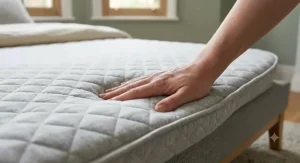
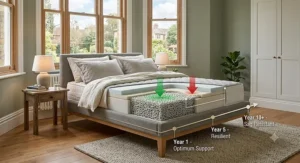
A high density memory foam mattress is, for most people, the single most impactful sleep upgrade available. Unlike the low-density foam that passes itself off as “memory foam” in budget supermarket offerings — foam that’s essentially slow-motion sponge — a genuine high density memory foam mattress packs significantly more material into every cubic metre of foam, typically 50–80 kg/m³. The result? It moulds properly to your body, distributes your weight evenly, isolates your partner’s 3 a.m. restlessness, and — crucially for value — actually lasts. Low-density foam under 40 kg/m³ often feels pleasant on day one and utterly defeated by month twelve.
In this guide, we’ve researched the best high density memory foam mattress options currently available on Amazon.co.uk in 2026, covering seven real products across every budget tier — from solid budget options under £200 to premium orthopaedic builds that justify serious investment. We’ve gone beyond the spec sheets to explain what the numbers actually mean for someone sleeping in a British bedroom, dealing with draughty windows, narrow Victorian staircases, and the six-month grey drizzle that passes for our climate.
Whether you’re furnishing a spare room in a terraced house in Sheffield, upgrading the master bedroom in a Leeds new-build, or simply sick of waking up with a crick in your neck — this guide is for you.
Quick Comparison: High Density Memory Foam Mattresses on Amazon.co.uk (2026)
| Mattress | Depth | Memory Foam Layer | Density Range | Firmness | Price (Double) | Best For |
|---|---|---|---|---|---|---|
| Vesgantti Gel Memory Foam | 16–20 cm | 3–4 cm | ~35–40 kg/m³ | Medium | ~£120–£200 | Budget/Guest rooms |
| Zinus Green Tea Memory Foam | 25 cm | ~5 cm | ~40–45 kg/m³ | Medium | ~£180–£260 | Budget upgraders |
| Silentnight 3 Zone | 18 cm | 3 cm | ~35–40 kg/m³ | Medium-Firm | ~£200–£280 | Brand-conscious buyers |
| Inofia Hybrid Pocket Spring & Memory Foam | 22 cm | ~3–4 cm | ~40–45 kg/m³ | Medium-Firm | ~£200–£280 | Hot sleepers/couples |
| Emma Original | 25 cm | Multi-layer foam | ~50 kg/m³ | Medium | ~£300–£450 | All-rounders |
| Nectar Memory Foam | 25 cm | 7.6 cm | ~50–55 kg/m³ | Medium | ~£350–£450 | Value-seekers/couples |
| Ergoflex 5G | 23 cm | 9 cm | ~65–70 kg/m³ | Medium-Firm | ~£385–£550 | Back pain/orthopaedic |
Reading the table above, a few things jump out immediately. The Ergoflex 5G’s 9 cm memory foam layer is exceptional at this price — most mattresses in the £300–£500 bracket offer half that depth. Budget buyers should note that the Vesgantti and Silentnight’s 3 cm memory foam layers are perfectly adequate for lighter sleepers and guest rooms, but if you’re over 13 stone or sharing a bed with a partner, that thin comfort layer will start to feel insufficient within 18 months. The Nectar sits in a sweet spot — generous memory foam depth, competitive pricing, and a trial period that removes all risk from the purchase.
✨ Don’t Miss These Exclusive Deals!
🔍 Take your sleep to the next level with these carefully selected mattresses. Click on any highlighted item to check current pricing and availability on Amazon.co.uk — these picks will help you find exactly what you need!
Top 7 High Density Memory Foam Mattresses on Amazon.co.uk: Expert Analysis
1. Vesgantti 16/18/20cm Gel Memory Foam Mattress — Best Budget Pick
For a first memory foam mattress or a guest bedroom where “good enough” genuinely is good enough, the Vesgantti Gel Memory Foam is one of the better-value options on Amazon.co.uk right now. Available in three depth variants — 16, 18, and 20 cm — the two-layer design pairs a gel-infused memory foam comfort layer (3–4 cm depending on the model) with a high-density polyurethane base foam beneath.
The gel infusion is the key differentiator at this price point. In British bedrooms — particularly those in older housing with limited insulation — temperature swings between seasons can be dramatic. The gel layer absorbs initial body heat and disperses it reasonably well, making this noticeably more comfortable than non-gel budget alternatives during warmer months. It’s not in the same league as the Ergoflex or Nectar for thermal management, but for under £150 on a single, it’s genuinely impressive.
The foam is CertiPUR-US certified, confirming it’s free from harmful substances — reassuring for allergy-conscious buyers. The knitted cover is removable and machine washable, which matters considerably in a British household where damp air and the occasional spillage are facts of life rather than accidents.
Where the Vesgantti falls short is longevity. At this density range, expect 4–6 years of comfortable sleep rather than the 8–10 years a premium mattress provides. For a guest room that sees occasional use, that’s perfectly acceptable. For a master bedroom occupied by two adults every night, you’ll likely be shopping again sooner than you’d like.
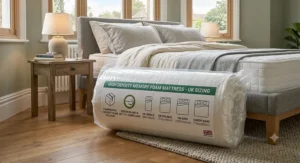
UK customers on Amazon consistently praise the value and ease of setup — it arrives compressed in a box, expands within 24–48 hours (allow 48 in a cool British bedroom, not 24).
✅ Excellent value for money
✅ Gel cooling layer — helpful in British summer months
✅ Machine-washable cover
❌ Thinner comfort layer — not ideal for heavier sleepers
❌ Shorter expected lifespan than mid-range options
Price range: around £120–£200 (double). Solid value for occasional use — check current pricing on Amazon.co.uk.

2. Zinus Green Tea Memory Foam Mattress — Best for Odour Control
The Zinus Green Tea Memory Foam is something of an outlier in the budget category, because it actually addresses one of the most common complaints about cheaper memory foam mattresses: that chemical off-gassing smell when you first unbox them. If you’ve ever opened a budget mattress and had to air out the bedroom for three days, you’ll understand why this matters.
Zinus infuses green tea extract and charcoal into the foam layers — not just the cover, which is a common marketing shortcut, but throughout the material itself. In practice, this dramatically reduces initial off-gassing odour and helps control moisture absorption over time. For a compact bedroom in a terrace with limited ventilation, this is more than a gimmick.
At 25 cm deep, the Zinus punches above its weight structurally. The three-layer construction — memory foam comfort layer, transition foam, and high-density base — offers reasonable support for back and combination sleepers up to around 13–14 stone. The 25 cm option in particular provides noticeably better support than the 20 cm variant; if you’re choosing between them, pay the modest difference.
The foam carries OEKO-TEX Standard 100 certification, indicating it meets international standards for harmful substance limits — relevant for buyers with sensitivities. Available in standard UK sizes (single, small double, double, king), fitting directly onto slatted frames or platform bases without adapters.
What most buyers overlook about this model is that whilst the memory foam layer is solid for the price, it lacks the response of denser foams — you’ll notice a slower “bounce-back” that can feel slightly sticky when changing sleep positions during the night.
✅ Green tea/charcoal infusion genuinely reduces off-gassing odour
✅ 25 cm depth — more substantial than many budget rivals
✅ OEKO-TEX certified foam
❌ Slower response foam — not ideal for combination sleepers who move frequently
❌ Foam density lower than mid-range options
Price range: around £180–£260 (double). A reliable step up from supermarket foam at an honest price — check current availability on Amazon.co.uk.
3. Silentnight 3 Zone Memory Foam Mattress — Best Trusted British Brand
If you need a mattress that your mother would recognise the brand name of, Silentnight is it. Probably the most recognisable name in British bedrooms — they claim one in five mattresses sold in the UK bears their name — the Silentnight 3 Zone Memory Foam is their entry point into the memory foam category, and it earns its place on this list through sheer reliability rather than headline specifications.
The “3 Zone” design places firmer foam beneath your hips and softer foam at your head and feet, preventing the hammock effect that single-density cheap foams often produce. In practice, this zoning approach is particularly useful for back sleepers — keeping the lumbar spine from sinking out of alignment through the night. At 18 cm deep with a 3 cm memory foam layer, it’s thinner than most competitors on this list, but what’s there is competently engineered.
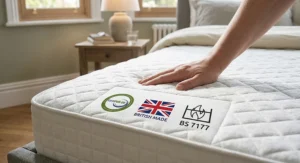
For a UK brand, Silentnight offers peace of mind around compliance — all mattresses meet BS 5852 fire safety regulations and BS 7177 flammability standards, without needing to navigate post-Brexit import questions about UKCA marking. The mattress is manufactured to British standards, which matters increasingly to buyers who’ve had issues with EU-imported goods since 2021.
With over 8,000 Amazon reviews averaging 4.2 out of 5, UK buyers consistently rate it well for value and comfortable first impressions. A frequently noted concern — around 150 reviews mention a “chemical smell” on arrival — suggests airing the mattress for 48 hours in a well-ventilated room before first use, which is standard practice with any memory foam mattress but particularly relevant here.
✅ Trusted British brand — BS 5852 and BS 7177 compliant
✅ 3-zone support prevents hammock sag
✅ Strong Amazon UK review track record (4.2/5)
❌ Thin 3 cm memory foam layer — limited pressure relief for heavier sleepers
❌ Off-gassing smell noted by significant number of UK reviewers
Price range: around £200–£280 (double). A sensible choice if brand familiarity and UK standards compliance are priorities — check current pricing on Amazon.co.uk.
4. Inofia Hybrid Pocket Spring & Memory Foam Mattress — Best for Couples and Hot Sleepers
The Inofia Hybrid occupies an interesting space — it’s not a pure memory foam mattress, but a hybrid that combines memory foam comfort layers with individually-pocketed springs below. For certain British buyers — particularly couples with different body weights, or anyone who tends to sleep warm — this combination is genuinely superior to pure foam.
At 22 cm deep, the construction features high-elasticity foam and memory foam comfort layers sitting above a 7-zone pocket spring base. The springs are individually encased, which does two things: it eliminates the motion transfer that disturbs partners (significantly better than interconnected coil springs found in cheaper hybrids), and it creates natural air channels that regulate temperature far better than solid foam blocks.
This matters considerably in the British context. Our bedrooms — particularly in Victorian or Edwardian terraces — often lack good air circulation. Solid foam mattresses can trap humidity, which in our damp climate can accelerate wear and contribute to that musty warmth that plagues poorly ventilated bedrooms. The Inofia’s spring layer ventilates naturally, making it more suitable for older housing stock.
Inofia offers a 100-night trial and a 10-year guarantee — exceptional at this price point, and the kind of assurance that only comes from a company confident in its product’s durability. UK Amazon buyers particularly appreciate the motion isolation; one recurring comment from couples is that a restless partner’s midnight gymnastics go largely unnoticed.
The foam layers are on the thinner side — don’t expect the deep contouring of the Nectar or Ergoflex — but for sleepers who find pure memory foam too “sinking,” the hybrid feel is actually preferable.
✅ Pocket spring ventilation — excellent for warm sleepers and damp British bedrooms
✅ 7-zone support — genuinely aids spinal alignment
✅ 100-night trial + 10-year guarantee at this price bracket
❌ Thinner memory foam comfort layer than pure foam rivals
❌ Pocket springs can creak slightly in cheaper spring gauges over time
Price range: around £200–£280 (double). The hybrid to consider if you sleep warm or share a bed — check current availability on Amazon.co.uk.
5. Emma Original Mattress — Best All-Rounder
The Emma Original is arguably the most versatile mattress on this list — it’s the one that tends to suit the widest range of sleep styles, weights, and preferences, which is why it’s a Which? award winner and consistently appears in expert round-ups across British publications.
Where the Emma differs from straightforward memory foam designs is in its multi-layer construction: a top layer of Airgocell® foam (Emma’s proprietary open-cell material, breathable and responsive), a middle layer of viscoelastic memory foam for contouring and pressure relief, and a high-density cold foam base for structural support. The memory foam sits in the middle of this “sandwich” rather than on top — which means you get the contouring benefits without the sometimes-stuffy sensation of sleeping directly on slow-response foam.
At 25 cm deep, the Emma’s overall build quality feels genuinely premium — particularly given where it sits on the price spectrum. The cover is removable and washable, and the mattress arrives bed-in-a-box style: manageable up even the narrow staircases that characterise so much British housing, particularly in Victorian terraces where anything wider than a slim person becomes a logistical negotiation.
Emma provides a 100-night trial, which is the minimum you should accept from any online mattress purchase — buying a mattress without lying on it is an act of faith, and a decent trial period transforms that faith into a calculated risk. The 10-year guarantee is industry-standard for this price tier.
UK buyer feedback is consistently positive, with particular praise for the motion isolation — important for light sleepers sharing a bed. The medium firmness (roughly 6 out of 10) suits most sleeping positions, making it a genuine all-rounder.
✅ Multi-layer construction suits most sleep positions
✅ 100-night trial — adequate to assess long-term suitability
✅ Breathable Airgocell® layer — better temperature regulation than single-material foam
❌ Memory foam sandwiched mid-layer — less contouring than top-layer designs like Ergoflex
❌ Medium firmness may feel soft to stomach sleepers or heavier builds
Price range: around £300–£450 (double). The safe choice for households that can’t decide — check current pricing on Amazon.co.uk.
6. Nectar Memory Foam Mattress — Best Value for Money Overall
The Nectar Memory Foam has earned a genuinely loyal UK following, and the reasons become apparent when you examine what you’re getting for the price. This is a five-layer mattress with a 7.6 cm adaptive memory foam layer — substantially deeper than anything else at this price point — topped with a gel-quilted cover for temperature management.
The 7.6 cm memory foam depth is significant. Most budget and mid-range mattresses scrape by with 3–5 cm of comfort foam before hitting the denser base layers. Nectar’s 7.6 cm means your body actually sinks into genuine contouring foam rather than sitting on top of it — the difference is noticeable, particularly for side sleepers who need the foam to accommodate shoulder and hip curvature without creating pressure points.
The gel quilting in the cover addresses the heat retention that plagues traditional memory foam. In British bedrooms where central heating runs through winter and summer warmth is increasingly oppressive in climate-impacted years, this cooling layer genuinely earns its place. The Tencel fibre content in the cover also aids moisture management — relevant in damp climates where overnight perspiration doesn’t evaporate as efficiently as it might in drier European climates.
What most UK buyers overlook about the Nectar is the warranty and trial combination: 365 nights to try it (an entire year) and a lifetime guarantee on the foam. These terms are industry-leading and reflect genuine confidence in product durability. UK customers on Amazon rate it 4.5 out of 5, with particular praise for motion isolation — it handles couples with differing weights remarkably well.
✅ 7.6 cm memory foam layer — exceptional depth at this price
✅ 365-night trial + lifetime guarantee — unmatched in this segment
✅ Gel cooling — genuinely effective in British bedroom conditions
❌ Edge support slightly lacking — you’ll notice the perimeter softening over time
❌ Slightly heavier than competitors at similar depth — manoeuvring requires two people
Price range: around £350–£450 (double). The best overall value on this list if longevity and trial terms matter to you — check current availability on Amazon.co.uk.
7. Ergoflex 5G Memory Foam Mattress — Best Premium High Density Pick
The Ergoflex 5G sits in a category of its own on this list. If you want the closest thing to a Tempur mattress at roughly a third of the price — and genuinely understand what high density memory foam means rather than just reading it on a spec sheet — this is the mattress to consider.
The headline specification is 9 cm of high-density viscoelastic memory foam — the thickest comfort layer on this list by a considerable margin, and genuinely orthopaedic in its pressure-relieving performance. At foam density in the 65–70 kg/m³ range, this is the kind of material that retains its structure and support properties for years rather than months. Beneath the memory foam sits Ergoflex’s Cool-Sleep™ 5 cm airflow layer — a ventilated system designed specifically to address memory foam’s Achilles heel of heat retention. It works. Meaningfully. Particularly in the enclosed British bedroom where air doesn’t circulate freely.
The outer Tencel® cover is naturally antimicrobial, moisture-wicking, and machine washable at 30°C — practical for real households rather than showroom aspirations. All foams carry both CertiPUR-US® and OEKO-TEX® Standard 100 certification. The mattress also complies with BS 5852 and BS 7177 UK fire safety standards, which matters post-Brexit when some imported mattresses arrive with CE (EU) rather than UKCA (UK) marking.
At a firmness of around 7.5 out of 10, the Ergoflex leans medium-firm — excellent for back sleepers, stomach sleepers, and heavier-build side sleepers, though very lightweight side sleepers might find it slightly unyielding. It is emphatically not a mattress for those who prefer to sink deeply into softness. It is, however, exceptional for anyone with lower back pain, hip discomfort, or a history of waking up stiff.
UK buyers note the 30-night trial is shorter than competitors. This is true, but the trial comes with a full refund option — unlike some competitors who only offer exchanges — which somewhat redresses the balance.
✅ 9 cm high-density memory foam — exceptional pressure relief and longevity
✅ Cool-Sleep™ airflow layer — the most effective heat management on this list
✅ BS 5852 + BS 7177 compliant, OEKO-TEX® and CertiPUR-US® certified
❌ 30-night trial shorter than Nectar (365 nights) or Emma (100 nights)
❌ Medium-firm feel — not suitable for those who prefer a plush, sink-in sensation
Price range: around £385–£550 (double). A long-term investment that rewards buyers who prioritise durability and orthopaedic support — check current pricing on Amazon.co.uk.
Getting the Most from Your High Density Memory Foam Mattress: A Practical UK Guide
Buying the right mattress is step one. Making it last, and sleeping well on it from night one, requires a little more thought — particularly given the specific conditions of British home life.
The first 48 hours matter. Every mattress on this list arrives compressed in a box. British bedrooms in autumn and winter are often cold, and cold temperatures slow foam expansion — don’t expect the mattress to reach full depth in 24 hours if your bedroom is below 16°C. Give it 48 hours in a warmer room before assessing comfort, and resist the urge to sleep on it immediately if it smells of fresh foam; open a window and let it breathe.
Invest in a waterproof mattress protector immediately. This isn’t optional advice — it’s essential. British humidity is genuinely higher than continental Europe, and memory foam mattresses that absorb moisture degrade faster, develop odour, and void most manufacturers’ warranties if they show liquid damage. A quality waterproof protector costs £25–£45 and will extend your mattress life by years. Consider it part of the purchase cost, not an optional extra.
Ventilate your bedroom properly. Older British housing stock — particularly pre-1970s construction — was built with natural ventilation through gaps and draughts that modern energy-efficient double glazing eliminates. Memory foam mattresses need airflow beneath them; ensure your bed frame has adequate slats (no wider than 7 cm gaps) or a properly ventilated divan base. Avoid placing the mattress directly on the floor — moisture from the floor surface will accelerate wear from beneath.
Rotate regularly, don’t flip. All modern memory foam mattresses are one-sided — the comfort layers are on top only. Flipping will leave you sleeping on the base layer, which is entirely wrong. Rotate 180° every three months during the first year, then every six months thereafter, to distribute body weight imprints evenly across the sleep surface.
In a compact flat or terrace house, storage of the mattress box after unboxing is a legitimate consideration — it’ll take up considerable space in a small hallway. Break it down and put it in the recycling rather than letting it dominate your landing for a fortnight. The mattress itself, once expanded, cannot be recompressed — so measure your bedroom, staircase turns, and doorframes before ordering a super king.
Real-World Scenarios: Which Mattress for Which UK Buyer?
Different British households have different needs, and matching the right mattress to the right buyer makes more difference than any specification on a comparison table.
The London flat-dweller, budget-conscious, furnishing a spare room. You have a small box room in a Clapham conversion flat that occasionally hosts visiting family. Budget is a priority. The Vesgantti Gel Memory Foam (16 cm, around £120–£150 for a single) is the logical choice — decent cooling, CertiPUR-US certified, and if it lasts five years of occasional use, you’ve spent wisely. Pair it with a £25 waterproof protector and consider the setup complete.
The Manchester suburban family, master bedroom upgrade. Two adults, one of whom is a light sleeper easily disturbed by a restless partner, both in the 70–85 kg range, sleeping on a mattress that’s now eight years old and showing a distinct dip in the middle. The Nectar Memory Foam is the recommendation here: 7.6 cm of contouring foam, excellent motion isolation, a 365-night trial that removes all buying risk, and a price point that’s serious without being extravagant. The lifetime guarantee provides genuine long-term peace of mind that the dip won’t return for many years.
The back-pain sufferer in Edinburgh, serious about orthopaedic support. You’ve tried three mattresses in five years and keep waking up stiff. You want something that actually works, not just marketing language about “orthopaedic support.” The Ergoflex 5G is the genuine article — 9 cm of true high-density visco-elastic foam, cooler than its predecessors, and with a density rating that will maintain its structural integrity under sustained use. The higher price is justified if it solves a problem that’s been affecting your daily function.
The retired couple in the Cotswolds, priority on ease of movement. Memory foam’s contouring can make getting in and out of bed harder for those with mobility issues — you sink in and have to push yourself up. Consider the Inofia Hybrid here, where the pocket spring layer provides that helpful spring assistance that pure foam cannot offer. The firmer feel and natural spring response make getting up easier, which is underrated as a consideration for older buyers.
How to Choose a High Density Memory Foam Mattress in the UK: 6 Key Criteria
Choosing a mattress is considerably less complicated than the marketing industry would have you believe, once you know which specifications actually matter.
1. Foam density first. This is the single most important number and the one most brands hide. Look for foam density in kg/m³ — anything above 50 kg/m³ in the comfort layer is solid, above 60 kg/m³ is premium. If a brand doesn’t publish their foam density, treat that omission as a red flag. The good ones shout about it.
2. Memory foam layer depth. A 3 cm memory foam layer is adequate for lighter sleepers and occasional use. For regular use by adults over 70 kg, look for at least 5–6 cm. The Ergoflex 5G’s 9 cm is exceptional. Don’t confuse total mattress depth with memory foam depth — a 25 cm mattress with only 3 cm of memory foam has 22 cm of base foam. Only the memory foam layer provides the signature contouring benefit.
3. Trial period and returns policy. Never buy a UK mattress online without at least a 100-night trial. Under the Consumer Contracts Regulations 2013, you have 14 days to return any online purchase — but mattress companies offer longer trials precisely because 14 days isn’t enough to assess sleep quality. Nectar offers 365 nights, Emma and Inofia offer 100 nights, Ergoflex 30 nights (with full refund). Prioritise full-refund options over exchange-only policies.
4. UK fire safety compliance. All mattresses sold in the UK must comply with BS 5852 (ignitability) and BS 7177 (fire resistance for domestic use). Post-Brexit, confirm products carry UKCA marking or are explicitly stated to meet British Standards — not solely EU CE marking, which is a different certification regime since January 2021.
5. Foam certifications. CertiPUR-US® and OEKO-TEX® Standard 100 are the two certifications worth looking for. They confirm the foam is free from harmful substances including heavy metals, formaldehyde, and certain flame retardants. OEKO-TEX® is arguably the more rigorous for UK/European context.
6. Bed frame compatibility. UK memory foam brands consistently recommend against box springs (rare in British homes anyway) and slatted frames with gaps larger than 7 cm. A solid platform base or divan is ideal. If you have an older slatted frame, measure the gaps before ordering — inadequate support will accelerate sagging and void most warranties.
Common Mistakes When Buying a High Density Memory Foam Mattress in the UK
Confusing mattress depth with memory foam depth. A 25 cm mattress sounds substantial. A 25 cm mattress with 3 cm of actual memory foam is 22 cm of base foam with a thin comfort layer on top. Always ask — or look carefully — for the memory foam layer specification specifically.
Ignoring foam density because it’s not prominently advertised. Brands that use quality high-density foam shout about it. Brands that use cheap foam talk about depth, cover quality, and sleep trials — anything except density. If density isn’t mentioned in the first paragraph of a product description, search for it specifically before purchasing.
Buying a US-specification mattress that doesn’t fit UK sizes. UK bed sizes differ from US sizes. A US “queen” (153 × 203 cm) is not the same as a UK double (135 × 190 cm) or king (150 × 200 cm). All products on this list are available in standard UK sizes, but if you venture beyond these recommendations, verify dimensions carefully — particularly for king size, where the US and UK specifications are notably different.
Underestimating the off-gassing period. All polyurethane foam releases VOCs (volatile organic compounds) when first unpackaged. This is normal, temporary, and well within safe limits according to research from Which?. It typically resolves within 24–72 hours with adequate ventilation. Don’t sleep on a freshly unboxed mattress in a sealed room; open windows, let it breathe, give it 48 hours if the smell is pronounced.
Ignoring UK delivery specifics. Amazon Prime delivery of mattresses like the Vesgantti and Nectar is generally excellent in urban areas — 1–2 days is realistic. However, buyers in the Scottish Highlands, rural Wales, Northern Ireland, and remote areas should check delivery terms carefully. Some direct-from-manufacturer brands (particularly those not Prime-eligible) may take 2–3 weeks to reach remote postcodes, and some couriers add surcharges for these areas.
Memory Foam vs Traditional Pocket Springs: The Honest Comparison
| Factor | High Density Memory Foam | Pocket Spring |
|---|---|---|
| Pressure relief | ⭐⭐⭐⭐⭐ Excellent | ⭐⭐⭐ Good |
| Motion isolation | ⭐⭐⭐⭐⭐ Exceptional | ⭐⭐⭐ Moderate |
| Temperature regulation | ⭐⭐⭐ Moderate (gel helps) | ⭐⭐⭐⭐ Good |
| Longevity | ⭐⭐⭐⭐ 8–10 years (HD) | ⭐⭐⭐⭐ 8–12 years |
| Edge support | ⭐⭐⭐ Moderate | ⭐⭐⭐⭐ Good |
| Ease of movement | ⭐⭐⭐ Moderate | ⭐⭐⭐⭐⭐ Excellent |
| Price range (double) | £120–£550+ | £200–£1,000+ |
| Best For | Back/hip pain, couples | Combination sleepers, mobility concerns |
The comparison above illustrates where memory foam genuinely excels — and where it doesn’t. For couples where one partner moves frequently in the night, the motion isolation advantage of high-density memory foam is transformative; it’s not a marginal improvement, it’s categorically different from spring mattresses. However, for anyone with mobility concerns — getting in and out of bed is harder on foam than springs — or sleepers who tend to overheat significantly, a hybrid or spring mattress may be worth considering alongside these options.
Memory foam’s reputation for sleeping hot is increasingly a legacy concern. Modern gel-infused options (the Nectar, Vesgantti, Inofia, Emma) perform meaningfully better than the original viscoelastic foam of ten years ago. The Ergoflex’s Cool-Sleep™ layer represents the current state of the art in foam temperature management.
Long-Term Cost and Maintenance: What Does a High Density Memory Foam Mattress Actually Cost You?
The true cost of a mattress is almost never the sticker price. A £200 mattress that lasts four years costs £50 per year. A £450 mattress that lasts ten years costs £45 per year — and provides dramatically better sleep throughout. When evaluated on a cost-per-night basis, investing in higher foam density is consistently the better financial decision.
Here’s a realistic breakdown for UK buyers:
A budget Vesgantti (around £150 for a double) with expected 4–5 year lifespan on regular use: approximately £30–£38 per year. A mid-range Nectar (around £400 for a double) with expected 8–10 year lifespan: approximately £40–£50 per year. An Ergoflex 5G (around £470 for a double) with expected 10+ year lifespan due to high foam density: approximately £47 per year or less.
The cost difference between budget and premium, per night of sleep, is often pennies. The difference in sleep quality is considerably more significant.
Maintenance costs to factor in:
- Waterproof mattress protector: £25–£45 (one-off, essential)
- Replacement every 2–3 years if laundered frequently: £25–£45
- Mattress cleaning spray (for spot treatment): £8–£15
One advantage worth noting: all mattresses on this list comply with UK Consumer Rights Act 2015 protections, meaning if a mattress proves defective within six months, the burden of proof lies with the retailer to demonstrate it wasn’t faulty, not with you to prove it was. Keep purchase receipts and any warranty documentation.
UK Regulations and Safety Standards: What Every Buyer Should Know
Since leaving the EU in January 2021, the UK operates its own product standards regime. For mattresses, this is relatively straightforward — but worth understanding before purchasing, particularly if buying from overseas sellers on Amazon Marketplace.
All mattresses sold for domestic use in the UK must comply with BS 7177:2008 (resistance to ignition of mattresses, divans and bases) and BS 5852:2006 (ignitability of upholstered composites). These standards are mandatory, not optional, and products that don’t comply shouldn’t be on sale — but Amazon Marketplace occasionally includes third-party sellers whose compliance isn’t always verified. Sticking to established brands (all seven on this list) removes this concern.
The UKCA (UK Conformity Assessed) marking replaced CE marking for most products sold in Great Britain (though Northern Ireland buyers should note that CE-marked products remain acceptable under the Northern Ireland Protocol for EU-origin goods). For mattresses, the practical difference is modest, but buyers concerned about standards compliance should look for explicit BS standard compliance claims rather than relying solely on CE marking.
From a foam safety perspective, CertiPUR-US® and OEKO-TEX® Standard 100 certifications are the relevant markers — both are independently verified, internationally recognised, and indicate foam free from harmful substances including formaldehyde, certain flame retardants, and heavy metals. All seven mattresses reviewed here carry at least one of these certifications.
Under the Consumer Contracts (Information, Cancellation and Additional Charges) Regulations 2013, UK online mattress buyers have a 14-day cooling-off period as a legal minimum — though the generous trials offered by these brands extend considerably beyond that baseline.
✨ Don’t Miss These Exclusive Deals!
🔍 Check current availability and pricing on Amazon.co.uk for all seven mattresses in this guide. Click any highlighted product name to see today’s pricing — deals and lightning offers change frequently, particularly around bank holiday weekends.
FAQ: High Density Memory Foam Mattresses in the UK
❓ What foam density is considered high density for a memory foam mattress in the UK?
❓ Do high density memory foam mattresses sleep hot in UK bedrooms?
❓ Can I use a high density memory foam mattress on a slatted bed frame?
❓ How long do high density memory foam mattresses typically last?
❓ Are Amazon memory foam mattresses compliant with UK fire safety regulations?
Conclusion: Which High Density Memory Foam Mattress Should You Buy?
Seven mattresses, seven different answers depending on who you are and what you actually need from your bed.
For budget-conscious buyers furnishing a guest room or a child’s bedroom, the Vesgantti Gel Memory Foam delivers honest value without pretending to be something it isn’t. For brand familiarity and British Standards peace of mind, the Silentnight 3 Zone remains a sensible, if unspectacular, choice. The Zinus Green Tea earns its place for buyers who’ve suffered through the off-gassing ritual before and want to avoid a repeat.
The Inofia Hybrid is the pick for hot sleepers and couples who need natural ventilation and the helpful spring-back that pure foam cannot offer. The Emma Original is the safe all-rounder for those who can’t confidently identify their sleep style. For best overall value across longevity, comfort, and risk-free purchase terms, the Nectar Memory Foam is difficult to beat — a 365-night trial and lifetime guarantee at a mid-range price is a combination that removes virtually all risk from the purchase.
And for those who are serious about sleep quality, understand what high density actually means, and are prepared to invest accordingly: the Ergoflex 5G remains one of the best-value premium mattresses available in the UK, delivering near-Tempur performance at considerably less than Tempur pricing.
Whichever you choose, do invest in a waterproof mattress protector, give the mattress 48 hours to fully expand in a warm room, and resist judging it in the first week — memory foam takes time to adapt to your body, and your body takes time to adapt to it. Most manufacturers recommend at least 30 nights before forming a firm opinion. In the meantime, your sleep is worth the patience.
✨ Don’t Miss These Exclusive Deals!
🔍 Take your sleep to the next level with these carefully selected high density memory foam mattresses. Click any highlighted product name to check current pricing and availability on Amazon.co.uk — better sleep could be just a few clicks away.
Recommended for You
- Best Traditional Memory Foam Mattress UK 2026: 7 Expert Picks
- Gel Memory Foam vs Regular Memory Foam: 7 Best UK Mattresses 2026
- Best Cooling Mattress UK 2026: 7 Expert Picks for Hot Sleepers
Disclaimer: This article contains affiliate links. As an Amazon Associate, I earn from qualifying purchases. If you purchase products through these links, we may earn a small commission at no additional cost to you.
✨ Found this helpful? Share it with your mates! 💬🤗
