
In This Article
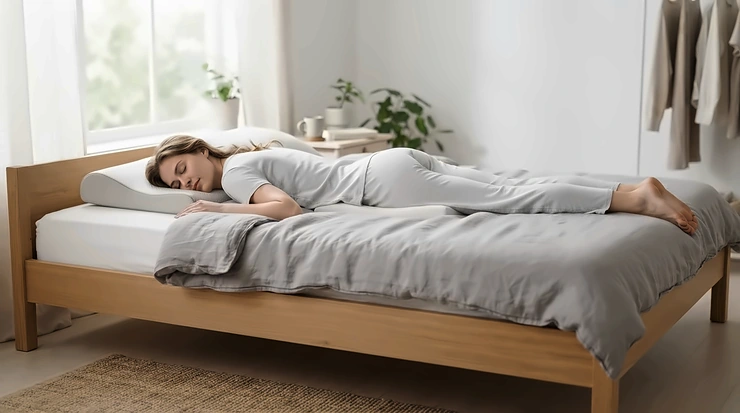
A mattress for heavy front sleepers is a bed built to stop the hips and midsection sinking while you lie face-down. It pairs a firmer, reinforced spring core with a thin, responsive comfort layer, so a heavier body stays level, weight spreads evenly, and the lower back avoids the arch that stomach sleeping otherwise creates.

Here’s the awkward bit. Most mattresses are tuned for an average-weight adult, and lying on your front is the position that punishes a soft bed hardest. Your midsection is the heaviest part of you, and face-down it presses straight into the surface. Add extra body weight and a mediocre mattress doesn’t just feel soft. It folds you into a shallow hammock.
The testers at Expert Reviews put the principle plainly: the heavier you are, the more supportive your mattress needs to be. Most entries in their heavy-people roundup also carry a maximum capacity of 114kg (18 stone) unless stated otherwise. That’s a useful reality check, because plenty of “supportive” beds have limits below what heavier sleepers weigh.
So I’ve done the sifting. Below you’ll find seven real, UK-available picks, with honest analysis of what each spec means for a face-down sleeper. You’ll also get a hybrid mattress for front sleepers explainer, a plain-English guide to reinforced support and weight distribution, a first-30-days playbook and a decision framework. No invented testing, no made-up reviews. Just reasoning grounded in published specs and professional test findings.
Mattress for Heavy Front Sleepers: Quick Comparison
| Product | Type | Stated weight limit (per sleeper) | Feel | Price range | Best For |
|---|---|---|---|---|---|
| Simba Hybrid Pro | Foam, wool and micro pocket-spring hybrid | 114kg (18 stone) | Balanced, cradling without sagging | Around £800–£1,300 by size | Best all-rounder up to 18 stone |
| HiGrid Premium Hybrid | Seven-layer hybrid with SmartGrid layer | Not published | Very supportive, firm-leaning | From around £900 | Heavier sleepers with back pain |
| Otty Original Hybrid | Foam and pocket-spring hybrid | Not published | Firm (7/10 per Otty) | Around £500–£800 by size | Firm support on a tighter budget |
| Eve Wunderflip Premium Hybrid | Flippable spring-and-foam hybrid | 130kg (around 20.5 stone) | Firmer and softer sides | From around £1,000 (double) | Heavier sleepers wanting a firmness choice |
| REM-Fit 4000 Ortho Elite Hybrid | Dual-layer pocket-spring hybrid | Up to 20 stone (per REM-Fit) | Very firm (9/10 per REM-Fit) | Check current price | The firmest feel for heavier front sleepers |
| REM-Fit Pocket 1000 Hybrid | Memory foam and pocket-spring hybrid | Not verified | Medium-firm | Under £500 (double) | Budget buyers at the lighter end of “heavy” |
| Dormeo Memory Plus | Memory foam | 139.7kg (22 stone) | Softer | From under £400 | Heavy sleepers who mix front and side |
Looking at the table, the Simba Hybrid Pro is the easiest recommendation if you sit below 18 stone, while the Eve Wunderflip Premium Hybrid and the REM-Fit 4000 Ortho Elite Hybrid are the ones to examine if you’re closer to 20. The Dormeo Memory Plus has the highest published limit here, but its softer feel makes it a riskier mattress for heavy front sleepers than its weight rating suggests. Prices move constantly, so treat every figure as a guide and check current prices before buying.
💬 Just one click — help others make better buying decisions too!😊
Top 7 Mattress for Heavy Front Sleepers: Expert Analysis
1. Simba Hybrid Pro — best all-rounder for heavier sleepers
The standout here is balance. Plenty of firm beds protect a heavy frame and punish everything else. The Simba Hybrid Pro tries to protect you and still feel like a bed.
Under the cover sit foam, a wool layer and two layers of micro pocket springs. On paper, that double spring stack means the upper layer handles fine contouring while the deeper one carries the load. That’s a sensible split for a face-down sleeper whose midsection is doing most of the pressing. Simba also publishes its limit: 114kg (18 stone) per sleeper, backed by a 10-year warranty and a 200-night trial. Being upfront about weight is worth a lot when you’re shopping by it.
Who’s it for? Heavy front sleepers who sit comfortably under that ceiling and drift between front, back and side overnight. If you’re above 18 stone, treat the limit as a hard stop and look at the Eve Wunderflip Premium Hybrid or the REM-Fit 4000 Ortho Elite Hybrid instead.
Professional testing is positive. Expert Reviews gave it a Best Buy, praising its temperature control and a cradled feel without sinking or sagging. I couldn’t verify a large pool of owner reviews, so before buying, scan retailer feedback for the words “stomach” and “heavy”.
Pros:
- ✅ Published 18-stone per-sleeper weight limit
- ✅ Two spring layers split contouring and load-bearing
- ✅ Wool layer helps with temperature control
Cons:
- ❌ Premium pricing unless discounted
- ❌ 114kg ceiling rules out the heaviest sleepers
Expect roughly £800–£1,300 depending on size, and check current price because promotions come and go. Value is strong if you land inside its weight band.

2. HiGrid Premium Hybrid — push-back that resists sinking
Where many hybrids cushion, the HiGrid Premium Hybrid resists. For a heavy front sleeper, resistance is the whole point.
It stacks seven layers, including an elastic “SmartGrid” polymer layer, high-resilience foam and individually wrapped springs. In practice, the grid works with the springs to push back evenly across the surface, so your hips don’t drop into a hammock shape. Expert Reviews ranked it among the most supportive mattresses they’d slept on, with consistent edge-to-edge push-back. The brand adds a 200-night trial and a 10-year guarantee.
Two honest wrinkles. First, no per-sleeper weight limit is published, so email the brand before committing, especially north of 20 stone. Second, this is a very heavy mattress. The testers said even a strong person couldn’t lift it alone, so book two-person delivery and don’t plan on rotating it solo.
Who should buy? Heavier front and back sleepers whose last bed left them with morning back pain. Side sleepers and smaller partners may find it too firm at first, as the upper layers only gradually become more supple. Reviewers describe the feel as never quite soft. For you, that’s a feature rather than a flaw.
On sentiment, professional tests are strongly positive about support. I couldn’t verify a broad base of owner reviews, so read those with care.
Pros:
- ✅ Exceptional edge-to-edge push-back
- ✅ Adapts to different sleeping positions
- ✅ Generous 200-night trial period
Cons:
- ❌ No published weight limit
- ❌ Too firm for side sleepers and lighter partners
Pricing starts around £900 and climbs with size, so check current price. It’s a serious outlay, but cheaper than replacing a sagging bed in three years.
3. Otty Original Hybrid — firm support without the premium price
The Otty Original Hybrid is Expert Reviews’ pick for best firm hybrid, and it earns the label honestly. Otty rates it 7/10 for firmness, and the testers agreed.
It combines 50mm of high-density foam, 30mm of reflex foam and 30mm of memory foam with full-size pocket springs, 2,000 of them in a king. Because memory foam is just one slice of the comfort stack rather than the whole story, you get contouring without a deep sink. That matters when your hips are the heaviest thing on the bed. Testers found it supportive right to the edge, with a durable feel and good pressure relief, and noted it didn’t feel obviously sprung. Otty offers a 100-night trial and a 10-year warranty.
The catch is that Otty doesn’t specify maximum weight capacities. That doesn’t make the mattress unsuitable, but it does mean you should ask before buying if you’re above 18 stone. It also isn’t for anyone who loves a bouncy, traditional spring feel.
I’d point this at heavy front sleepers who want genuinely firm support for less than premium-brand money. Owner reviews weren’t something I could verify at scale, so lean on the professional findings above.
Pros:
- ✅ Firm 7/10 feel with edge-to-edge support
- ✅ Dense foam stack resists deep sinking
- ✅ Lower price than many premium hybrids
Cons:
- ❌ Weight capacity not specified by the brand
- ❌ Less bouncy than traditional sprung beds
Expect around £500–£800 across sizes, and check current price. Value is excellent for firmness-first buyers.
4. Eve Wunderflip Premium Hybrid — flippable, with a 130kg limit
Most hybrids are one-sided. The Eve Wunderflip Premium Hybrid gives you a choice of a firmer and a softer side, and that’s handy when you’re not sure how firm “firm enough” is.
It’s a spring-and-foam hybrid, sold from double to super king, with a stated maximum of 130kg (about 20.5 stone) per sleeper. That’s among the higher published limits in this group, so it suits heavier sleepers who would overshoot Simba’s ceiling. The brand offers a 200-night trial and a 10-year warranty, and flipping is optional.
Here’s the commentary. Expert Reviews found the gap between the two sides modest: the firmer side isn’t extremely firm. For a heavy front sleeper, I’d start on the firmer side and treat the softer side as a backup. The flippability also spreads wear across both surfaces, which should help the mattress hold up over time, though that’s the testers’ reasoning rather than proven long-term data.
Note that Eve no longer offers its 365-night trial, but 200 nights is still generous. I couldn’t verify a large body of owner reviews for this specific model.
Pros:
- ✅ Published 130kg per-sleeper weight limit
- ✅ Flippable for firmness choice and even wear
- ✅ 200-night trial and 10-year warranty
Cons:
- ❌ Firmer side isn’t dramatically firm
- ❌ No single size available
Expect to start around £1,000 for a double, so check current price. It’s a premium spend, justified if you need the higher weight rating.
5. REM-Fit 4000 Ortho Elite Hybrid — rated for up to 20 stone
This is the firmest option here. According to REM-Fit’s own guide, the REM-Fit 4000 Ortho Elite Hybrid offers 9/10 orthopaedic tension, 4,000 dual-layer pocket springs and encapsulated edge support, and is rated for sleepers up to 20 stone. It comes with a 100-night trial (200 with a protector), a 15-year guarantee and free UK delivery.
I need to be upfront. I couldn’t find an independent lab or editorial review of this specific model, so everything above is a manufacturer claim. Treat it as such, and use the trial period as your real test.
What does 9/10 mean for you? Very little give. For a heavy front sleeper that’s usually welcome, because the biggest risk is sinking, not hardness. If you also sleep on your side for part of the night, you may feel pressure at shoulders and hips. REM-Fit’s own guide points heavier side sleepers towards its softer-leaning 5000 Lux Elite Hybrid instead.
Dual-layer springs are a sensible design for heavy loads, since two tiers share the work rather than one. That’s reasoning from the spec, not test data.
Pros:
- ✅ Brand rating up to 20 stone
- ✅ Encapsulated edges for stable perimeters
- ✅ 15-year guarantee
Cons:
- ❌ No independent review found
- ❌ Very firm for side sleepers
Pricing varies widely with REM-Fit’s sales, so check current price. Value looks good on paper, but only if the trial confirms the claims.

6. REM-Fit Pocket 1000 Hybrid — best budget hybrid under £500
The REM-Fit Pocket 1000 Hybrid is the budget pick, and an honest one: it suits the lighter end of “heavy”, not the extreme end.
Recently updated, it now stands 25cm deep with a memory foam top layer. REM-Fit rates it 7/10 for firmness, though Tom’s Guide testers felt it was nearer 6–6.5 and suitable for back, side and stomach sleepers. Expert Reviews noted noticeable motion transfer, which matters if your partner is a light sleeper. It comes with a 100-night trial, free delivery and a 15-year guarantee.
I could not verify a published weight limit, so contact REM-Fit before buying. If you’re well into heavy territory, the REM-Fit 4000 Ortho Elite Hybrid above is the safer REM-Fit choice. This one is for sleepers who need a decent firm-leaning hybrid without spending big, or for a guest room.
The independent verdicts are positive for the price. Expert Reviews flagged it as a Best Buy and called it a crowd pleaser, though neither their review nor Tom’s Guide framed it as a dedicated heavy-sleeper bed.
Pros:
- ✅ Under £500 for a double
- ✅ Medium-firm feel suits front sleepers
- ✅ 15-year guarantee and 100-night trial
Cons:
- ❌ No verified weight limit
- ❌ Noticeable motion transfer for couples
Expect under £500 for a double, so check current price. Strong value, provided your weight sits comfortably within what REM-Fit confirms.
7. Dormeo Memory Plus — highest weight limit, but softer
The Dormeo Memory Plus has the highest published limit in this roundup: 22 stone (about 139.7kg) per side, according to Dormeo’s warranty page. It’s also the one I’d approach most carefully as a mattress for heavy front sleepers.
It’s all-foam: a foam core with a 3cm memory foam layer, 170mm deep. Expert Reviews found it comfortable and supportive despite its slimmer build, but on the softer side. That’s the tension. A high weight rating tells you the mattress won’t fail structurally, not that it will keep a heavy stomach sleeper’s hips level. A softer surface lets the midsection sink, and that’s exactly what front sleepers should avoid.
So who’s it for? Heavy sleepers who split the night between front and side, or those who prefer a cushioned feel and accept a trade-off on alignment. Testers also flagged heat on warm nights. You get a 60-night trial and a 15-year warranty, with no turning needed.
Expert Reviews noted it is often heavily discounted in Dormeo’s own sales. I couldn’t verify a broad base of owner reviews.
Pros:
- ✅ Highest published weight limit here
- ✅ Frequently discounted in brand sales
- ✅ Comfortable, supportive for its depth
Cons:
- ❌ Softer feel risks hip sinkage
- ❌ Can sleep warm on hot nights
Expect pricing from under £400, though check current price. Excellent value, but best for mixed-position sleepers rather than committed front sleepers.
Side-by-side: how the seven stack up
| Product | Construction | Stated per-sleeper limit | Trial / guarantee | Independent verdict | Best For |
|---|---|---|---|---|---|
| Simba Hybrid Pro | Foam, wool, two micro-spring layers | 114kg | 200 nights / 10 years | Best Buy (Expert Reviews) | Balanced all-rounder under 18 stone |
| HiGrid Premium Hybrid | Seven layers with SmartGrid | Not published | 200 nights / 10 years | Among the most supportive tested | Back pain sufferers needing firm push-back |
| Otty Original Hybrid | Dense foam, reflex foam, memory foam, 2,000 springs (king) | Not published | 100 nights / 10 years | Best firm hybrid (Expert Reviews) | Firm support, mid-range budget |
| Eve Wunderflip Premium Hybrid | Spring-and-foam, flippable | 130kg | 200 nights / 10 years | Best for choice of firmness | Heavier sleepers wanting options |
| REM-Fit 4000 Ortho Elite Hybrid | 4,000 dual-layer pocket springs | Up to 20 stone (REM-Fit) | 100 nights (200 with protector) / 15 years | No independent review found | Firmest feel at higher weights |
| REM-Fit Pocket 1000 Hybrid | Memory foam over 1,000 pocket springs | Not verified | 100 nights / 15 years | Best Buy (Expert Reviews) | Budget hybrid, lighter heavy sleepers |
| Dormeo Memory Plus | Foam core, 3cm memory foam | 139.7kg | 60 nights / 15 years | Best foam with high weight capacity | Mixed front and side sleepers |
The pattern is clear. Beds with published limits (Simba Hybrid Pro, Eve Wunderflip Premium Hybrid, Dormeo Memory Plus) give you the most certainty, while the unpublished ones (HiGrid Premium Hybrid, Otty Original Hybrid) demand a quick email to the brand. Firmness-first buyers should lean towards the Otty Original Hybrid or REM-Fit 4000 Ortho Elite Hybrid, while anyone who wants the longest guarantee will find the two REM-Fit models and the Dormeo Memory Plus hard to beat.
Your First 30 Days: Setup, Break-In and Maintenance
Buying a mattress for heavy front sleepers is half the job. Setting it up properly is the other half, and Amazon listings rarely tell you how.
Get the base right. Expert Reviews notes that a slatted base adds bounce while a solid divan base makes a mattress feel firmer. If you’re heavy, check your bed frame’s rated capacity covers your weight, your partner’s and the mattress itself. Slats that are too widely spaced will let a foam-topped mattress sag between them.
Give it time to expand and air. Some bed-in-a-box hybrids need several hours to fill out, and some off-gas for a short while. Open a window and wait before you judge.
Don’t judge in three nights. Reviewers consistently note that upper layers soften as they adapt to your body. Give it at least two weeks before deciding.
Rotate as instructed. Simba, for example, recommends rotating once a month for the first six months, then every three to six months. Follow the brand’s own advice for your model.
Use a protector. REM-Fit extends its trial to 200 nights when you use a protector, and it keeps the mattress clean for a return if needed.
Fix your pillow. Chiropractor Marc Sanders, a member of the British Chiropractic Association, advises front sleepers who can’t switch position to place a pillow under the pelvis and lower abdomen, and to keep pillows low so the neck stays in line with the spine. T3 makes the same point about thin pillows. It’s a five-minute fix that works with any mattress.
Common first-month mistakes: giving up too early, using a pillow that props the head too high, and ignoring the trial window until it closes.

Real-World Scenarios: Which Mattress for Heavy Front Sleepers Fits Your Life?
These profiles are illustrations, not case studies, but they show how the specs translate into decisions.
Scenario A: the 16–17 stone front-and-back sleeper on a mid-range budget. You’re under Simba’s 18-stone ceiling and want firmness without paying luxury money. The Otty Original Hybrid gives you a firm, edge-to-edge feel in the £500–£800 range. If you’d rather have published limits and a longer trial, the Simba Hybrid Pro is the premium step up.
Scenario B: the 19–21 stone committed front sleeper. This is where limits bite. The Eve Wunderflip Premium Hybrid (130kg per sleeper) and the REM-Fit 4000 Ortho Elite Hybrid (up to 20 stone, per REM-Fit) are the options with stated numbers. Be cautious about sleeping right at a limit, and email the brand first. The HiGrid Premium Hybrid is worth an enquiry too, since it publishes no limit at all.
Scenario C: the couple with mismatched bodies. One heavy front sleeper, one lighter side sleeper. The Eve Wunderflip Premium Hybrid lets you flip to a firmer or softer side, and the Simba Hybrid Pro balances support with comfort. I’d avoid the REM-Fit Pocket 1000 Hybrid if motion transfer bothers your partner.
Buyer’s decision framework:
- If you’re over 18 stone, choose a bed with a published limit above your weight, because “unspecified” means unknown.
- If you sleep on your front all night, choose firmer, because softness lets the hips sink.
- If you also sleep on your side, choose a balanced bed like the Simba Hybrid Pro, because very firm models can pinch shoulders.
- If your budget is tight, choose the Otty Original Hybrid or REM-Fit Pocket 1000 Hybrid, then use the trial period fully.
How to Choose a Mattress for Heavy Front Sleepers
Follow these steps in order. Each one narrows the field.
- Check the stated weight limit, with a margin. Choose a mattress for heavy front sleepers whose published per-sleeper limit sits clearly above your weight, not just at it. Brands that don’t publish limits require an email.
- Prioritise firmness over softness. Osteopath Dave Gibson, quoted by Ideal Home, says firmness matters more than mattress type for front sleepers. Heavier bodies shift the target firmer.
- Insist on a pocket-spring core. Springs carry sustained loads better than foam alone, which is why a hybrid mattress for front sleepers usually beats all-foam designs.
- Keep the comfort layer thin and responsive. Deep foam lets the midsection sink. You want just enough cushion to relieve pressure.
- Inspect edge support. Reinforced support at the perimeter keeps you stable when you sit on the edge and prevents roll-off.
- Read the trial and returns terms. A 100- to 200-night trial is your best protection against a wrong guess.
- Match the base. Slats, divans and adjustable bases change how a mattress feels. Check compatibility before ordering.
Hybrid Mattress for Front Sleepers: Why Coils Beat All-Foam
A hybrid mattress for front sleepers combines a pocket-spring core with foam or latex comfort layers. For heavy sleepers, that combination does two jobs. The springs resist deep compression, and the foam softens the first few centimetres so pressure points ease.
All-foam beds can work, but they tend to deepen their sink under sustained weight. That’s a particular problem face-down, where the pelvis is the lowest point of the body. Expert Reviews’ own warning about the DreamCloud Hybrid illustrates this. They praised it as an all-rounder but cautioned that heavier sleepers may sink too far into its foam layers, and that stomach sleepers should be considerably lightweight. In other words, even a good hybrid can be wrong if its foam layers are deep.
| Mattress Type | Support for front sleeping | Heavy-load durability | Heat | Best For |
|---|---|---|---|---|
| Hybrid (e.g. Simba Hybrid Pro, Otty Original Hybrid) | Good when firm and thin-topped | Springs resist compression well | Springs aid airflow | Most heavy front sleepers |
| All-foam (e.g. Dormeo Memory Plus) | Variable, depends on firmness | High weight limit, softer feel | Can retain heat | Mixed-position sleepers |
| Traditional pocket-sprung | Firm, minimal sink | Strong, but depth and comfort vary | Often cooler | Back and front sleepers wanting minimal give |
The takeaway is simple. For a committed front sleeper who’s also heavy, a firm hybrid is the safest starting point, and all-foam only makes sense when softer comfort is a priority. Another way of putting it: choose the bed that stays level, then add comfort with a pillow strategy rather than a deeper mattress.

Reinforced Support: What the Label Really Means
“Reinforced support” appears on a lot of listings, so let’s pin it down. In a mattress for heavy front sleepers, it usually points to some combination of five things.
Higher spring counts or dual-layer springs. More springs spread the load across more contact points. The REM-Fit 4000 Ortho Elite Hybrid is built around 4,000 dual-layer pocket springs, for example.
Reinforced edges. The REM-Fit 400 Hybrid uses 150mm reinforced foam sidewalls, which testers credited with excellent edge support. Similarly, the DreamCloud Hybrid has a reinforced perimeter. This is what keeps the mattress stable when you sit or sleep near the edge.
Denser foams. Higher-density layers resist compression longer, so the surface doesn’t develop body impressions as quickly.
Structural layers. The HiGrid Premium Hybrid uses an elastic polymer grid for its push-back.
Published weight limits. A brand willing to state a limit has, in effect, committed to its reinforcement claims.
Here’s my practical advice. Ignore the phrase itself and ask for numbers: spring count, foam density, edge construction and maximum weight. If a seller can’t provide them, the reinforced support is probably marketing. Brands that publish limits, like Simba, Eve and Dormeo, give you something you can hold them to.
Weight Distribution: Why It Matters More Than Firmness Alone
Firmness gets all the attention, but weight distribution is the real goal. Expert Reviews defines pressure relief as helping spread body weight more evenly across the sleeping surface. For a front sleeper, the question is where the load concentrates: chest, pelvis and thighs.
Sports surgeon Carlos Cobiella, speaking to Expert Reviews, explained that firmer mattresses tend to distribute weight more evenly and stop the body sinking too deeply. A sunken midsection puts the spine into extension, which is exactly the lower-back arch that front sleepers are trying to avoid.
Good weight distribution comes from the interplay of layers. Pocket springs move independently, so they carry the load beneath each body part rather than bridging between them. A thin, responsive comfort layer then smooths the pressure. Too much foam and the bed distributes weight into the foam, which compresses. Too little and you feel the springs.
You can improve distribution further with that pelvis pillow. Consultant physician Aimee Brame of the Sleep Centre at London Bridge Hospital suggests it as a way to improve the spinal angle when sleeping on your front, noting the position puts strain on the neck and spine. Weight distribution, in short, is partly the mattress and partly your set-up.
Features That Actually Matter (And Those That Don’t)
Matter a lot:
- A published weight limit. It’s the single most reassuring number.
- Honest firmness. Labels vary. DreamCloud rates its Hybrid at 5/10 but testers found it medium-firm. The Otty Original Hybrid is rated 7/10 and testers agreed.
- Core construction. Pocket springs and dense foam layers matter more than cover fabrics.
- Trial length. Generous trials like 200 nights give you room to be wrong.
Matter somewhat:
- Cooling. T3 notes that front sleeping traps heat around the stomach, and heavier sleepers often run warmer. A breathable cover and spring layer help, but they won’t rescue a wrong-feeling mattress.
- Edge support. Valuable if you sit on the edge or sleep near it.
Matter much less than marketing suggests:
- “Orthopaedic” labels. I couldn’t find a standardised definition, so ask for measurable specs instead.
- Cover fabric prestige. Pleasant, but it won’t hold your hips up.
- Headline spring counts alone. Gauge and layering matter as much as the number.
Common Mistakes When Buying a Mattress for Heavy Front Sleepers
Trusting the firmness label blindly. As noted above, brand ratings can sit well away from tester impressions. Read independent reviews and use the trial.
Ignoring combined weight. Limits are usually per sleeper, but check what each brand specifies, and remember your bed frame has limits too.
Choosing deep foam for comfort. The extra cushioning feels lovely in a showroom and lets your hips sink at 3am.
Forgetting the base. A slatted base adds bounce and a solid base firms up the feel, so test on the same type you’ll own.
Assuming a mattress fixes everything. Even good beds can’t eliminate the strain of front sleeping. If you wake with neck or back pain, adjust your pillows, try the pelvis pillow, and see your GP if pain persists.
Long-Term Cost & Maintenance
Mattress economics are easier to judge per night. A bed costing around £900 and used for ten years works out at roughly 25p a night. A £450 bed that sags after five years costs the same. That’s why durability matters more than sticker price for heavier sleepers, who load a mattress harder.
Dr Cobiella told Expert Reviews that firmer mattresses tend to last longer under extra weight. Warranties vary: the Simba Hybrid Pro, HiGrid Premium Hybrid, Otty Original Hybrid and Eve Wunderflip Premium Hybrid offer ten years, while the REM-Fit models and Dormeo Memory Plus offer fifteen. Read the small print, though, because warranties often tie to weight limits and sag thresholds.
For independent durability data, Which? mattress reviews test support for the main sleeping positions along with durability and breathability, though much of the detail sits behind a login.
Maintenance is straightforward. Rotate as the brand advises (or flip the Eve Wunderflip Premium Hybrid occasionally), use a protector, air the bed regularly, and check for body impressions every few months. Catching a dip early gives you a better chance of a successful warranty claim.
FAQs
❓ Can a heavy person sleep on their front without back pain?
❓ Are bed-in-a-box mattresses strong enough for heavy people?
❓ Do I need a mattress topper on a firm hybrid?
❓ How long does a mattress for heavy front sleepers last?
❓ Is a firm or medium-firm mattress better for stomach sleeping?
Conclusion
Choosing a mattress for heavy front sleepers comes down to a short list of non-negotiables: a published weight limit that clears your weight, a firm-leaning pocket-spring core, a thin comfort layer and a trial long enough to prove it. Everything else is secondary.
If you want a single starting point and sit under 18 stone, the Simba Hybrid Pro is the safest all-rounder. For firmness on a tighter budget, the Otty Original Hybrid is hard to beat, while the HiGrid Premium Hybrid suits those chasing maximum push-back. At higher weights, the Eve Wunderflip Premium Hybrid and the REM-Fit 4000 Ortho Elite Hybrid give you stated numbers to work with, and the REM-Fit Pocket 1000 Hybrid is the sensible budget entry. The Dormeo Memory Plus is best kept for mixed-position sleepers.
Whatever you choose, use the full trial, set the pillow up properly and judge support after the break-in period rather than after three nights. A good hybrid mattress for front sleepers, with real reinforced support and sound weight distribution, shouldn’t just feel comfortable on night one. It should still be level in year five.
✨ Your best night’s sleep starts with the right support!
🛏️ Click any highlighted product name above to check current pricing, size options and availability on amazon.co.uk, then use the trial period to make sure it’s truly the one.
Recommended for You
- Mattress For Front Sleepers With Back Pain: 7 Best Picks (2026)
- Mattress For Front Sleepers: 7 Best Proven Picks For 2026
- Orthopaedic Mattress For Back Sleepers: 7 Proven Picks (2026)
Disclaimer: This article contains affiliate links. As an Amazon Associate, I earn from qualifying purchases. If you purchase products through these links, we may earn a small commission at no additional cost to you.
✨ Found this helpful? Share it with your friends! 💬🤗
