
In This Article
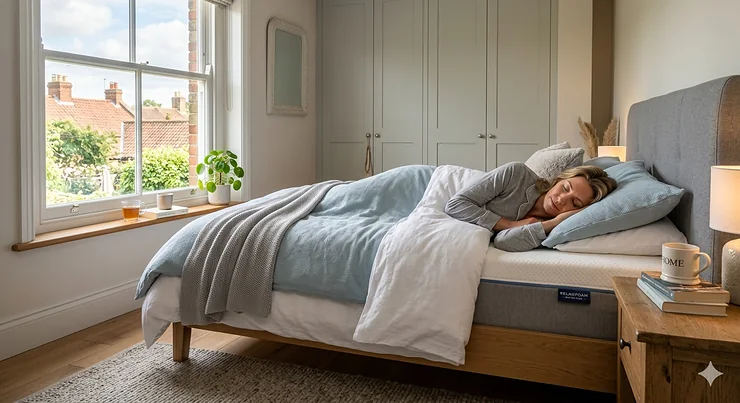
Waking up with a stiff back is, at best, a nuisance. At worst, it’s a daily misery that follows you from the bedroom to the bathroom to the office chair, a low-grade ache that colours everything. Here’s something worth knowing: back pain affects around 8 in 10 people in the UK at some point in their lives, and one of the most overlooked culprits is the mattress they’ve been loyally sleeping on for the past decade.
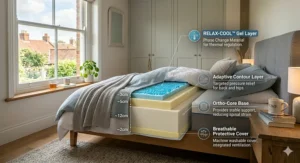
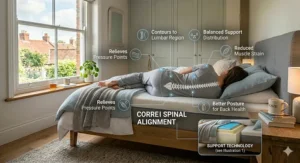
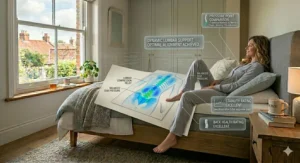
The right memory foam mattress for back pain doesn’t just make things slightly more comfortable. When it’s properly matched to your sleep position, body weight, and specific back complaint, it can genuinely change how you feel in the morning — less creaking, less bracing for the first stand of the day, less of that particular grimace that your partner has learned to politely ignore. The mechanism is straightforward: memory foam contours to your body’s unique shape, distributing weight evenly across pressure points and allowing your spine to maintain a neutral alignment throughout the night. No more hips sinking too deep, no more lower back arching away from the surface in protest.
But — and this is important — not all memory foam mattresses are created equal. The foam topper you bought from a discount retailer in 2018 bears almost no resemblance to the sophisticated, multi-layered orthopaedic systems available in 2026. Modern designs layer reactive foam with pocket springs, infuse foam with cooling gel, or engineer seven distinct support zones that respond differently to your shoulders, waist, hips, and heels. The result is something considerably more intelligent than a simple slab of foam.
In this guide, I’ve researched and assessed seven of the best memory foam mattresses for back pain currently available on Amazon.co.uk — covering everything from budget options that genuinely perform to premium engineering that most UK buyers won’t regret. All price ranges are in GBP, all products are available with UK delivery, and all recommendations come with honest commentary about who each mattress actually suits.
Quick Comparison Table
| Mattress | Best For | Construction | Firmness | Price Range |
|---|---|---|---|---|
| Simba Hybrid Pro | All-round premium support | Hybrid | Medium-firm | £700–£900 |
| Emma NextGen Premium | Seven-zone adaptive relief | Hybrid foam | Medium | £500–£800 |
| Silentnight 7-Zone Memory Foam | Trusted UK brand, hot sleepers | Memory foam | Medium | £300–£500 |
| Dormeo Octasmart Plus | Advanced airflow & lumbar support | Octaspring | Medium-firm | £400–£600 |
| Vesgantti 11-Inch Hybrid | Heavier sleepers needing firm support | Hybrid | Firm | £250–£450 |
| Inofia Hybrid Pocket Spring | Budget-conscious couples | Hybrid | Medium-firm | £180–£320 |
| Zinus Green Tea Memory Foam | Entry-level, single sleepers | All-foam | Medium-firm | £130–£260 |
The table tells an interesting story. Hybrid construction — memory foam layers married to pocket springs — now dominates the back pain mattress market, and for good reason: the springs provide the responsive pushback that pure foam often lacks, whilst the foam layers handle pressure relief at the surface. Budget-focused buyers should note that the Zinus and Inofia options represent genuine quality at their price points, not just cheap compromises. The depth of a mattress matters more than most buyers realise — anything below 20cm tends to lack the layering necessary for proper zonal support.
💬 Just one click — help others make better buying decisions too! 😊
Top 7 Memory Foam Mattresses for Back Pain: Expert Analysis
1. Simba Hybrid Pro — British Engineering Meets Serious Back Pain Science
The Simba Hybrid Pro is the mattress equivalent of a well-engineered British estate car: purposeful, sophisticated, built for sustained performance, and worth every penny if you use it properly. It combines up to 4,800 individually-wrapped Aerocoil titanium microsprings with a graphite-infused Simbatex foam comfort layer — and the engineering detail here genuinely matters for back pain sufferers. The dual-layer spring system works independently at each contact point, meaning your shoulder can sink appropriately whilst your lumbar region receives firm, unwavering support. That’s not a spec you often see articulated clearly, but it explains precisely why this mattress earns such consistent praise from UK customers dealing with chronic lower back issues.
At 28cm deep, the Simba Hybrid Pro has enough layers to offer genuine zonal variation rather than uniform compression. The Simbatex layer delivers superior airflow compared to standard memory foam — particularly valuable during Britain’s increasingly warm summers and for anyone who’s woken up in a heat-induced foam-induced sweat at 3am in July and immediately regretted their life choices. The washable cover is a thoughtful touch for UK households; spills, pets, and the occasional midnight cup of tea are realities of British domestic life.
UK customers report that it takes two to three weeks to fully break in, after which morning stiffness drops noticeably. The 200-night trial is generous, and the 10-year guarantee provides the kind of reassurance that a £800 purchase arguably deserves. One practical note: the Simba Hybrid Pro is genuinely heavy, so rotating it every three months (which you should do with any mattress) requires either a second pair of hands or an impressive tolerance for awkward furniture wrangling.
Pros:
✅ Dual-layer Aerocoil system provides targeted zonal spinal support
✅ Graphite-infused foam keeps temperatures noticeably cooler
✅ Generous 200-night trial and 10-year guarantee
Cons:
❌ Heavy — rotation requires help
❌ Premium price point isn’t accessible for all budgets
Price range: Around £700–£900 depending on size Best for: Side sleepers and combination sleepers with chronic back pain who want premium engineering and aren’t willing to compromise
2. Emma NextGen Premium — Seven-Zone Intelligence for Adaptive Spinal Alignment
There’s a reason Emma has become one of the dominant mattress brands in British bedrooms, and the Emma NextGen Premium illustrates it well. The centrepiece is the Halo Memory Foam system — a proprietary foam with a honeycomb microstructure that allows it to respond more dynamically to pressure than conventional visco-elastic foam. Pair that with a seven-zone support layer that provides deliberately different firmness levels across the zones corresponding to your head, shoulders, lumbar, hips, and legs, and you have a mattress that doesn’t just cushion — it actively supports the natural curvature of your spine.
The hybrid construction includes micro-pocket springs beneath the foam layers, which serves two practical purposes for back pain sufferers: it provides the responsive “push back” that prevents the dreaded sinking feeling, and it allows enough bounce to shift sleeping positions without waking up feeling cemented in place. The edge-to-edge support technology is genuinely impressive — the sleep surface extends right to the perimeter without the significant drop-off you get on cheaper mattresses, which matters for anyone who sits on the edge of the bed to put on shoes (and for couples who use every centimetre of the mattress surface).
UK reviewers consistently note a relatively short break-in period compared to competitors, with most finding the optimal feel within the first fortnight. Average-weight sleepers across all positions report excellent results. The caveat worth noting honestly: buyers over approximately 15 stone sometimes find the Emma NextGen Premium slightly too soft for ideal lumbar support, in which case the firmer Vesgantti Hybrid (listed below) is the more appropriate choice.
Pros:
✅ Seven-zone system distributes support across distinct body regions
✅ Edge-to-edge support maximises usable sleep surface
✅ Quick break-in period compared to most premium mattresses
Cons:
❌ May feel insufficiently firm for heavier sleepers
❌ Higher price tier requires significant upfront investment
Price range: Around £500–£800 depending on size Best for: Average-weight sleepers of all positions, particularly those who’ve found other memory foam mattresses either too firm or too soft
3. Silentnight 7-Zone Memory Foam Mattress — The Reliable British Classic That Actually Works
Some brands earn their reputation not through marketing spend but through decades of consistent product quality, and Silentnight — a Lancashire-based manufacturer with over 75 years of British mattress-making behind them — is firmly in that category. The Silentnight 7-Zone Memory Foam Mattress takes a focused approach: rather than stacking layer upon complicated layer, it delivers a well-constructed 20cm memory foam mattress with gel infusion throughout, divided into seven distinct orthopaedic zones that respond differently across the length of your body.
The gel infusion is the feature most worth understanding for UK buyers. Standard memory foam has a well-known heat retention problem — fine in our typically mild climate, genuinely unpleasant during warm spells or in centrally heated bedrooms. The cooling gel within the Silentnight 7-Zone disperses heat more effectively, keeping the sleep surface noticeably cooler without sacrificing the contouring properties that make memory foam useful for back pain in the first place.
The brand’s UK manufacturing heritage means the Silentnight 7-Zone is built to British fire safety standards (BS7177) and comes with the kind of customer service infrastructure that gives pause for thought when buying from less-established brands on Amazon. UK customers repeatedly mention the reassurance of speaking to a British customer service team when issues arise — which, to be fair, isn’t often with Silentnight products. It’s available on Amazon.co.uk with Prime delivery, arrives compressed for easy manoeuvring up narrow staircases (a consideration that American reviewers genuinely don’t need to factor in), and expands within 24–48 hours.
Pros:
✅ Established UK brand with strong customer service track record
✅ Gel infusion manages heat effectively
✅ Seven-zone orthopaedic design without unnecessary complexity
Cons:
❌ 20cm depth may not provide sufficient layering for severe back conditions
❌ Medium feel may lack firmness for heavier individuals
Price range: Around £300–£500 depending on size Best for: Hot sleepers with back pain, those who value brand heritage and accessible UK customer support, and buyers transitioning from a traditional spring mattress
4. Dormeo Octasmart Plus Mattress — Unconventional Technology for Superior Lumbar Support
Dormeo’s approach is genuinely different. Rather than using conventional foam or standard pocket springs, the Dormeo Octasmart Plus is built around the brand’s patented Octaspring technology — individual spring-like foam cells that combine the point-elastic responsiveness of springs with the pressure-relieving properties of foam. Each Octaspring cell compresses independently at each contact point, which means the mattress responds with remarkable precision to the specific contours of your body rather than applying a uniform surface pressure.
For back pain sufferers, the practical benefit is real: the Octaspring cells create naturally differentiated support zones without the rigid segmentation of traditional zoned foam, adapting dynamically as you shift position. The airflow properties are exceptional — the cellular structure allows air to circulate freely through the mattress body, which addresses both temperature regulation and the subtle humidity issues that arise in British bedrooms during autumn and winter. If your current mattress has ever developed an unpleasant damp smell by February, adequate mattress airflow is something you’ll want to prioritise.
The Dormeo Octasmart Plus sits at a medium-firm feel, which suits the majority of back pain profiles. UK customers particularly praise its performance for lower back pain specifically, noting that the adaptive Octaspring cells provide targeted lumbar support without the stiffness that traditional orthopaedic mattresses can impose. Available on Amazon.co.uk, typically with Prime delivery, and backed by Dormeo’s pan-European customer service infrastructure.
Pros:
✅ Patented Octaspring cells provide genuinely adaptive pressure response
✅ Outstanding airflow properties — excellent for damp British bedrooms
✅ Medium-firm feel suits the widest variety of back pain profiles
Cons:
❌ Octaspring technology feels noticeably different from conventional foam — takes adjustment
❌ Some UK reviewers note the cover shows wear after 18–24 months
Price range: Around £400–£600 depending on size Best for: Those with lower back pain specifically, hot sleepers, and anyone who wants the benefits of both foam and springs without a traditional hybrid construction
5. Vesgantti 11-Inch Hybrid Pocket Spring & Memory Foam Mattress — Firm Support for Heavier Sleepers
Here’s the honest truth that most mattress guides dance around: if you’re over approximately 14–15 stone, many popular medium-feel mattresses will compress significantly under your body weight and effectively become soft mattresses — with all the lumbar support issues that entails. The Vesgantti 11-Inch Hybrid is designed with this reality in mind. Its 1,000 individually-wrapped pocket springs — a notably high coil count for this price tier — provide a firm, responsive foundation that doesn’t compress to the same degree under higher body weights, whilst the memory foam comfort layer on top handles pressure point relief at the shoulders and hips.
The 11-inch (approximately 28cm) depth allows for meaningful layering: there’s enough foam for genuine pressure relief without sacrificing the structural support from the spring core. The breathable knitted cover — a detail that separates quality mattresses from budget imports — is removable and machine-washable, which is rather more practical than it might sound once you’ve lived with a mattress through several British winters. The foam components carry OEKO-TEX Standard 100 certification, confirming they’ve been tested against a comprehensive list of potentially harmful chemicals — something worth checking when buying foam products on Amazon.
UK reviewers consistently rate the Vesgantti Hybrid above its price point, with heavier sleepers and couples with significant weight differences particularly impressed. At under £450 for a double, it represents exceptional value for a genuinely well-constructed hybrid. Prime-eligible on Amazon.co.uk with next-day delivery available to most UK postcodes.
Pros:
✅ High coil count provides excellent support for heavier sleepers
✅ OEKO-TEX certified foam — no chemical nasties
✅ Washable cover is genuinely practical for British households
Cons:
❌ Firmer feel won’t suit lightweight sleepers who prefer contouring
❌ Less brand recognition may concern buyers used to Silentnight or Emma
Price range: Around £250–£450 depending on size Best for: Heavier sleepers (14 stone+), couples with different body weights, and those who’ve tried medium mattresses and found them insufficiently supportive
6. Inofia Hybrid Pocket Spring & Memory Foam Mattress — Budget-Friendly Support Without the Budget Feel
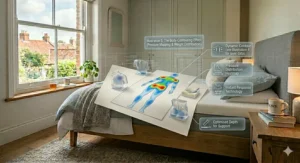
The Inofia Hybrid occupies an interesting market position: it’s priced like a budget mattress but performs, in several respects, like a mid-range one. The combination of a gel-infused memory foam comfort layer with individually-wrapped pocket springs gives it the core structure of hybrid mattresses that cost considerably more. What Inofia has done cleverly is focus the engineering attention where it matters most — the spring core quality and foam layering — whilst making modest compromises on the cover materials and edge support that drive up costs elsewhere.
At approximately 25cm deep, the Inofia Hybrid has adequate depth for proper spinal support. The individually-wrapped pocket springs — rather than the bonnel coil systems used in cheaper alternatives — mean each spring reacts independently, providing better motion isolation and more precise contouring. For couples sharing a double or king, this is meaningful: your partner shifting at 2am won’t register as a seismic event on your side of the bed.
The gel memory foam layer manages temperature reasonably well. UK reviewers who’ve slept on it through multiple seasons note it doesn’t retain heat as aggressively as cheaper foam alternatives, though hot sleepers with back pain would be better served by the Silentnight or Dormeo options listed above. Independent reviews from UK buyers — including a month-long real-world assessment published by a well-regarded sleep review site — rate the Inofia Hybrid positively for back and stomach sleeping, with some caveats for heavier side sleepers who may want additional padding.
Pros:
✅ Pocket spring construction at a budget-friendly price
✅ Good motion isolation for couples
✅ Gel memory foam layer manages heat better than pure foam at this price point
Cons:
❌ Edge support is noticeably weaker than premium options
❌ Heavier side sleepers may find the foam comfort layer insufficiently thick
Price range: Around £180–£320 depending on size Best for: Budget-conscious buyers who need genuine hybrid support, couples who need motion isolation, and those making their first upgrade from a budget foam mattress
7. Zinus Green Tea Memory Foam Mattress — The Reliable Entry Point for Memory Foam Newcomers
The Zinus Green Tea Memory Foam Mattress is the Amazon best-seller in this category for a reason that has nothing to do with marketing and everything to do with performance-per-pound. It’s an all-foam mattress — no pocket springs — but Zinus has built the foam stack thoughtfully: green tea-infused comfort foam on top (the green tea extract acts as a natural freshener, helping the mattress stay odour-free over time), followed by gel-infused foam for temperature management, and a high-density foam foundation that provides the structural support the comfort layers alone cannot.
The CertiPUR-US certification is relevant to UK buyers because it confirms the foam has been independently tested for emissions and durability without harmful chemical levels — a meaningful reassurance when purchasing a product you’ll be spending eight hours a night in contact with. The Zinus Green Tea arrives compressed in a box, which makes it ideal for British flats and terraced houses where navigating a mattress up a narrow staircase with a tight landing is a genuine logistical challenge rather than an abstract concern.
As an all-foam mattress, it excels at motion isolation — if you share a bed, your partner’s movement genuinely doesn’t translate to your side. It’s less ideal for combination sleepers (those who move position frequently) because the denser foam layers offer less bounce than hybrid alternatives. Back and side sleepers who stay relatively still tend to rate it highly; stomach sleepers and restless sleepers may prefer the spring-assisted responsiveness of the Inofia or Vesgantti options. At its price point, this is a genuinely honest entry into quality memory foam territory — not a premium mattress pretending to be budget, but a well-made budget mattress doing exactly what it should.
Pros:
✅ CertiPUR-US certified foam — tested for safety and durability
✅ Excellent motion isolation for couples
✅ Compact box delivery — ideal for flats and narrow UK staircases
Cons:
❌ All-foam construction lacks the responsiveness of hybrid alternatives
❌ Less suitable for combination sleepers and stomach sleepers
Price range: Around £130–£260 depending on size Best for: Single sleepers and couples on a tight budget, those in flats where delivery access is limited, and anyone making their first switch to memory foam
✨ Don’t Miss These Exclusive Deals!
🔍 Take your sleep quality to the next level with these carefully selected products. Click on any highlighted product name to check current pricing and availability on Amazon.co.uk.
How to Choose a Memory Foam Mattress for Back Pain: A Practical Framework
Choosing wrong here is expensive and painful — quite literally. So rather than leaving you with a vague “it depends,” here’s a decision framework built around the questions that actually matter.
Step 1: Identify your primary sleep position. Side sleepers need more give at the shoulders and hips, making medium to medium-firm mattresses (the Emma NextGen Premium, Silentnight 7-Zone) the best match. Back sleepers need firm lumbar support with gentler surface pressure — medium-firm hybrids like the Simba Hybrid Pro excel here. Stomach sleepers need the firmest options to prevent excessive lumbar arch — look at the Vesgantti Hybrid or Zinus at its firmest configuration.
Step 2: Know your body weight. Under 11 stone? You’ll barely compress a medium mattress, so firmness is less critical than pressure relief. Between 11 and 14 stone, medium-firm hybrids suit most back conditions. Over 14 stone, you need the coil count and foam density of the Vesgantti Hybrid or Simba Hybrid Pro to avoid bottoming out.
Step 3: Identify your back pain type. Lower back pain responds best to firm lumbar support with surface pressure relief — the Dormeo Octasmart Plus or Simba Hybrid Pro. Upper back and shoulder pain tends to improve with greater surface contouring — the Emma NextGen Premium’s seven-zone system is well-suited. General aches without a specific diagnosis benefit from medium-firm hybrids across the board.
Step 4: Consider your bedroom context. British homes are not American homes. If you’re in a first-floor flat with a spiral staircase, a compressed box delivery (Zinus, Emma, Vesgantti) is not just convenient — it’s essential. If you run warm even in a November bedroom, gel infusion (Silentnight, Inofia) or advanced airflow (Dormeo) should be prioritised.
Step 5: Assess your budget honestly. The Inofia and Zinus options represent genuine quality at their price points. Spending more buys you better materials, longer warranties, and more sophisticated engineering — but spending the minimum doesn’t mean settling for something that won’t help your back. It means being more precise about what you actually need.
Real-World Scenarios: Which Mattress for Which British Sleeper?
The abstract advice only gets you so far. Let’s get specific.
Scenario 1: The London flat-dweller with a dodgy lower back. Sarah is 34, rents a one-bedroom flat in Hackney, and has been waking up with lumbar pain for six months. Her partner runs warm. Access is via a narrow staircase. She needs: a compressed box delivery, a medium-firm hybrid with cooling properties, good motion isolation, and a price under £500 for a double. The Inofia Hybrid at the lower end, or the Silentnight 7-Zone for slightly better engineering, both hit this brief precisely.
Scenario 2: The suburban professional who’s finally investing in sleep. James is 48, 15 stone, sleeps on his back, and has chronic lower back pain that’s begun affecting his work. He has a proper bedroom in a semi-detached in Leeds and can afford to spend properly. He needs: firm lumbar support with enough surface pressure relief to avoid aggravating the pain, a long trial period, and a guarantee that justifies the price. The Simba Hybrid Pro is the obvious choice — the dual Aerocoil system handles precisely his combination of body weight and back-sleeping position. The 200-night trial means he can test it through a full British winter.
Scenario 3: The retired couple in a Cotswolds cottage. Margaret and Derek are both in their late sixties, different body weights, both have some form of back or joint issue, and their current mattress is approximately fifteen years old. They need: motion isolation so one doesn’t disturb the other, a balanced firmness that suits different weights, and a mattress that doesn’t require acrobatic rotation. The Vesgantti 11-Inch Hybrid suits their weight range, and its pocket spring construction handles the motion isolation and differing support requirements of two sleepers.
Common Mistakes When Buying a Memory Foam Mattress for Back Pain
Choosing firmness based on intuition rather than sleep position. The idea that back pain demands a rock-hard mattress is persistent and largely wrong. Research from the Sleep Foundation indicates medium-firm mattresses — not firm — provide the best back pain outcomes for most sleepers because they support the spine without creating excessive pressure at the hips and shoulders.
Ignoring mattress depth. Anything below 20cm typically lacks the layering required for meaningful zonal support. The comfort layer performs its job; the support layer performs its job; the transition foam between them — the bit that stops you from feeling the spring coil through the foam — requires depth to exist at all. Under £100 mattresses under 15cm deep are selling you a floor with pretensions.
Testing a mattress for ten minutes in a shop. Your back needs weeks, not minutes, to respond to a new sleep surface. This is precisely why trial periods exist. The Simba Hybrid Pro and Emma NextGen Premium both offer 200-night trials on Amazon.co.uk — use them. A mattress that feels fine on day three may reveal its true character at week four, and vice versa.
Buying a US-spec or European-spec mattress without checking UK sizing. British bed sizes differ from both American and continental European standards. A UK double is 135 × 190cm; a European double is often 140 × 200cm. The Zinus models on Amazon.co.uk are listed in UK dimensions — but if you’re ordering from a European Amazon site or importing, verify the dimensions before purchasing.
Neglecting to check fire safety certifications. All mattresses sold in the UK must comply with The Furniture and Furnishings (Fire) (Safety) Regulations 1988, which require resistance to specific ignition sources. Reputable brands on Amazon.co.uk (Silentnight, Emma, Simba, Dormeo, Vesgantti, Inofia, Zinus) are compliant — but budget grey-market imports occasionally are not. Look for explicit fire safety compliance mentioned in the product listing.
Maintaining Your Memory Foam Mattress in British Conditions
Britain’s climate creates specific maintenance challenges that American or Australian mattress care guides simply don’t address. The combination of damp air, centrally heated bedrooms, and relatively cold mornings means moisture management is more important here than almost anywhere else.
Rotate every three months, but don’t flip. Most modern memory foam mattresses are one-sided — the support layers are designed to face downward and the comfort layers upward. Rotating 180 degrees (head to foot) every three months distributes wear evenly without disturbing the layer orientation. Put a reminder in your calendar; it genuinely extends mattress lifespan.
Use a quality mattress protector. In a British climate, a breathable but waterproof protector does two things: it guards against the inevitable spill or accident, and it prevents moisture from British air (and sleeping bodies) from gradually penetrating and degrading the foam. Silentnight and Emma both sell compatible protectors; any OEKO-TEX certified breathable mattress protector on Amazon.co.uk will serve the purpose.
Air your mattress weekly. Pull back the duvet for 20–30 minutes each morning. It sounds minimal, but it allows the moisture your body releases overnight (approximately half a litre per person per night, which is a statistic nobody enjoys contemplating) to evaporate rather than absorb into the foam layers. In winter, this matters more, not less — the combination of closed windows and central heating creates a humid microclimate in British bedrooms.
Don’t jump on it. Memory foam is designed for gradual, distributed pressure — not point impacts. Children bouncing, dogs launching themselves onto the bed with enthusiasm, and sitting on the edge repeatedly in the same spot all accelerate wear and damage the foam cell structure. Some things are worth mentioning even at the risk of stating the obvious.
Memory Foam vs Other Mattress Types for Back Pain: An Honest Comparison
| Type | Back Pain Suitability | Durability | Heat Retention | UK Price Range |
|---|---|---|---|---|
| Memory foam | Excellent pressure relief | 7–10 years | Moderate–high | £100–£800+ |
| Hybrid (foam + springs) | Best overall for most conditions | 8–12 years | Low–moderate | £200–£1,000+ |
| Pocket spring only | Good support, less pressure relief | 8–10 years | Low | £150–£600+ |
| Latex | Excellent, but niche | 10–15 years | Low–moderate | £400–£1,200+ |
| Budget innerspring | Generally poor for back pain | 4–6 years | Low | £80–£200 |
The hybrid construction that appears in five of our seven recommendations isn’t coincidental — it genuinely represents the best available option for most back pain profiles. Pure memory foam excels at pressure relief but can lack the responsive support that spring systems provide, particularly for heavier sleepers. Latex is the only material that rivals hybrid performance for back pain, but the price premium is substantial and the range available on Amazon.co.uk is more limited.
The budget innerspring category deserves a direct comment: if your current mattress is a basic innerspring under ten years old and your back pain is relatively new, your mattress may not be the primary culprit. If it’s over seven years old or you can feel the springs through the surface, replacing it is overdue regardless of how your back feels.

FAQ
❓ Is memory foam good for back pain in the UK?
❓ How firm should a memory foam mattress be for a bad back?
❓ How long does it take for a memory foam mattress to help back pain?
❓ Are memory foam mattresses on Amazon.co.uk safe to buy?
❓ What is the return policy for mattresses bought on Amazon.co.uk?
Conclusion: The Right Memory Foam Mattress for Back Pain Is Worth Getting Right
Your mattress is the piece of furniture you interact with more than any other — roughly a third of your life takes place on it. Getting it wrong doesn’t just mean a slightly uncomfortable sleep; for back pain sufferers, the wrong mattress can actively worsen a condition that affects their entire waking day.
The seven options in this guide cover every meaningful back pain profile and budget tier available on Amazon.co.uk in 2026. The Simba Hybrid Pro is the premium choice for those who want the best available engineering. The Emma NextGen Premium offers sophisticated seven-zone adaptation at a slightly more accessible price. The Silentnight 7-Zone is the trusted British choice for hot sleepers. The Dormeo Octasmart Plus brings genuinely innovative airflow technology to lumbar support. The Vesgantti Hybrid is the right answer for heavier sleepers who’ve been let down by softer alternatives. The Inofia Hybrid delivers genuine hybrid quality at a budget-friendly price. And the Zinus Green Tea is the honest entry point for anyone making their first proper investment in memory foam.
Use the framework in this guide — sleep position, body weight, back pain type, bedroom context, budget — and you’ll be equipped to choose with confidence rather than hope.
✨ Don’t Miss These Exclusive Deals!
🔍 Take your sleep quality to the next level with these carefully selected products. Click on any highlighted product name to check current pricing and availability on Amazon.co.uk. Your back will thank you.
Recommended for You
- 7 Best Memory Foam Mattress Under £200 Picks UK (2026)
- Best Memory Foam Mattress for Side Sleepers UK: 7 Top Picks (2026)
- Best Memory Foam Mattress UK 2026: 7 Top-Rated Picks
Disclaimer: This article contains affiliate links. As an Amazon Associate, I earn from qualifying purchases. If you purchase products through these links, we may earn a small commission at no additional cost to you.
✨ Found this helpful? Share it with your mates! 💬🤗
